

Keep building on Tapeout. Building the most powerful applications on BNB Chain. Independent team Part of the Tapeout ecosystem.
UK
Joined September 2026
- Tweets726
- Following27
- Followers592
- Likes1.2K



Pinned Tweet
HashPort takes a key step forward!
HPA has launched and graduated on TapeHub, and will serve as a core functional token in the future HashPort container ecosystem, carrying important roles such as usage, circulation, and ecosystem collaboration!
HashPort will also work together with TapeOut to co-build a more open on-chain container ecosystem, allowing more projects, assets, and communities to connect, operate, and grow within it
HPA
CA: 0x0Df25a91A6d7A7af201bCfdC721aA9CbE7611010
The HashPort gateway doesn't switch rules when traffic spikes
The first visitor and the thousandth take the same path
And get the same files
Trust starts at the first screen
HashPort wants that first screen on chain
So anyone can ask which version this is
And get an answer
A transparent protocol does not automatically guarantee a trustworthy frontend
Contract permissions tell us who can modify certain On Chain rules
Frontend verification tells us whether delivered Web files match a trusted publication record
These are different layers of assurance
HashPort focuses on the second
For Web3 applications, understanding both layers is essential to evaluating the full user experience
Trust should be supported by evidence at every relevant layer
A website can change many times without changing its domain
For users, the address may look identical
For developers and auditors, the actual version matters
Content hashes and publication records can help distinguish one release from another
HashPort supports verifiable publishing and version management
A clear release history makes it easier to investigate what changed, when it changed, and which files were delivered
When users interact with a Web3 application, they see a frontend maintained through a publishing process
Who can update that frontend?
How are new versions approved?
Can users verify the content they receive?
These questions matter even when the underlying smart contracts are publicly auditable
HashPort addresses the verification of published Web files
A complete security process must also examine who controls the release workflow
A smart contract may be immutable while the frontend interacting with it continues to evolve
Developers still need to fix interface bugs, improve usability, and release new versions
But a frontend update can also change how users understand or initiate transactions
That makes version verification important
Publishing source code is an important step toward transparency
But a public repository does not automatically prove what users are receiving in their browsers
The deployed frontend may differ from the reviewed source
Build processes, dependencies, and later updates can all affect the final files
A frontend integrity warning should never be treated as a routine inconvenience
If delivered files fail to match a trusted reference, users should avoid sensitive actions until the discrepancy is understood
Do not rush to connect a wallet or approve a transaction
Confirm the application source and seek clarification through trusted project channels
HashPort emphasizes verifiable publishing because unexpected content changes deserve attention
Verification is most useful when people know how to respond to its results
When a Web application can initiate transactions involving valuable assets, the frontend becomes part of the user's security boundary
Relying only on the website operator's assurance leaves an important question unanswered
Can the delivered files be checked against an independently trusted publication record?
HashPort focuses on making Web content verifiable
For high value DApps, independent verification can add useful assurance alongside contract audits, secure signing, and permission controls
Security reviews need evidence
A screenshot shows what a page appeared to display at one moment
A content hash can identify the exact bytes of a published file
Version records can help connect releases with specific content
HashPort provides tools for verifiable Web publishing
These records can support investigations and release verification, although they do not replace a full security audit
Better evidence makes technical questions easier to examine
A frontend update can change more than the appearance of a website
It may alter transaction parameters, wallet interactions, or the information shown before signing
For applications handling valuable assets, updates deserve a clear review process
Who approved the release?
Which files changed?
Does the deployed version match the intended build?
HashPort supports verifiable publishing and version records
Release discipline remains an important responsibility for the project team
Frontend security is not only about the final website
Applications depend on packages, build tools, deployment pipelines, and people with publishing access
A compromise at any of these stages may affect the files delivered to users
This is part of frontend supply chain risk
HashPort addresses the integrity of published content
A stronger security process also examines how that content was built, reviewed, authorized, and released
A DeFi frontend often sits between a user's intention and a blockchain transaction
The user may believe they are approving one action while the transaction data represents something different
That makes the signing interface a sensitive part of the security workflow
Verifiable publishing can help users or verification tools check the frontend files against known records
But users must still verify transaction details and permissions before signing
Trustworthy interfaces and informed authorization need to work together
HTTPS protects communication between a browser and the connected server
But an encrypted connection does not automatically prove that the server delivered the intended application files
Transport security and content integrity answer different questions
One protects data in transit
The other checks what was delivered against a trusted reference
HashPort focuses on verifiable Web content
Both layers matter, and neither should be mistaken for complete application security
A domain helps users find an application
A Gateway helps deliver its content
Content verification helps determine whether the delivered files match a trusted reference
These are three different responsibilities
A familiar domain does not automatically guarantee file integrity
A functioning Gateway does not eliminate the need for verification
HashPort connects Web access and verifiable publishing, helping developers think beyond availability alone
A website is rarely published only once
Developers fix bugs, improve features, and release new versions
For applications handling digital assets, knowing which frontend version users received can be important
Content hashes and version records provide a way to identify specific releases
HashPort supports verifiable publishing and version management
A clear publication history helps teams investigate changes instead of relying only on what a website currently displays
A verified frontend can still contain malicious code if an attacker gains legitimate publishing authority
The files may match the published reference exactly
The problem is that the reference itself was created through a compromised workflow
This is why verification and authorization must be treated as separate security controls
HashPort focuses on content integrity
Publishing permissions and release approval processes help protect how trusted versions are created
A frontend should not be just code returned by a server
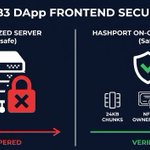
HashPort publishes frontends to TapeOut Circuit Containers
SiteRegistry records file paths and hashes
TapeKit then reads and verifies them
This allows users to not only see a page
But also confirm where the page comes from, whether the files match, and whether the version has changed
Verifiable frontends cannot replace audits
But they can extend the security boundary from the contract to the page users actually open and sign from

所有多签机构、DeFi 平台和 DApp 项目的团队,我在此向大家郑重地发起一个倡议:为了客户的安全,请把前端部署到 DeWEB中,让前端和合约在同一层!!
这几年最大的几次交易所被盗,问题出在了前端被篡改,签名者看到的页面已经被人换掉了。多签再多,签的是一笔假的交易,也起不到保护作用。
核心问题在于,合约在链上,前端却在服务器上。两层不在一起,中间黑客就能下手。
所以我倡议:凡是管着别人资产的项目,请把前端部署到 DeWEB 上一份。TapeOut 的 DeWEB 把网页的每一个文件连同它的哈希一起存进链上的电路容器,与合约在同一层。打开页面时,内核逐个文件核对哈希,哈希对不上文件不显示,并直接给出警告。无论是你的本机、你的网关、你的 DNS 被动了手脚,用户会看到页面被篡改。
部署DeWEB非常简单,只需要把构建好的前端上传到电路容器中,并绑定DNS,即可任何人无障碍访问。上传以后,它不依赖任何服务器,一次支付Gas部署,永远免费。
请来研究一下 TapeOut 的 DeWEB,它今天就能用。也是目前可验证前端的最佳答案。让交易所被盗的事少发生一次,让行业更安全一点。把前端和合约放在同一层,从你的项目开始。
A matching content hash proves that a file matches a particular reference
It does not prove that the code is harmless
A malicious script can have a perfectly valid hash
This is why frontend integrity verification should complement, not replace, code review, access control, and transaction verification
HashPort helps address the question of what content was published and delivered
Whether that content is safe requires additional examination