Hawraa Hallal, MD (@HawraaHH) header
Hawraa Hallal, MD (@HawraaHH) profile picture

Pulmonary and critical care medicine. @AUBMC_OFFICIAL graduate. Interested in music, philosophy, flowers. Mechanical ventilation enthusiast.

Joined August 2012
Me to any ED consult after 12 am
4
3
48
Hawraa Hallal, MD retweeted
By definition, acute respiratory distress syndrome (ARDS) occurs in the context of an acute precipitating insult, most commonly pneumonia, nonpulmonary sepsis, or aspiration of gastric contents. Less common precipitants are severe trauma, blood-product transfusion, and pancreatitis; rare precipitants include drug overdose, smoke inhalation, cardiopulmonary bypass, near drowning, fat emboli, and reperfusion lung injury. Patient-level factors including cigarette smoking, alcohol use, and air-pollution exposure have been linked to an increased incidence of ARDS, as have older age and hypoalbuminemia, whereas diabetes has been inconsistently associated with a decreased incidence of ARDS, for unclear reasons. In 2019, the United States had an outbreak of ARDS cases associated with the use of electronic cigarettes or “vaping”; this outbreak was ultimately attributed to vitamin E acetate in cannabis-related vaping products, and the risk associated with current commercially available vaping products requires further study. The syndromic definition of ARDS requires the acute onset of bilateral radiographic opacities on chest imaging, which may be diffuse and symmetric, patchy and asymmetric, or focal in nature. Examples of radiographic images consistent with ARDS are provided in the figure seen here. Chest radiographs have limitations in the diagnosis of ARDS, including poor sensitivity early in the disease as compared with computed tomography (CT) or ultrasonography, limited specificity, weak correlation with lung mechanics and regional lung injury, and substantial interobserver variability in interpretation, all of which contribute to persistent underrecognition in practice. To learn more, read the Review Article “Acute Respiratory Distress Syndrome” by Carolyn S. Calfee, MD, and Daniel F. McAuley, MD: nej.md/4t69Vq0
9
43
1
169
17,766
#LIVES2025 Hot Topics Session 1. SOFA-2: updated organ dysfunction score ➡️ 3.34M ICU patients in 9 countries ➡️ 6 systems retained with modern supports incl ECMO ➡️ AUROC ~0.79–0.81 for ICU mortality, slightly better than SOFA-1 CCR Journal Watch criticalcarereviews.com/late…
1
66
168
15,130
Hawraa Hallal, MD retweeted
ICU Lung #POCUS Refresher:
1
24
110
14,322
How we use critical care ultrasonography in the management of cardiogenic shock: a strategic game of chess in intensive care CCR Journal Watch - tracking the critical care literature daily criticalcarereviews.com/late…
1
52
162
12,169
Hawraa Hallal, MD retweeted
Friendly reminder that this is not high-flow nasal cannula:
4
3
30
7,742
Hawraa Hallal, MD retweeted
ICU Snapshots: You start your week of dayshifts and upon entering an intubated patient's room for the first time at 7:45 am, you see this 👇 on the ventilator screen:
6
25
144
23,389
Hawraa Hallal, MD retweeted
🚨 "Early norepinephrine in #septic shock: SRMA" @Crit_Care ✅↓D28 mortality ✅↓fluids ✅Faster MAP stabilization 🛡️Safe & effective 🔍Trial sequential analysis : more RCTs still needed to confirm Big thanks to my co-authors! @shiruimaya @Prof_XMonnet 🔗rdcu.be/ek2Uz
1
48
1
128
6,467
Hawraa Hallal, MD retweeted
Quick refresher on LFTs 💡
11
471
6
2,598
270,296
Hawraa Hallal, MD retweeted
💨Weaning-induced pulmonary oedema: a key driver of weaning failure 🏥 13#ICU 🤕634 SBTs, 500 patients 12% all #SBT 36% of weaning failure More frequent w/ T-piece risk factors: COPD (OR 13.2) & cardiopathy (OR 3.97) 🔗 rdcu.be/egWBQ @Crit_Care @Prof_XMonnet @shiruimaya
38
1
106
5,820
Hawraa Hallal, MD retweeted
Rapid atrial fibrillation is common in the ICU. How do you decide whether Afib is driving hypotension or simply an innocent bystander? A 🧵 (1/x)
13
139
4
585
106,672
Hawraa Hallal, MD retweeted
◾️In memory of Prof L Gattinoni, towering figure in ICM, profoundly shaping understanding of #ARDS & #ECMO. The “father" of prone position revolutionized MV with a pioneering "baby lung” concept. His legacy will guide/inspire for generations to come. 🔗esicm.org/obituary-luciano-g…
342
59
636
102,716
Hawraa Hallal, MD retweeted
1st talk: RV dysfunction by @Sam_Brusca at #critcarecards24 RV contracts in multiple mechanisms. LV contraction indirectly contributes 40% of the stroke volume of the RV!
5
26
1
121
13,789
Hawraa Hallal, MD retweeted
Summary: Potential benefit really lies in cirrhosis. Albumin doesn't have a defined role for patients with isolated CHF. - @BenjaminBier at #critcarecards24
11
30
4,684
Hawraa Hallal, MD retweeted
To whom it may concern In Lebanon we receive the number and location of massacres in an hourly report (average 5-7 per hour) . All over the country. Full neighborhoods are erased. Refugees buildings are attacked. EMS and Healthcare workers targeted. Thank you
5
7
828
Hawraa Hallal, MD retweeted
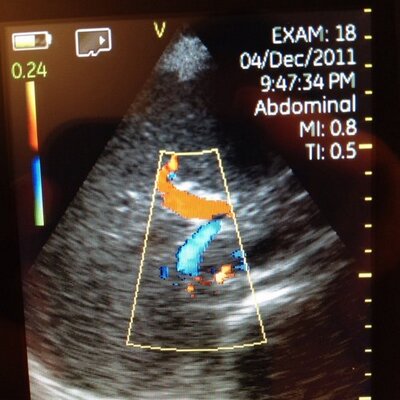
No pleural fluid at this point Presence of lung sliding and A vascular graft!
2
3
28
5,930
The answer is rarely "resume sedation" in weaning failure.
ICU Stories: Elderly male pt w multiple co-morbidities was intubated for respiratory failure (pneumonia). Hospital course was complicated by AKI w peak creatinine 6.4 mg/dl but renal function improved & urine output increased to >2 l/day. On ICU day 5, sedation was stopped and
1
150
Hawraa Hallal, MD retweeted
thrombolyze the 40 yo lady, mother of three, who flew back home last night after a much needed vacation in Hawaii & presented to our ED/ICU with PE / syncope / BP 86/66, HR 130, sat 85%, lactate 6 #foamed #foamcc #meded #MedTwitter #medstudent #hemodynamics #pulmonaryembolism
5
6
137
13,379
Hawraa Hallal, MD retweeted
perform suction thrombectomy or catheter-directed thrombolysis. Reminder: when the PE patient is hanging by a thread, we don't wait for IR; we start thrombolytics. If we can give t-PA to the 90 yo lady from nursing home who presents w "stroke symptoms", I am pretty sure we can
3
5
1
92
13,500
Hawraa Hallal, MD retweeted
Pulmonary Embolism (PE) - Update: I have noticed the last few years that we* have become spoiled by the availability of Interventional Radiology (IR) in our hospitals. In fact, we are becoming complacent with the management of patients with massive/high-risk PE & wait for IR to
13
37
3
441
142,820