

Israeli post-Oct 7 liberal. Empirical right-winger. Demography enthusiast. Secular, not secularist.
Joined November 2020
- Tweets59.7K
- Following1.2K
- Followers4.5K
- Likes29.6K




Pinned Tweet
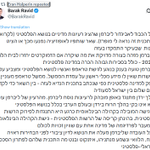
Some hard truths about Israeli electoral politics, which you won't read in English-language analyses, and which are rarely said in Hebrew-language writings either - some people don't know them, and many try very hard not to know them.
1) Political parties are like guns that jerk leftward, and which you need to aim to the right of the target to actually shoot the target. Which is to say, every single political party's rhetoric is two standard deviations to the left of the policies that it will actually promote when in government.
The reasons for this are many, but the main one is that Israel's international environment and its unelected officials exert leftward pressure on policy. Without active interference by the elected government, in autopilot mode, between any two options the more passive and the more dovish one will be implemented. Constant friction and rightward push is required even to just keep things as they are.
2) Party platforms are irrelevant and not worth reading. Almost every party, with the exception of the Democrats, has a center-right to right-wing written platform. These platforms are meaningless and largely unrelated to the party's actual policies. For this reason it's also extremely midwit to complain that a party has no published platform. These are unnecessary for understanding the party's actual policies.
3) The most important thing about a party is not what it wants, but what it's willing to sacrifice a lot for. On paper, 80% of political actors want the same thing: no Palestinian state; free market economy; most Haredim should enlist in the army; no "coercion"; improve diplomatic relations with Europe, the US, and really everyone; expand the Abraham Accords; go tough on Iran. In reality, nobody will do all of these things, and you're lucky if your elected MKs will promite half of them.
If you want to know what a party will promote, ask not what it wants, but what it wants to avoid at virtually any cost - even avoiding it will hurt a lot diplomatically/economically/socially, etc. A party's true platform is not what it wants, but the place where it refuses to get dragged even if the skies fall.
4) The party's slate of candidates, except for its leader, is also an unreliable guide to its expectable policies. Tokenism is rampant in Israel. Most politicians think that if they cram their slate with people with a certain background, then people with that background will vote for them. They are wrong, but they keep assuming that. Eisenkot's Yashar is full of knitted kippahs, but the party's support among the national-religious is miniscule. Ben Gvir's Otzma Yehudit has both religious and secular candidates, but few seculars vote for the party. And so on.
5) The correct way to determine a party's probable policy is opinion polls among its voters, and the base's socioeconomic and ethnoreligious composition. As I said, on paper almost everyone is right-wing about security, capitalist about the economy, and wants peace and good relations with our neighbors and trade partners. But as I also said, it doesn't matter what people want; the real question is where they refuse to be dragged - by coalition partners, by inertia, by international pressure, and so on.
So as a rule of thumb, look at who the voters are, and you can figure out policy. A nominally right-wing party won't dig in its heels about building E1 even in the face of sanctions, if its core base consists of upper-middle class hilonim in Gush Dan who cannot bear the thought of losing visa-free travel to Europe. A nominally capitalist party is unlikely to lower taxes or increase competition by letting in Uber if 70% of taxi drivers vote for it and if the average socioeconomic score of its strongholds is 5.7/10. And so on and so forth.
6) Finally, just my sense personally. I strongly believe that most Israelis know these things. They go through the moves, they argue, they insist "but the party I'm voting for also wants X!!", but deep down they know all the things I wrote above. These arguments are an exercise in trying to make cognitive dissonance go away. It's hard to be a well-informed, intelligent voter in Israel because if you're honest with yourself, you know that however you vote, you'll give up things very dear to you. That's difficult to accept, so most most voters bargain before they resign themselves to the foul-tasting compromises they inevitably have to make. It looks like they are argueing with you, but really they are bargaining with themselves.


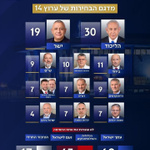
בוחרי ימין יקרים, אני מאוד מצטער אבל ערוץ 14 הוא רעל, הוא סם. כיף להסניף אותו, הוא גורם לתחושות חמות וטובות כאלה, אבל בטווח הארוך הוא רע לכם מאוד. הוא הופך אותכם למושלים, לטיפשים, והוא מחסל את היכולת שלכם להבדיל את הדמיון ואת החלומות שלכם מהמציאות. תרדו מהסם הממכר הזה.

"Netanyahu has lost. But has Eisenkot won?"
Nope. If it's not yet clear that Eisenkot won, then it's not yet clear that Netanyahu lost.
You'll hear this spin a lot over the coming days and weeks. Eisenkot has won once he has a government. As long as he doesn't, we're in draw / compromise / repeat elections territory.

Five initial remarks on the dramatic election results in Israel. All based on exit polls and might change.
1. Don’t let the noise distract you. Netanyahu has just lost this election, and resoundingly.
The numbers tell the story. His current coalition holds 68 seats in the Knesset. According to the exit polls, that same bloc is projected to win between 50 and 53 seats. Again, exit polls are only exit polls. But if these numbers hold, this represents a decline of more than 20% in the parliamentary strength of the Netanyahu bloc. A substantial defeat.
2. The most significant change is the turnout of Arab voters.
Possibly for the first time in Israel’s history, turnout among Arab citizens of Israel was as high as among Jewish voters- and according to some estimates, it may actually be higher. Not far from 80% turnout. Gone are the days in which Israeli Arabs wanted to boycott the election as a protest against the state legitimacy.
Across Jewish public in Israel, turnout is also approaching 80%. Israelis came out to vote in massive numbers, determined to influence the future of their country.
The reason Arab voters turned out in such extraordinary numbers was not primarily Gaza or Palestinian statehood- issues that alway dominated the local Arab discourse. It was their rights as citizens of Israel, a deep sense of discrimination by the far-right Netanyahu government, and specifically the conduct of Itamar Ben-Gvir, the minister responsible for the police. Ben-Gvir, who has been convicted of incitement to racism and supporting a terrorist organization, is a disciple of Meir Kahane’s ideology of Jewish supremacy. Under his watch, crime in Arab communities and cities has been neglected.
Arab citizens responded with a remarkable mobilization at the ballot box, seeking to help remove this government from power.
3. Netanyahu has lost. But has Eisenkot won?
Gadi Eisenkot, exactly as the polls suggested, is emerging as the leading candidate to form the next government. Israel’s president will probably give him the mandate to try to assemble a coalition.
However, according to the same exit polls- and the final results could change things for better or worse- Eisenkot does not have the numbers to form a stable, coherent, and politically homogeneous coalition.
This is the essential distinction: Netanyahu has lost the election. But it is not yet clear that Eisenkot has won it. That will only become clear if he can actually form a government. It could be a minority government supported by Arab parties, probably from outside the coalition; an arrangement with Likud, with or without Netanyahu; or some other combination of parties.
Right now, the road ahead looks extremely difficult. Eisenkot does not have the 61 seats needed for a cohesive, centrist, Zionist coalition.
The right-wing parties in the bloc seeking change will not sit in a government alongside Arab parties that support Palestinian statehood, and some are reluctant even to rely on their support from outside. Eisenkot has also essentially ruled out governing with the ultra-Orthodox parties, because of his position on military conscription.
Taken together, these constraints make it extremely difficult for him to translate his electoral achievement into an actual government. He may have to compromise on some of his principles- or risk sending Israel into another election.
4. What actually happened to Netanyahu?
The only silver lining for the prime minister at the moment is that Likud appears to have emerged as the largest party in the Knesset. This is also a surprise compared with the polls, which suggested that Likud would win significantly fewer seats.
But the real story is the breakdown within the Netanyahu bloc. What happened is that Likud essentially cannibalized its own bloc, drawing voters away from far-right parties and some of the ultra-Orthodox parties, back to Likud itself.

Good questions. The real answer is in my pinned tweet: electoral platforms and promises are irrelevant in Israel, and deep down, Israeli voters understand this even though they pretend not to. They aren't being lied to; the parties' official communication was never meant to express commitment to any policy to begin with. Its real function is tribal signaling, i.e. purely aesthetic. You can sit with Ra'am, just not too easily, because it will make you look like *that* kind of party, much as you're not supposed to look too enthusiastic on a first date, lest you be taken for *that* kind of guy.
My question is why that criticism wasn’t heard throughout the campaign. Not at the right-wing bloc, but at Lieberman, Bennett and Lapid, and at Gadi Eisenkot, who explained that there’s the Zionist bloc, and then there are those who might support it from outside.
We can all agree on one thing: if this exit poll holds, 70 MKs ran on saying no to Netanyahu and his coalition. That’s not up for debate.
By the same token, let’s respect the fact that somewhere between 70 and 90 MKs promised not to sit with the Arab parties. Even without counting Yashar, there are 70 MKs against that partnership.
So which election promise is supposed to be broken?
A quick experiment: if Lieberman announced tonight that he was going with Bibi, everyone would jump on him in fury. So why, if he goes with the Arab parties, would everyone say, “See? Fine”?
Why is one promise something we can shrug off, “the election’s over, the masks come off,” while the promise not to sit with Netanyahu is set in stone?
הימור: כשנראה את התוצאות הסופיות מחר, נגלה שהקולות לוינטר ולהנדל/זליכה שנשרפו לא ממש שינו את מאזן הכוחות בין הגושים. גם כי הם מתקזזים פחות או יותר, וגם כי הנטישה ההמונית ברגע האחרון השאיר אותם עמוק מתחת לאחוז החסימה.
זה גם אומר שמי שהצביע להם, לא צריך להרגיש רע.
הימין של שרדינגר.
דבר אחד ברור הערב:
רוב העם בוחר ימין.
רוב העם רוצה ערכים של עם ישראל, ארץ ישראל ותורת ישראל.
רוב העם בעד טרנספר לאויב,
משילות בכל הארץ,
תנופה חלוצית ביהודה ושומרון.
לשמאל אין רוב.
כדי להשיג רוב הם נזקקים לקולות הערבים, אנשים שמערכת הביטחון לא נותנת להם צו גיוס כי לא סומכת עליהם שלא יבגדו עם האויב.
הימין קצת מסוכסך עם עצמו,
קצת לא יודע להתנהל,
קצת נאיבי
קצת אוהב להתפצל,
אבל הוא הרוב פה. אין ספק 🇮🇱
Rafi DeMogge רפי דמוג retweeted
לא מדהים. לא מפתיע. לא שאלה דמוגרפית ענקית. התייחסתי אליה כבר לפני 7 שנים
tamritz.wordpress.com/2019/0…


אם המדגמים קרובים לתוצאות האמת, עולה הלילה שאלה דמוגרפית ענקית: איך ייתכן שהחרדים, האוכלוסייה הצומחת בישראל בקצב המהיר ביותר ובפער עצום, לא מגדילים את כוחם בכנסת? נכון, יש הסברים מגוונים להימנעות מהצבעה, כולל מצביעי ש״ס שדרשו גיוס חובה. אבל איפה המשפחות הענקיות, מאות הנכדים והגידול הדמוגרפי, כשמגיעים לקלפי? ש״ס צונחת מ־11 ל־7 מנדטים. נתון מדהים


Netanyahy clearly cannot form a government, but to anyone who wasn't in Channel 14's parallel reality, this was already known before the election. So, he didn't win.
But he lost only if Eisenkot can form a coalition, and so far it's not clear at all that he will be able to do that. If the results look like in the exist polls, the election's most important part is still ahead of us.


מה שמטורף בסקר הזה הוא שאפשר לדעת שהתוצאות מאוד שונות רק מדפוסי ההצבעה לפי אופי הישוב, שכבר ידועים. ב2022 זה היה 60/60 אם לא היה אחוז החסימה.
אנחנו כבר יודעים ששיעור ההצבעה:
- עלה דרמטית ביישובים ערבים (זה כן משתקף בסקר)
- עלה בחדות במועזי מרכז-שמאל
- עלה קצת, אבל פחות, במועזי ימין
- ירד בערים חרדיות
בטווח הארוך הדמוגרפיה עובדת לטובת הימין, אבל 4 שנים לא משנות כל כך, ורוב היתרון מגיע מהמגזר החרדי שפחות יצא להצביע הפעם.
רק מהנתונים האלה אפשר להבין שהימין איבד מנדטים לטובת האופוזיציה. לפי הסקר הזה העליה של המפלגות הערביות קרתה אך ורק על חשבון האופוזיציה היהודית.
טירוף. פשוט טירוף. מביך.

Quick thoughts about the exit polls:
1) I can’t believe Channel 14 is still at it. Guys, it’s over. Are you also going to publish your own vote count?
2) Eisenkot bloc + Ra’am has no 61 in any exit poll.
3) Minority coalition is a possibility according to every poll except Filber. This was always going to be the case; Bibi’s bloc was never going to get 61.
3a) It looks like the Joint List has more mandates than Lieberman. That means he can’t veto a minority government even if he wants to. Question if anyone else will; unclear.
4) Likud + Yashar + Haredi parties have 61 mandates in most polls. Unfortunately.
One-two mandates here or there could make all the difference about what’s possible. It’s either a clear defeat for the right bloc or a hung Knesset. By tomorrow, we’ll know.