

Amante de la cultura y las artes, la investigación histórica y el análisis político. Abierto al diálogo y a la búsqueda de la verdad sobre argumentos lógicos.
Joined September 2019
- Tweets4.9K
- Following1.2K
- Followers622
- Likes5.7K





Hugo Ketzel ن retweeted
Amigos! Este jueves estaré impartiendo una conferencia con la Sociedad Médica del Hospital General, a las 12pm, en torno a la independencia de México.
Si gustan, están cordialmente invitados.
Muchas gracias, estimado @Janitziogg , por la invitación!
Saludos!

Hugo Ketzel ن retweeted

Únete a la videoconferencia "La intervención de los esmaltes: aproximación histórica mexicana a través del Segundo imperio", impartida por Hugo Ketzel Cuéllar Serna.
Hoy a las 17 h por facebook.com/MuseodeLoreto

Hugo Ketzel ن retweeted

"Iturbide es destituido por Calleja al fincarsele acusamientos por robo y otras indoles"
Hugo Cuéllar.

Hugo Ketzel ن retweeted

Se les cayeron estas páginas del Programa, o simplemente no lo han leído.


¿Ya escuchaste los mitos de la oposición sobre el desarrollo urbano?🙃
La oposición intenta sembrar miedo inventando que el nuevo Programa de Ordenación de la Zona Metropolitana (POZMVM) va a quitar propiedades o subir el predial ¡FALSO! ❌
Ellxs defienden el caos del pasado; nosotros y nosotras impulsamos la planeación del futuro🤲🏽
👉🏽 Hoy en tribuna les dejamos claro que este programa NO cambia el uso de suelo, NO crea nuevos impuestos y respeta al 100% la propiedad privada.
El plan real es coordinar el agua, el transporte y la seguridad para beneficio de casi 23 millones de habitantes de la CDMX, Edoméx, Hidalgo y Morelos.
El actual programa es de 1998, y el Valle de México ya cambió y urge ordenarlo sin dejar a nadie atrás🫰🏼
La consulta pública está abierta hasta el 22 de noviembre. ¡Participa y no te dejes engañar! 🗣️
Hugo Ketzel ن retweeted

🏛️✅ Aprueban legisladores realizar foros sobre el Proyecto del Plan General de Desarrollo de la #CDMX.
🔗Más detalles aquí👇🏽
f.mtr.cool/u90040cf79

Hugo Ketzel ن retweeted

La primera Misa del Papa León XIV en Argentina reunió en Buenos Aires a unos 2,5 millones de personas, según las autoridades locales. La multitud fue tan grande que muchos siguieron la celebración a través de las más de 30 pantallas instaladas para los fieles.
Pero uno de los momentos más conmovedores llegó durante la consagración: al escuchar las palabras del Santo Padre, incluso quienes estaban a kilómetros del altar se arrodillaron para adorar a Cristo Eucaristía en silencio total.
Sigue nuestra cobertura del Papa León en Uruguay, Argentina y Perú en ewtnnews.com/es y mira todos los videos completos de todos sus eventos en YouTube.com/@EWTNNewsES
Hugo Ketzel ن retweeted

Buena salida arrancada de Checo, avanzó seis lugares, por el momento se ubica 13. 🇲🇽 #MexicoGP xitter.gq/Marls0001482082/status…
Hugo Ketzel ن retweeted

¡BRUTAL! @brozoxmiswebs lo vuelve a hacer.
Su parodia de la carta de renuncia de Taddei es una joya de sátira política: una imitación genial, humor negro y un sarcasmo afiladísimo.
¡Qué manera de exhibirla! ¡Órale!
Hugo Ketzel ن retweeted
Por si estaban con el pendiente, aquí un recordatorio de la carrera nocturna sprint en Marina Bay. 📌🌙
#MásAutomovilismo
#SingapureGP


Hugo Ketzel ن retweeted

Checo: “Después del Safety Car FUE TODO.
Al inicio me di cuenta que la slick no era la opción correcta, así que fui a pits, fue la decisión correcta. Logré subir muchos lugares y despues vino el safety car desafortunadamente y así regresamos a nuestro ritmo usual.
Luego tenía un neumático plano y tuve que entrar a pits pero meh, después del SC la buena decisión que tomamos con las llantas desapareció.
No fue un gran fin de semana como equipo. No hubo sorpresas, después del SC fue todo”
#BahrainGP
Hugo Ketzel ن retweeted
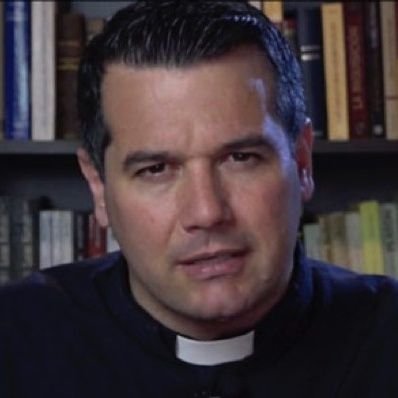
Hace dos meses y medio, cuando tomé posesión de la parroquia, el 90% de los fieles comulgaba en la mano. Literal.
Desde el primer día, dije que usaría el comulgatorio (hermoso, de mármol), aún si no pudiesen arrodillarse (incluso es más rápido dar la comunión así).
Saqué los ministros extraordinarios también y les expliqué que podrían ayudar con los presos y los enfermos, si lo deseaban. Entendieron (nunca les habían leído los documentos de la Iglesia, por cierto).
Hoy, dos meses y medio después y sin siquiera predicar sobre la comunión en la mano, 90 % ya comulga en la boca.
Para terminar la catequesis, ayer prediqué este sermón: al momento de la comunión, el 99% de ellos comulgó en la boca.
La gente, cuando no está ideologizada y se le explica con humildad, entiende.

Holy Communion: In the Hand or on the Tongue?
Homily, September 20, 2026
Last Sunday, in our homily, we reflected on the need to strengthen our catechesis concerning the Real Presence of Jesus Christ in the Eucharist. Today, continuing with that theme, we would like to conclude these reflections by considering the manner in which we receive Our Lord in Holy Communion.
Few liturgical questions have generated as much discussion in recent decades as the manner of receiving Holy Communion. To understand the issue properly, we need to set ideological positions aside and consider both what happened historically and what the Church has actually taught.
What Happened in 1969?
In 1969, under Pope St. Paul VI, the Instruction Memoriale Domini was issued. Its historical context is important. In a number of places, the practice of receiving Holy Communion in the hand had been introduced without authorization, contrary to the discipline then in force. At the same time, the Church was deeply concerned about errors and confusion regarding the Real Presence of Christ in the Eucharist.
Faced with this situation, the Holy See consulted the bishops of the world. The majority favored retaining the traditional discipline—that is, receiving Holy Communion on the tongue.
Pope Paul VI therefore confirmed the traditional manner of receiving Communion and warned that changing the practice could lead to diminished reverence toward the Blessed Sacrament, the danger of profanation, and the adulteration of true doctrine. Nevertheless, in places where the contrary practice had already become established—particularly in countries with a Protestant heritage—episcopal conferences could request an indult—that is, an exceptional permission—from the Holy See for Communion to be distributed in the hand.
“But Didn’t the Early Christians Receive Communion in the Hand?” someone might ask
There is evidence that Christians in the early centuries of the Church received Holy Communion in the hand. But using this historical fact in isolation can be misleading.
St. Basil the Great, in the fourth century, speaks explicitly about receiving Communion in one’s own hand in circumstances such as times of persecution, when a priest or deacon was not available. St. Cyril of Jerusalem, also in the fourth century, describes the communicant making the left hand a “throne” for the right in order to receive the King. He also insists upon the greatest care that nothing of the Eucharist be lost.
Other early Christian writers likewise testify to the extraordinary care with which the Eucharist was treated and to concern that nothing consecrated should be lost or profaned.
Thus, even when Communion in the hand existed in the ancient Church, we should not simply assume that it was identical in manner, discipline, or surrounding ritual to the modern practice. What is unmistakable in the ancient sources is the profound reverence with which Christians approached and handled the Holy Eucharist.
In any event, the antiquity of a practice does not by itself prove its superiority. If our criterion were simply, “The early Christians did it,” then, for example, all women would have to cover their heads at Mass, none of them could proclaim the readings, and men and women would have to sit separately. Pope Pius XII already warned in his encyclical Mediator Dei that an ancient practice, merely because it is ancient, should not necessarily be considered better.
Over the course of the centuries, the Church’s Eucharistic discipline gradually developed, and increasingly precise measures were adopted to safeguard the Blessed Sacrament.
Why Did This Development Take Place?
Memoriale Domini itself gives us an important explanation. As the Church’s understanding and reverence for the Eucharistic mystery deepened, the custom developed whereby the minister placed the consecrated Host directly upon the tongue of the communicant.
Three elements therefore appear closely related: a deeper understanding of the Eucharistic mystery, greater reverence toward the Blessed Sacrament, and an attitude of humility in receiving Our Lord.
What, Then, Is the Best Way to Receive?
Receiving Holy Communion in the hand, where it is legitimately permitted, is not per se a sacrilege. Nor can we automatically judge a person’s interior devotion on the basis of whether he receives Communion on the tongue or in the hand. But this does not mean that the two manners of receiving must necessarily be regarded as pastorally identical.
The Instruction Memoriale Domini expressly points to the advantages of the traditional manner of receiving Holy Communion on the tongue. Speaking of this traditional practice, it states that:
“This method of distributing holy communion must be retained, taking the present situation of the Church in the entire world into account, not merely because it has many centuries of tradition behind it, but especially because it expresses the faithful’s reverence for the Eucharist.”
The document goes on to explain that this traditional manner more effectively safeguards the reverence, decorum, and dignity due to Holy Communion, protects against the danger of profanation of the Eucharistic species, and safeguards the careful attention that the Church has always required regarding the fragments of the consecrated Bread.
This is not about turning the manner of receiving Communion into an ideological banner, nor is it about claiming that a person who receives on the tongue is necessarily holier than someone who receives in the hand. Rather, it is about asking ourselves which outward signs most clearly express what we truly believe.
If the consecrated Host is truly the Body, Blood, Soul, and Divinity of Our Lord Jesus Christ, then our bodily attitude should manifest that faith. The history of the Church shows a progressive development of signs of adoration, humility, and reverence before the Eucharistic mystery.
Therefore, beyond controversies and personal preferences, perhaps the fundamental question is much simpler:
How can we receive Our Lord with the greatest possible reverence?
Blessed and praised be the Most Holy Sacrament of the Altar. Now and forever, blessed and praised.
Fr. Javier Olivera Ravasi
Saint Monica / St Thomas the Apostle Parish
Archdiocese of San Francisco

Hugo Ketzel ن retweeted

Not saying memes are a great source of history, but this should get the point across. 🫣😂

The Spanish Inquisition was not how it was portrayed by modern media and pop culture. By modern standards it was harsh, absolutely. But the reality of the Spanish Inquisition is this:
Executions were only used in a small minority of cases, torture was also used in a small minority.
The great majority of people who were brought before the inquisition, many of the cases ended with acquittal, dismissal, or relatively mild religious penalties.
The punishments given by the inquisition could include things like prayers, fasting, pilgrimage, attending Mass, wearing a penitential garment, fines, temporary loss of property or office, or periods of imprisonment.
This is what happened to the majority of people.
The inquisition itself didn’t even carry out the executions, they were handed over to the secular authorities.

Hugo Ketzel ن retweeted

Dos santos que se reconocen.
San Juan Pablo II y Santa Teresa de Calcuta, juntos: la fuerza de la verdad y la ternura de la caridad. Dos vidas gastadas hasta el final por Cristo y por los hombres.
Hay imágenes que no necesitan explicación.
#SanJuanPabloII #SantaTeresaDeCalcuta
Hugo Ketzel ن retweeted

La cooperación de México en la independencia de Centro América
📗👇
archive.org/details/lacooper…


Hugo Ketzel ن retweeted
— General, hay reglas de gobierno. — ¡El gobierno yo! Usted, señor, no ha entendido ¡nada! de las dificultades que eso entraña. Mi compromiso es preservar la integridad del territorio nacional. ¿Acaso hicimos la independencia para permitir el despojo que pretenden esos bandidos?


Hugo Ketzel ن retweeted

El ministro en retiro Javier Laynez Potisek señala que, con la elección judicial, la preparación dejó de ser el principal factor: ahora pesan más la campaña, la simpatía o incluso tener el “acordeón indicado”.
📹: Yared de la Rosa
Hugo Ketzel ن retweeted

🚨La exministra presidenta de la Suprema Corte de Justicia de la Nación (SCJN), Norma Piña, reapareció públicamente tras la nueva conformación del máximo tribunal.
Durante el foro “Diálogos Constitucionales: México en perspectiva”, organizado por la Escuela Libre de Derecho, Piña bromeó sobre su presencia al señalar que estaba “a la moda” porque llevaba su acordeón.
Hugo Ketzel ن retweeted

El ministro en retiro José Ramón Cossío cuestiona la curva de aprendizaje de los actuales integrantes de la Suprema Corte y señala que quienes llegan al máximo tribunal deberían contar ya con una sólida preparación jurídica. A su juicio, el aprendizaje debería concentrarse en el funcionamiento y la práctica judicial, no en aprender Derecho desde cero.
#videorrss #expansionpolitica
Hugo Ketzel ن retweeted

Ministros que se oponen a la presidencia de @LeniaBatres en la @SCJN y piden método de elección para sustituir a @HugoAguilarOrti en 2027, no respetarían la voluntad popular, afirma el analista e investigador @rafaelestradam.
✍️: @dontomini | 📹: @RalEstrella1