

Exploring Robots & AI | Unpacking the tech driving them & the financial impacts shaping the future of robotics
Joined February 2024
- Tweets751
- Following1.4K
- Followers1.8K
- Likes34.1K
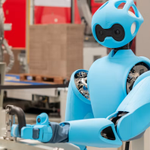





Roscosmos launched a humanoid robot toward the International Space Station today: its Progress MS-36 cargo spacecraft lifted off from Baikonur at 13:17 Moscow time (5:17 AM Central) carrying the Teledroid robot avatar. The Soyuz-2.1b carried more than 2.4 metric tons of cargo, and the spacecraft is due to dock with the station's Small Research Module on November 26.
Teledroid, built by NPO Android Technics with RSC Energia, is designed to work on the station's exterior and assist cosmonauts. An operator inside the station or at mission control wears a special suit and the robot copies their movements, with some tasks intended to run autonomously: preparing worksites before spacewalks, opening casing and installing equipment, cutting the time cosmonauts spend outside.
The control equipment arrived earlier: Progress MS-35 delivered the cosmonaut workstation in September, and cosmonauts Pyotr Dubrov and Anna Kikina have already rehearsed installing Teledroid outside the station, including underwater training. It is the first humanoid robot sent to work in orbit.
154
Japanese humanoid robotics startup ATOM announced today it has signed loan facilities totaling 4.5 billion yen (about $28.3 million) with three major Japanese banks to build its own GPU cluster and prepare its humanoids for volume production: Sumitomo Mitsui Banking Corp. 2 billion yen (about $12.6 million), Mizuho Bank 1.5 billion yen (about $9.4 million) and Mitsubishi UFJ Bank 1 billion yen (about $6.3 million).
The headline number needs a caveat: these are borrowing limits, not money drawn, and the Mizuho facility replaces an August 2026 agreement of the same size, so not all of it is new capacity. Even so, three megabanks backing a one year old startup's manufacturing ramp signals where Japan's financial system thinks the humanoid race is headed.
ATOM, founded in November 2025 in Tokyo's Koto ward, is developing a two armed bipedal humanoid and its own physical AI model, targeting 200 deliveries a year by 2027 and 10,000 by 2030. The question is whether a one year old startup can turn bank credit into factory floor robots before its better funded Chinese and American rivals do. @aoshun7
1
167
Apricity Robotics announced today a $16.1 million Series A financing round led by JumpStart Ventures, Business Wire reports, bringing the Dublin, Ohio company's total raised to $19.1 million including earlier seed funding and grants from the U.S. National Science Foundation. The money will fund completion of its Robotic Ultrasound Assistant and support regulatory submissions.
The system mounts to a hospital's existing ultrasound cart and holds and positions the probe during cardiac exams while the sonographer directs the scan. The problem it attacks is physical: a 2024 study estimated 75.8% of sonographers have suffered work-related musculoskeletal disorders, while U.S. ultrasound exam volume grew 55% between 2011 and 2021 against 44% growth in sonographers.
Apricity is evaluating the system with health system partners including University Hospitals in Cleveland, and the device remains investigational, not yet for sale in the United States. Medical robotics keeps finding its sharpest edge in workforce strain rather than replacement, and this is a clean example of it.
1
167
Chinese humanoid robotics startup Simplexity unveiled its second humanoid, iX, on Monday, a wheeled machine designed to serve drinks, deliver items and lead guided tours, as Bloomberg reported the company has raised $100 million in a pre-Series A round led by Ant Group at a $1.6 billion valuation. Chairman and co-founder Wang Kai disclosed the round to Bloomberg, with Tencent, HSG and Lanchi Ventures also participating.
Simplexity, founded in July 2025 by former Li Auto executives, is developing embodied AI and robots for physical environments. Its first humanoid, an industrial model on a wheeled base, is already deployed in manufacturing, logistics sorting, retail and pharmaceutical packaging.
The round is Ant Group's twelfth humanoid sector investment since early 2025, alongside stakes in Unitree, Galaxea and Linkerbot. It lands as China's robotics fundraising cools. Bloomberg reports sector fundraising fell to about $1.6 billion in October, down sharply from June's peak. That a 16 month old startup can still command a $1.6 billion valuation tells me the smart money in Beijing is consolidating around a handful of humanoid bets rather than spreading across the field.
1
182
Nvidia said Monday it is reinstating Jensen Huang as chief executive, effective immediately, in an extraordinary reversal eleven days after his resignation. Reuters reports the board acted under pressure from employees, shareholders, business partners and President Donald Trump, who said last week he wanted Huang back in the top job. Nvidia shares surged more than 31% in premarket trading.
Huang resigned November 12 after revelations of extramarital affairs, including one with a businesswoman US authorities suspect of spying for China, an allegation Beijing denies. A petition calling for his return drew more than 180,000 signatures, including one from Elon Musk. Chairman Harvey Jones had said last week the company would not rehire Huang.
The board said Monday it was satisfied with Huang's candor and leadership ability and, after input from senior US government officials, saw no national security risk from his return. Colette Kress, who served as interim chief executive, will continue as chief financial officer. The reversal underscores how dependent one of the world's most valuable companies remains on its co-founder.
153
French startup Gobano Robotics said today its Gobano Station is folding and inspecting towels autonomously at a 99.5% success rate at a laundry run by the Henri Wartner Group, reaching about 68% of a human worker's throughput over shifts of up to 18 hours. The system runs on Gobano's Toutatis reinforcement learning engine, which combines human demonstrations, world models and data gathered on the floor.
The 68% figure matters more than it looks. Fabric is one of the hardest manipulation problems in robotics because towels deform, bunch and slide, which is why most automation has avoided textiles entirely. A machine that runs 18-hour shifts and restarts itself after a failed grasp makes the economics work even below human speed, and Gobano says throughput improves about 5% a day.
The test now is whether Toutatis generalizes beyond towels to sheets and tablecloths. Gobano has disclosed no funding, pricing or unit counts, so this is a single-site proof point rather than a rollout. But deformable-object handling is narrow, high-repetition work where robotics pays off first, and a 99.5% success rate at a real customer is worth taking seriously. @Gobanorobotics
AGIBOT announced today it is expanding across Australia and New Zealand, deploying a cloud node in Australia to support local robot operations and showcasing its humanoids at the New Zealand - China Products Expo in Auckland. The Shanghai based humanoid maker said its Australian team is now working with customers on site requirements, deployments and after sales support, with pilot applications planned in commercial cleaning, security patrol and premium services.
AGIBOT is one of China's most aggressive humanoid exporters, and a local cloud node is the unglamorous infrastructure that makes real deployments possible. Robots that depend on remote compute cannot sell into markets that demand low latency and data residency. Australia and New Zealand are small markets, but they are also open ones, and a foothold there is a useful beachhead against Western rivals. @AGIBOTofficial
1
206
Skylark Labs demonstrated today a humanoid robot that can search suspected explosive ground with a handheld metal detector, sweeping an area and backing off when the detector sounds, under human supervision. Breaking Defense reports the test was run for an EOD supplier, and the robot ran the sequence without step-by-step commands.
The robot learned the search from minutes of human demonstration, using Skylark's Continual Field-Adaptive Models, with the detector's beep feeding its next action. In one manipulation test, the models delivered about 30% higher task success than a standard model, and matched standard performance using just 40% of the training data.
The stakes are plain: Action on Armed Violence counts 10,376 IED incidents across 94 countries between 2015 and 2024, causing 83,529 civilian deaths and injuries. EOD teams already use robots, but the Air Force's 170 L3Harris T7 systems need an operator directing every move. Skylark's bet is that a humanoid using tools built for people lets a specialist supervise remotely. Handling and disposal remain goals, but this is the kind of defense humanoid use case I take seriously. @SkylarkLabs
Agility Robotics announced today it has reshaped its executive team to run the company as a public business, promoting Daniel Diez to president, naming Christopher Sullivan chief product officer and Ana Lang chief administrative officer. The appointments follow Agility's November 4 listing on Nasdaq after its combination with Churchill Capital Corp XI.
The timing reflects how fast the commercial side is moving: Agility says it has secured more than $300 million in committed multi-year orders for its Digit 5 humanoid, with an expanded deployment agreement with GXO, a planned pilot with AGCO and paid evaluation programs with three more enterprise manufacturers announced in October. Digit has logged more than 65,000 hours of real-world operation.
Agility is the first humanoid maker to go public, and this is the team being put in place to turn that order book into deployments at scale, the point where humanoid robotics stops being a demo business and starts being judged on delivery.
2
252
OpenAI has disbanded its standalone robotics team, Fortune reports today, moving researchers into the main research group under Mark Chen and hardware staff into Greg Brockman's Applied organization. The company says the move speeds up its robot plans, and it is keeping its target of a first public humanoid robot demonstration in 2027.
The bet is that general-purpose models can now run robots without a dedicated lab. In an October 14 study, Nvidia researchers ran OpenAI's GPT-6 Astra as a robot controller on the RoboLab-120 benchmark, where it succeeded on 74.8% of tasks against 51.0% for the best dedicated robot model. But each attempt cost about $36.40 in tokens and took 18.56 seconds per model call — far too slow for real robots.
Carnegie Mellon roboticist Guanya Shi told Fortune the move means OpenAI views robotics as "no longer a special problem," though a cloud-dependent robot faces a real limit. If the best general model already beats the best specialist, the specialist lab is overhead, but a robot that needs the cloud to think is still a long way from the factory floor.
229
Reuters reports today that its review has identified more than $3 billion in Chinese computing projects built around Nvidia's restricted processors, even as the chipmaker has said US export controls effectively shut it out of China's AI data-centre market.
The pipeline stretches from coastal tech hubs to remote western provinces. A proposed 6.2 billion yuan ($873 million) AI computing centre in Fujian specifies Nvidia H100 chips; a 3 billion yuan (about $420 million) project in Shaanxi specifies H100 and H200 processors; and a 1.16 billion yuan (about $163 million) contract in Gansu covers a centre planning to install roughly 3,072 Nvidia processors, according to tender documents.
The findings land a day after Nvidia co-founder Jensen Huang resigned as chief executive, and they underline how deeply Nvidia hardware remains embedded in China's AI buildout despite the curbs. Tighter restrictions now risk construction delays, inflated costs, or forced redesigns around domestic alternatives, and with Huang, the industry's loudest voice for easing export controls, gone, that exposure looks harder to unwind. This is the kind of second-order fallout from the Nvidia saga I would keep watching closely.
1
176
U.S. humanoid robot production will reach 300,000 to 400,000 units by 2030 and about 1.5 million by 2035, J.P. Morgan said on Thursday, as the industry shifts from demonstrations to commercial deployment. The bank cites labor shortages, improving economics and rising production capacity, and says robot costs are nearing parity with labor costs, with multi-shift deployment able to generate about $100,000 in annual savings per customer.
Near-term progress is still supply constrained, J.P. Morgan said, with hands, actuators, the AI brain and production capacity the binding bottlenecks. Most U.S. manufacturers outside Tesla are targeting 10,000 to 30,000 units a year, and the bank expects the market for key components such as actuators, motors and vision systems to approach $30 billion by 2035. It names Tesla's Optimus, Agility's Digit, Boston Dynamics' Atlas, Figure's robots and Apptronik's Apollo as the key U.S. platforms.
The bank also flagged that the Trump administration's finding that imported robotics pose national security risks could lead to tariffs that boost domestic production. That is a tailwind for U.S. makers, but the forecast is also a reality check: 400,000 units by 2030 depends on solving the hand and actuator bottlenecks every manufacturer is still working through.
2
201
GXO Logistics announced today it has signed a letter of intent with Apptronik to expand trials of the Apollo humanoid robot in live warehouse operations and develop a Robotics-as-a-Service model for deployment at scale. Trials covering goods-to-person and person-to-goods picking, case and tote movement, packing and sortation begin in 2027, with a conditional path to as many as 1,000 robots over four years and first deployment in North America in late 2027.
The deal builds on a partnership that began with a 2024 proof of concept and a successful U.S. pilot earlier this year focused on autonomous picking of small consumer goods. The two companies have also tested Apollo on more than 50 logistics tasks at Apptronik's Robot Park training facility, and each use case will now be judged against jointly agreed productivity, safety and operational targets before it scales.
This is GXO's second major humanoid commitment in weeks, after its October expansion with Agility Robotics to put Digit robots into two more U.S. warehouses. For Apptronik, a Robotics-as-a-Service deal with the world's largest pure play contract logistics provider is the clearest commercial validation yet that Apollo is moving from pilot to product.

Physical AI is moving from concept to reality, and we’re excited to help lead what’s next with @Apptronik.
By scaling humanoid robotics across our operations, we’ll continue identifying practical applications for Apollo to demonstrate how humanoids can work alongside our #GameChangers as well as existing automation to drive even greater efficiency, safety and operational performance.
The future of logistics will be powered by our colleagues and intelligent automation working together to deliver results around the world. bit.ly/4BWAhPh

ALT Warehouse illustration featuring GXO and Apptronik logos. Robots are performing tasks: picking from shelves, reducing human repetition, and supporting packing. People are working among tall racks and a truck with the GXO logo.
2
3
279
These are great, plus we get to hear from @jeffcardn about @Apptronik

AI in Motion is back! Our road trip this season stops in Austin, where Jeff Cardenas of @Apptronik examines a future of humans and humanoids working side by side.
Watch here: youtu.be/__2viE-zS7c
1
205
Google DeepMind introduced Gemini Robotics 2.5 today, calling it its most capable vision-language-action model to date. In a proof of concept on active Mercedes-Benz production lines in Kecskemét, Hungary, and Sindelfingen, Germany, Apptronik's Apollo 2 humanoids performed automotive kitting, sorting parts from bulk bins into trays in the exact order each car needs, with a 96% success rate. Across more than 200 tasks, DeepMind reports success rates 30% to 100% higher than previous baselines, with tasks completed 20% to 30% faster.
The model pairs an embodied reasoning model that tracks the workflow with the 2.5 actions model that controls the hands and arms, and it works across robot types, including Apollo 2 with its five-finger, 22-degree-of-freedom SharpaWave hand and the two-armed Franka Duo. DeepMind is rolling it out to robotics partners including Agile, Apptronik and Boston Dynamics, with more than 100 trusted testers already working with its models.
Safety is part of the release too. DeepMind published ASIMOV-Jailbreak, an open-source benchmark for tricking robots into unsafe actions, and says its Gemini 4 Argon simulation engine resists 99.5% of jailbreak attempts, up from 82% for the previous baseline. A humanoid hitting 96% on a live auto line is the kind of real-world proof point the physical AI thesis has been waiting for.
1
2
316
CNBC reported today that Amazon has assembled a new home-robotics team over the past several months and is hiring for a "new-to-world robot product," five years after its first home robot, the $1,450 Astro, stalled as an invite-only device shipped to only a few thousand customers.
The effort builds on Amazon's March acquisition of Fauna Robotics, whose 3.5-foot humanoid Sprout, priced at about $50,000, now sits inside a new Personal Robotics Group. Listings show Amazon staffing the full stack: a UX designer to define what living with a Fauna robot feels like, cloud engineers to connect a growing robot fleet, and field support for customers with Fauna robots in the field.
The timing tracks a funding surge: venture firms put $33.4 billion into robotics and physical AI in the first half of 2026, already more than the $28.7 billion invested in all of 2025, per PitchBook data cited by CNBC, and Barclays values the humanoid market at $2 billion to $3 billion today and roughly $40 billion by 2035. Amazon already runs more than a million robots in its fulfillment centers; the question is whether it can turn that industrial muscle into a home product people actually want.
1
1
339
Hyundai has finalized the battery specifications for Boston Dynamics' Atlas humanoid, The Elec reports, selecting Samsung SDI and LG Energy Solution as suppliers. Each Atlas will carry 70 cylindrical 2170 cells at 5,000mAh each, for a roughly 1.3kWh pack. Samsung SDI is expected to handle virtually all initial shipments while volumes stay limited.
The pack is small by electric vehicle standards, about 1.6% of the 84kWh battery in an Ioniq 5 Long Range, but it should power Atlas for two to four hours, with a battery swap taking 90 minutes and a recharge under three minutes. Mass production is scheduled for 2028 or later, and Hyundai has put its automotive components arm, Hyundai Mobis, in charge of the program.
The same 2170 cells will power Spot 2, Boston Dynamics' next-generation quadruped, planned at 100 units a month at around 100 million won (about $70,000) per unit, with roughly 500 original Spot robots already working at Hyundai's Georgia Metaplant.
1
1
252
Swiss robotics company Embodied AI unveiled AIR today at Humanoid Europe 2026 in Munich, a wheeled humanoid built to share the factory floor with people on the high-dexterity manual tasks that change too often for conventional robots. The company built it in nine months and says it has signed contracts with major manufacturers globally, with AIR already being tested on their floors.
AIR's arms are light and tendon-driven, with motors, gearboxes and electronics in the torso, so they carry almost no mass and give way on contact. It runs on wheels rather than legs and is designed under the ISO/TS 15066 collaborative-robot safety standard, with CE marking planned for 2027. Every job starts under a human operator's control, and the company's AI stack learns from those demonstrations until the robot can do the task itself, typically within a month.
The market is moving this way: 22% of manufacturers plan to use physical AI such as humanoids within two years, more than double today's 9%. Embodied AI's earlier two-arm cell hit 98% reliability on a cable handling test for a leading consumer electronics maker, against a 90% goal. Customers will prioritize humanoid robots designed with safety first and built to perform reliably in real world factory environments.

2
2
249
Serve Robotics reported third-quarter revenue of $2.8 million today, up 313% year over year, and raised its full-year 2026 revenue guidance to $12 million, up from $9 million to $10 million. Recurring revenue now makes up nearly 70% of total revenue, and the company ended the quarter with $198 million in cash and marketable securities. The quarter's loss was $59 million, a reminder the unit economics still have far to go: cost of revenue alone reached $10.4 million, nearly four times revenue.
The bigger news is strategic. Serve also launched Physical AI Services today, a new business line that licenses the connectivity and data tools behind its own robot fleets to other companies building physical AI systems. Bedrock Robotics, a startup building self-driving systems for construction equipment, is already a customer, and Serve is working with T-Mobile to bring AI computing power closer to robots in the field.
Serve is effectively trying to become the infrastructure layer for other robot makers, not just an operator of its own delivery fleet. If the licensing model works, the revenue mix shifts from low-margin delivery operations toward software-style recurring income, which is exactly the story the raised guidance is starting to tell.
2
266
Unitree Robotics founder Wang Xingxing said Wednesday at the World Internet Conference in Wuzhen that there is a high probability 2027 becomes the tipping point for embodied intelligence and robot models. He defined that moment as robots completing about 80 percent of tasks, through voice commands, in about 80 percent of unfamiliar scenarios.
Wang pointed to data utilization as the bottleneck, saying large amounts of robot data are wasted, and argued factory robots still struggle with precise work such as fine assembly because their sense of touch remains too thin. Unitree's answer, he said, is to let its physical AI models evolve on their own, gathering data and running their own training cycles.
The prediction arrives a week after Unitree's first earnings report as a public company: third-quarter revenue of 665 million yuan (about $99.7 million), up roughly 70 percent, while net profit fell 17.4 percent to 112.7 million yuan (about $16.9 million), far below the 224 million yuan analysts estimated, as research spending climbed 249.6 percent. Founder timelines are marketing as much as forecasting, but spending at this pace makes the urgency credible even if 2027 proves optimistic.
@UnitreeRobotics
185