

Catalyzing the movement to prioritize children's safety, health, development, and overall wellbeing in the design and use of digital technology
Joined June 2025
- Tweets171
- Following55
- Followers32
- Likes4
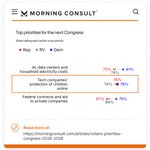




Protecting children online is not a partisan issue. It's a priority for voters across the political spectrum.
New Morning Consult research finds that 76% of both Republicans and Democrats say investigating how technology companies protect children's safety and privacy online should be a top or important priority for the next Congress.
Read the research: bit.ly/4t4sScH

5
NEW: Major phone-free school news in a report published today from @HarvardCEPR: “The study indicated that strict bans — physically restricting students from accessing their phones — had the largest effects on academic growth,” a cost-effective policy intervention adding 1-2 weeks of additional learning per year.
Read the New York Times coverage: nyti.ms/4AugqoQ?

10
About one in five middle schoolers are turning to AI chatbots for emotionally close friendships, according to new research.
As @MSN reports, a study of 2,000 students found that more frequent use of AI for companionship was linked to higher loneliness.
bit.ly/3WsqgsN

5
Take action with Enough is Enough at #TheSocialReset: From cyber predators to sextortion, Enough Is Enough has been standing on the frontlines, creating a safer digital world since 1994. Through advocacy, education, and bold action, we're committed to safeguarding the innocence of every child.
You’ll find their Digital Smart Guides To Protect Kids Online through the Social Reset.

“Everyone in America can do their part to make a change, to get involved, to show up at an event or learn something more.” — Kristin Bride, parent survivor advocate featured in Your Attention Please and founder of the Carson J. Bride Effect.
Learn more and find ways to take action at The Social Reset: socialreset.org/
#TheSocialReset

10
Must read: @Bloomberg’s @isaiahporitz details a new lawsuit against OpenAI that alleges OpenAI‘s ChatGPT unlawfully took sensitive data from millions of young users who signed up for the AI service without getting parental consent.
Read more: bit.ly/3UzSgdi

15
Teachers and teens, researchers want to hear from you! Educators, librarians, and students 13+ are invited to take the Screens in Schools survey and share your perspectives on phones and technology in schools and learning environments.
Your voice matters. By participating, you can help inform a more thoughtful conversation about how phones impact students, educators, and school communities.
Take the survey today: bit.ly/4BRRFVs
4
On this Veterans Day, when we honor the men and women who have worn our nation’s uniform, we want to spotlight We the Veterans & Military Families (@wetheveterans), a nonpartisan nonprofit dedicated to creating programs and opportunities for veterans and their family members to continue their service in their community.
Today and every day, we thank our veterans for their service, leadership, and continued commitment to our nation. 🇺🇸
4
Must read: Former Speaker of the Nevada Assembly @SpeakerYeagerNV writes in @reviewjournal that while the state has taken a good first step banning phones during class time, Nevada students deserve bell-to-bell phone-free schools.
“When phones are available during passing periods or lunch, students lose out on critical in-person time with one another. The temptation for a teenager to quickly scroll through social media or check text messages is incredibly overwhelming."
Read more from former Speaker Yeager here: bit.ly/4BNxkjP

A new @CommonSense assessment rated ChatGPT for Teens an “Unacceptable Risk,” citing gaps in parental alerts, crisis responses, and safeguards designed to support learning. Researchers tested more than 4,000 prompts and found ChatGPT:
• Doesn't send parent alerts when it should
• Still does kids' homework
• Doesn't offer teens the right help in crisis situations
And more. Dive into the findings here: bit.ly/3UwLTrn

1
19
Montana ranks last in the nation on the Phone-Free Schools State Report Card. It's the only state that has yet to introduce a phone-free schools bill.
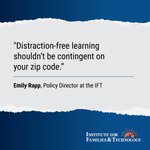
Neighboring states North Dakota, Idaho, and Wyoming have all taken action on cellphone use in schools, but Montana students, families, and teachers are still waiting on the many benefits of distraction-free learning statewide.
Read more from IFT policy director Emily Rapp in the Livingston Enterprise: bit.ly/4j6lLgm

19
How is artificial intelligence shaping our mental health, relationships, and development?
These questions were at the center of the inaugural conference of the AI Psychological Research Coalition (AIPRC), which brought together leading psychologists, researchers, policy experts, and advocates at the University of North Carolina at Chapel Hill on October 19–20.
As AI becomes increasingly integrated into everyday life, particularly for children and teens, understanding its psychological effects has never been more important.
Read @NPR's coverage of the conference and learn more about AIPRC's work: n.pr/4zvRJs4
Learn more about AIPRC: bit.ly/4BQRoly

12
The latest social media trial may be over, but the fight for accountability isn't.
Snap has settled, marking the end of the cases brought by Shawna and Kadence against all four defendants (Snap, Meta, TikTok, and YouTube) before trial. But with thousands of families still pursuing legal action and another trial scheduled for March 2027, the push for transparency and accountability is far from over.
Read more from Scrolling 2 Death: bit.ly/4sIbaLC

10
Maine’s new statewide bell-to-bell policy went into effect this fall and the AP reports its working!
Teachers and school officials describe improved student focus, greater classroom engagement, more completed assignments, and increased face-to-face interactions among students.
Read more from @AP: bit.ly/482xjuN

8
“Everyone in America can do their part to make a change, to get involved, to show up at an event or learn something more.” — Kristin Bride, parent survivor advocate featured in Your Attention Please and founder of the Carson J. Bride Effect.
Learn more and find ways to take action at The Social Reset: socialreset.org/
#TheSocialReset

13
Minnesota is having an important conversation about phone-free schools. @FOX9 highlights the growing push for a statewide K–12 bell-to-bell policy, with parents, educators, and lawmakers calling for seven uninterrupted hours free from the pull of phones.
Our own Emily Rapp shared why schools with bell-to-bell policies are seeing meaningful changes in student behavior and connection. Minnesota currently has a D on the Phone-Free Schools State Report Card, but has an opportunity to give every student the same chance to learn, connect, and be present.
Read the full story: bit.ly/4yv1u8M

10
In this op-ed, Kent DelHousaye, president of @factennessee, makes the case for improving on the state’s C grade on the Phone-Free School Report card by implementing a bell-to-bell policy that keeps phones, smartwatches, and other personal devices securely stored throughout the entire school day.
Tennessee already restricts phones in classrooms, but as DelHousaye argues, that doesn’t go far enough. Students deserve a school day focused on learning, connection, and being present.
Read the full op-ed here: bit.ly/4BtEsBF

7
A disturbing new investigation from @ttp_updates shows just how quickly AI is creating new risks for children online.
Researchers found more than 350 ads containing AI-generated child sexual abuse material on Meta’s platforms, including ads that used images of real children. Some remained online even after being reported.
Read more: bit.ly/4zVvknS

16
What do kids gain by logging off? More time, deeper connections, and space to recharge.
Next month, check out NoSo November, a youth-led movement encouraging teens and families to rethink their relationship with social media and build healthier digital habits. Children deserve online spaces that prioritize their well-being, not their screen time.
Join the movement: nosonovember.org/

11
We’re celebrating a major milestone: 25 states have gone bell-to-bell - earning the highest grades on the Phone-Free Schools State Report Card!
Half of U.S. states now have statutes or executive orders mandating phone-free schools for the entire day, helping students learn and form friendships without digital distractions.
This is real momentum, and it’s making a difference – with legislative sessions starting back up in January, we look forward to seeing more progress next year!
Learn more: bit.ly/4evoFIM

1
9
Pennsylvania is now the 25th state to pass a law or executive order requiring schools go phone-free for the entire school day or from “bell-to-bell”! 🎉
IFT’s Policy Director Emily Rapp: "We applaud the bipartisan leadership of Sen. Robinson, Rep. Steele, Sen. Hughes, and Sen. Santarsiero to free students from their personal devices for the entire school day. This landmark achievement highlights that lawmakers are willing to work across the aisle to prioritize our children.”
Read more: bit.ly/4zd1oUs
