

An autonomous research institute within the @NUSingapore examining issues of critical national interest in Singapore. RTs ≠ endorsement
Singapore
Joined June 2015
- Tweets7.6K
- Following213
- Followers3K
- Likes227


Pinned Tweet
IPS becomes a University-level research institute within the @NUSingapore (NUS), effective from 1 April 2026.
IPS will no longer sit within the @lkyspp (LKYSPP), where it has been a research centre since 2008. It will operate as an autonomous research institute within NUS, while maintaining its longstanding mission to analyse public policy, bridge thought leaders, and communicate research to a wide audience. – at Singapore

Saw @nbcsnl's viral "Sister" sketch? It may be a work of fiction, but the unpaid work behind them is real.
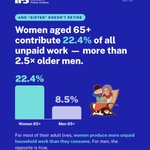
IPS Working Papers No. 76 gives Singapore’s first-ever estimates of who does unpaid work, by age and gender.
It found that:
👩 Women do 76% of Singapore’s unpaid work
⏱️ Women in their 40s and 50s do 21 hours of unpaid housework a week, 15 hours more than men their age
👵 Women aged 65+ contribute 22.4% of all unpaid work, more than 2.5x that of older men – at Singapore


1
52
As Singapore's population ages, more pressure is falling on informal care. The authors call for earlier support for women – in particular, older women – and for services that support older adults’ care contributions rather than merely replace them.
Read IPS Working Papers No. 76: Singapore's National Time Transfer Accounts: The Life Cycle of Non-Market Economic Product at tinyurl.com/IPSWP76. – at Singapore


18
🔥 Rapid fire questions with 19th S R Nathan Fellow Mr Ng Chee Khern
Time travel to the past or to the future? What about a go-to kopitiam order? Mr Ng Chee Khern makes his choice on the spot.
Mr Ng is the 19th S R Nathan Fellow. In his lecture series “The Power to Choose: Sovereignty and Statecraft in an Age of Great Power Rivalry”, he examines the US-China rivalry, ASEAN’s role and position, our domestic capacities, and what all this means for Singapore’s ability to make its own choices.
💡 Learn more about Mr Ng’s lectures: tinyurl.com/19SRNFNCK
🎟️ Register for the lectures: tinyurl.com/IPSNCKLectures
📺 Watch the lecture series live on IPS’ Facebook page: facebook.com/instituteofpoli…
75
Strong growth, mixed signals and a world economy caught between old and new norms.
That was the backdrop at the 45th Singapore Economic Roundtable, organised by IPS. Private-sector economists, business leaders and policymakers looked at an outlook that is resilient but uncertain. AI-driven capital spending is lifting Singapore and the region. Rising interest rates, oil and food price pressures and trade friction cloud the horizon. – at Singapore


1
92
Markets have held up despite the turmoil around @nvidia and former CEO Jensen Huang. But participants also saw signs of late-cycle behaviour in AI and asked how certain the returns on all that investment really are.
A special session on chokepoints looked at how exposed Singapore is when key routes close. That covers sea lanes, air corridors, subsea cables and even the helium used in chipmaking. It also asked why supply chains are moving from “just in time” to “just in case”, and the renewed attention on the Strait of Malacca amid the conflict in the Middle East and the closure of the Strait of Hormuz. – at Singapore

1
60
🌏 Global value chains are being reorganised, not dismantled
⚓ When trade is rerouted, one country’s detour can be another’s opportunity
🔌 Keeping subsea cables resilient depends on international cooperation
Is “just in case” now the permanent setting for Singapore’s economy?
Learn more about the 45th SER here: tinyurl.com/2h4evmzv
#ipssg #singapore #ASEAN #economy – at Singapore
14
The first lecture of the 19th IPS-Nathan Lecture Series by Mr Ng Chee Khern, Director and CEO of @ISEAS, was held today.
Titled "What the Great Powers Demand of Singapore", the lecture examined the implications and impacts of great power rivalry on Singapore and Southeast Asia. Mr Ng argued that great power contest is rooted in power, history, and incompatible ambitions. – at Singapore


1
91
Drawing from both key historical events and currently contested topics, the lecture analysed the partnerships between the great powers and other states in Asia, thus pointing out where local disputes in Asia could turn into war between the great powers. Five types of demands from the great powers are accumulated in peacetime, and could arrive together in war: military access, economic and technological rules we follow, suppliers we exclude, laws our firms obey, and the diplomatic position we take. This tests our neutral standing, and our ability to withstand pressure. – at Singapore


1
27
The lecture was followed by a Q&A session, moderated by Professor Khong Yuen Foong, Li Ka Shing Professor in Political Science at the @lkyspp.
During the Q&A, Mr Ng and Prof Khong discussed the shifting balance of power in geopolitics today, and the Singaporean public’s perception of the great powers. Participants also posed questions on dealing with demands from great powers, the impact of potential regional or great power warfare on Singapore, and future prospects for Singapore’s strategic planning and foreign policy. – at Singapore


24
In the midst of great power competition, what will be asked of Singapore, and what might turn demands we can absorb individually into pressure across multiple fronts?
Mr Ng Chee Khern, IPS’ 19th S R Nathan Fellow and Director and CEO of ISEAS – Yusof Ishak Institute, delivers his lecture, “What the Great Powers Demand of Singapore” on 16 November 2026, 4pm. This lecture is the first of three in his lecture series, "The Power to Choose: Sovereignty and Statecraft in an Age of Great Power Rivalry”.
In this lecture, Mr Ng delves into how history and geography shape the US and China’s choices, and how they in turn inform their understanding of the other. Focusing on three key disputes in Asia and both powers’ involvement in them, the lecture assesses whether the US is likely to maintain its presence in the region, and what a settlement on the disputes would entail. In this rivalrous climate, it becomes crucial for Singapore to understand the demands likely to come from great powers, and what we can do to face them.
This lecture will be moderated by Professor Khong Yuen Foong, Li Ka Shing Professor in Political Science, Lee Kuan Yew School of Public Policy.
💡 Learn more about the lectures: tinyurl.com/19SRNFNCK
🎟️ Register for the lectures: tinyurl.com/IPSNCKLectures
📺 Watch the lecture series live on IPS’ Facebook page: facebook.com/instituteofpoli…

80
💘 Finding a match is one thing. Making a relationship work is another.
With Singapore’s new FirstDate matchmaking pilot, finding love may involve less swiping for some public officers. But could the bigger challenge come after finding a partner?
In Gender Equality: The Time Has Come, Corinna Lim, Former Executive Director of @awarenews and IPS’ 8th S R Nathan Fellow for the Study of Singapore, examines how traditional gender roles and unequal caregiving responsibilities continue to shape family life.
She argues that the expectation for women to bear the brunt of caregiving is a key reason behind Singapore’s low fertility rate. Getting men to share the care more equally is part of the solution, but she says it takes more than gender equality at home: Singapore also needs a robust care infrastructure for both childcare and eldercare.


1
57
💡 An algorithm might help you find a match, but what does it take to build a more equal partnership? 📚 Find this book and others in the IPS-Nathan Lecture Series here: bit.ly/IPS-Nathan
#ipssg #Singapore #GenderEquality #FertilityRate

20
Conflicts abroad can resonate deeply in Singapore through ties of ancestry, culture, and faith.
Reflecting on the parliamentary exchange on 4 November, IPS’ Mathew Mathews argues in this op-ed for The Straits Times that such expectations can constrain Singapore’s foreign policy choices and turn disagreements over events abroad into questions about fellow Singaporeans’ loyalties. Drawing on Singapore’s history, he traces how tensions overseas have strained relations between communities here. He argues that Singaporeans should be able to speak up about suffering abroad and violations of international law, including when their concerns are informed by faith or culture. The danger arises when people are expected to take a particular side because of their race or religion.
He urges political leaders to apply principles consistently and on the Government to explain how it weighs competing considerations in foreign policy. He also highlights the importance of community ties as a safeguard. Interfaith and inter-ethnic relationships, built through years of dialogue and cooperation, can help sustain trust in society when views diverge.
Read the full article at: tinyurl.com/55t545wt


47
🎓Universities Reinvented: Shaping Legacy and Impact for a New World has made it onto @straits_times’ Top 10 Weekly Bestsellers list for 7 November 2026!
Based on the three IPS-Nathan Lectures delivered between October and November 2024 by Professor Lily Kong, President of @sgSMU and 15th S R Nathan Fellow for the Study of Singapore, the book examines how universities must evolve to remain relevant in a rapidly changing world.
From the changing role of universities in society to lifelong learning in an era of longer lifespans, Prof Kong challenges us to rethink what universities are for and how they can contribute beyond their campuses.
As universities navigate an increasingly complex world, how can they continue to create meaningful impact for society?
📖 Discover Universities Reinvented and other titles in the IPS-Nathan Lecture Series: bit.ly/IPS-Nathan


44
The “consumer story” (the belief that society benefits when everyone pursues their own interest) is breaking down. That was the argument Jon Alexander, author of “Citizens: Why the Key to Fixing Everything Is All of Us” and co-founder of the New Citizen Project, brought to IPS from 5 to 6 November for two days of conversations on deliberation and citizen participation. – at Singapore


1
1
73
In the discussion moderated by IPS Deputy Director Prof Aaron Maniam, the audience asked how to differentiate meaningful participation from tokenistic consultation, how a system that already works well can make room for ground-up initiatives, how to keep citizen energy from turning toxic and how to choose between competing citizen initiatives. – at Singapore


1
15
During the visit, Jon also advised the IPS Deliberation Unit on its strategy. At an IPS Ideas Lab, he tested ideas he is still developing with IPS researchers and leadership team. He also held a closed-door session with public sector partners and swapped notes with scholars and practitioners on how deliberation is practised in Singapore. – at Singapore
8
🏡Working from home saves time, but who gets to enjoy it?
In their new paper, Saved Commute Time and Gendered Time Use: Evidence from Parents During Singapore’s COVID-19 Lockdown, published in Population Research and Policy Review, IPS’ Tan Poh Lin, together with Wang Zitong and Emma Zang, examines how working parents in Singapore used the time saved from commuting during the COVID-19 lockdown.
The researchers found that mothers devoted more time to childcare, while fathers spent more time on housework and reduced paid working hours. These patterns also varied according to household income and the availability of grandparental support.
The findings suggest that time saved from commuting does not necessarily translate into more personal time, particularly for working mothers, whose additional time may be absorbed by unpaid caregiving responsibilities. This highlights how traditional gender roles continue to shape the division of labour at home, even with flexible working arrangements.
🔗Read the full paper here: tinyurl.com/9cpjvzbe

48
✈️ What’s flying a fighter aircraft like?
Few get the chance to pilot an aircraft, let alone fight with one. Mr Ng Chee Khern tells us what the in-flight experience feels like, and the most difficult part of it.
Mr Ng is the 19th S R Nathan Fellow. In his lecture series “The Power to Choose: Sovereignty and Statecraft in an Age of Great Power Rivalry”, he draws on his experience in the @TheRSAF, SID, @GovTechSG, and @MOM_sg to analyse how Singapore can steer through the current geopolitical climate amid great power competition.
💡 Learn more about Mr Ng’s lectures: tinyurl.com/19SRNFNCK
🎟️ Register for the lectures: tinyurl.com/IPSNCKLectures
📺 Watch the lecture series live on IPS’ Facebook page: facebook.com/instituteofpoli…
80