

We are the 501(c)(3) critical action think tank that unites technology and policy leaders to create solutions to emerging security challenges.
Bay Area, CA
Joined January 2015
- Tweets8.3K
- Following1.9K
- Followers4.9K
- Likes6K






Pinned Tweet
Reflecting the rapidly evolving global security landscape and the organization's own significant growth, IST is launching two new Centers: 🌐 the Perry-Shultz Center for Technology & Strategic Stability and 🛡️ the Center for Advancing Cybersecurity.
➡️ Learn more: securityandtechnology.org/bl…

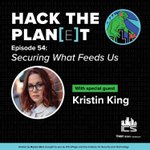
A cyberattack targeted internet-connected refrigeration systems in supermarkets across France, spoiling millions of euros of food last week. In the latest #HackthePlant, food security expert Kristin King told host @brysonbort that she anticipates a cyber incident affecting American food systems.
🚀 Listen now: hack-the-plant.simplecast.co…

Between 2 remote code execution PHP vulnerabilities, the discovery of easy-to-access keys issued by an Indian certificate authority, and new reports of a China-state aligned hacking campaign that leveraged AI, it's been a long week for cyber defenders... What should policymakers take away from this week? Is this a manifestation of the so-called "AI-powered vulnpocalypse" that has been heralded over the past year?
TOMORROW: Register now for the latest edition of Vulns + AI = Oh My! us02web.zoom.us/webinar/regi…

On Friday, October 23 at 12 pm EDT / 9 am PT, join @caseyjohnellis, Nick Leiserson, and @NextJenSecurity for the latest edition of Vulns + AI = Oh My! As always, bring your perspectives, hot takes, and burning questions.
TODAY: AI is poised to reshape the technical foundation of nuclear crisis communications as both a source of resilience & a catalyst for failure. On the margins of the UN First Committee, IST is convening researchers, diplomats & more to evaluate the risks & opportunities of AI in nuclear crisis comms.
🌐 Learn more: reachingcriticalwill.org/dis…

ALT AI's Impact on Nuclear Crisis Communications: Wednesday, October 21 at 1:15 pm ET in Conference Room E
AI-driven threats are outpacing traditional vulnerability management strategies. In August, NIST published a RFI on modernizing the National Vulnerability Database. In their response, Nick Leiserson, Bob Lord, and Lauren Zabierek offer four structural changes to rebuild the CVE ecosystem.
🛡️ Read more: securityandtechnology.org/bl…
🚨 NEW: Deterrence used to be driven by a nation’s military power, but modern deterrence is increasingly defined by a country’s ability to deliver at speed and scale. In a policy memo, David Helvey breaks down how AI, autonomous systems, and industrial capacity are rewriting strategic competition.
🌐Read more: securityandtechnology.org/vi…

🚨 NEW from IST: Hardware supply-chain security is national security, particularly when a compromised component can threaten the resilience of critical infrastructure like the power grid. Securing complex bulk-power systems and other critical infrastructure systems requires visibility into all the underlying components. Today’s policy memo makes the case for Hardware Bills of Materials as an essential foundation of real grid resilience.
🛡️ Read more: securityandtechnology.org/vi…

In "Building an Interoperable HBOM Ecosystem for Energy Sector Supply Chain Security," authors @allanfriedman and Nicholas Leiserson present a vision for building an HBOM ecosystem that balances confidentiality, practical implementation, and cross-sector reuse from the outset.
They conclude with policy recommendations for both the Department of Energy and the White House: “The goal should not be a centralized government database or a single mandated technical platform. It should be a common vision for hardware supply-chain transparency, supported by interoperable data, practical disclosure models, and an evolving ecosystem of tools and services.”
In the wake of the PowerSchool and Canvas breaches, can school districts trust third-party vendors with their data? Not unless edtech companies set clear cybersecurity priorities. In an @OneRSAC webinar tomorrow, 10/16 at 1 PM ET, IST's @michaelfklein joins cyber experts to unpack the non-negotiable security baselines districts should expect.
🛡️Register to attend: rsaconference.com/library/we…

"We are creating the potential for a foodborne illness to happen from a cyber attack.” #HackthePlant host @brysonbort sits down with Kristin King, host of the Bites and Bytes podcast, on why food and agriculture remain a dangerously overlooked piece of critical infrastructure.
🚀 Listen now: hack-the-plant.simplecast.co…
🚨 NEW from IST: Why do U.S.-China risk reduction discussions keep hitting a wall? In a new policy memo, IST Distinguished Fellow for Defense Strategy and Indo-Pacific Security David F. Helvey argues it’s not a lack of communication channels, but rather a fundamental disagreement on common goals.
🌐 Read more: securityandtechnology.org/vi…

In “Managing Strategic Risk with China,” Helvey breaks down why Washington and Beijing view strategic engagement so differently and what realistic risk reduction looks like in a complex era.
The administration’s Cyber Operations National Security Presidential Memorandum sets out to enlist private contractors to execute offensive cyber ops. But execs at the companies best positioned to disrupt criminals are unlikely to take on operations with ill-defined risks. In an IST Commentary, Leonard Bailey argues that the NSPM's solutions only raise new questions.
🛡️ Read more: securityandtechnology.org/vi…

AI in schools isn’t just about schoolwork; it’s about defending vulnerable systems. On this episode of the #AIEducator podcast, IST’s @michaelfklein argues that, with the right support and resources, AI could help target-rich, cyber-poor districts address network vulnerabilities.
🎧 Listen now: podcasts.apple.com/us/podcas…
A breach of the Pentagon’s database exposed data on 3M+ employees & military personnel. IST’s @joshcorman joined @7NewsDC to discuss how AI is accelerating cyberattacks & what everyday citizens can do to protect themselves: “Take a healthy level of skepticism, pause, and #Take9 seconds to think.”
🛡️ Watch more: wjla.com/news/local/hackers-…

AI models developed in China have become a favorite among hackers because of low costs & weaker safeguards. Chinese state-linked groups have more than doubled their attack volume in recent months, putting AI at the center of the geopolitical contest between the U.S. and China, IST’s Kang Lee argues in an op-ed for @InsiderEng.
❇️ Read more: theins.press/en/opinion/lee/…

AI-powered cyber threats are increasingly exposing the vulnerabilities in our critical infrastructure systems. For @Claroty, IST CFAC President Nicholas Leiserson argues that we can narrow the gap between malicious actors and #cyber defenders with efforts like IST’s #FragileFoundationsSprint.
🛡️ Read more: nexusconnect.io/articles/ai-…
