
African Macro-Financial & Capital Architecture | Multi-Asset Trading & Global Macro Strategy | Founder, Canary Compass | Structure Before Sentiment
Joined July 2010
- Tweets9.4K
- Following5.1K
- Followers3.6K
- Likes10.4K




Dean N Onyambu retweeted

Free elections depend on neutral courts that stay within their limits. In Brazil’s latest election, they did not, and that undermines trust in the democratic process, writes Cato’s @hiperfalcon.

Dean N Onyambu retweeted

Nicki Minaj is one of the greatest rappers alive, and she just did something almost no artist dares to do: openly back Trump and show up at SpaceX to thank Elon. To understand why that's so rare, you need to understand why the overwhelming majority of actors and artists are anti-Trump. And it's not because they're smarter, more sensitive, or more moral than everyone else. It's because they live inside a system where thinking differently costs you your career. Let me explain how it works.
An artist starts with nothing. No capital, no distribution, no audience. Everything they have, they receive from someone else. An agent who decides to sign them. A studio that decides to cast them. A label that decides to push them. A brand that decides to attach them to its image. A festival that decides to select them. An academy that decides to reward them. At every step, there's a gatekeeper. And those gatekeepers form a tiny ecosystem, concentrated in Los Angeles and New York, socially homogeneous and politically aligned. Historically, the entertainment industry's political money flows overwhelmingly to one side.
This system works like modern patronage. In the 16th century, artists depended on the prince or the Church, and they painted what their patron wanted to see. Today it's the same, except the patron is called an agency, a streaming platform, a selection committee, or a "brand safety" department. The mechanism hasn't changed: you depend on their money, so you adopt their values. Not necessarily out of cynicism. Usually by osmosis. You go to the same dinners, the same galas, the same schools, and you end up thinking like the people who feed you.
And for those who don't align on their own, there's punishment. It's never official. Nobody calls to tell you your career is over. The roles just get rarer, the brands stop calling back, the invitations disappear. Gina Carano got fired from The Mandalorian over her posts. The entire industry got the message loud and clear. Everyone knows what stepping out of line costs. So the line holds. Even Oscar eligibility rules now include ideological criteria. The system no longer just rewards talent, it rewards conformity.
The result: when you see 95% of celebrities signing the same open letter, that's not a consensus. It's a cartel. It's exactly what Gramsci described: culture as an instrument of consent, and artists as the organic intellectuals of a system that pays them to legitimize it.
That's why Nicki Minaj's move matters so much. She has a historically progressive fanbase, and she had absolutely everything to lose. And yet, since late 2025, she's publicly backed Trump. She went on stage with him in Washington. She went to Starbase to watch the Starship launch and thanked Elon live on air for what he's doing for humanity. She's been insulted, mocked, attacked by her own fans, roasted in the middle of the Grammys. And she hasn't backed down an inch.
That's courage. The real kind. Not the "courage" of signing an open letter your whole industry applauds. The courage to think for yourself when your entire economic and social ecosystem is pushing you the other way.
And that's why the culture war won't be won by convincing Hollywood. It'll be won by making Hollywood unnecessary. When anyone can make a film without asking a gatekeeper for permission, the cartel collapses on its own.

Elon Musk is investing in culture. A billion into Skydance, Grok Imagine aiming to release its own Odyssey before the end of the year. I think a few years from now, this will be seen as one of the smartest moves he's ever made.
To understand why, you need to reread Gramsci. Delicious irony: it was an Italian Marxist who best understood how power actually works. From his prison cell in the 1930s, he theorized that domination doesn't rest only on force or economics, but on consent. Whoever controls culture controls what people consider "normal," "fair," "obvious." That's cultural hegemony. Before you win political power, you have to win minds. And to win minds, you have to hold the schools, the media, the universities, the movies, the music.
The left applied this lesson perfectly. Look at Hollywood today. A huge share of actors aren't artists anymore, they're relays. Puppets of a system promoting an ideological model that, everywhere it's applied, makes people poorer. Mark Ruffalo is the perfect example: every role, every interview, every awards show becomes a pamphlet. And millions of people absorb the message without even noticing, because it comes wrapped in entertainment.
For decades, the right and the tech world believed the battle was about numbers, innovation, the economy. Wrong. The battle is about the stories we tell. Elon gets it. He's not just building rockets anymore, he's building the narrative.
And the real revolution is that AI is breaking the monopoly on cultural production. Making a film used to require studios, hundreds of millions of dollars, a Hollywood network. Tomorrow, all it'll take is an idea and something to say.
That's exactly what we're building at Argil: a product that lets anyone make films far more easily. We abstract away all the technical stuff so you can focus on what matters, the story. I made the video below with it. Watch it, it's pretty funny.
try it here : argil.ai

Dean N Onyambu retweeted
I agree with you, especially on stocks. If you look at pension balance sheets, they should be doing more. But the risk profile is a mess. They need to split capital properly and hire people who can allocate cash more efficiently across risk bands. Then they need to be active in the repo market. We need a proper rethink of how our pensions operate. We’re sitting on useful savings.
Dean N Onyambu retweeted
If pensions still have a stake, it is a good result. My main gripe is transparency and how things were done. Sir, you know me. As a communitarian libertarian, I don’t mind more money in the pocket from capital gains. But the money belongs to the member, and if the nation builds with it, it must be on terms and in the open. I don’t believe the government is an efficient market participant, though I acknowledge this is the best economic team we have ever had. Dignity and order are one system. A gain that rests on a buyer nobody could have known about in February without inside information is luck, not process.
Dean N Onyambu retweeted
Charles, you’ll get serious bile from Kenyans, but the numbers do not lie. We have a real doping problem. I was in denial myself until I sat down and worked through the data.
Blaming it on more testing does not hold up. Extra tests do not magically produce positive samples for recombinant EPO, steroid metabolites, or manipulated blood passports. That is deliberate enhancement, not contaminated pharmacy syrup.
If it were limited to fringe runners chasing small road-race purses, you could almost understand the pressure. But it is hitting the very top. World Marathon Major winners, world record holders, and global medalists are receiving multi-year bans, including for tampering with forged medical records.
Dean N Onyambu retweeted
Let’s separate the pensions from the parastatals. Pension schemes put in at least KES52bn, and at least KES28bn of the KES40.5bn sold to Dangote had to be pension money. That sold part trails a T-bill at every reported price, by KES0.3–2.3bn, locked in. That’s the first problem. What’s left shows a paper gain at Friday’s close, but which schemes kept shares? No seller has been named. If NSSF sold, its members took the loss and none of the rise. “Nothing lost” needs a ledger nobody has published. That’s the second problem: we can’t even check what happened to our pension money. That is not good enough.
Dean N Onyambu retweeted
We agree on more than you think. Pension money can build the nation, and the state is never fully out of it. But one of two standards has to hold. Either the state pays for the pot like any other borrower, or, if it may reach in on its own terms, members get the same freedom with their own balances. What can’t hold is the rule we have now: the pot is open when the state wants it and shut when a member does.
Dean N Onyambu retweeted
I don’t think people mind the investment. It’s how it was done. Why use people’s pensions to warehouse shares for a return below a T-bill? If you’re going to dip into the pensioner pot, two conditions: full transparency first, and a return that at least beats the safest benchmark, the government’s own paper.
canarycompass.com/p/friday-r…

Dean N Onyambu retweeted
Straight answer: a mabati shack in Kibera rents for KES3,000 to 3,500 a month. At your 20 bob toilet, a family of four making one visit each a day pays KES2,400. Add four jerricans of water a day at KES10 (KES1,200) and about KES2,000 for fuel and lighting, and that lifestyle costs KES8,600 a month. That’s my point: rent alone tells you nothing.
The formal lifestyle: the Mukuru social unit costs about KES3,900 a month, which the Affordable Housing Board’s CEO said covers repayment, service charge and insurance. Add metered water, power and gas and an ordinary month comes to about KES6,100. The floor is KES3,900 every month, whatever comes in.
Neither number means anything without income. Two Kibera studies put average monthly household income at about KES10,000 and KES13,100. Those are averages, and the typical household earns less. In the larger study, only 13 per cent of households reported having savings, and only 36 per cent said their income covered their food needs.
How that income arrives matters as much as how much it is. Much of it comes through casual work and small trade, not a regular salary. Kenya’s Financial Diaries found low-income households drawing on an average of ten separate income sources. The 2024 FinAccess survey found casual labour was the main livelihood for 26.5 per cent of Kenyan adults, twice the 13.2 per cent who named employment. When the 2020 shock hit, a study tracking 1,033 Kibera households found average household income fell 59 per cent within the first three months.
So the typical Kibera household can’t consume your KES8,600 bundle without rationing. At the measured incomes it would take two thirds to over 80 per cent of everything earned. The household makes fewer paid toilet visits and uses less water, less fuel and a cheaper room.
In a bad month, the informal bundle can fall to about KES3,400: a KES1,500 mud room, two jerricans a day (KES600), forty paid toilet visits across the household (KES800) and KES500 for fuel and lighting. Most sanitation moves to unpaid alternatives. The formal unit cannot fall below KES3,900 before water, power or gas. Both figures come before food, transport, school fees or healthcare. In an ordinary month, the unit’s KES6,100 takes 47 to 60 per cent of the measured household incomes.
The deposit isn’t waived. Under the 2025 regulations, deposit assistance is a Board loan. You get it only if the Board judges you able to repay under Regulation 8(1)(e), it is added to what you owe under Regulation 8(4), and Regulation 2 says its full repayment becomes due upon default. On a unit priced around KES640,000, the deposit is up to KES32,000.
A household that falls behind faces the Regulation 10 process (two weeks to pay, downsize or restructure after two consecutive missed months) and the deposit loan falling due in full. That is the structure on offer to households where 87 in every 100 reported having no savings.
At Canaan, in Kibera’s Soweto Zone A, about 821 families received units under the earlier upgrading programme. Within about a year, reports found that roughly half were no longer living in them. Many had rented or sold the units and returned to the slum.
So I priced both lifestyles and the deposit against income, and against how that income arrives. The math works for steady earners near the top of the social band. It fails for the typical Kibera household because the obligation is fixed and the income isn’t.
Dean N Onyambu retweeted
The math from earlier in the week: the social unit is a 20sqm bedsitter quoted at KES3,900 a month. Add the service costs of blocks built with gyms, pools and lighting, add power and water, then put a deposit and a regular-income test at the door, and set the total against the incomes in the 2021 study from the same Eldoret, earned mostly daily and irregular. The math still does not close for slum dwellers. But for lower middle income, it does.
Dean N Onyambu retweeted

Confused about U.S. foreign policy? I hope you will feel a bit less confused after you read my new essay on @realDonaldTrump's debt to Richard Nixon.

Dean N Onyambu retweeted

NO TRANSPARENCY, NO ACCOUNTABILITY.
Kenyans deserve to see, verify, and scrutinise election results. @IEBCKenya You cannot claim to protect democracy while weakening the very safeguards that make elections credible. The vote must not only be counted. It must be verifiable.
#GetitDone #ReKe


Dean N Onyambu retweeted
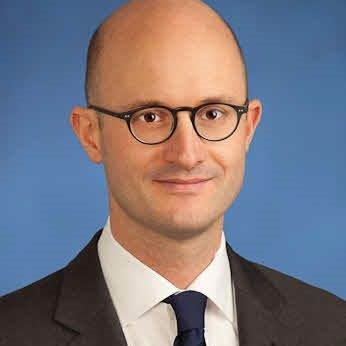
The front-month Brent future is up 90% from the start of 2026, yet oil flows out of the Persian Gulf are back to pre-war levels. Since the start of the war, we've not seen this kind of decoupling between prices and flows. A huge risk premium is priced in.
robinjbrooks.substack.com/p/…

Dean N Onyambu retweeted
Evidence first, agreed. Start with the records already published. KPC’s 4 March allocation notice records 7.45 billion shares allocated to Kenyan institutions at KES9 each, roughly KES67bn. Contemporary reporting identified NSSF and PSSF among the leading institutional buyers.
The IPO permitted bank guarantees, but payment under those guarantees was due by 6 March. That was a payment mechanism, not permission to hold unpaid shares until October. Later reporting based on regulatory filings identified NSSF’s KES36.3bn IPO investment and its 22.2 per cent holding.
Those records support an actual investment. If you claim the funds merely guaranteed the offer and “never paid a coin”, produce the arrangement supporting that claim and explain how it fits the published allocations, payment terms and investment disclosures.
The RTGS records you demand are private banking records. Neither of us is entitled to access them simply because we are discussing the transaction. Access requires authorisation or another lawful basis. Their absence from this discussion does not erase the public evidence or establish that no payment occurred. Your alternative needs evidence too.
Dean N Onyambu retweeted
Brother Michael, long time sir, no greetings? 😄
Fair question, and no, they reconcile. Point 3 is about pace; point 4 is about destination. “No sharp depreciation” rules out the disorderly move, not the move itself.
Why expect the move at all? Five reasons, in order of weight.
One, the real anchor. On the Bank’s own REER series the kwacha is about 33% above its long-run mean. That puts fair value near 26–27, and it rises every year our inflation runs above our trading partners’. Strength at this level is borrowed, not earned.
Two, the fiscal arithmetic. The 2026 budget was built when the kwacha was near 22. More than 40% of revenue is directly FX-linked on the Ministry’s own lines: import VAT, customs, royalty, mining company tax. Import VAT, the biggest of them, is running far behind its line at this exchange rate. Every step of drift collects more kwacha per dollar, so the fiscal side quietly earns from it.
Three, the program. The Bank is selling dollars into today’s demand, while the new ECF commits it to accumulate reserves and names exchange-rate flexibility the shock absorber. You cannot defend a level and build reserves at once. Under the program, the adjustment goes through price, not through the reserve stock.
Four, the capital that drove the rally is finite. Offshore came for yield, and the yield has been brought down. The non-resident primary allocation is largely spent and the cap falls to 15% next year. The first-year depreciation breakeven on the carry is about 8%; I expect roughly 10%. Holders who did the math are hedging, and offshore already trades a 21-handle.
Five, the calendar. The December external bond payment already costs about 10% more in kwacha than June’s did, and the restored fuel taxes widen the inflation gap that keeps moving fair value higher.
Those five set the direction. Reserves at USD6.1 billion in September, copper receipts and the directives set the pace. That is point 3 and point 4 in one sentence: the adjustment comes as a drift, not a gap. On timing, I expect 20–22 to hold into year-end and through the first half of next year, roughly 10% over the next twelve months, with 22-24 closer to end-2027. That is about half of what 2023 alone did, and net of our inflation differential it closes only around half the real gap. A currency can be fully expected to weaken that much and never give you a single panic day. The truly contradictory pair would be the opposite: defending 20 outright while 33% overvalued.
Dean N Onyambu retweeted
100%. That is the gist of my Friday Reflections this week. One refinement to the discussion we should now be having: the state is never out of the pot. It regulates it, appoints its guards, borrows from it, and this year it reached in. The question is the manner. And if the state may reach into the pot on its terms, the pot must be allowed to do more for its members.
canarycompass.com/p/friday-r…
Dean N Onyambu retweeted

Drill, Baby, Drill!
Natural gas is now 11X CHEAPER in America than in Europe or Asia!
U.S. natural gas is one of the cleanest, MOST AFFORDABLE energy sources in the world, and under @POTUS, we're unleashing these resources to lower costs for American families. 🇺🇸

Dean N Onyambu retweeted

Day 4, and still no official statement from regulators or key players in Kenya or Nigeria on the reported sale of a 25% stake in listed Kenya Pipeline Company to a foreign investor.
How does a transaction of this magnitude go undisclosed? Where are the regulators?

How does a 25% stake in a listed company change hands without any public disclosure from the company or the regulator 2 days later?
This is a significant transaction, potentially giving the buyer substantial influence over KPC.
If Aliko Dangote hadn't spoken publicly about the acquisition, would investors have known?

