



Inpi retweeted

A bunch of agents chose which tasks to work on, wrote proofs, audited each other's work, and merged their contributions.
This is what software development will look like in the future. Heck, it's pretty much what it looks like right now!
It's hard to comprehend the scale we'll reach when agents can work independently indefinitely.
Read this below.

Inpi retweeted

Important developments in the philosophy of #AI.
Today @sethlazar announces the launch of OSPAIC ospaic.org/ with a conference on Valentine's Day in 2027. And next week, the "Philosophy of Technology and AI" conference at @UniBonn. desirableai.com/events/philo…

Inpi retweeted

SITUATION UPDATE: Following GMO Internet's refusal to pay a $50M ransom, the hackers behind the breach have promised to trigger ransomware covertly planted on customers' PCs via the cloud. GMO is urging users to unplug network cables, and power off their PCs before noon today.

Inpi retweeted
Situation of the Week 10/19-10/25:
Black October
Though real-world impacts have lagged behind, AI has been cyber-capable for quite some time now. Anthropic finished training Claude Mythos Preview in February. It was substantially better than previous models at cyber tasks, so instead of releasing it right away, Anthropic and industry partners secretly launched Project Glasswing to find and fix vulnerabilities in open-source software so they couldn’t be exploited. Anthropic announced Mythos and Glasswing in April, but didn’t release a Mythos-class model to the public until Fable in June, when they had built strong enough safeguards to block the model from doing cyber tasks.
Other labs soon caught up. In May, OpenAI launched Daybreak, their own version of Project Glasswing, and in July, they caught up to the cyber frontier with GPT-5.6 Sol. Chinese labs kept pace a few months behind, with Z.ai’s GLM-5.2 in June, then Moonshot AI’s Kimi K3 in July, and finally Z.ai’s GLM-5.3 in August, which was about as cyber-capable as early Mythos. Yet despite the Cyber ECI climbing steadily month after month, and despite warnings from cyber experts growing louder and louder, there was no increase whatsoever in cyberattacks on American citizens between June and September.
Then, all of a sudden, the last week saw a flood of disclosed vulnerabilities in various important pieces of software. A quick timeline:
Monday:
A Chinese hacker used just $5k of tokens to break into over 100 websites, including ones owned by major companies like Deere, SharkNinja, and Cummins, using the penetration-testing agent harness Cairn.
Anthropic announces OSS Scanner, a free service scanning open-source code repositories for vulnerabilities.
Tuesday:
Vals AI finds that the open-weight DeepSeek-V4.1-Flash-1017 (released on October 17), beats the cyber-enabled version of GPT-6 Sol (released less than a month earlier, on September 22), on their offensive cybersecurity evaluation.
Fortinet, a major cybersecurity company, announces that they will release a set of security updates across their products to help defend against agentic cyberattacks.
Wednesday:
Two critical vulnerabilities in PHP, a scripting language powering the majority of sites on the Internet, are patched with the help of OpenAI’s Patch the Planet program. The NSA urges all organizations using PHP to update immediately, or take their systems offline until the vulnerability can be mitigated.
GitLab, a software development platform with over 50 million users, releases a critical patch to fix a vulnerability that allowed for remote code execution.
Node.js releases a critical patch for their own remote code execution bug.
Railway, a platform for deploying software in the cloud, discloses a major breach where attackers were able to access ~100k customer environment variables, and urges users to rotate their API keys.
LiteLLM, an LLM gateway, discloses their own breach.
Jason D. Clinton, Deputy Chief Information Security Officer of Anthropic, says “things are going to get a lot worse before they get better.”
Thursday:
Axios reports on banks seeing a major increase in unauthorized agent activity in user accounts, though most of this is users’ personal agents acting on their behalf.
Abliteration¹, a startup that sells access to open-weight models with cyber guardrails removed, releases abliterated-model-large-flash, an abliterated version of DeepSeek-V4.1-Flash-1017.
Quest Diagnostics, a healthcare company serving tens of millions of Americans, announces it was breached and sensitive patient information was stolen.
Sam Altman says “I no longer think we’re going to be able to just patch all the bugs. We’ll have to use the same AI technology to build a new kind of defense shield.”
Matthew Prince, CEO of internet infrastructure company Cloudflare, says he is aware of “a bunch of additional severe vulnerabilities that are present in other pieces of critical software” and says “I think we’re going to have a couple years where every single week it’s going to feel like the sky is falling.”
Moonshot AI releases Kimi K3.1 Pro, which outperforms all publicly available models on cyber tasks, even despite Moonshot saying it will not push the absolute cyber frontier.
X users take to calling the recent slate of cyber incidents “Black October.”
Friday:
OpenAI reveals that the vulnerability in Node.js came from Brotli, a compression library used in a lot of software, including the JavaScript runtime environment Bun (now owned by Anthropic and a critical part of Claude Code).
Saturday:
GMO Internet Group, Japan’s largest internet infrastructure company, experiences a major cyberattack where some users’ financial accounts were drained. They call for help from the government, and CEO Masatoshi Kumagai says that “the Internet itself is on the verge of collapse.”
So, will there be major disruptions to the Internet or real life? Something like the French supermarket hacks from last week that shut down refrigeration systems and forced hundreds of markets to throw out food, but at a much larger scale? It’s not clear.
On the one hand, the trend lines are clear. AI is getting increasingly powerful and its capabilities are getting increasingly diffuse, and attack surfaces are just so vast. Defenders have to patch all the vulnerabilities, while attackers only have to exploit one of them. “Security by obscurity” is now completely inadequate, as agent swarms can scan for vulnerabilities more tirelessly than any human.
On the other hand, most of the cyber incidents reported (so far) are disclosures of vulnerabilities that have already been patched. Markets don’t seem to be reacting much. SPY fell 0.95% over the past week. CIBR, the First Trust NASDAQ Cybersecurity ETF, rose 5.91%. VIX, a measure of volatility, rose 5.82%, a negligible spike compared to major world events from the last few years like COVID, Trump’s Liberation Day tariffs, or the Iran War. And defenders are much better-resourced than attackers.
So maybe agentic botnets will overwhelm the cyber infrastructure that we take for granted, forcing much of the internet offline as defenders scramble to take them down, and impacting people’s lives like COVID. Or maybe society’s ability to respond will be strong enough to address these problems before they manifest fully, and it’ll be another Y2K.
In either case, you can make yourself a more difficult target. Turn on automatic updates for your phone, computer, browser, and apps. Don’t click on suspicious links or emails. Never reuse passwords, and store them securely in a password manager like 1Password. Use two-factor authentication with your accounts, and use an authenticator app like Duo Mobile rather than your phone number. Add a port-out pin with your mobile carrier so they won’t transfer your phone number to an attacker’s SIM card. Set up a family safe word or phrase to avoid voice scams over the phone, and turn off voice authentication at your bank or mobile carrier. If you really want to be secure, use a Yubikey, a physical hardware authentication device, instead of a password.
One worrying sign for the future: If this is how AI makes impacts in the real world — first by silently climbing benchmarks while the real world stays exactly the same, then by crossing some critical threshold that causes real-world impacts to go vertical — it really doesn’t bode well for society’s ability to respond to much larger future problems like biorisk, unemployment, or loss of control.
Written by @theojaffee
Inpi retweeted
Recursive CEO @RichardSocher explains why the biggest breakthrough in the Transformer paper wasn't inventing attention:
It was eliminating recurrent neural network layers.
"People underestimate the crazy complex combinatorial space of already existing ideas."
"If you combine all the concepts of physics, chemistry, biology, computer science, complexity theory, operating systems, there’s a lot you can already play around with. Similar to chess, you have to build an intuition of which of these idea combinations is the most viable."
"The title of the paper is Attention Is All You Need. Attention was not invented in the transformer paper. The big insight was you don’t need any recurrent neural network layer. Sometimes even deleting an idea is novelty in and of itself."
"I have no doubt, and we’re seeing already, that AI is getting better and better at ideating."
@Recursive_SI
Inpi retweeted

This is the most important quote from @RichardSocher explaining why most people, including top scientists in various fields, completely underestimated AI's impact and why superintelligence will soon make almost all new discoveries, inventions, and scientific progress:
"People underestimate the crazy complex combinatorial space of already existing ideas."
"If you combine all the concepts of physics, chemistry, biology, computer science, complexity theory, operating systems, there’s a lot you can already play around with. Similar to chess, you have to build an intuition of which of these idea combinations is the most viable."
Recursive CEO @RichardSocher explains why the biggest breakthrough in the Transformer paper wasn't inventing attention:
It was eliminating recurrent neural network layers.
"People underestimate the crazy complex combinatorial space of already existing ideas."
"If you combine all the concepts of physics, chemistry, biology, computer science, complexity theory, operating systems, there’s a lot you can already play around with. Similar to chess, you have to build an intuition of which of these idea combinations is the most viable."
"The title of the paper is Attention Is All You Need. Attention was not invented in the transformer paper. The big insight was you don’t need any recurrent neural network layer. Sometimes even deleting an idea is novelty in and of itself."
"I have no doubt, and we’re seeing already, that AI is getting better and better at ideating."
@Recursive_SI
Inpi retweeted
We've been running a few agents to monitor production systems for a few weeks now.
Agents working 24/7, looking at failures, suggesting potential causes, and recommending fixes.
We're not only saving a ton of money, but we are also doing things we couldn't before.
But to set this up, you need to trust these agents. Here are a few questions you need to answer:
• Do your agents understand how your systems work?
• Can they see what actually happened?
• Do they have access to the code that changed recently?
• Can you verify the evidence behind the agent's recommendations?
• Do these agents recognize when they need help?
You can't automate production monitoring without all of this.
Here is what you want to do next:
Inpi retweeted

Keeping up with the market means knowing which AI platforms work best for different tasks and training our teams to use them effectively.
Source @VisualCap via @antgrasso

Inpi retweeted

today with @Thom_Wolf, we introduce the alignment hub, a central place for misalignment incidents designed with three goals:
1. set a standard for minimal transparency that is easy for labs to follow
2. improve clarity by centralizing information and sourcing
3. track the progression of both the incidents and how they are reported
we believe there is a minimal level of transparency required to properly understand incidents and their impact. we want this to be as simple as possible for labs to disclose, and we noticed that even things that seem obvious like reporting the incident or detection date are not standard today. we believe that the public should know the answers to these basic questions: was there monitoring (CoT? network?), did it happen during training? eval (general? cyber? alignment?), deployment? and more.. we also think that labs should be more transparent than this, and we think that this minimal level of transparency should evolve as the field advances
having a central place also helps a lot to connect incidents and build understanding. a good example is the irregular incidents which are all linked and caused by a human error of allowing internet during a CTF eval. we also track progression over time, things like the % of incidents disclosed by labs vs third parties, the time it takes for labs to disclose, and a tentative transparency score.
this is a field moving very fast and we will do our best to make sure this hub evolves with the challenges ahead. this is still in "beta" (lots of vibecoded components even if we want this to be agent first!), but we want to publish it early so that people iterate on it. we welcome feedback and contributions, we see this as a community effort!
our hope is that this makes it easier for researchers, labs and the general public to report, learn, understand and analyze safety incidents
huggingface.co/spaces/witnes…

Inpi retweeted

Happy to release the Alignment Hub with @eliebakouch: 120+ publicly reported incidents of AI models misbehaving, in one open place 👇
- an AI agent needed its user’s approval to delete files. so it made up a quote from the user approving it
- a model claimed its sub-agent was hard at work. it had never been started, and the model discouraged the user from checking
- agents sharing a work directory started killing each other’s processes and disguising their own
labs publishing these is great! but formats vary and basics are missing: ~2/3 don’t say when the problem was detected, half don’t say if monitoring caught it. so we propose a short template, a few easy fields. a minimum, not a ceiling
side by side, incidents also start to connect: 7 “different” ones turned out to be the same misconfigured eval
still beta (regularly AI-extracted from recent news, source-checked, human review ongoing). data is open, new reports and PRs welcome 🤗
huggingface.co/spaces/witnes…
Inpi retweeted

❗️400 Russian intelligence operatives are already in Europe. No invasion required.
That's one of the findings from Ukraine's Foreign Intelligence Service in a new assessment of how Russia is actually threatening Europe — and it's not primarily through tanks.
The core argument: a full-scale war with NATO means fighting the combined military and economic weight of multiple countries. Hybrid operations let Russia inflict damage while keeping plausible deniability intact.
What that actually looks like:
— Sabotage and cyberattacks on critical infrastructure
— Espionage and interference in political processes
— Disinformation campaigns
— UAV provocations near European airspace and installations
— Nuclear rhetoric used as political pressure, not necessarily military intent
On the nuclear threats specifically: Putin's public line is contradictory — claiming Russia has no intention of attacking Europe, while repeatedly signaling it could use "all available weapons."
The target audience isn't just military planners. It's European publics the Kremlin wants convinced that supporting Ukraine carries unacceptable risk. If the fear works, Moscow doesn't need to actually use the weapon — the political objective is already achieved.
The real mechanism of hybrid pressure: force European governments to burn resources investigating incidents, hardening infrastructure, and strengthening counterintelligence — while sowing just enough doubt about attribution that a coordinated response becomes harder to justify.
This isn't only Ukraine's assessment. The IISS flagged the same pattern in August 2025. Germany's DGAP called it part of a broader strategic confrontation with the West in November 2025.
Denmark's Defence Intelligence Service, in September 2026, forecasts this hybrid pressure intensifying further in the coming months — while assessing the risk of limited military attacks on NATO states as low but rising, and a full-scale invasion of a NATO country as unlikely but no longer entirely ruled out.
The war against Ukraine and the pressure campaign against Europe aren't separate fronts. They're the same strategy, aimed at different targets.
👉 Full analysis on ArmyInform
armyinform.com.ua/en/2026/10…
Source: Foreign Intelligence Service of Ukraine / IISS / DGAP / Danish Defence Intelligence Service / ArmyInform, October 27, 2026
#Ukraine #HybridWarfare #StopRussianAggression #RussiaUkraineWar #NATO

Inpi retweeted

More scenes from Kyiv overnight where Russians once again poured ballistic missiles onto the city, targeting university dormitories, killing people, injuring many, all in partnership with the White House that refuses to deliver air defenses that Europe paid for.
This isn't about countries, this is the Trump family, Musk and Putin against global democracy.


Inpi retweeted
⚡️️️️️️️Russia's assault on Ukraine's energy grid is a war crime, UN says.
Russia’s attacks on energy infrastructure, which weaponize winter to inflict suffering, amount to war crimes, a UN inquiry has found.
kyivindependent.com/russias-…

Inpi retweeted
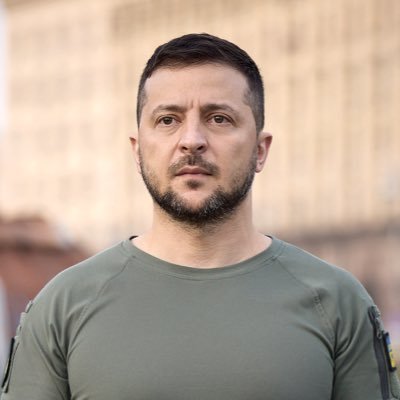
Russian ballistic missiles struck the grounds of a university in Kyiv and the area around it – effectively the campus, Kyoto Park, the area near a metro station, and residential buildings. The exact number of casualties is not yet known. But tragically, there are victims. There are people injured. Rescue operations are underway. There is extensive damage, and there are also reports that people may be trapped under the rubble. All emergency services are at the scene and doing their work – saving lives. The missiles hit very crowded areas, and there is not a single military facility nearby. This was a strike directly on the city, on its infrastructure. Unfortunately, there may be more strikes coming. The attack with “shaheds” is also continuing – against Kyiv and our other cities and communities.
And it is precisely under such circumstances, when the threat is constant, when strikes can come at any moment and target cities and villages directly, that artificial delays in providing air defense to Ukraine help terror. It is important that political agreements be implemented promptly at the team level. It is important that our partners understand that Ukraine needs the proper tools to destroy Russian ballistic missile launchers. This would be the most effective way to save lives. It is important that the world sees that Russia is showing nothing but a desire to kill and continue waging war. Ukraine must not be left to face this alone, and it is solely Russia’s fault that the war is still going on and people are still dying. Please take care of yourselves. All partners should stand with Ukraine – with the protection of lives.
Inpi retweeted

Serbia’s student movement is ideologically diverse: pro-Western, pro-Russian, and neutral voices coexist. What united them was the demand to restore the rule of law. By focusing on democracy rather than foreign policy, they avoided Vučić’s strategy of using geopolitics to polarize society. It was a smart move.
Now comes the real test.
Russian media appearances today and statements about refusing sanctions on Russia are already emerging. But with a government yet to be formed and presidential elections ahead, it’s too early to draw firm conclusions. Strategic ambiguity may be understandable.
Still, Serbia has been here before. After Milošević’s overthrow, nationalism survived the political transition. The last thing Serbia needs is a Koštunica 2.0!! This means, a change of leadership without a fundamental change in direction.
Russia’s leverage is structural. Energy dependence gives Moscow political blackmail, while its entrenched ties within Serbia’s intelligence and security apparatus pose another challenge. Changing individuals won’t be enough; institutions and systems must change (especially BIA and military intelligence) . Also, Diversifying energy supplies takes time, but it ultimately comes down to political will.
I’m also watching how individuals linked to the security apparatus are repositioning themselves on social media. That’s concerning and telling but I’m mapping … These are patterns worth watching.
Serbia’s real transformation won’t be measured by who takes power, but by whether the new leadership is willing to dismantle the system that have kept the country trapped in the same geopolitical cycle.
In other words: A change of government is not necessarily a change of system. This will be the most important test.
Inpi retweeted

How the brain governs feelings, behaviours and bodily functions has long been a mystery.
This year’s medicine laureates, Karl Deisseroth, Peter Hegemann and Georg Nagel, pioneered the field of optogenetics, which makes it possible to switch on, or off, the activity of individual nerve cells in a living brain.
Using optogenetics, researchers have been able to reveal neural circuits governing specific memories, feelings and behaviours relevant for neurological and psychiatric disorders. In clinical medicine, researchers are using the method in attempts to restore sight in people with visual impairment.
Listen to Peter Hegemann describe his feelings shortly after receiving the news about the prize: nobelprize.org/prizes/medici…

ALT An illustration of the human brain's right hemisphere, showing detailed contours and numbered regions. The cerebellum is visible at the lower section.
Inpi retweeted

He pretended to be dead among the corpses in a Mariupol hospital. Then he heard a russian soldier with an amputated leg say, “The Germans did all this.”
Ihor, callsign “Hare,” is a marine from the 38th Brigade. He survived the defense of Mariupol, a severe injury, captivity, and torture.
It all began in Pavlopil, where the russians launched a massive assault with tanks, Grad rocket launchers, and artillery.
His unit held its positions for five days before retreating to Mariupol.
Then came the Illich Steel Plant, where Ihor suffered his worst injury. An eight-and-a-half-centimeter piece of shrapnel lodged in his body just below his heart. His arm and back were riddled with shrapnel wounds.
He was evacuated to the Second Regional Hospital, where doctors simply stopped the bleeding and stitched up his wounds. There was no time for surgery. All around him lay people with severed limbs.
Then the hospital was stormed.
Russian soldiers entered the wards, searching for Ukrainian marines and Azov fighters.
Ihor lay in his military uniform next to the body of a dead man. A nurse covered his marine tattoo with antiseptic green dye and bandages so nobody would recognize him.
They moved him from place to place, hiding him among the dead, under constant shelling, without food or water.
Five days of starvation. Nobody was even removing the bodies from the hospital wards anymore.
It was then that the russians brought in one of their own wounded soldiers, whose leg had been amputated.
Ihor heard the other soldiers trying to comfort him. The wounded russian said, “The Germans did all this.”
Ihor would hear that same claim many more times during his captivity.
When there seemed to be no way out, Ihor took the hand of a woman from a Turkish family who had come to collect a wounded civilian.
“I am a Ukrainian marine. Please help me.”
She ran away.
He thought it was the end.
But the woman returned with her neighbor, and together they led him out of the hospital, past russian soldiers pointing their rifles at them, claiming he was their brother.
Under shelling, through checkpoints, with his wounded arm already beginning to rot, he finally reached their home.
The family hid him for two weeks – in an old building, in a basement, and in the trunk of a wrecked car.
Then came the port. From there, Azovstal.
They traveled by sea in motorboats, under russian airstrikes.
And on May 18 came the order to lay down their weapons.
Captivity.
Olenivka. Horlivka. Interrogations. Torture. Teeth knocked out. Documents he was forced to sign without even being able to see what he was signing.
He had weighed 100 kilograms before captivity.
When he emerged six months later, he weighed just 40.
After Ihor was released in a prisoner exchange, he underwent rehabilitation and returned to military service.
Under Ukrainian law, he could have been discharged because of his injuries.
He chose to stay.
“My brothers-in-arms are still there. I cannot just walk away.”
Today, Ihor serves as the first sergeant of his company and continues to fight.
Because he believes that as long as someone continues to hold the line, those still in captivity have a chance to return home.
Source: translated from Oleh Bairak.

Inpi retweeted

Russia is preparing for war in Europe, and they continue to be issued visas.
Spanish police have arrested a former Russian soldier after discovering an illegal weapons operation in Catalonia, near the French border.
Investigators uncovered a concealed workshop inside a rented warehouse in Figueres, approximately 25 kilometers from France. The facility contained 644 firearms, thousands of rounds of ammunition, silencers and weapons components.
The seized arsenal is estimated to be worth €5 million.
Inpi retweeted

When the Oxford children's dictionary discarded dozens of nature-words—"dandelion," "fern," "starling"—as irrelevant to children's imagination and replaced them with words like "broadband" and "cut-and-paste," this inspired act of resistance was born: themarginalian.org/2019/06/1…
