

Evidence over ideology. Explaining science in context, exposing harmful misinformation, sharing references—and posting reminders the world is beautiful.
Joined August 2011
- Tweets114K
- Following6.4K
- Followers12.1K
- Likes108K




Pinned Tweet
1/10
America is losing scientific expertise from its federal government at an extraordinary rate.
Thousands of researchers, physicians, engineers, and other specialists have left agencies responsible for protecting public health, evaluating medicines, forecasting disasters, and supporting scientific discovery.
We can measure the departures. The longer-term consequences are harder to quantify.
Let’s examine what the evidence tells us.
🤖 Made with AI

1/3
On July 20, 2014, a seriously ill man arrived in Lagos, Nigeria, on a flight from Liberia.
His name was Patrick Sawyer. He had a fever, vomiting, and diarrhea. He was taken to First Consultants Medical Centre, where doctors initially treated him for malaria.
But one physician recognized a far more dangerous possibility.
Her name was Dr. Ameyo Stella Adadevoh.
Ebola was spreading through West Africa. Nigeria had never recorded a case, and Lagos was a densely populated international transportation hub.
Adadevoh considered the patient’s symptoms and recent travel history. She suspected Ebola and insisted that he remain isolated while testing was arranged.
Sawyer wanted to leave.
According to the hospital’s director, the Liberian ambassador also pressed for his release, arguing that the hospital was unlawfully detaining him. Sawyer had traveled to Nigeria for an important regional meeting.
Adadevoh and her colleagues refused.
Imagine the circumstances. An unfamiliar disease was devastating neighboring countries. The patient was demanding his freedom. Diplomatic pressure was mounting. The diagnosis had not yet been confirmed.
She understood what releasing a potentially infectious patient into Lagos might mean.
The hospital maintained his isolation, and public-health authorities were alerted.
On July 25, Sawyer died. Laboratory testing confirmed Ebola.
By then, the physician who had helped prevent his departure had herself been exposed to the danger.
🤖 Made with AI

2/3
Dr. Ameyo Stella Adadevoh had worked at First Consultants Medical Centre for 21 years.
She was an experienced physician and endocrinologist, known to generations of families in Lagos.
She was also a wife and mother.
Her only child, Bankole Cardoso, was 25 when Ebola arrived at his mother’s hospital.
The danger became terribly personal when Adadevoh began showing signs of illness.
She had contracted Ebola.
Other healthcare workers from the hospital were also infected. Some would survive. Others would die.
There was no established, widely available Ebola-specific treatment at the time. Medical teams were struggling to provide care during an epidemic that had already overwhelmed health systems elsewhere in West Africa.
Adadevoh was transferred to an isolation facility.
Her son later described the anguish of watching his mother’s condition deteriorate. For a time, there were signs she might recover. Then her doctors told the family that she was unlikely to survive.
On August 19, 2014, Dr. Adadevoh died.
She was 57.
In a deeply moving NPR interview, Bankole recalled his mother’s concern for her patients, even when their care placed her at risk.
He also remembered the last thing she told him.
She was proud of him.
For Nigeria, she would become a national hero.
For Bankole, she was simply his mother, and she was gone.
3/3
On October 20, 2014, the World Health Organization declared that Nigeria’s Ebola outbreak had ended.
Dr. Ameyo Stella Adadevoh did not live to see that announcement.
The outbreak that began with Patrick Sawyer’s arrival had produced 20 confirmed or probable cases and eight deaths, according to the CDC.
It could have been much worse.
Lagos was home to millions of people, with extensive transportation links throughout Africa and the wider world.
Adadevoh’s early recognition of the threat and her hospital’s refusal to release a potentially infectious patient had bought precious time.
What followed was a remarkable coordinated public-health operation.
Nigerian authorities, physicians, nurses, epidemiologists, laboratory personnel, and international partners identified 894 contacts and carried out approximately 18,500 face-to-face monitoring visits.
Transmission was interrupted.
It would be inaccurate to credit one person with stopping Ebola in Nigeria. Containment required an extraordinary collective effort, and several healthcare workers paid for that effort with their lives.
But Adadevoh’s decision was pivotal.
She acted when the diagnosis was still uncertain, when pressure was mounting, and when the consequences of being wrong in either direction were enormous.
There is an especially painful contrast in her story.
A woman who spent more than two decades caring for the families of Lagos would never return to her own.
Her son, Bankole, later helped establish a health trust in her name to strengthen Nigeria’s capacity to confront future infectious diseases.
Perhaps that is the most fitting continuation of her work.
Her story is a reminder that epidemic preparedness ultimately depends on people: their clinical judgment, their willingness to recognize danger, and the systems available to protect them when they act.
Dr. Ameyo Stella Adadevoh (1956–2014).
She recognized the danger. She refused to ignore it. And her country remembers.
1/3
In February 2003, an Italian physician working for the World Health Organization in Hanoi was called to investigate a patient suffering from an unusual and severe pneumonia.
His name was Dr. Carlo Urbani. He was 46 years old, a specialist in infectious and tropical diseases, and a former president of Médecins Sans Frontières Italy.
What he encountered in that Hanoi hospital would become one of the defining moments in the history of emerging infectious diseases.
The patient was gravely ill. Soon, doctors and nurses caring for him began developing similar symptoms. Urbani recognized that something dangerous was unfolding.
He alerted the WHO and worked with Vietnamese authorities and hospital staff to introduce isolation procedures, protective measures, and infection controls.
Nobody yet fully understood the pathogen they were confronting. The disease would soon become known worldwide as Severe Acute Respiratory Syndrome — SARS.
Urbani’s early recognition and insistence on immediate action helped give Vietnam a crucial advantage in containing the outbreak.
But while trying to prevent the disease from spreading, he had almost certainly been exposed himself.
🤖 Made with AI

2/3
Carlo Urbani understood the risks of working with an unidentified infectious disease.
When his wife, Giuliana, expressed her fears, he reportedly answered with a question that would later become inseparable from his memory:
“If I can’t work in such situations, what am I here for?”
On March 11, 2003, while traveling to Bangkok, Urbani developed a fever. Recognizing what it might mean, he warned colleagues to keep their distance. Upon arrival, he requested immediate isolation.
The physician who had helped recognize the emerging epidemic was now fighting for his own life.
His wife traveled from Hanoi to Bangkok with their three children: Tommaso, Luca, and little Maddalena.
But the children could not visit their father in isolation.
On March 19, Giuliana sent them home to Italy, where relatives would care for them. She remained in Bangkok, close to her critically ill husband.
There was no final family embrace at his bedside. No opportunity for the children to say goodbye in person.
For nearly three weeks, Urbani struggled with the disease he had worked so urgently to contain.
On March 29, 2003, he died in a Bangkok hospital.
He was 46 years old.
3/3
On April 28, 2003, just 30 days after Carlo Urbani’s death, the World Health Organization announced that Vietnam had become the first country to successfully contain its SARS outbreak.
Vietnam had recorded 63 cases and five deaths.
The achievement belonged to many people: Vietnamese physicians and nurses, public-health officials, government authorities, and international colleagues who worked together under extraordinary circumstances.
But Carlo Urbani had played a pivotal role.
He recognized the danger early, helped sound the alarm, and pressed for protective measures before the full nature of the disease was understood.
His contribution was so significant that one of the first isolates of the SARS coronavirus was named the Urbani strain in his honor.
In 2023, twenty years after his death, the WHO Director-General traveled to Urbani’s hometown of Castelplanio, Italy, for the opening of a museum dedicated to his life.
There is something profoundly moving about his story.
A physician working far from home encountered a disease nobody fully understood. He recognized the threat, tried to protect others, and ultimately lost his life to it.
His three children grew up without their father.
Countless other families, however, benefited from the early warnings and public-health response he helped set in motion.
Carlo Urbani’s legacy reminds us that public health is not simply a collection of statistics, recommendations, or institutional policies.
Behind its greatest achievements are people willing to recognize uncomfortable realities, speak up when evidence is still emerging, and accept responsibility when the consequences of inaction could be devastating.
Sometimes, the people who make the greatest difference never live to see the results.
Dr. Carlo Urbani (1956–2003).
His courage deserves to be remembered.
1/3
In February 2003, an Italian physician working for the World Health Organization in Hanoi was called to investigate a patient suffering from an unusual and severe pneumonia.
His name was Dr. Carlo Urbani. He was 46 years old, a specialist in infectious and tropical diseases, and a former president of Médecins Sans Frontières Italy.
What he encountered in that Hanoi hospital would become one of the defining moments in the history of emerging infectious diseases.
The patient was gravely ill. Soon, doctors and nurses caring for him began developing similar symptoms. Urbani recognized that something dangerous was unfolding.
He alerted the WHO and worked with Vietnamese authorities and hospital staff to introduce isolation procedures, protective measures, and infection controls.
Nobody yet fully understood the pathogen they were confronting. The disease would soon become known worldwide as Severe Acute Respiratory Syndrome — SARS.
Urbani’s early recognition and insistence on immediate action helped give Vietnam a crucial advantage in containing the outbreak.
But while trying to prevent the disease from spreading, he had almost certainly been exposed himself.
🤖 Made with AI


When Your Brain Needs to Win the Argument (Even When You’re Wrong) 🧠🥊 youtube.com/shorts/ybAA0bROo… via @YouTube

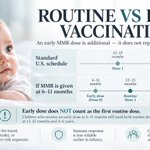
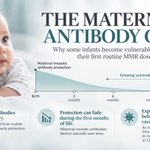
Dr. Peter Hotez has raised an important question about America’s measles resurgence.
What happens to infants who are old enough to lose the protection they received from their mothers, but too young for routine measles vaccination?
As of October 15, the CDC had recorded 4,410 U.S. measles cases in 2026, nearly twice the total reported during all of 2025.
For babies between roughly 5 and 11 months of age, this raises an uncomfortable question: should we be offering measles vaccination earlier?
🤖 Made with AI

11/ — References & Further Reading
For readers interested in the underlying evidence and recommendations:
CDC — Measles Cases and Outbreaks (2026). U.S. surveillance, case counts, and vaccination coverage.
cdc.gov/measles/data-researc…
CDC — Clinical Questions About Measles (2026). Early MMR vaccination at 6–11 months and subsequent routine doses.
cdc.gov/measles/hcp/clinical…
WHO — Measles Vaccines: Position Paper (2017). Recommendations for vaccination beginning at 6 months in high-risk settings.
who.int/publications-detail-…
Nic Lochlainn LM et al. (2019). Immunogenicity, effectiveness, and safety of measles vaccination in infants younger than 9 months. The Lancet Infectious Diseases.
pubmed.ncbi.nlm.nih.gov/3154…
Nic Lochlainn LM et al. (2019). Effect of early measles vaccination on immune responses to subsequent doses. The Lancet Infectious Diseases.
pubmed.ncbi.nlm.nih.gov/3154…
Hotez PJ (2025). Measles, Mumps, Rubella Immunization and the Resurgence of Measles in America. Annals of Internal Medicine.
doi.org/10.7326/ANNALS-25-01…
These sources distinguish established vaccination recommendations from the emerging policy question of whether earlier infant protection should be expanded as measles transmission increases.
@IntegralAnswers
