

Following technology, business fundamentals, and changing market cycles. Data before hype and discipline before emotion. Educational only—not financial advice.
Joined April 2009
- Tweets245K
- Following227
- Followers5.2K
- Likes148K






AI demand is real. But the cost of scaling it is becoming harder to ignore.
$SKHynix just reported record Q3 revenue of KRW 104.6T and operating profit of KRW 83.3T, fueled by surging AI memory demand.
At the same time, a reported $63B financing package for Anthropic’s AI infrastructure highlights just how much capital this buildout requires.
Two things can be true at once:
• AI infrastructure demand is accelerating.
• The returns on that investment still need to justify the cost.
The next phase of the AI trade may depend less on spending announcements and more on who can turn that spending into sustainable cash flow.
Who do you think captures the most value from this cycle: chipmakers, cloud providers, or AI model developers?
$NVDA $AVGO $MU $MSFT $AMZN
The Nasdaq is trying to stabilize, but the 50-day MA remains a key hurdle.
The Nasdaq Composite closed Monday back above 26,063, a key retracement level, but it still needs to reclaim the 50-day moving average near 26,600 to strengthen the short-term setup.
If momentum fades, 25,803 is the next downside level I’m watching. Until resistance is reclaimed, I’d be cautious about treating a bounce as a confirmed trend reversal.
That makes this week’s mega-cap earnings especially important.
With $MSFT, $GOOGL, and $AMZN reporting, the market needs evidence that rising AI capex is translating into sustainable revenue growth, operating leverage, and stronger free cash flow.
I’ll be watching:
• AI monetization and demand
• Capex growth versus expected returns
• Forward guidance and free cash flow
Can earnings provide the catalyst for the Nasdaq to reclaim resistance, or will elevated expectations keep the rally in check?
$NDX $QQQ $NVDA $MSFT $GOOGL $AMZN
A good watchlist saves you from chasing every stock that starts running. I've updated mine with the chart patterns and price levels I'm watching. Want the list? Just DM me or follow along.

$SPCX IS UP NEARLY 10% — BUT $166.18 REJECTED THE FIRST PUSH.
Earnings brought the buyers in. Now the chart has to prove this isn't just a spike.
Reclaim $162.50 → $164.00–$164.70 back in play.
Lose $161.15 → $159.50–$160.00 comes back into focus.
$166.18 is still the high bulls need to beat.
Continuation or a post-earnings fade?


$TICKER BOUNCED OFF $157.78. NOW $160.20 IS THE REAL TEST.
Buyers are fighting back, but the 15-minute trend hasn't turned yet.
Above $160.20 → $161.20–$161.60 in play.
Rejected here → $157.78 back in focus.
Breakout or another bull trap?

$TICKER BOUNCED OFF $157.78. NOW $160.20 IS THE REAL TEST.
Buyers are fighting back, but the 15-minute trend hasn't turned yet.
Above $160.20 → $161.20–$161.60 in play.
Rejected here → $157.78 back in focus.
Breakout or another bull trap?
$CRWV DOWN 4% PREMARKET. HERE'S THE REAL TEST.
Buyers bounced it off $57.78, but $58.95 is still overhead.
Above $58.95 → $59.40–$59.55.
Lose $57.78 → sellers stay in control.
I'm watching this setup into the open.
Bounce or bull trap?

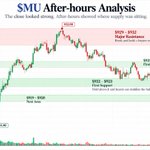
After-hours $MU
The close looked strong. The after-hours tape is telling a different story.
MU closed around $931.24, but the post-market move couldn’t hold the highs. Price pushed near $932, then sellers took over and walked it back down toward $922.50.
That shift matters more than the headline gain.
$922-$923 → first support
Hold above it → buyers still have a chance to stabilize the fade.
Lose it → $919-$920 becomes the next area I’m watching.
$925-$926 → first reclaim zone
Get back above it and the tape starts looking healthier.
$929-$932 → major resistance
Break and hold → buyers regain control.
Reject again → sellers probably keep leaning on the move.
The regular session showed strength.
The after-hours action showed where supply is still sitting.
Tomorrow, I’m watching whether buyers can defend the low $920s or whether this turns into a deeper unwind.
Most traders watch the close. I care more about what price does after everyone thinks the move is over.
$MU $NVDA $SOXX
I mainly post real-time market setups, key levels, and price action during the session. If you like following what actually matters on the chart, feel free to follow along.

Intraday $MU
The morning squeeze already happened.
Now I’m watching whether buyers can actually defend the breakout instead of giving the whole move back.
MU ripped from the high $870s into $922.28, then sellers hit the move hard. Since then, price has been compressing around $911-$912 instead of fully breaking down.
That makes this the fight right now.
$910-$911 → immediate support
Hold it and buyers keep the intraday structure alive.
$907-$908 → next support
Lose that and the pullback starts looking a lot less controlled.
$914-$915 → first reclaim zone
Get back above it and buyers start forcing the issue again.
$918-$922 → bigger resistance
That’s where sellers showed they’re willing to defend.
Volume has cooled off after the morning move, so I care more about whether price can hold these levels than another quick spike.
The rally got attention.
The hold is what matters now.
Can MU defend $910 and take another shot higher, or do sellers finally turn this into a deeper unwind?
$MU $NVDA $SOXX
I mainly post real-time market setups, key levels, and price action during the session. If you like following what actually matters on the chart, feel free to follow along.

Pre-market $MU
The headline is the gap down.
The real question is whether buyers can keep defending the lows.
MU is trading around $872.20 pre-market after yesterday’s weak close, but the overnight action has been much more violent than the current price suggests.
Price flushed all the way to $863.40, bounced hard into $880, and has since rolled back into the low $870s.
That puts the fight here:
$871-$872 → immediate support
Hold it and buyers still have a shot at stabilizing the pre-market range.
$868-$869 → next downside area
Lose that and the overnight low starts coming back into focus.
$875-$876 → first reclaim zone
Get back above it and buyers start repairing some of the damage.
$879-$880 → major resistance
That’s where the overnight bounce already failed.
The volatility is obvious. What matters now is whether buyers can actually defend a level instead of just producing another quick bounce.
Can MU build a base above $871, or does this turn into another lower-high setup before the open?
$MU $NVDA $SOXX
I mainly post real-time market setups, key levels, and price action during the session. If you like following what actually matters on the chart, feel free to follow along.

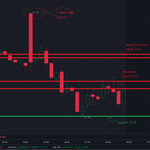
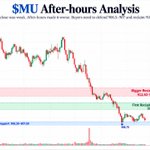
After-hours $MU
The close was weak. The after-hours reaction made it worse.
MU spent the afternoon printing lower highs and lower lows, then sellers kept pressing after the bell. Price slipped from the $914 close area down toward $906.70 before trying to stabilize.
That tells me the important story isn’t the size of the drop.
It’s that buyers still haven’t shown they can hold a bounce.
$906.50-$907 → immediate support
Hold it → buyers at least get a chance to build a floor.
$910-$911 → first reclaim area
Get back above it and the tape starts looking less heavy.
$912.50-$914 → bigger resistance
That’s where sellers are most likely to test any recovery.
The structure is still simple: lower highs, lower lows, and every bounce keeps getting sold.
Tomorrow I’m not watching for a green candle.
I’m watching whether buyers can finally defend one.
Can $907 hold, or does MU keep searching for a lower floor?
$MU $NVDA $SOXX
I mainly post real-time market setups, key levels, and price action during the session. If you like following what actually matters on the chart, feel free to follow along.

Pre-market $MU
I mainly post real-time market setups, key levels, and price action during the session. If you like following what actually matters on the chart, feel free to follow along.
The drop isn’t what I’m watching anymore.
I’m watching whether buyers can finally build a floor.
MU got hit hard from the upper $970s, flushed all the way to roughly $929, then bounced — but every recovery attempt has struggled to hold.
This morning price is back around $940.70, sitting near the lower end of the recent range.
That puts the fight here:
$939-$940 → first support
Hold it and buyers still have a chance to stabilize the tape.
$935-$936 → next support
Lose that and the $929-$932 low zone comes back into play.
$944-$946 → first reclaim area
That’s where I want to see whether buyers can actually hold a bounce instead of getting faded again.
$951-$953 → bigger resistance
Above there, the structure starts looking a lot healthier.
The chart doesn’t need another quick green candle.
It needs buyers to prove they can defend one.
Can MU build a base around $940, or do sellers keep pressing every bounce?
$MU $NVDA $SOXX
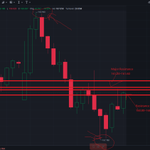
Intraday $MU
This isn’t a dip buyers are controlling right now.
MU has been printing lower highs all session, and every bounce keeps getting sold. Price just flushed to a fresh intraday low around $919.57 before trying to stabilize near $922.
That makes this area the fight.
$919.50-$920 → immediate support
Hold it and buyers at least get a chance to build a floor.
$924-$926 → first reclaim zone
Until MU gets back above there and holds, sellers still have control.
$930-$932 → bigger test
That’s where the structure starts looking less broken.
The earlier $940 area mattered. It’s gone now. I’m not interested in pretending the old level still controls the trade.
Right now the tape is simple: lower highs, lower lows, and sellers pressing every failed bounce.
Can buyers defend $920 and finally hold a recovery, or is the next bounce just another one to fade?
$MU $NVDA $SOXX
I mainly post real-time market setups, key levels, and price action during the session. If you like following what actually matters on the chart, feel free to follow along.

Pre-market $MU
I mainly post real-time market setups, key levels, and price action during the session. If you like following what actually matters on the chart, feel free to follow along.
The drop isn’t what I’m watching anymore.
I’m watching whether buyers can finally build a floor.
MU got hit hard from the upper $970s, flushed all the way to roughly $929, then bounced — but every recovery attempt has struggled to hold.
This morning price is back around $940.70, sitting near the lower end of the recent range.
That puts the fight here:
$939-$940 → first support
Hold it and buyers still have a chance to stabilize the tape.
$935-$936 → next support
Lose that and the $929-$932 low zone comes back into play.
$944-$946 → first reclaim area
That’s where I want to see whether buyers can actually hold a bounce instead of getting faded again.
$951-$953 → bigger resistance
Above there, the structure starts looking a lot healthier.
The chart doesn’t need another quick green candle.
It needs buyers to prove they can defend one.
Can MU build a base around $940, or do sellers keep pressing every bounce?
$MU $NVDA $SOXX
WALL STREET IS STARTING TO QUESTION THE AI TRADE.
Samsung -7.4%.
SK Hynix -10.1%.
$MU fell 3.9% Monday.
Three reasons:
China's CXMT is threatening future memory-chip pricing power.
AI infrastructure spending is becoming increasingly expensive.
Investors want actual returns, not just AI growth stories.
$NVDA $AMD $MU $AVGO
I still believe in AI.
But AI growth and AI stock returns are two very different things.
EVERYONE IS WATCHING $NVDA.
But $AMZN may have just revealed where the NEXT AI battle is heading.
Amazon is reportedly in talks to buy Decart for ~$7 BILLION.
Why does that matter?
Decart is working on:
AI that runs across different chips
Real-time world models
Simulated 3D environments
My watchlist:
$AMZN $NVDA $AMD $AVGO
The next AI winner might not be the company making the chips.
It might be the one controlling how they're used.
Who wins that battle?
THE S&P JUST HIT ANOTHER HIGH.
Tech wasn’t even the leader.
Russell finished red.
And the 10Y touched 5.36%.
Yeah… that’s a pretty weird combo.
S&P 500: +1.2%
Nasdaq: +0.6%
Russell 2000: -0.9%
For once, the market got some help outside the usual AI crowd.
Staples had a huge week.
Energy caught a bid.
Most sectors finished green.
Tech basically took a breather.
Honestly, I don’t hate that.
I’d much rather see money moving around than watch the same five names drag the whole index higher every day.
But I’m not calling this some beautiful broad rally yet.
Small caps were still red.
Bitcoin got hit.
And the 10Y hit 5.36%.
That number is hard to ignore.
I’ve been stuck on bonds for weeks for a reason.
Stocks keep acting like 5%+ yields are somebody else’s problem.
Maybe they’re right.
Maybe they’re just late.
We’ll see.
The AI trade got a little more interesting this week too.
Not because demand disappeared.
Far from it.
TSMC just reported record Q3 revenue, up 50% YoY.
So yeah, people are still spending a stupid amount of money on AI.
The better question now is:
Who can actually afford to keep doing it?
Chips.
Data centers.
Power.
Networking.
Debt.
This stuff isn’t cheap.
That’s the part I’m watching now.
Not “is AI dead?”
That argument is getting old.
I want to know who has the cash flow and who needs another giant financing deal to keep the story going.
Then Friday, SpaceX basically dropped a grenade into telecom.
$TMUS and $VZ got smoked after the spectrum deal.
That move was nasty.
And it’s a good reminder that disruption gets priced a whole lot faster than most people expect.
Outside stocks, things were still messy.
Dollar stayed firm.
Brent stayed above $100.
Gold bounced.
Bitcoin struggled.
Again — not exactly the kind of tape where I’d just close my eyes and buy everything.
Money still wants risk.
It’s just getting pickier.
And next week?
Now it gets fun.
Big banks start reporting.
$JPM
$GS
$C
$WFC
Then CPI hits Wednesday.
That’s the one I care about.
If CPI comes in hot while the 10Y is already hanging above 5%…
things could get uncomfortable pretty fast.
If inflation behaves?
Stocks probably get some room.
Pretty simple.
This week the rally finally got a little broader.
Good.
Now earnings and inflation have to prove it wasn’t just a one-week rotation.
S&P at the highs.
10Y above 5%.
Small caps still lagging.
Something eventually has to give.
I’ll be watching.
$SPY $QQQ $IWM $NVDA $TSM $JPM
#StockMarket #AI #WallStreet

WALL STREET JUST HAD ONE HELL OF A DAY.
Oil exploded. AI stocks got crushed. Treasury yields went crazy.
And somehow, the Dow still finished green.
Here's what actually happened in the stock market today:
1. The Nasdaq took the biggest hit.
• S&P 500: -0.47%
• Nasdaq: -1.25%
• Dow Jones: +0.10%
• Russell 2000: +0.03%
The S&P posted its second straight decline after hitting a record on Tuesday.
But this wasn't a market-wide panic. Most of the selling was concentrated in technology.
2. The AI trade got hit HARD.
The semiconductor index dropped 3.4%.
Some of the biggest names took serious damage:
• $NVDA -2.9%
• $AMD -3.9%
• $MU -4.8%
• $INTC -5.3%
• $AVGO -4.4%
• $ORCL -5.5%
These are some of the companies powering the AI boom.
And today, Wall Street wasn't interested in hearing another AI growth story.
3. OpenAI suddenly became Wall Street's biggest question mark.
A Financial Times report suggested OpenAI's annualized revenue was roughly $20 billion below figures previously signaled.
That doesn't necessarily mean AI demand is collapsing. There are questions about how those revenue figures were calculated.
But the market reacted immediately.
Why?
Because so much of the AI investment thesis depends on future demand becoming real revenue.
4. The AI debt story is getting harder to ignore.
Reports suggest $AVGO is lining up roughly $50 billion in financing tied to OpenAI, while $ORCL is also seeking funding.
Think about that.
Billions are flowing into chips, data centers and infrastructure.
But investors are starting to ask a different question:
How much of this spending turns into actual profits?
That's a question I think Wall Street will keep asking.
5. Oil briefly became the biggest story in the market.
Brent crude surged above $105 before cooling toward $104.
Middle East tensions, shipping disruptions and reduced U.S. production pushed prices higher.
Energy stocks loved it.
Growth stocks? Not so much.
Higher oil prices bring inflation fears right back into the conversation.
6. Bond yields gave investors another scare.
The 10-year Treasury yield briefly approached 5.36% before retreating toward 5.23%.
That's a massive intraday swing.
Fed officials are also keeping the possibility of additional rate hikes alive.
And when borrowing costs stay elevated, expensive growth stocks become much harder to justify.
7. $CMG was one of the day's biggest winners.
Chipotle jumped 6.2% after reports that Starbucks had explored a potential acquisition.
$SBUX slipped 0.4%.
Nothing has been announced as a completed deal.
But the market clearly liked the possibility.
8. Not every stock got crushed.
$PLTR gained 2.4% after Goldman Sachs upgraded the stock to Buy.
$PEP rose 3.7%, even after cutting its annual profit outlook, as investors focused on cost-cutting plans.
Meanwhile, energy stocks led the S&P 500.
Technology finished dead last.
Money wasn't leaving every corner of the market.
It was moving.
9. Here's the part most people will miss.
The S&P 500 fell.
But an ETF tracking the S&P 500 excluding technology actually gained around 0.5%.
Six of the index's 11 sectors finished higher.
Read that again.
The index looked weak, while much of the market held up.
That's what happens when a few heavily weighted stocks start selling off.
10. And now we're heading straight into earnings season.
Third-quarter earnings are about to take center stage.
Wall Street wants answers.
Can AI companies justify their valuations?
Can hyperscalers turn massive spending into real returns?
Will higher oil prices and borrowing costs start hurting corporate profits?
Those are the questions I'm watching.
MY TAKE:
I don't think today's selloff means the AI boom is over.
But I do think the market is starting to separate companies making money from companies promising they'll make money someday.
And that distinction could create some very interesting opportunities.
Friday could get interesting.
Are you buying the AI dip, moving into energy, or staying on the sidelines?
Drop your top stock for tomorrow. 👇
Follow me for more market breakdowns and the stocks Wall Street may notice next.
THE AI BOOM IS TURNING INTO A DEBT BOOM.
And I think the market is missing something big.
$AMZN, $GOOGL, $META and $ORCL issued roughly $194 BILLION in bonds through July 7 alone.
Now $AVGO is reportedly arranging $50B+ in financing tied to OpenAI's custom chips.
Think about what's happening here.
One company's spending becomes another company's revenue.
$NVDA sells the GPUs.
$AVGO supplies the custom chips.
$ORCL builds out the infrastructure.
$META commits billions to AI capacity.
Everyone is racing to build.
But here's what bothers me.
The revenue shows up today. The returns may take years.
And debt doesn't disappear if AI demand falls short of expectations.
I'm not bearish on AI.
I'm questioning whether every company pouring billions into it will earn an acceptable return.
Because there's a big difference between building the future and making money from it.
AI could be the biggest technological revolution of our lifetime and still be a terrible investment for some companies.
That's the part I think Wall Street needs to watch.
Full breakdown in the comments. 👇
4/4 — Here's what would change my mind.
Show me:
• Higher data center utilization
• Growing recurring AI revenue
• Stronger free cash flow after capex
• Returns that exceed financing costs
If those improve together, the debt may be financing one of the best investments of this decade.
If they don't, some of today's AI winners could become tomorrow's biggest disappointments.
I'm not betting against AI.
I'm betting that the market will eventually separate companies creating value from companies simply spending money.
Which stock has the most to prove — $ORCL, $META or $APLD?
3/4 — $APLD is another example.
Revenue just exploded 322% to $341.9M.
Sounds incredible.
But look closer:
$183.5M came from tenant fit-out services.
Only $65.8M came from HPC base rent.
I'm not saying the growth is fake.
I'm saying construction-related revenue and recurring rental revenue aren't worth the same multiple.
What matters now is how quickly new capacity turns into durable cash flow.
That's what I'd be tracking next quarter.