

an econometrician who studies and teaches macro and investment.
Joined May 2017
- Tweets1.4K
- Following559
- Followers484
- Likes340



JQ retweeted

Eva is a student at @PrincetonNeuro working with me, @brody_lab and Ben Eysenbach. She was abducted by ICE while trying to board a flight from SFN. Some thoughts below how we can help her.


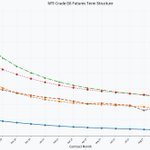
From June to July, high-flow-low-cost turns into low-flow-low-cost. From Oct to Nov, high-flow-high-cost is turning into low-flow-high-cost. An even worse turn of events.


44
Some say the US has been defeated by Iran. I don't think so. It is true that the US didn't achieve anything in this war. But it is far from being defeated. The US naval blockade of Iran is much more devastating to the Iranian economy than the Iranian "closure" of Hormuz to the US economy. It is Iran that has to escalate to get out of the status quo. The US can afford to wait. #oott
45
Oil producers know better than GS.

US Oil Producers Sour on Hedges as Stronger Finances Offer Cover
Oil producers in the US shale patch are souring on hedges that took the sheen off an otherwise stellar quarter, in a bet that stronger balance sheets will be enough to weather a price collapse.
Companies including SM Energy Co., Devon Energy Corp. and Diamondback Energy Inc. reported in their third-quarter earnings hundreds of millions of dollars in losses on settled derivative positions. Those hits are dwarfed by eye-watering cash profits as the Iran war kept crude near $100 a barrel, emboldening some financially well-positioned producers to let hedges roll off. (Bloomberg)

22
JQ retweeted

TBH, I think this has more to do with positioning than anything. Big players are out of the market looking at COT data. Volume has significantly dropped off since November 4th. This market is easily pushed around. That said the entire curve is pricing higher than it was 2 months ago


The status quo is unsustainable because: The US can maintain the naval blockade, with which Iranian economy cannot survive. Iran has to escalate, prompting the US escalation...
(WCTW) The Unsustainable Status Quo
Trump wants to do nothing, but that may not be the case at all. It’s the worst of both worlds for global energy markets.
hfir.com/p/wctw-the-unsustai…

39
JQ retweeted

Top 10 most economics-heavy novels of all time:
1. Émile Zola — Money (1891)
2. John Steinbeck — The Grapes of Wrath (1939)
3. Theodore Dreiser — The Financier (1912)
4. Anthony Trollope — The Way We Live Now (1875)
5. Charles Dickens — Little Dorrit (1857)
6. Upton Sinclair — The Jungle (1906)
7. Elizabeth Gaskell — North and South (1855)
8. Edward Bellamy — Looking Backward (1888)
9. Honoré de Balzac — César Birotteau (1837)
10. Frank Norris — The Octopus (1901)
Well said. Jensen Huang appears to be the target of a systematic attack, rather than just a simple affair scandal. However, the attackers did exploit his greatest weakness...

Let Jensen be a lesson to all men.
Women will always be one of the biggest temptations in your life, and the wrong ones can bring down everything you’ve built…
You have two options.
Stay single, do whatever you want, but understand that the more successful you become, the more women will try to take advantage of you. Look at Elon.
OR find one woman who loves you, build a life together, and remain loyal.
Money and status will bring endless temptation.Real discipline is knowing when to say no and focus on yourself and missions.
Don’t throw away everything you’ve built for a few minutes of pleasure!! It can ruin your life and thousands of others!
77


It feels like, in The Godfather, Tom Hagen was removed by Michael Corleone because he is not a "wartime consigliere."

Today is my last day as White House Chief of Staff.
Serving President Trump in the White House has been the honor of a lifetime. I’m so proud to have been a part of what we’ve accomplished together from securing our border and cutting taxes to strengthening our economy and putting America First.
More than anything, I’m grateful for the extraordinary people I’ve had the privilege of working alongside. While my role may be changing, my commitment to the President and the mission never will.
36
JQ retweeted

Thank you, Florin, for sharing this beautiful paper.
What I will remember most about Perry, though, is that he eventually took a different road and the courage it took to do so.
He had a Harvard PhD and a JPE paper. Everything was there for a conventional career in macroeconomics.
Instead, he turned away from mathematical economics and read Bagehot, Hawtrey, Allyn Young, Hicks and Minsky, forgotten traditions of monetary thought that he brought back to life as what he called the money view. He later said he almost did not survive it. Most of his papers were rejected, and Barnard told him his record was not strong enough for tenure. He eventually got it for a book, The Money Interest and the Public Interest, in which he went looking for what he called his intellectual ancestors.
Perry sometimes called himself, too modestly, a historian of economic thought. As Florin says, he remained to me an elegant and deep theorist even when not using mathematics, while now working in a direction orthogonal to most of the profession. I genuinely believe he had far more impact this way, and did more for our understanding of money, than he ever could have on the conventional path.
He also made a choice that would be unusual today, spending much of his time building his synthesis in his money and banking course at Barnard, with his students. The course became a MOOC with close to 200,000 enrollments, and an eye-opener for many.
I was one of them. I signed up while interning at the ECB as a PhD student, without expecting much. I was amazed by how much I learned. It was different from everything I had been taught, and complementary to it. I remember trying to follow the balance sheets of the shadow banking system he drew on the pixelated board, and the eureka moments when he had us look past the institutional details to the same economics of banking and central banking across countries and centuries. I remember him deciphering the euro crisis live.
That course, and the reading that followed, shaped the monetary economist I became. Writing on repo, FX swaps and stablecoins, I have tried to understand shadow banking the way he taught us, as an ecosystem of interlocking balance sheets where heterogeneous institutions together transform liquidity exactly as a bank would. Almost every paper I have written starts with the balance sheets of the model.
As always happens when someone you have learned so much from passes, I wish I had interacted with him more, and had been more explicit about what my work owes him.
Perry found his intellectual ancestors in forgotten books. He is now one of mine, and I will do my best to carry the money view forward.

RIP Perry Mehrling.
An incredibly elegant and deep theorist, especially for all things "money".
This 1993 note is a gem (on the suboptimality of the Friendman rule in Bewley models due to redistributive effects).
(HT @a_auclert who first pointed me to this paper 10+ years ago!)

Treasury Secretary's tantrum against a respected journalist shows that he is emotionally exhausted. It is not surprising, considering the multiple tasks he is facing. The control of the Treasury yield, the Yen exchange rate (to help control Treasury yield), to maintain USD's reserve currency status (which requires a functioning Treasury debt market), and the manipulation of oil prices (to keep inflation from exploding before the mid-term election). The tantrum may mark a crucial turning point for several markets.
64
So funny

BYD has breached the walls of fortress Japan.
I remember hearing horror stories of trying to sell cars in Japan as a young engineer in GM.
GM did a huge push to sell the Opel branded vehicles in Japan back in the 90’s. They Spent hundred of millions and the first year we sold 1,600 Cars.
After some studies, they determined sales were slow because the steering wheel was on the wrong side of the car.
So we changed the steering wheel location and sales went DOWN.
More studies determined the only reason we had sold 1,600 cars was because some people liked the steering wheel on the opposite side.
1
98
JQ retweeted

Tony Feng is a mathematics professor at UC Berkeley, and he tells us:
« In the past, the path to a math Ph.D. cultivated resilience, resourcefulness, critical thinking, and a healthy skepticism (…) but suddenly you can produce a passable Ph.D. thesis with the push of a button. »
Obviously, it is not just in mathematics. Obviously.
Want to write a PhD in sociology, education, computer science, or mechanical engineering? Press of a button.
Let us go back in time. I started university before the web. At the time, you had to go to a physical library to do research. You would wander through the (paper!) journals, find something interesting, and either read it there or make a copy or borrow it.
When I finished my PhD, I had stashes of journal articles, categorized in some way. I had collected them over years. I did not have a search function, and certainly not an AI helper. So you sort of had to memorize the important papers.
Working alone, with little help from your thesis supervisors, was not great. That was an era where the quality of your thesis supervisor mattered a great deal. If they knew the literature of a domain like the back of their hand, they could really direct you to read the proper work. It made a huge difference.
Then we got the web, and search engines. At first, I would just dump a lot of PDFs on my disk and search through them for keywords.
Then we got Google Scholar. What a breakthrough! A full index of the entire scientific literature. It was like having a friend with an encyclopedic knowledge of the literature with you at all times.
At that point, if you were a lone fellow in some corner of the world and somehow had library access to the PDFs, you could reasonably, on your own, pick a topic and find out what people had written about it, not in years, but in days or maybe hours.
All along, the number of people writing PhD theses went up. in the United States it rose from about 36,000 in 1990 to over 58,000 in 2024, while in China it exploded from just a few thousand in the early 1990s to roughly 88,000 per year today.
Then it became much easier to share code, and then data.
Even in the physical world, research became somewhat easier to automate. Drones can fly over a forest, taking pictures. We have robots that can conduct chemical analysis and experiments.
And then, the biggy: we got agentic AI.
I could, today, write a PhD thesis generator. Enter a topic, and a PDF that looks like what would have been accepted for a PhD in 2015 will come out.
Consider that most PhD theses were never good. How often do you rush to read a PhD thesis? The vast majority of them are painful to read. You learn little if anything.
So the bar is not as high as people imagine.
And that’s where we are today.
So people tell me: “Yeah, but to get the PhD, you have to present it live and answer questions.” Yeah. About that. For social reasons, it is highly uncommon for people to fail the oral defense of their thesis. Some people are just terrible at it, naturally. They cannot think well on their feet. They get confused and answer the wrong question.
I was at an oral defense a few months ago. My older colleague kept raving about the extensive review of the literature. He kept saying that he had never seen such a young person produce such an extensive review in so little time. This same colleague is proud to say that he opposes ChatGPT and friends. Would I tell him? No, I kept my mouth shut. I am never rude on purpose.
To sum it up, the very foundation of modern academia has been blown to bits. Not shaken. Wiped out.

I've seen this sentiment from several mathematicians, and it is understandable, but I feel it is also dangerously wrong. I say this because I think mathematicians need to adapt hard and fast, instead of wishing that the disruption from AI will somehow go away.
There is a science to large language models and it predicts that with the linear scaling rate we are seeing now, capabilities will increase over the next 5 years at a similar rate as the last 5 years. To get a sense of what that means, one of the main benchmarks 5 years ago was GSM8K, whose questions you can see for yourself at huggingface.co/datasets/open….
There also seems to be a misconception that frontier labs are emphasizing math right now, and spending a lot on solving open math problems, in order to advertise the intelligence of their models. There was some truth to this 7-10 months ago, but that time has passed and most labs are now focused on coding agents. The continued improvements in math are largely a side effect.
In the past, the path to a math Ph.D. cultivated resilience, resourcefulness, critical thinking, and a healthy skepticism. These qualities are still needed today, perhaps more than ever, but suddenly you can produce a passable Ph.D. thesis with the push of a button. This signals that the field needs to completely overhaul itself, starting now.
My recommendation is that the future role of humans in mathematics, and similar theoretical fields, should be preserving and disseminating knowledge in oral and social forms; written papers will be the domain of AI. Over the coming months I will be involved in workshops that aim to produce more concrete proposals. But people need to come to terms ASAP with the fact that drastic change and compromise are needed to prevent the disenfranchisement of humanity from knowledge work.

If this turns out to be true, then the world will lose not only the oil through Hormuz, but all the oil from the Middle East.

BREAKING: 🇺🇸🇮🇷 A retired US general says the war against Iran could last 20 years:
“We’re going to be there a long time. Operation Northern/Southern Watch [Iraq war] went on for 20 years. This is going to be similar. We’re going to have to stay there.”
73
JQ retweeted

#SaudiArabia: crude and refined product exports were at 4.517mbpd in May versus 4.995mbpd in April according to
@JODI_Data
#oott


JQ retweeted

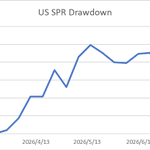
For those in the oil industry, you might wanna flag this strategic and jurisdictional ass-covering.
EIA just published a warning (16 July) that Cushing’s reported inventory may overstate how many barrels are actually usable as stocks approach tank-bottom levels.
If Cushing tightens further and someone asks why prices exploded despite having 18 million reported barrels, the answer is ready:
"Those barrels were technically present but not operationally accessible."
That changes the political framing from:
"The government allowed inventories to become dangerously depleted."
to:
"The market encountered a complex technical storage limitation."
Jurisdictiional angle:
By publishing this now, EIA effectively says:
"Our headline series should not be interpreted as proof that all reported barrels remain available. We have now disclosed the limitation."
If policymakers continue drawing down buffers after this warning, EIA has separated itself from the decision.
This isnt merely the admin covering its ass. Its potentially one bureaucracy protecting itself from another part of government.
#OOTT

Why did the EIA TODAY put out a 1-pager on tank bottoms warning about minimum operating limits "in extreme cases"? Why now????? eia.gov/todayinenergy/detail…
