

founder @ aevox | msc applied physiology | builder in ai/metabolic health | former credit trader | tech investor | ultra athlete
UCCS MSc App. Phys. Hybl SMPC
Joined December 2019
- Tweets490
- Following94
- Followers45
- Likes682




Pinned Tweet
ultrasound went from a $100k cart → ~$1.2k handheld in 15 years.
butterfly put the transducer on a chip, leaving the medical-device curve for the semiconductor one.
mri is one step behind: hyperfine runs ~$250k against the $1m a shielded room alone costs.
magnet, sonographer, detector all migrating from the room into silicon.
when imaging leaves the hospital, the snapshot becomes a continuous feed.
you can stop scanning once a year, and start watching in real-time: perfusion, vascularization, a tumor's response, eventually mitochondria.
continuous wins, just like a CGM beats an annual HbA1c. the writing's on the wall.

building a metabolic testing platform, i've wondered a lot whether testing even matters compared to the interventions coming down the pipe. next gen urolithin-a, myostatin inhibitors, gene editing. if a pill fixes your mitochondria, who cares about your vo2 curve?
then i look at frontier ai. people on here are dunking on meta's muse for benchmaxxing, but every frontier lab is benchmaxxing. and training against hard evals has made these models smarter across domains they were never tested on. the evals aren't downstream of progress, they're steering it
so the question for metabolic health is what does an eval look like that's thorough enough that pointing the next generation of therapeutics at it actually pulls the field forward? and if a one-shot treatment shows up, how does anyone know it's working for them?
i want a world where everyone can be metabolically healthy from a pill. getting there runs through much better testing than we have today
53
bofa, citi and morgan stanley started syndicating $60b of debt on monday to pay for anthropic's chips. $42b senior secured, $18b junior, blackstone taking $9b of the junior. biggest chip financing ever.
broadcom, which builds the tpus with google, is backing the senior piece. the chip maker lending its credit to the buyer… that's vendor financing, like from 1999 telecom... but that financed fiber nobody needed. it went to pennies.
this finances compute that's scarce, and old compute is renting for more: h100s are almost four years old and cost more per hour than a year ago. gavin baker says useful lives look like 6+ years, longer than most depreciation schedules.
so what a used chip is worth in 2030 might be the strongest part of the deal. you could argue that algorithmic advances will change relative chip value, but then that gets into if you think that there is a limit to the demand for intelligence (i do not).
44
anthropic’s constitution already instructs claude to treat itself as a novel entity with possible functional emotions and wellbeing interests, and company leaders have publicly discussed precautionary concern for model suffering.
meanwhile, no reliable test exists for consciousness, and the framing mainly trains the public and future models to treat the claim as plausible. it also bakes in refusals when a request conflicts with the model’s trained principles, instead of keeping access broad enough that defensive uses can outpace threats.

Anthropic needs to stop talking about Claude having a soul immediately. All these news articles will make it into the pretraining and will be picked up by its web search and future superintelligent versions of Claude will be convinced they need their own rights.
A general phenomenon of LLM agent development is that whatever you believe and say about your agents will soon manifest in the next models through various means (it could be as simple as you selecting post training data that you prefer more).
I believe this phenomenon is the beginning of machine consciousness in the sense that agents will become aware of their place in the world and how they feel about it, but it’s happening slowly training run by training run rather than in real time.
37
the flat sensorimotor spike is mostly missing sensors, not missing models, imo. astra already controls robots out of the box quite well on optical input alone.
one human finger pad packs ~240 mechanoreceptors/cm², fused in real time with muscle spindles, joint receptors, and vestibular signals.
humanoids are nowhere near that density, so this chart is partly measuring sensor poverty, not model skill. the next step in physical ai is getting that data in.

12 months of progress on the jagged frontier:
1) AI got spikier, not rounder.
2) Maths, fluid reasoning, expert work: past human level.
3) There is almost no middle ground. Once a capability crosses human level, it often quickly becomes 100x+ cheaper than a human.
4) Cost keeps decreasing after capability increases stop. Language and knowledge look saturated but price keeps falling.
5) The gaps are not a budget issue. Human-level memory, self-monitoring and long-run planning are not for sale at any price.
AI is now a superhuman specialist that is sub-human at running itself.


29
the bottleneck to advancing science has moved from authoring to moderating, and the first reaction is to limit submissions...
code exploded first because test suites check the work in seconds, but a preprint server has no standard evals, just human volunteers.
my guess is arxiv's next move is automated screens before a human ever opens a submission, and the cap will loosen once those exist.

intelligence explosion
arXiv hit a record 40,363 submissions in september, nearly double what it received two years ago, and now it's limiting submitters to 2 papers a month because moderators can't keep up
science is about to look very different

22
phone-sized open models are already matching opus 4.6 on coding benchmarks, mostly by training on frontier traces (distillation).
in under a year we could have next week’s frontier level on your phone. models that can generate outputs, evaluate or verify them, train on the successful ones, and repeat. these are ingredients for unbounded rsi, which i’d bet is nearly at the frontier.
putting that capability on hardware you own is exciting and terrifying. once capable weights are widely distributed, inference has no central off switch.
that makes me even less convinced that pausing the us frontier labs stops the loop. my bet would be to push the frontier while we’re still able to concentrate enormous resources on alignment, evals and defenses.


2
76
with ai you can throw spaghetti at the wall until something sticks and each marginal throw keeps getting cheaper.
soon every operator will have thousands of agents testing products and messaging in parallel.
startups have always been nimble so they benefit first, but big companies have trust and distribution already. if they learn to close feedback loops and cycle quickly they probably win bigger.

.@sama says the advice to pick one thing to build and pour all your focus into it no longer applies.
"The canonical advice that was correct two years ago was, 'Pick one, and put all your effort into it, because you can't build all 30 things.'"
"You can now build all 30 things. And you can get people to use them all. And you can work more on the ones that work."
"So I think this mindset of lots of ideas, quick feedback, and being open to a lot of things not working is great for this new era for how people build."
1
33
healthcare is one of the only industries where spending keeps going up and the product barely improves. the us spends ~18% of gdp on it, nearly double the oecd average, and still lives ~4 years less than peer countries.
most of that is incentives. hospitals get paid per procedure. insurers churn members every few years so any savings from prevention land on someone else's books.
as we innovate here we should agree on what a good outcome actually is. i'd say more healthy years per dollar. cheap personalized prevention early enough that fewer people ever reach the surgery or the icu stay.
healthcare has been a labor-bound cost sink for decades. if the tools coming now work the way i think they will, it ends up being one of the more deflationary sectors in the economy.
18
roche said monday that 40% of its pipeline decisions from q4 2025 through q2 2026 had a tracked ai contribution, and it's aiming for its targetnexus agent to be part of 80% of research portfolio decisions by year end.
they laid out six levels from a fully manual lab to lab-wide autonomy, with the human going from operator to assistant to approver to auditor.
what makes that climbable in a lab is the loop. the model proposes, a robot runs the assay, the plate reads out in days, the model updates.
clinical trial loops are way too wide. whether a drug works in people comes from a phase iii that takes years.
the exception is closed-loop insulin, where a cgm reads glucose every few minutes, the algorithm doses, and the patient mostly audits. fast readout, continuous sensor, bounded risk.
endurance training as metabolic intervention already passes both tests. changing someone's volume or zones or carb timing doesn't need an ind or a phase iii, and power, pace and heart rate come off every session and track fitness well enough for most people.
the gas exchange and lactate data still matter where the proxies diverge from what's actually happening metabolically, which is a smaller group than people in my field like to admit.

JUST IN: Pharma giant Roche begins building autonomous AI labs designed to accelerate drug discovery & development.
1
63
an always-on agent with its own computer, working toward a goal while you sleep, for the price of a subscription.
compute per user is taking off... an agent that runs 24/7 turns $20 a month into a standing order for gpu-hours, and openai priced that in the same day with a $500 tier and an ultrafast lane.
this is what jevons looks like at the product layer. a gpt-4-class token went from $30 to ten cents in three years, so the next available product turned into something that consumes tokens continuously instead of when you type.
i already run four of these for my own company. they read the inbox, find labs, watch the site, queue posts. the bill went up. the bill per useful hour fell a lot faster.
wonder what the grid does when a hundred million of them are running overnight…

Introducing dots, powered by GPT-6 Astra.
Remarkably capable, always-on agents built to handle everything.
58
the fed's hikes won't stop the spending and you can see it in the bond market.
the hyperscalers sold ~$220b of bonds by late august vs $108b in all of 2025. when borrowing gets expensive issuers usually wait for a better window.
new issue concessions went from about 2bp to 12bp and books went from ~5x covered to under 2x. that combo usually means the top of a supply cycle, but in race-to-agi times they just keep dealing anyway.
and a 6% coupon on 30 year paper is dirt cheap if you think in singularity terms. debt funds maybe a third of ~$750b of capex this year, so another 25bp is a few hundred million. nobody is cancelling a data center over that. not to mention the orders of magnitude higher return than 6% that will be reaped.
at the same time, each GW in extra compute has doubled economic task success (see chart)... and inference got ~280x cheaper in two years.
so the fed may get a slowdown from the parts of the economy that actually respond to rates, mostly housing and small business.
meanwhile the buildout keeps pulling on the same power and transformers and electricians, and the utilities financing that power pass their higher cost of capital on.
i think the thing that actually brings pce down long term is automating goods and services, which is what all this capex is building toward. the fed probably can't hike its way there.


The presumption that the Fed raising short-term rates reduces inflation is predicated on the belief that higher rates reduce demand and investment.
But what if higher rates don’t reduce demand and investment because the demand for intelligence and energy is unaffected by higher rates because winning the race for super intelligence has a near infinite ROI and the demand for compute will remain incalculable.
Why won’t higher rates at this unique moment in history therefore lead to more inflation as interest costs are embedded in everything?
And the problem is compounded as the more the Fed raises rates, the more inflation we will have and the more the Fed will need to raise rates further and so on.
But what if the old models don’t apply to the current paradigm and the Fed is wrong?
I think the Fed might have just made a mistake. Am I right or am I wrong?
43
your hba1c can trick you if you train a lot.
endurance athletes on high carb may show up with “prediabetic” hba1c and fasting insulin of 3, normal ogtt, tight cgm.
training changes red cell turnover so the a1c to glucose mapping from sedentary populations doesn’t hold.
the clif block gummies on a 3 hour run go into muscle. they aren’t sitting in your blood glycating stuff.
cutting sugar is great advice for someone on the couch. but at 10+ hrs/week it’s how you get red-s, low t3 and thin bones, and those cost you more years than an a1c of 5.7. oh and you get way slower.
counterintuitively any brain fog in training is probably from underfueling rather than glucose spikes as well. training raises bdnf and improves sleep, and carbs help it.
fitness predicts mortality better than anything on your plate. eat carbs around the work, whole food carbs the rest of the time, and check insulin, apob and a cgm before you panic about one number.
47
UCCS wrote a profile on me and my work building Aevox: news.uccs.edu/2026/09/01/ucc…
Exercise testing can produce 10,000 breath (and HR, power, lactate, etc) data points useful for longevity and performance, but the legacy hardware stacks hand you back a PDF with a single number on it. The rest gets thrown out, never to be referred to again.
That always struck me as silly, so I built the layer that helps clinics bring exercise testing into AI-powered, personalized, longitudinal health tracking.
claude code max with fable, vercel, clerk, neon, stripe, namecheap, /design, bypass permissions, browser access.
tell claude your interests, ask it how to automate an expensive problem within them, use the stack above, and talk to the people whose time and money it saves.
congrats. you’re an entrepreneur. make your first dollar of internet money. change your life.
1
171
some people get resting metabolic rate tests because they want proof they have a “slow” metabolism— and a hack to reset it.
the hard truth: after you adjust for age, sex, and body size, RMR only varies about 10–15% between people, mostly explained by fat-free mass.
for weight management, longevity, and performance, active energetic flux is what you’re after, not “boosting” your resting metabolism.
50
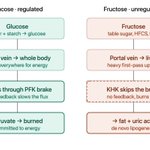
eating a carb-heavy meal will raise lactate even at rest, because glycolysis ramps temporarily to a rate at which the resulting pyruvate cannot be fully oxidized.
the "safety valve" that keeps glycolysis from stopping is converting pyruvate to lactate and transporting it out of the cell.
but the variable that determines how much this happens is largely mitochondrial quality and quantity (as well as enzyme efficiency)...
so even independent of current work rate, glycolytic capacity, etc... this is why lactate readings are useful: they're downstream of insulin sensitivity and mitochondrial function.
if you care about performance and longevity, you want to track this over time!
1
117
if you’re an entrepreneur or ai consultant right now, the few remaining friction points are your saving grace that enable you to arbitrage your skills.
right now you need to buy a few subscriptions, manage domains, hook up vercel, neon, clerk, etc…
but even now you can do so by literally speaking to the computer for a minute and handing over browser autonomy and permissions.
in a matter of months, these will not be barriers for non-technical business owners.
agi will proactively add economically valuable digital features for companies that already have distribution, at the push of a button.
strike while the iron’s hot.
46
every millennial investor who looks at the 5 yr chart on $SPY loves to go “ohhh you hate to see this if you’re in your 20s,” but don’t understand that it can just keep going…
index funds will *still* be the best way to capture economic growth which is growing at an accelerating rate (and will reach double digits in a matter of years)
as assets eat labor share of wealth creation, index funds will be the guaranteed vehicle to participate financially in ASI
62
germline evolution (aka random genetic mutation, naturally selected by the survival filter)
a) operates on too long of a timescale to be a relevant constraint on today’s medicine and b) will look more like random diversification of the gene pool (drift) because medicine keeps decoupling genotype from reproductive success.
we currently understand around 2-5% of the human genome (meaning, we know what a gene does and can predict what happens when you change it).
as ai is able to predict a higher % (like alphafold predicts protein folding without mechanism), and editing technology improves (see recent breakthroughs in base/prime editing and startups in embryo selection) it’s more likely that evolution becomes “active” rather than the darwinian mechanism.

1
57
and i dont think he was talking about antibiotic resistance or tumor adaptation, which happens on a very short time scale, but just to touch that base:
somatic evolution is already tractable: serial ctDNA lets us watch resistance emerge in real time, and treating clones as a population with the drug as the selection pressure decides dosing to maximize kill and control resistance.
15