
Researcher at Center for Energy Studies
Joined December 2020
- Tweets165
- Following486
- Followers132
- Likes17




🗓️Call for panels/papers for 2026 ECPR GC!
Submit by Jan 9 to one of our sections:
Climate policy: ecpr.eu/Events/Event/Section…
Geoeconomics and econ statecraft ecpr.eu/Events/Event/Section…
Everything else energy policy, politics, and governance ecpr.eu/Events/Event/Section…
@ecpr_energy
Do it now!

In view of the upcoming @ECPR General Conference in Dublin (12-15 August 2024), I welcome paper proposals for the two panels described below:
🔵Nuclear power
🟢Green electrification
If you have a proposal, send it to me (title & abstract of max 500 words) by Friday 12 January!


Finally, a methodological disclaimer: We investigated 495 source documents published since the dawn of time until Q1 2021. 400 were associated with EJ and 105 with ED, including 11 documents that related to both concepts.

ED conceptualization? Before 2018, one’d go to Kunze and Becker 2014 or Sweeney 2013. After 2018, it’s mostly Szulecki 2018.
If they use a reference to signal their understanding of EJ, they go to Jenkins et al. 2016, Sovacool and Dworkin 2015, McCauley et al. 2013, or Sovacool and Dworkin 2014. Cluster analysis resulted in no specific pattern how the authors select their conceptualization.

Of the papers that explicitly mention EJ or ED in their titles, 7% and 13% respectively do not provide any definition. Why is that?
▪️ Authors either see the concepts as common-sensical or...
▪️ Use them to position their (related) research


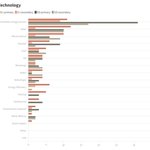
▪️ Both fields focus primarily on renewable energy.
▪️ Biomass and LPG, the tech sometimes associated with energy poverty studies, largely missing.
▪️ Both fields practically silent on nuclear waste.


Generally, both fields:
📌Show rather limited empirical coverage
📌Are concerned mainly with Global North
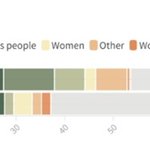
📌Overlook important social groups (women, low income individuals)
📌Display shallow theoretical base
📌Do not connect empirical research to conceptual foundations well
New in #ERSS! With @KacperSzulecki and @jenk2021 we traced the development of #energyjustice and #energydemocracy research fields, asking which countries, topics, tech, and social groups are reflected, and how EJ and ED are defined.
doi.org/10.1016/j.erss.2023.…

Nemá. Ale cyklovat nemusíte. Na aplikaci si nastavíte, kolik % baterie chcete mít nabitých co nejrychleji a kolik si může síť nabít podle aktuální situace. Ta první část bude dražší, ta druhá (poskytujete časovou flexibilitu) levnější. Něco jak HDO, to známe a máme rádi.
Jan Osicka retweeted

A year since #Russia's open invasion of #Ukraine, #EU is yet to extend sanctions to cover #nuclear energy, where RF's #Rosatom is a globally dominant player. We present a dataset of all Rosatom's international projects, the dependencies they create & associated #security risks 1/

31 European countries' air travel: flights shorter than 500 km account for 27.9% of departures but 5.9% of fuel burnt; vs. flights longer than 4,000 km account for 6.2% of departures but 47.0% of fuel burnt.
Might be of interest of @PetrOcelik

Banning super-short haul flights is getting a lot of attention as a way to reduce aviation emissions.
But how effective it would be in reducing emissions? In our new paper with Frédéric Dobruszkes & Laurette Mathieu we find: *very little*. doi.org/10.1016/j.jtrangeo.2…
(THREAD)

Omlouvám se, ale to, že v bezprostředním okolí bydlí lidé, kvalitu ovzduší na místě nijak nevylepšuje. Nechce MČ pobízet lidi k trávení času jinde než pod křižovatkou?