

Nuclear Energy, Science, Technology, Engineering, Computers, Linux, Opensource.
NL
Joined January 2011
- Tweets9.3K
- Following1.8K
- Followers574
- Likes14.6K





Jan Rhebergen retweeted

België en @ENGIE_energie zijn erin geslaagd de kerncentrales Doel IV en Tihange III in een half jaar volledig te reviseren, alle veiligheidsprocedures te doorlopen en weer op te starten. Terwijl sluiting gepland was.
Dat is een applausje waard, vindt u niet?
#grafiekvandedag

Jan Rhebergen retweeted

Mijn zoontje heeft een vriendje in zijn klas en hij is hier geboren, maar zijn ouders komen uit Somalië of Eritrea. Het is een leuk joch en mijn zoontje vroeg of hij bij ons kwam spelen. Hij woont dichtbij school dus mijn partner ging mee om kennis te maken met z’n ouders, maar het jochie snelde naar binnen en kwam naar buiten en zei: “ik moet om 17:00 thuis zijn, kan dat?” En m’n partner stond daar wat verbouwereerd en nam hem maar mee. Toen de man hem thuisbracht bedankt het vriendje voor het spelen en kwamen zijn ouders ook niet naar buiten. Ze komen ook nooit naar school.
Ik vind dit heel vreemd, je wil toch graag weten waar je kind naartoe gaat? Ik vermoed dat ze de taal ook niet spreken (na ruim 8 jaar 🙄) maar hun zoon had kunnen tolken. Andersom zou ik dit niet willen of het zou me niet lekker zitten.
Ik neem het het ventje niet kwalijk, maar ik denk dat ik aan de deur er toch op gestaan had om kennis te maken.

Jan Rhebergen retweeted

In Deutschland gibt es 42 tiefengeologische Endlager für toxische Abfälle. Sie enthalten unter anderem Arsen, Zyanid, Asbest, Quecksilber, Cadmium, sowie dioxin- und furanhaltige Abfälle.
Kein Grüner interessiert sich dafür! Warum nicht? Sind die Stoffe unbedenklich?
(1/7) 🧵

Jan Rhebergen retweeted

Researchers at Oxford argue that LLMs can't invent anything.
It's impossible mathematically.
The paper is called "Theory Is All You Need."
Teppo Felin and Matthias Holweg take the famous "Attention Is All You Need" title and flip it. Their argument is that AI predicts from the past, while humans reason forward into the future, and those are two different kinds of thinking.
Start with the numbers. The authors estimate a large language model trains on roughly 13 trillion tokens. A human reading at 150 words a minute would need about 164,000 years to get through that. A child hears around 20,000 words a day and roughly 36.5 million words in their first five years. It's the same task with wildly different data, and the child still ends up with language that goes far beyond anything they heard.
Their point is that the model learns which words tend to follow other words. It becomes a mirror of what people have already written. It doesn't build a theory of how the world works, so it can't step outside its training data.
The paper's sharpest thought experiment makes this painful. Imagine an LLM trained in 1633 on every scientific text ever written up to that point. Ask it about Galileo and heliocentrism. Thousands of years of geocentric texts would swamp Galileo's ideas, so the model would tell you he's wrong. It would also rate Tycho Brahe's astrology as more credible than the idea that the Earth moves, because more people had written about astrology.
Then there's flight. In 1888 the scientist Joseph LeConte looked at bird data, noted that no bird above 50 pounds could fly, and concluded humans couldn't either. Lord Kelvin, then president of the Royal Society, said he had not the smallest molecule of faith in aerial navigation.
The New York Times estimated in 1903 that flight was one to ten million years away.
Nine weeks later the Wright brothers flew.
The Wrights didn't have better data. They had a theory. They broke flight into three problems, lift, propulsion, and steering, built their own wind tunnels, and generated the data that didn't exist yet.
Wilbur wrote in 1900 that he had been "afflicted with the belief that flight is possible to man."
Every prediction machine on Earth would have told him no.
The authors call this the data belief asymmetry. Every real breakthrough starts with someone believing something the existing data says is wrong. A system trained to minimize surprise can't do that by design.
They're not anti AI. They say AI will win at routine, repetitive decisions that extrapolate from the past, which is most decisions. They're just pushing back on the idea that you should replace humans with algorithms whenever possible, which is a direct quote from Kahneman.
I use these models every day and this matches what I see. The new stuff comes from the human at the keyboard who decides the data is wrong.
LLMs don't think, you do!

Jan Rhebergen retweeted

There’s a painfully short list of people that write regularly about the nuclear industry and have industry experience. I’m tracking low single digits, and Nick is one of them.
He was running whatisnuclear when noooooobody cared. That made him one of the only people that was ready-to-receive when this latest renaissance kicked off, with a website packed full of data and stories for everyone to educate themselves on.
He also reviewed the first article i wrote for The Nuclear Review, my write up on nuclear reactors for investors! We’re all lucky to have a nuclear historian and cheerleader like Nick, and you should be doomscrolling his site instead of social 🤘


Jan Rhebergen retweeted

Can we finally stop pretending nuclear is "unreliable" because of droughts and heatwaves?
New study: across 500+ reactor-years in Europe, heat & drought reduced output by just 0.6% (max 1.3% in any country). That's peanuts.
Solar and wind are FAR more weather-dependent and thus less reliable year-round, even during droughts. Heatwaves often bring still air, so low wind is common exactly when it's hottest. Nuclear's capacity factor is ~90.9%, way steadier.
And the fixes work: French river-fleet heat losses dropped 91% (5.5→0.5 TWh) since 2003 through cooling upgrades.
(Voor @MelissaDepr, dat is precies het punt dat ik eerder maakte.) sciencedirect.com/science/ar…

Jan Rhebergen retweeted

"Een fundamentele koerswijziging in het beleid voor hernieuwbare energie", aldus de Duitse minister van Energie. Voortaan gaat Duitsland meer sturen op de totale systeemkosten. Wanneer volgt Nederland? (via @BM_Visser)
linkedin.com/posts/remcodboe…

Jan Rhebergen retweeted

Perhaps the most important part of this statement is what *wasn't* said.
The German government didn't say it wasn't possible to repair or rebuild the reactors.
They didn't say it would be too expensive to embark on such a program.
They didn't say the power the reactors would provide isn't necessary.
They didn't say any of that because none of it is true.
They said something defensible: that it was a political decision to make nuclear illegal, and it remains illegal to this day.

Official statement from the German government on REG’s latest Germany Restart report:
"The Federal Government is aware of the analyses by the Radiant Energy Group as well as the open letter.
In 2011, the German Bundestag decided to accelerate the nuclear phase-out via the Thirteenth Act to Amend the Atomic Energy Act, supported by a broad, cross-party majority comprising the then-governing parliamentary groups (CDU/CSU and FDP) as well as the SPD and Alliance 90/The Greens parliamentary groups.
The last three German nuclear power plants were shut down in 2023. All German nuclear power plants have already received authorization for decommissioning and dismantling, and the dismantling process is underway; parts of the facilities have already been shut down and dismantled.
There has been no agreement since then to resume the use of nuclear energy via nuclear fission; moreover, doing so would contradict the objective set out in the Atomic Energy Act—namely, to bring the use of nuclear energy for the commercial generation of electricity to an orderly conclusion."
Tl;dr the government decided to make nuclear illegal in 2011, which is why it has to be illegal.
When today's legislators blame yesterday's legislators for a policy they know and admit is wrong, it becomes a question of democracy. Especially given that 3x as many Germans want to keep using nuclear as phase it out.

Jan Rhebergen retweeted

Grosszügige Subventionen für Erneuerbare:
Laut Nuklearexpertin Prof. Dr. Annalisa Manera von der ETH Zürich könnte man mit den Subventionen, die heute in Windräder fliessen, ein Kernkraftwerk fast gratis bauen.

Jan Rhebergen retweeted

During Kristallnacht in November 1938, a 15 year old Jewish boy and his father walked the streets of Munich to avoid the Gestapo.
One small item from World War One may have saved their lives:
(🧵)

Jan Rhebergen retweeted

No, French nuclear reactors did not shut down because they could not cool
During the latest heatwave, several headlines made it sound as if French nuclear reactors had to close because the reactors themselves technically could no longer be cooled.
That is not what happened.
Some reactors were curtailed because of environmental regulation on river temperatures and water discharge. To protect downstream ecosystems, EDF must comply with strict environmental thresholds. Some plants are required to ensure that the river does not exceed a maximum temperature after cooling water is returned, even when the water on average is returned only around 0.2°C warmer.
That is very different from saying the reactors could not technically cool themselves. Nuclear reactors have no problem using "hot" intake water as cooling. Coastal reactors are also not exposed to the same river-temperature constraints, why this "problem" mostly concern inland power plants.
Looking at the actual generation data gives a useful sense of scale. From 1 to 16 June, French nuclear generation averaged 38.9 GW. From 17 to 30 June, during the heatwave period, it averaged 38.2 GW. In other words, French nuclear generation changed surprisingly little.
Records from the French transmission system operator RTE Réseau de Transport d'Electricité show that nuclear capacity averaging 2.7 GW, equal to around 4.3% of the French nuclear fleet, was unavailable because of environmental regulation during the heatwave period (June 17 to June 30). But this did not translate one-for-one into lower French nuclear generation. Aggregate output stayed broadly steady, likely because other available reactors partly absorbed the effect and because unavailable capacity is not the same as guaranteed lost production.
That does not mean there was no impact. A few GW of constrained nuclear capacity can matter when consumption rises during a heat wave. But it's not only nuclear that is affected.
We could apply the same logic to other energy sources. Wind generation also dropped right as the heatwave began on 17 June. Solar panels become less efficient at high temperatures. Demand rises because of cooling needs.
Heatwaves affect the whole energy system, not only nuclear power.

Jan Rhebergen retweeted

Wer übers Sparen spricht, darf über die #Energiewende nicht schweigen. Es geht um mindestens 30 Mrd/Jahr. Reaktivierung #Kernkraft würde diese Mittel nach und nach politisch wieder verfügbar machen und entscheidende Ursache der Wirtschaftskrise beseitigen. welt.de/debatte/plus6a3d1504…


Jan Rhebergen retweeted
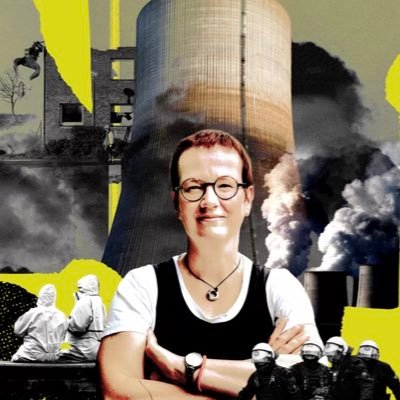
Einzelne AKW in Frankreich down vs fast die gesamte Windkraft in Deutschland down. Von der CO2-Bilanz ganz zu schweigen.


Frankreich drosselt einzelne Atomkraftwerke wegen Hitze und Kühlwasserauflagen. Deutsche Atomkritiker machen daraus ein Systemproblem. Die Fakten sprechen dagegen: geringe Produktionsverluste, hohe Stromexporte und keine Versorgungskrise.
#Atomkraft #Frankreich #Hitze #Energiepolitik
blackout-news.de/energie/hit…

Jan Rhebergen retweeted

Jetzt gibt es keine Ausreden mehr für die deutsche Politik: Ehemalige Leiter von Kernkraftwerken erklären deren Reaktivierung für möglich und sinnvoll!
Wirtschaftlichkeit, Machbarkeit und Zeitplan werden in der Neuauflage des @RadiantEnergyG-Berichts zur Reaktivierbarkeit deutscher Kernkraftwerke detailliert erklärt, der am kommenden Montag veröffentlicht werden wird.


Jan Rhebergen retweeted
WE HAVE ACHIEVED CRITICALITY ✨
On the fourth of June 2026, the Idaho sun rose over the high desert kindling the dawn of the Second Atomic Age.
Last May, President Trump signed an executive order mandating that three reactors go critical before July 4th, 2026.
One month ahead of schedule, @AntaresNuclear answered, sustaining a steady chain reaction at Idaho National Laboratory.
This is the first new reactor brought to life at INL since 1973. The same ground where, in 1951, nuclear electricity first powered four light bulbs.
Criticality is only the beginning, a fleeting spark on a long and difficult road.
But it carries a message that echoes across the plains: American Nuclear is back.
Today marks the return of a new era, one where the United States once again tackles the hard things, where innovation is pursued without apology and celebrated without restraint.
It was powerful to stand on that iconic ground and witness history be made!
Congratulations to every single one involved ✨


Jan Rhebergen retweeted

Dit filmpje zou verplichte kost moeten zijn voor iedereen die ‘de genocide in Gaza’ als feit brengt. Verplicht voor de slachtoffers van propaganda en zeker voor de kwaadaardige verspreiders ervan, die je helaas maar al te vaak in de media en politiek ziet

