

Inference R&D at https://xitter.gq/t.co/C8Vz08a4XZ
Pune, Maharashtra India
Joined September 2023
- Tweets649
- Following1.1K
- Followers495
- Likes2.4K




Pinned Tweet
I have been writing a small series on LLM inference with @vllm_project that can be a practical starting point for people trying to understand this space.
Along with the explanations, I also ran benchmarks on realistic workloads across different GPUs and datasets to evaluate how these techniques perform in practice.
It covers:
- Major speculative decoding techniques
- Major quantization methods
- Distributed inference: DP / PP / TP
- Expert Parallelism and mixed parallel setups
- Practical optimization techniques like prefix caching, KV cache, and disaggregated prefill/decode
My goal was to explain how these techniques work, where they help, so it is easier to choose the right approach for a given workload.
This series is useful not only for people getting into LLM serving, but also for engineers who are already serving LLMs and want to optimize inference, improve throughput, reduce latency, or evaluate the right serving strategy.
Doing some experiments on Dspark and the Looped Transformer model inking 2 mini. Let’s see how much impact the looped transformer has with speculative decoding.
2
155
Open source 💫

US open-weight models have caught up.
We post-trained four US models from @meta, @nvidia, @reflection_ai and @thinkymachines with the Harvey Tenet recipe we used on Kimi K3.
They are now competitive with non-US models, and Muse Spark Open is the first model to pass 30% all-pass on Legal Agent Bench.
5
419

Jaydev retweeted

🚨 Introducing HobbyLM-Embed: India's first embedding model built from scratch, and the smallest MoE embedder on MTEB
A 140M model with 36M active. 62.33 on MTEB(eng, v2), near SOTA at ≤40M active params - Top 10 on MTEB.
Runs on CPU and MLX. Apache-2.0.
huggingface.co/harims95/hobb…

Jaydev retweeted

Tokens & Teens. @jarvislabsai and @lossfunk are teaming up for a three-hour hackathon, for ages 13 to 19.
Bengaluru, Saturday 28 November. Free. No theme. A billion DeepSeek tokens, powered by Jarvislabs Token Factory.
Forward this to the young builders in your life.

Total number of kernels = number of fused groups + number of external kernels calls like cuBLAS library.
This is the small view of torch.compile and how at the end it gets decided how many gpu kernels gets created for our models inference.
Focus on top right blog diagram 🥸

9
251
Gemma 4 31B Global Attention (FA4) kernel peaks at only 30% (300 TFLOPS), while one H200 can deliver up to 989 TFLOPS, impacting TTFT badly on prompts larger than 50k tokens.
Tried other backends like
FlashInfer and
TRITON_ATTN, but they are slower than FA4.
Still exploring other ways……
Tried 9 different torch.compile Inductor settings on Qwen3-0.6B running on an NVIDIA A30.
Most made little to no difference.
combo_kernels was the only one that noticeably helped, reducing decode latency by 1.5%. Adding coordinate_descent_tuning pushed it to 2.1%.
Interestingly, max_autotune had no effect. Turns out Inductor skips Triton matmul autotuning on GPUs with fewer than 68 SMs. The A30 has just 56.

2
8
366
Jaydev retweeted

Sovereignity is about control of destiny. Each additional step towards it should be welcome, makes pulling the rug from under us that much harder. Self hosted open weight models at @jarvislabsai and BlazeInfer platform has been around for a while based on same thesis. We are inviting indian model builders to use our sovereign infrastructure to host their proprietary models as well.
Jaydev retweeted

Training a LLM model is hard, very few companies in the world has done this. It needs courage to even attempt one.
Sarvam, Gnani and others from India are trying it. I think we should encourage them. By nature, success of startups is very hard, 90% plus failure rate and that increases when you want to try harder things.
Is serving LLM's profitably easier, I don't think so. If Indian companies do not succeed in building great products that produce tokens efficiently and economically, then all our companies should import them, which has much larger implications. Few of us are making an effort, in trying to change that. Will we succeed, may be yes/no.
Startups are famous for doing things against the odds. We all will do our best to challenge the status quo.
How could you serve Chinese models: Because China was able to produce some of the best open weights models. Customers wants to solve problems, with whatever tools work. If we look around, we all can notice a lot of things that are built in China, US and other countries. As new models come up, which are better they replace. The origin of the models just plays a part in wether they are served are not.
As a country, should we not celebrate Entrepreneurs and support them when they fail.
Same models, same benchmark, faster and cheaper. All on H200s, built and running in India. 🇮🇳

We launched Jarvislabs Token Factory two months ago, running on GPUs in India, and have been heads down improving it ever since.
We benchmarked the same three open-weight models on Sarvam's Token Factory and ours.
We're on par with or faster than Sarvam across speed and latency metrics, while offering lower pricing.
- GLM 5.3 Flash is almost 2x faster.
- Gemma 4 31B and DeepSeek V4.1 Flash are slightly faster, with significantly lower pricing for input, cached, and output tokens.
And we're running on H200s, not B200s btw.

3
248
Jaydev retweeted
And we did not write any custom kernels
We launched Jarvislabs Token Factory two months ago, running on GPUs in India, and have been heads down improving it ever since.
We benchmarked the same three open-weight models on Sarvam's Token Factory and ours.
We're on par with or faster than Sarvam across speed and latency metrics, while offering lower pricing.
- GLM 5.3 Flash is almost 2x faster.
- Gemma 4 31B and DeepSeek V4.1 Flash are slightly faster, with significantly lower pricing for input, cached, and output tokens.
And we're running on H200s, not B200s btw.
Tested a small vLLM startup win today. It saved 18 s, and it had nothing to do with GPUs.
vllm serve imports ~35,000 Python files. Images built with uv had no .pyc files, so every fresh container compiled them all again.
vLLM ≥ 0.32.0 ships precompiled bytecode.
Qwen3.8-27B, 1× H100: 107.6 s → 89.6 s


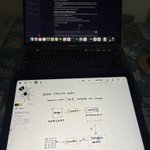
I like this way of taking notes. It keeps my things connected in one freeform board. Whenever i have to find something I checks the scenes from freeform app then gets everything else connected to it there. I came to explore the torch inductor and got revise everything related to CUDA in a couple of minutes.
Not revised but got connected to it.

3
223
