

Natural Wellness Advocate | 📚🎮 nerd @bookandlatte | Centrist Free Thinker | Biotoxin illness #CIRS & #LymeWarrior 💚🏹
Colorado
Joined January 2012
- Tweets19.3K
- Following884
- Followers1.6K
- Likes9.6K





Jen Halligan retweeted

I'm a spine surgeon. You asked a fair question, so here's the plain-English answer.
Before 2012 you could buy an individual plan online for about $200 a month, pick from six or seven insurers, and choose your own deductible: $500 if you wanted to pay more up front, $5,000 if you didn't. If you were healthy, that is. If you were sick, they could turn you down, and that part was real and had to be fixed.
Obamacare fixed it by requiring every plan to cover everyone for everything. Good. But that made the real price of a plan jump, and the only way to keep the monthly number from looking insane was to push the cost onto the back end. That's your $6,500 deductible. You're paying comprehensive prices for catastrophic coverage.
Then the quiet part. The law caps what insurers can keep at 20% of premiums. So the only way an insurer makes more money is if the total bill gets bigger. 20% of $10,000 beats 20% of $5,000. They have no reason to fight the hospital's price. They pass it through, take their cut, and send you the premium.
And the hospital's price went up. Hospitals bought the independent doctors, and the same visit & surgery under the hospital's name now costs 3-10 times more. Hospital prices are up 281% since 2000.
The number of insurers you can choose from fell to one in half the counties in America by 2018. Meanwhile, six in ten adults now have a chronic disease, so the pool is sicker.
So: sicker patients, pricier hospitals, an insurer that profits from a bigger bill, and a law that moved the cost to your deductible. That's what you're paying for.
Nobody in that chain gets paid more if you get better. That's the part to fix.

CAN SOMEONE EXPLAIN HEALTH INSURANCE LIKE I’M FIVE?
I pay $580 every month for health insurance. Then I get sick, visit the doctor, and receive a $1,400 bill because I haven’t met my $6,500 deductible.
So I paid nearly $7,000 in premiums just to be told I still have to spend another $6,500 before most of my coverage kicks in.
And every January, the deductible resets and the whole game starts over.
WHAT EXACTLY AM I PAYING FOR IF I STILL HAVE TO EMPTY MY OWN POCKETS BEFORE MY INSURANCE DOES ITS JOB?
Big fat flakes of snow this morning where we are, but they didn’t stick for long. #COwx

1
125



Jen Halligan retweeted

😳😳
I am afraid this man is absolutely right and there is a huge problem coming our way.
😱
Jen Halligan retweeted

Next week, for the first time in human history, a human-made object will reach a distance of one light-day from Earth.
We're inviting the world to celebrate Voyager 1's major milestone with us. science.nasa.gov/mission/voy…


Moon landing conspiracy debunk (again) #space #nasa #astronomy #science youtube.com/shorts/UG6aH5DX8…

1
41
Jen Halligan retweeted
A comprehensive environmental study led by researchers at Stockholm University warns that rainwater across every geographic region of Earth is now heavily contaminated with toxic synthetic pollutants. Analytical testing reveals that global precipitation consistently contains per- and polyfluoroalkyl substances (PFAS) at concentration levels that vastly exceed the lifetime drinking water health advisories established by major global regulatory agencies.
Commonly referred to as "forever chemicals" due to the exceptionally strong carbon-fluorine bonds that make them virtually immune to natural environmental degradation, these substances have integrated entirely into the Earth's hydrologic cycle. Because they cycle continuously between the oceans and the atmosphere via marine aerosols, they have successfully contaminated even the most isolated locations on the planet, including the remote ice sheets of Antarctica and the high-altitude Tibetan Plateau. This global saturation means that untreated rainwater everywhere on Earth is now unsafe for human consumption.
For decades, industrial manufacturing sectors have used PFAS compounds extensively to produce everyday consumer goods, including nonstick cookware, stain-resistant fabrics, waterproof outerwear, and specialized aqueous film-forming firefighting foams. Over time, these chemicals leached out of landfills and industrial wastewater streams, permanently infiltrating primary aquatic systems and cycling upward into the upper atmosphere.
Biomedical research has definitively linked chronic exposure to these persistent pollutants with a wide array of severe, long-term health anomalies. These risks include the development of specific malignancies, compromised immune function, decreased fertility rates, elevated cholesterol, and notable developmental delays in children.
As international regulatory bodies actively work to lower permissible drinking water thresholds, environmental health experts warn that humanity has crossed a critical planetary boundary. Because these persistent chemicals are already distributed globally throughout the atmosphere and water cycles, reversing this widespread contamination is practically impossible using current remediation technologies.
[Cousins, I. T., Johansson, J. H., Salter, M. E., Sha, B., & Scheringer, M. (2022). Outside the safe operating space of a new planetary boundary for per- and polyfluoroalkyl substances (PFAS). Environmental Science & Technology, 56(16), 11172-11179]


Jen Halligan retweeted

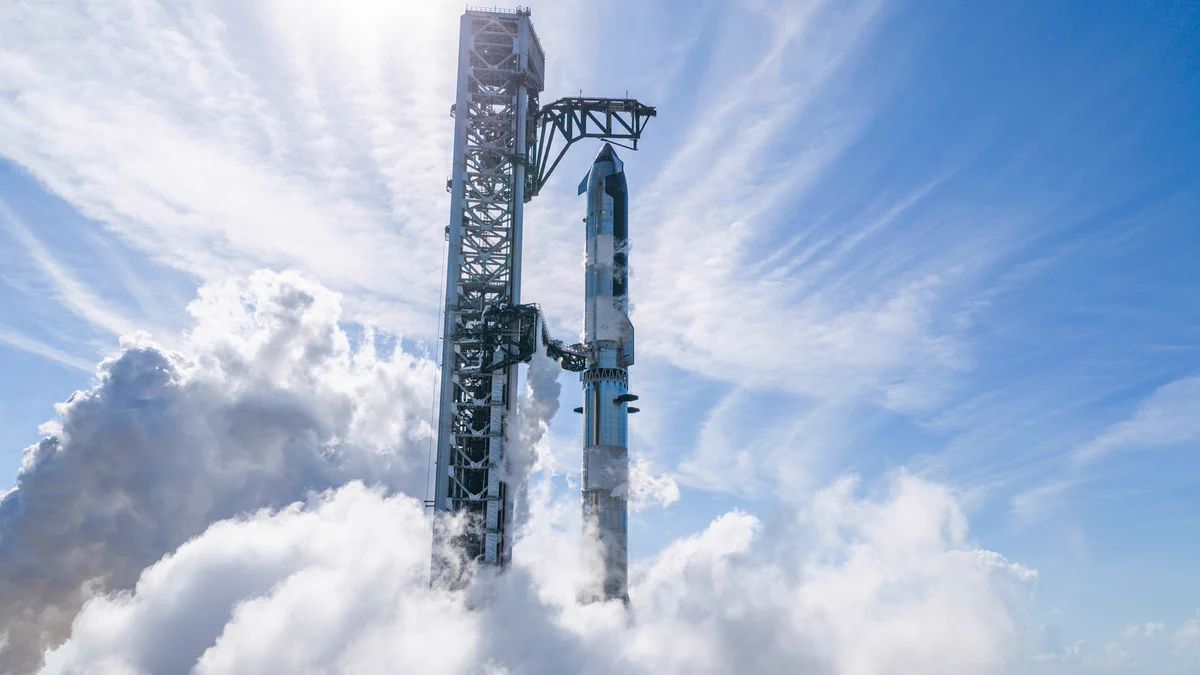
Watch Starship Flight 14 xitter.gq/i/broadcasts/1qxvvenMP…
Jen Halligan retweeted

Lotus seed pods appear to make different facial expressions
The round seed holes can line up like eyes and mouths, making the pods look like they’re smiling, frowning or reacting


Jen Halligan retweeted

🚨 Chinese scientists just detected an unexplained 71-terahertz vibration inside mitochondria — the microscopic "powerhouses" of living cells.
The work was published by researchers at the University of Shanghai for Science and Technology.
The signal, which oscillates 71 trillion times per second, was detected in living human cells and mouse tissues but vanished completely once the cellular structures were dried or disrupted.
This dependency on structural integrity led the scientific team to propose that mitochondria may utilize a quantum hybrid state, known as a polariton, created by light-matter coupling inside their highly folded inner membranes to optimize how they function.
To test this theory, the scientists stimulated human cell cultures with weak infrared light tuned to specific frequencies associated with this quantum state. The experiment yielded a stunning 10 percent jump in the production of adenosine triphosphate (ATP), the vital molecule that fuels almost every biological function in our bodies.
While the study was published as a bioRxiv preprint and is still awaiting peer review, it represents a monumental leap for quantum biology. If verified, the ability to manipulate these quantum channels could pave the way for revolutionary treatments targeting metabolic diseases, aging, and chronic genetic conditions.
source: Song, B., et al. (2026). A quantum state of mitochondria in the living cell. bioRxiv.

Jen Halligan retweeted

MIT published a brutally honest report on what AI is doing to students.
A committee of professors and students spent five months studying how AI changed learning on campus, and the findings read like a warning to every university on the planet.
Study groups are disappearing. Office hours are emptying out. Problem sets and take-home exams no longer prove anything, because AI can produce credible solutions to almost any written assignment in the undergraduate curriculum. Students who lean on chatbots lose mastery and confidence, and some slip into what the report calls cognitive surrender, reaching for AI at the first hint of struggle.
The numbers are rough. 46 percent of surveyed MIT undergrads use LLMs daily. 90 percent worry about their own overreliance. Undergrads who feel AI makes them replaceable now outnumber those who feel it makes them capable.
The committee's answer surprised me. They refused to fight AI with surveillance. The report calls AI detectors unreliable, says lockdown browsers feel like spying, and warns that policing students builds a classroom atmosphere of mutual distrust.
Instead, MIT wants to rebuild education around the things AI can't replace. That means oral exams, semester portfolios, in-person project work, and a required social component in every subject. The report even floats the idea of rethinking grades entirely, since without a GPA to optimize, much of the incentive to cheat with AI evaporates.
The committee warns professors against replacing undergrad research assistants with AI agents just because they're cheaper, because a university exists to grow people, not output.
The most famous tech school on earth admitted the machines broke its way of teaching. Its answer is more humans, not more software.

Jen Halligan retweeted
The U.S. Forest Service is spraying glyphosate (Roundup) across tens of thousands of acres of national forests this spring to support commercial timber production.
Following wildfires, forests naturally regenerate with diverse shrubs, wildflowers, and wildlife. However, a recent investigation reveals that the Forest Service and private logging companies are routinely applying the herbicide to eliminate competing native vegetation, favoring commercially valuable species such as Douglas fir and sugar pine.
This practice has created large areas with significantly reduced biodiversity, often described as "dead zones", where insect, bird, and plant populations have sharply declined. Glyphosate, classified by the World Health Organization as a probable human carcinogen, has seen its use in California national forests quintuple over the past two decades, reaching a record 266,000 pounds in 2023.
Local communities, environmental groups, and residents are raising concerns about potential impacts on water quality, endangered species (including salmon and rare foxes), and public health. Critics argue that prioritizing industrial timber production over ecological diversity conflicts with the broader mission of national forests as public lands.
The issue has intensified debates over forest management, balancing economic interests with long-term environmental and community health.


