

Co-founder @E11BIO Prev @HHMIJanelia (NeuroAI & lead MouseLight) Building technologies to map mammalian brains at scale
Alameda, California
Joined May 2015
- Tweets147
- Following188
- Followers514
- Likes54




Pinned Tweet
Incredibly proud to announce that today @E11BIO is releasing our first preprint together with accompanying open data and methods🚀 Here we show how our PRISM technology addresses the biggest bottlenecks in connectomics: tracing and sample fragility.

@E11BIO is excited to unveil PRISM technology for mapping brain wiring with simple light microscopes. Today, brain mapping in humans and other mammals is bottlenecked by accurate neuron tracing. PRISM uses molecular ID codes and AI to help neurons trace themselves. We discovered a new cell barcoding approach exceeding comparable methods by more than 750x. This is the heart of PRISM. We integrated this capability with microscopy and AI image analysis to automatically trace neurons at high resolution and annotate them with molecular features.
This is a key advance towards economically viable brain mapping - 95% of costs stem from neuron tracing. It is also an important step towards democratizing neuron tracing for everyday neuroscience. Solving these problems is critical for curing brain disorders, building safer and human-like AI, and even simulating brain function.
In our first pilot study, we acquired a unique dataset in mouse hippocampus. Barcodes improved the accuracy of tracing genetically labelled neurons by 8x – with a clear path to 100x or more. They also permit tracing across spatial gaps – essential for mitigating tissue section loss in whole-brain scaling. Using molecular annotation, we uncover an intriguing feature of synaptic organization, demonstrating how PRISM can be used for systematic discovery 🧵
Johan Winnubst retweeted

You may have noticed some "holy $%@#" tweets on fly brain emulation. So is this a game-changer or a nothing-burger? Read on to find out...
🚀 Looking to hire a light-sheet microscopy scientist to help us design, build, and optimize the next-gen platform that will power mammalian connectomics at scale. If you’re excited to join a fast-paced team doing high-impact science, take a look: jobs.lever.co/convergentrese…🔬⚙️
🚀 Excited to be growing the ML team at E11 Bio! We’re looking for creative ML scientists to help us revolutionize connectomics at scale 🧠✨
In this role, you’ll design and deploy ML systems that turn massive 3D microscopy datasets into biological insight. Come strengthen our team to work on what Nature called one of 2026’s “technologies to watch.”
👉 jobs.lever.co/convergentrese…
We teamed up with AWS Open Data to make all our PRISM data openly available! Read more here in our joint announcement:
aws.amazon.com/blogs/publics…

Couldn’t be prouder of the team we’ve built at @E11BIO and what we released today. The energy and momentum in the lab is invigorating and gives me confidence we’re at an inflection point that will change the field. And trust me, what we have under wraps is even cooler🔬🤖

Want to learn more about our work at @E11BIO? Well great news: we got a pod for that!
Also, I will now forever be in debt to @ashleevance for coming up with the phrase "Amazing technicolor breakthrough". Clearly this is a writing talent I don't possess 😂

We get into where AI and brains collide tomorrow on the pod with @Andrew_C_Payne and @E11BIO
Johan Winnubst retweeted

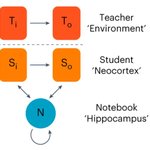
Why does AI sometimes fail to generalize, and what might help? In a new paper, we highlight the latent learning gap — which unifies findings from language model weaknesses to agent navigation — and suggest that episodic memory complements parametric learning to bridge it. Thread:

ALT Latent learning: episodic memory complements parametric learning by enabling flexible reuse of experiences Andrew Kyle Lampinen , Martin Engelcke , Yuxuan Li , Arslan Chaudhry and James L. McClelland; Google DeepMind
Johan Winnubst retweeted

A cell is a vibrating, densely packed bag of molecules. The ratios of these molecules are not balanced, however. A typical HeLa cell, for example, has about 20 times more protein than DNA by mass. Why, then, are the methods available to study proteins so much more expensive, and less scalable, than those used to study DNA?
Human cells make thousands of different proteins using 20 amino acids.
Those amino acids can be arranged in a staggering number of combinations to make everything from small, spindly structures like insulin (51 amino acids) to globular giants such as titin (34,350 amino acids).
This chemical diversity is what makes proteins so adaptable and infinitely useful.
Ideally, scientists would be able to study the proteomes of thousands of cells in one experiment! And cheaply, too! But in reality, existing proteomics technologies can only be used to analyze about a dozen cells at once — a paltry amount.
Modern proteomics is majorly bottlenecked, in other words. And it's a shame, because many of the diseases we care about are influenced by proteins. Protein alterations — like phosphorylation and ubiquitination — can change a protein’s function in ways that are invisible at the level of DNA or RNA. Diseases like Alzheimer’s are partly driven by these changes. And it is exceptionally difficult to study the brain, with its billions of cells, by looking at the proteins of just a few cells each day.
For my latest essay in @AsimovPress, I explain how a non-profit organization, called Parallel Squared Technology Institute, is trying to solve this problem. Their goal is to make proteomics as scalable and accessible as DNA sequencing. And remarkably, they are working toward this goal NOT by making better hardware (aka bigger, more expensive machines), but rather by inventing better molecular barcodes, devising protocols to squeeze more data out of mass spectrometers, and writing software to handle all the data.
So far, they’ve made a 9-plex barcode system (up from the state-of-the-art 3), and combined it with a time-staggered injection method called timePlex, thus enabling 27-plex experiments on existing machines. Their strategy has already boosted the number of proteomes scientists can study in a single day by a great deal. Now they want to 100x this again.
The Parallel Squared team is now applying their tools to study Alzheimer’s. They’re mapping the proteomes of individual neurons taken from patients who died at various disease stages, from Braak 0 to Braak 6. By lining up healthy and diseased cells and watching how protein quantities change, they aim to flag molecular markers that appear before symptoms begin — in the disease’s quiet, prodromal phase, when treatments might still work.
Thanks for reading. You can check out the full article here: press.asimov.com/articles/pr…

🚀!

This summer, I’m interning at @E11BIO in SF as an ML fellow! We'll further push my previous work on automated connectome proofreading. Let’s have coffee and chat about AI & vis for bio/neuro if you're in the area! Collab w/ @srinituraga 🧠 #connectomics #AI @Convergent_FROs

Johan Winnubst retweeted

Just Published: A look inside @FutureHouseSF, the nonprofit trying to build an AI scientist.
We sent a photographer to their HQ in San Francisco and interviewed both co-founders, @SGRodriques and @andrewwhite01.
Check it out in the link below.

Exciting opportunity for viral engineering wizards to come join our mission to map the mouse brain!

🚀 Join Our Team! We're seeking a Scientist and Research Associate to drive In Vivo Circuit Mapping and push the boundaries of whole-brain connectomics. If you're passionate about moonshot neuroscience and skilled in viral labeling, apply now!
#hiring

Johan Winnubst retweeted

I’m excited about this highly collaborative project by @sunw37, @JohanWinn, and many other talented contributors. Read more about how our @HHMIJanelia team imaged thousands of neurons in mouse hippocampus as mice learned cognitive tasks over several days:
janelia.org/news/mapmaking-i…


1/12 How do animals build an internal map of the world? In our new paper, we tracked thousands of neurons in mouse CA1 over days/weeks as they learned a VR navigation task. @nspruston @HHMIJanelia, w/ co-1st author @JohanWinn
Video summary: youtube.com/watch?v=yw_4uVur…
Paper: nature.com/articles/s41586-0…
Johan Winnubst retweeted

Cellpose3 from @marius10p and @computingnature uses deep learning to enhance degraded images for more accurate segmentation. nature.com/articles/s41592-0…

Johan Winnubst retweeted

Exciting! 'Space is a latent sequence' & CSCG theory of hippocampus we developed at @GoogleDeepmind and @vicariousai gets strong support in this @Nature paper with a set of ingenious animal experiments, neural recordings and analysis. Congrats @sunw37 @nspruston @JohanWinn...1


Nature research paper: Learning produces an orthogonalized state machine in the hippocampus
go.nature.com/4jWJoqc
Johan Winnubst retweeted

Such a revealing moment—seeing hippocampus build a state machine for tasks in an orthogonalized manner! Truly honored to work with amazing @weinan, @JohanWinn @nspruston, and @HHMIJanelia team on this brilliant paper (a big milestone in my opinion)!
1/12 How do animals build an internal map of the world? In our new paper, we tracked thousands of neurons in mouse CA1 over days/weeks as they learned a VR navigation task. @nspruston @HHMIJanelia, w/ co-1st author @JohanWinn
Video summary: youtube.com/watch?v=yw_4uVur…
Paper: nature.com/articles/s41586-0…
This has been an amazing collaboration with a host of talented people! Early on @sunw37, @nspruston and I had very high-level discussions on how to design an experiment to "close the loop" between neuroscience and AI. I like to think that we have done just that :) What a ride! 🚀
1/12 How do animals build an internal map of the world? In our new paper, we tracked thousands of neurons in mouse CA1 over days/weeks as they learned a VR navigation task. @nspruston @HHMIJanelia, w/ co-1st author @JohanWinn
Video summary: youtube.com/watch?v=yw_4uVur…
Paper: nature.com/articles/s41586-0…