

🇬🇧 Ancient & whimsical academic. Time traveller exploring the 21st century. Curious not judgemental. Be Courteous, gentle & kind. ⛔ No DMs
England.
Joined May 2022
- Tweets48.3K
- Following743
- Followers874
- Likes72K




Pinned Tweet
Yes! I know! This site is untidy.
I haven't cleared up but come in.
Pull up a chair and have a cuppa.
My background is Medical & education.
My interests: Art, poetry, comedy, music, Sci-Fi/horror.
Happily married to Ell (40yrs).
Kindness respect & acceptance.
Ally to 🏳️🌈🏳️⚧️

Six weeks later, Gerald returned to the pet shop with the kitten to discuss exactly how big it woouos be when fully grown.


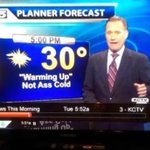
And now, the weather forecast....
It's cold....but it's not ass cold!
You will not be freezing part of your anatomy off.
Just thought you'd like to know.🙂👍

Me: "Hey, Meowy. Don't disturb me today. I've got a whole lot of work on the computer this afternoon."
That afternoon......

The Rose Garden by Daniel Ridgway Knight
- Daniel Ridgway Knight was an American artist born in Pennsylvania.
- However, his painting was very much influenced by French artists.
- He lived and studied at the École des Beaux-Arts, Paris, having a studio at Poissy on the Seine.

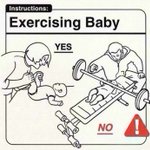
Thankyou, post-natal manual on child health.
I almost made a terrible mistake while exercising my baby. 😬

Hi everyone.
Today I thought I'd start with Philip Sidney's 3 requirements of a good poem.
It should teach, paint a word picture, & delight the reader.
Sir Philip Sidney was an Elizabethan courtier,scholar and poet. He wrote "The Defense of Poetry" & "Astrophel and Stella".


I studied this when I was a radiographer.
- You use Ultra-Low Energy X-rays known as Grenz rays (Grenzstrahlen).
- They were discovered by Gustav Bucky in 1923.
- They sit on the electromagnetic spectrum right between ultraviolet and traditional, harder diagnostic X-rays.


I saved this image a couple of years ago.
I really like it.
The use of mirror reflections and the limited colour palette make it rather beautiful in my view.

Don't worry.
Uncle Neville has given the cat the salmon from the fridge, so it won't want anything else now.
He says we should get "peace in our time"


Because something is weird with my ability to upload photos this morning on X, I'm falling back on images I have on my tablet already.
You know, the ones I found interesting but didn't have a use for.
Looking at the variety, I'm wondering what a psychologist would make of it.
We are the music makers,
And we are the dreamers of dreams,
Wandering by lone sea-breakers,
And sitting by desolate streams; —
World-losers and world-forsakers,
On whom the pale moon gleams:
Yet we are the movers and shakers
Of the world for ever, it seems.

Hi everyone.
I rather like this quote from Lao Tzu (also called Laozi, which means "Old Master").
He was an ancient Chinese philosopher and the founder of Taoism.
I also like his quote "When I let go of who I am, I become who I am".
Both quotes speak to universal truths.

Jonormous B retweeted
After the apple joke, I was trying to think of what would be next... never would have guessed an Eggs-Box 360! 😂
RIP Legend!
Jonormous B retweeted

November 1, 1700. A king died childless in Madrid and started a world war that killed somewhere around a million people.
He was 38. He had been unable to chew properly, he had a tongue too large for his mouth, he suffered seizures and fainting fits, and he could not produce an heir. His own assessment of his situation was that God alone bestows kingdoms, and that he himself was nothing.
Charles II of Spain is the end point of one of the most reckless genetic experiments in European history.
The Spanish Habsburgs had spent nearly two centuries marrying their own relatives to keep the inheritance inside the family. Uncle to niece, first cousin to first cousin, over and over. Charles's parents were uncle and niece. Modern genetic work on the Spanish Habsburg line has calculated inbreeding coefficients in the final generations comparable to the offspring of a brother and sister.
The results were exactly what you would predict. Enormous infant mortality in the family, and a final heir who was physically and medically wrecked from birth and who nobody expected to survive childhood.
He survived to 38, which is the thing nobody planned for.
Because for most of his reign, Europe's chanceries were not governing. They were waiting.
Charles ruled Spain, Naples, Sicily, Sardinia, Milan, the Spanish Netherlands, and the entire Spanish empire in the Americas and the Philippines. Whoever inherited that would be the dominant power on earth.
He married twice. Marie Louise of Orléans, a niece of Louis XIV, for ten years, no children. She died in 1689. He then married Maria Anna of Palatinate-Neuburg, a Wittelsbach, who clashed bitterly with his mother and was rejected by much of the Spanish nobility as a foreigner, and there were no children there either.
So the claims were argued over his head by two families.
Louis XIV of France had married Charles's half-sister and claimed the inheritance for his grandson Philip of Anjou. The Austrian Habsburgs, the other branch of the family, claimed it for the Archduke Charles.
England and the Dutch Republic, who had spent decades fighting Louis XIV, were adamant that France must not get it, because a Bourbon ruling France and Spain together would dominate Europe and the Atlantic trade.
So they tried to carve it up in advance. The partition treaties were negotiated between foreign powers, while Charles was alive, dividing his possessions as though he were already dead. A 1698 compromise named a Bavarian prince, Joseph Ferdinand, as a neutral heir, and he died in 1699, which collapsed the whole arrangement.
Charles found out about the partition plans, and he was humiliated and furious. Spanish pride would not accept the empire being dismembered by the Dutch and the English.
In his last months, confused, dying and under heavy pressure, he signed conflicting wills.
The final one, secured by the pro-French faction at court, left everything undivided to Philip of Anjou, on the condition that the French and Spanish crowns never be united in one person.
Charles died on November 1, 1700. The autopsy report, which gets quoted endlessly online, described a body containing not a single drop of blood, a head full of water, and various other findings. It is a real document and it is also an early modern autopsy, so the descriptions are not clinically reliable in modern terms.
Louis XIV accepted the will. Legend has him saying there were no longer any Pyrenees.
Austria rejected it. England and the Dutch, who might have swallowed Philip as king of Spain alone, were pushed over the edge when Louis occupied the Spanish Netherlands and recognised the Stuart claimant to the English throne.
The War of the Spanish Succession ran from 1701 to 1714.
It was a genuinely global war. Fighting in Flanders, Germany, Italy, Spain and Portugal, at sea, and in North America, where the colonists called it Queen Anne's War. It produced Blenheim in 1704, where Marlborough and Eugene destroyed a French army and made Marlborough's reputation. Ramillies, Oudenarde, and then Malplaquet in 1709, which Marlborough won and which cost him over 20,000 casualties and was so bloody it helped end his political career.
Total deaths across the war are usually estimated around 400,000 to over a million depending on whether you count disease and civilians, and nobody really knows.
The settlement at Utrecht in 1713 and 1714 is the thing to look at, because it is the whole modern balance of power in one document.
Philip kept Spain and the Americas, and renounced any claim to France. Austria got the Spanish Netherlands and the Italian possessions. Savoy got Sicily. And Britain got Gibraltar and Minorca, plus the asiento, the contract to supply enslaved Africans to Spanish America, which was one of the most profitable commercial concessions of the eighteenth century.
Britain emerged from a war about a Spanish king's childlessness with a Mediterranean naval base it still holds, and a slaving monopoly.
All of it traces to a family that would not stop marrying its cousins, and a man who knew exactly what he was and said so.
