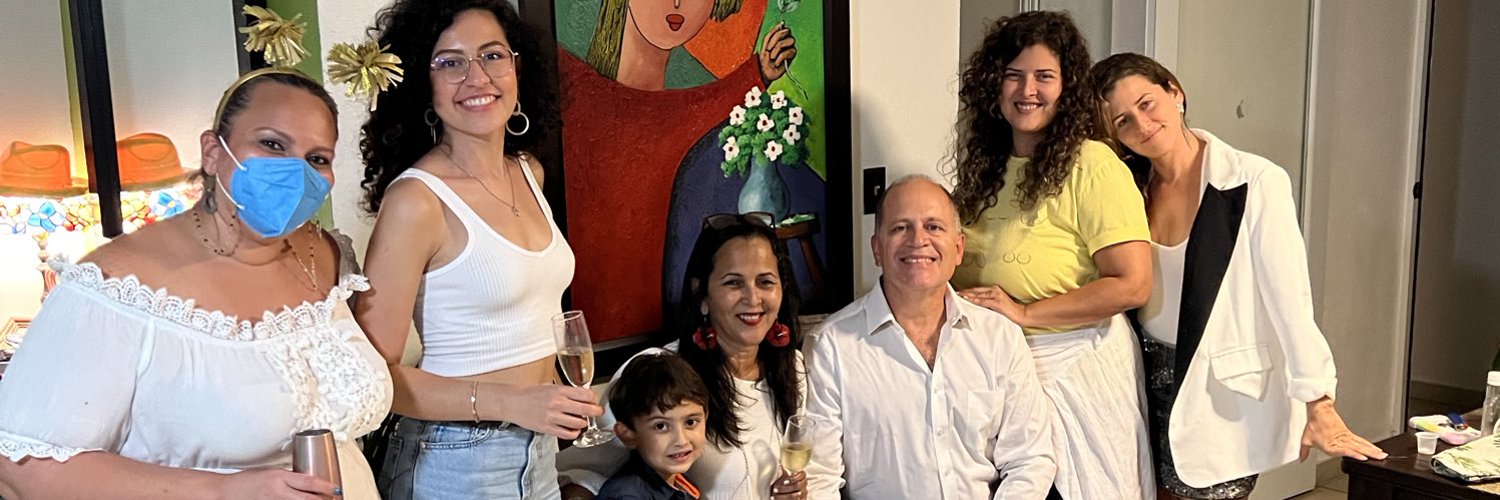
Químico,cocolo,socialista,ambientalista,sindicalista,amante esposo de Luz Delia,padre de cuatro hijas:Jiany,Liany,Loly,Natalia,abuelo de Caribe,Kaiamar y Sixto.

Puerto Rico
Joined January 2009
Budget cuts by the federal appointed @FOMBPR have already reduced state funding for the @UPR_Oficial by 48%, jeopardizing the University of Puerto Rico's capacity to drive economic R&D and produce STEM professionals for the US and Puerto Rico. science.org/doi/10.1126/scie… @CienciaPR
5
62
6
71
Jorge Colón retweeted
El viernes 24 de octubre de 1969, hace 57 años, Fania Records públicó ‘Cosa Nuestra’, el 4.º álbum de la orquesta de Willie Colón con Héctor Lavoe. Grabado en los estudios Beltone de Nueva York, apareció en un momento decisivo, pues sus tres discos anteriores habían tenido ventas discretas y, según el investigador Thomas Muriel, Willie estuvo cerca de quedarse sin contrato con Fania. Aquel contrato había sido firmado originalmente por su abuela cuando todavía era menor de edad y vencía precisamente con esta cuarta grabación. Su título es una adaptación al español de ‘Cosa Nostra’, expresión italiana asociada a la mafia siciliana, y continuaba la temática delincuencial que la dupla había desarrollado en las portadas de ‘El Malo’, ‘The Hustler’ y ‘Guisando’. Alguna vez Willie Colón reconoció haberse inspirado en la serie televisiva ‘Los Intocables’, que narraba la persecución del famoso mafioso Al Capone. Esta vez, la fotografía de Henri Wolfe, con diseño de Izzy Sanabria, mostraba a Willie junto a un cadáver con una enorme piedra atada a los pies, preparado para hacerlo desaparecer en las aguas del río Hudson. La escena evocaba una práctica asociada al crimen organizado, que era hundir los cuerpos de sus víctimas para evitar que fueran encontrados, y recordaba la célebre leyenda de los ‘zapatos de cemento’, popularizada por las historias de la mafia. El éxito llegó con ‘Che Che Colé’, inspirada en un juego infantil africano y transformada en una explosiva fusión de ritmos afrocaribeños. El álbum se convirtió en el primer disco de oro de la dupla y abrió las puertas de nuevos mercados internacionales. Para febrero de 1970, ‘Cosa Nuestra’ ya encabezaba las ventas de LP en Puerto Rico, según Billboard. Aquella grabación terminó convirtiéndose en el gran punto de inflexión de sus carreras. Incluye: ‘Che Che Colé’, ‘No Me Llores Más’, ‘Ausencia’, ‘Te Conozco’, ‘Juana Peña’, ‘Sonero Mayor’, ‘Sangrigorda’, ‘Tú No Puedes Conmigo’.
22
149
14
582
10,311
Jorge Colón retweeted
In 1929, Alexander Fleming published his paper outlining the antibacterial properties of penicillin, and paved the way for a new era of antibiotics. Read the Nobel Prize laureate's full article online: goo.gl/G8mUHd #OpenAccessWeek
21
206
10
738
39,430
Jorge Colón retweeted
Hegel, the philosopher, the foundational figure of Western intellectual tradition, the man whose ideas shaped how generations understood history and progress and civilisation, said Africa had no history. Literally. In "The Philosophy of History," published posthumously in 1837, he described Africa as "the land of childhood, which lying beyond the day of self-conscious history, is enveloped in the dark mantle of Night." No history. No development. No participation in the movement of human civilization. This was not a fringe opinion. These were the intellectual assumptions that would help legitimize European colonial domination and, decades later, the partition of an entire continent. Now. While Hegel was writing this, the Oyo Empire in West Africa governed millions of people through a sophisticated constitutional system with checks on royal power. While Hegel was writing this, the Kingdom of Dahomey had a standing army, a complex taxation system, and active diplomatic relationships with the European powers who were simultaneously, in their salons and academies, insisting the continent they were negotiating with had no civilization worth the name. While Hegel was writing this, the Asante Empire operated under legal codes that European jurists would have recognized as sophisticated if they had been written in a language those jurists were willing to read. While Hegel was writing this, the manuscripts of Timbuktu, hundreds of thousands of texts on mathematics, astronomy, medicine, theology, history, were being preserved by African scholars in the city his tradition insisted had produced no thought worth preserving. And while Hegel was writing that Africa had no history, Ethiopia already had one that stretched back more than four thousand years. Egyptian pharaohs, themselves African rulers, had been sending fleets to trade with the Land of Punt, in the Horn of Africa, as early as 2500 BCE. Gold, frankincense, myrrh, ebony, ivory. By the third century CE, the Kingdom of Aksum was minting its own coinage, trading across the Red Sea and Indian Ocean, and commanding such international recognition that the religious teacher Mani counted it alongside Rome, Persia and China as one of the great kingdoms of the world. Its written literary tradition in Ge’ez carried scripture, philosophy, law, and royal chronicles that predated most of the nations doing the accusing by centuries. The darkness was not in Africa. It was in the theory that needed Africa to be dark.
65
782
38
1,672
29,355
On 2.0°C watch. The global temperature anomaly for October 22nd was 1.94°C above the 1850-1900 IPCC pre-industrial baseline and set a new daily record. The Climate 8-Ball is hiding in the corner.
8
108
5
418
6,973
Jorge Colón retweeted
El Niño is everywhere in the headlines, but ultimately human-caused climate change is the key reason for the record global warmth. 📈 Curious about how these two climate stories relate? Learn more in our latest report: climatecentral.org/climate-m…
5
117
6
245
7,994
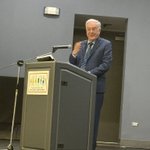
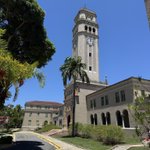
Happy to have been the host this past Wednesday of the visit to the University of Puerto Rico, Río Piedras @uprrp of Dr. @RachelDDavidson and Dr. Emil Hernández-Pagán @EmilHP_Chem of the Department of Chemistry and Biochemistry at @UDelaware. Emil gave a recruitment talk to our undergraduate students and Rachel gave a research seminar in our @uprrpchemgrad Program Seminar Series. We took them for lunch to the great Flor de Parcha restaurant in Río Piedras and for dinner to the Doña Ana restaurant in Isla Verde. Thanks Rachel and Emil for sharing your research with us and the excellent opportunities for our students at the University of Delaware!
1
5
124
My undergrad student Melissa Hernández Morales presented the recent research results of Naomi Cruz Rodríguez, Ninoshka Delgado Rivera @NinoshkaMarie23 and her today at the poster session that was part of the ACS Green Chemistry Institute @ACSGCI Pharmaceutical Roundtable Workshop held at Recinto de Río Piedras de la UPR @uprrp. This is a collaboration with our good friend Alvin Holder of Old Dominion University @ODU. We are proud of you, Melissa!
1
4
115
Breaking News! Code UFB!!! It takes 2 weeks to confirm ocean sea surface temperatures and the long wait is finally over. The first day in recorded history with Nino 3.4 SST at or above 30.0°C is now officially on the record. October 7, 2026: 30.000°C. climatereanalyzer.org/clim/s…
35
798
64
1,874
61,747
Jorge Colón retweeted
For 70 years, we were told plastic was safe because it doesn't react with anything. Nature just published proof that it does. And the trigger is water. Researchers at Columbia University and UC Berkeley took six of the most common plastics on Earth. Polyethylene. Polypropylene. Polystyrene. PVC. PET. Acrylic. The stuff in your water bottles, food containers, pipes and packaging. They ground them into microplastics and dropped them into plain water. Nothing else. No sunlight. No chemicals. Just plastic and water. And the water started changing. At the surface of every single plastic, it began producing hydroxyl radicals. One of the most reactive and destructive molecules in chemistry. All six plastics did it. Every one. To prove it, they added a yellow dye to water with polystyrene. Over 10 days, nearly 90% of the dye was destroyed. The water turned almost clear. In other liquids, the dye survived. Only water made the plastic active. In plain English: The plastic isn't leaking a toxic chemical. It is turning the water around it into something that attacks. Then they tested what that does to living things. DNA and proteins got pulled onto the plastic surface like magnets. Proteins started clumping together. And red blood cells that touched the particles were torn into broken fragments. But here is the twist. The most dangerous plastics were the ones we trusted most. Polyethylene and polypropylene, the "safe" plastics in bottles and food containers, were the most reactive of all. The effect was weaker in blood serum. But it was still there. And microplastics have already been found in human blood, brains, placentas and arteries. The lead researcher said it plainly: "Water is a key active player here, rather than just a spectator." We spent decades asking what chemicals leak out of plastic. Nobody thought to ask what plastic does to the water inside us. How many times have you sipped from a plastic bottle today?
163
1,423
148
4,069
128,364
Jorge Colón retweeted
Conversación de Arturo Massol Deyá con Michelle Rama-Poccia y Paula García, de la Union of Concerned Scientists, sobre la insurrección energética de Adjuntas Pueblo Solar: youtube.com/watch?v=DjP3gUcg…
9
21
788
Ahora que Jennifer Barreto, Miss Universe Puerto Rico, lucirá un traje típico inspirado en esta planta, te explicamos qué pasa cuando tocas el moriviví. #CienciaBoricua
1
9
18
559
We're headed for an El Niño that is — quite literally — off the charts. WMO's Global Seasonal Climate Update shows that El Niño is forecast to exceed the scale of global monitoring charts. Its impacts will be felt well into 2027. Read the full update: bit.ly/4z2MhwQ
20
425
52
683
48,638
The world is on track for 2.8 degrees C of warming this century, a gross breach of international climate targets, according to a new U.N. report. e360.yale.edu/digest/emissio…
39
75
22
91
17,461
Jorge Colón retweeted
The UN says it is now impossible for the world to limit global warming to 1.5°C above pre-industrial levels, with emissions on track to cause 2.8°C of warming by the end of the century.
17
47
8
80
9,767