

Investor | AI Infrastructure | Assymetric Stocks Institutional-grade equity research on Substack 1K+ subscribers
Not Financial Advice
Joined December 2022
- Tweets309
- Following129
- Followers176
- Likes709


Pinned Tweet
$ORCL just dropped the most defensive “we’re fine” post of the cycle.
They claim to be the first hyperscaler fully funded for this AI investment wave.
The $300B+ OpenAI contract is locked, the $20B raise (half equity, half debt) is done, and vendor financing is already in place. Any other talks are optional.
The tape sold AI names hard today and $ORCL closed down ~8% at $101. AH bounced as high as 3.3% once the statement hit.
> Abilene (where Astra-6 trained) is nearly complete
> Shackelford, the next GW-scale site, is fully permitted
> $NVDA Vera Rubin racks are on track for handover in the coming weeks
> Positive FCF still guided for H2 FY2028, >$30B targeted in FY2029, then self-funding
IMO this is constructive for the buildout thesis. Capital is committed, sites are advancing, and the revenue should flow through to $ORCL (and the GPUs to $NVDA). The high-cost debt and OpenAI concentration risk aren’t gone, but the “can they even fund it” narrative just vanished.
The re-rate still waits on actual FCF inflection. Until then the stock stays a high-beta proxy for AI capex sentiment.
— KC

Oracle has secured all the funding we need to fulfill our contract with OpenAI. With our final capital raise earlier this month, we became the first hyperscaler fully funded for this investment cycle. The financing we outlined at Oracle Investor Day, including vendor financing, is in place. Any further private discussions with vendors are just additional options. Our ability to deliver on our OpenAI contract does not depend on those discussions. Any media reports that will come out and say the contrary are incorrect and wrong.
Oracle and OpenAI are making rapid progress on our infrastructure partnership. Our Abilene campus, where Astra-6 was trained, is nearly complete. Shackelford, our next gigawatt-scale campus, is fully permitted. The handover of NVIDIA Vera Rubin racks in its data halls is on track for the coming weeks.
We continue to expect positive free cash flow in the second half of FY2028. We are targeting more than $30 billion in free cash flow in FY2029 and expect to self-fund future growth beginning that year.
THIS IS WHY YOU DILUTE.
$AAOI just locked a second hyperscaler LTA. Hard commitments, not vibes.
> $2.2B FIRM: $1.5B 800G in 2027 + $0.7B lasers 2028-29
> Customer discussions already point to +$10B potential through 2030
> Stacked on top of the existing 1.6T LTA
> Capacity ramp to 500K+ units/month by YE (1M+ by end-2027) is the entire point of the ATMs
The dilution is funded into real visibility, not a vacuum. Demand is already outrunning supply and they’re building to capture it.
— KC

📢 𝗝𝗨𝗦𝗧 𝗜𝗡: $AAOI AOI Announces Multi-Year Long-Term Agreement with Tier-1 Hyperscale Datacenter Customer
stockwhiz.ai/news/aoi-announ…

1
1
158
Databricks’ co-founder just said they’ve found only one neocloud with isolation strong enough to even consider for customer workloads.
The Nov 12 shareholder letter says Databricks selected $NBIS after a rigorous evaluation for demanding AI R&D. Pretty confident that’s who he meant.
Most neoclouds (and plenty of hyperscaler GPU slices) still treat isolation as an afterthought. Tenant leakage, weak InfiniBand segregation and residual data in shared GPU memory are real risks. @SemiAnalysis_ has repeatedly flagged gaps in multi-tenant isolation.
$NBIS is built differently:
> Private networking by default. Each project gets its own isolated VPC.
> Segregated InfiniBand traffic and direct passthrough for GPUs and ConnectX adapters.
> VM-level isolation for Managed Kubernetes clusters.
> Full Enterprise Stack: SOC 2 Type II, HIPAA support, ISO 27001, granular IAM, CMEK and Workload Identity Federation.
> Platinum in SemiAnalysis’ ClusterMAX ratings ($CRWV got platinum too)
$IREN owns scarce power and land. But for Databricks to trust a provider with customer data, it has to clear the isolation bar. Hyperscalers optimize for breadth and utilization. For a purpose-built AI cloud, keeping tenants isolated on the same fabric can be a technical moat.
Databricks choosing $NBIS for R&D is a strong signal.
My biggest neocloud position is $NBIS, but I’m long $IREN too. NFA.
— KC

Who said Neoclouds don't have a technical moat? High confidence this statement is about $NBIS.
Databricks co-founder:
"We are VERY CAREFUL about where compute runs and so far we've only found a *single* neocloud we think has robust enough isolation to ever have a chance at running our customer workloads."
- Databricks selected Nebius AI Cloud (shareholder letter) following a rigorous evaluation (November 12)

While you were sleeping, Elon said AI delays of a few months mean “hundreds of billions of incremental dollars just for working capital.” Then he asked where that money comes from.
SpaceX on 30 Sep: $89.9B cash and securities, $38.8B debt.
Friday Apollo and Goldman priced $44B for $SPCX’s $NVDA chips. Oversubscribed.
Also overnight:
> Tesla started rolling out FSD V15. Elon called it a completely new architecture that deserves to be called “super” intelligence. Vehicles will share traffic knowledge and combine it with Grok’s real-time X feed.
> Morgan Stanley: SpaceX’s own cost to orbit ~$1,000/kg in 2026, ~$500 by 2030, ~$140 by 2040. Weekly Starship launches by the end of 2027.
The capital isn’t free anymore. The order book hasn’t stopped. $SPCX is still the cleanest pure-play on the buildout.
PS - Credits to @spcxGOD (PANKE). Best $SPCX itw.
— KC

Good morning Europe
SpaceX investors
While you were having your beauty sleep, this happened:
1. Elon last night: even delays of a few months will mean "hundreds of billions of incremental dollars just for working capital." "Where will that come from?" SpaceX on 30 Sep: $89.9B cash and securities, $38.8B debt. Friday, Apollo and Goldman priced $44B for SpaceX's Nvidia chips, oversubscribed
2. Tesla started rolling out FSD V15. Elon called it a completely new architecture that deserves being called "super" intelligence. He also said Tesla vehicles will share traffic knowledge and combine that with Grok's real-time X feed
3. Elon: "woven stainless steel matting on the ship side probably solves for zero refurbishment"
4. Dragon splashdown confirmed at 23:04 Amsterdam, SpaceX's 35th station resupply
5. Morgan Stanley: SpaceX's own cost to orbit, about $1,000 a kg in 2026, about $500 by 2030, about $140 by 2040. Weekly Starship launches by the end of 2027
6. Elon: "Give Grok Bot your hardest tasks."
In case you missed my posts:
SpaceX is the most misunderstood stock in the market
Find them in the reply below.
$SPCX
Have a great Sunday


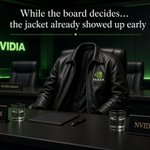
After all the hype today, I’m just genuinely happy.
Somewhere along the AI buildout, Jensen earned a special place in our hearts as investors.
We’ve watched him pursue his mission through all the drama and the selloff.
Having him around feels like having our own lucky charm.
So happy to have you back. @JensenHuang

3
309
Cassandra Unchained waited months for his victory lap and got three days before the tape shut him up again.
Classic Burry.
The dip was mostly a Jensen personal scandal + temporary financing scare, not the structural collapse he keeps forecasting.
$NVDA, $CRWV, $NBIS and $IREN bounced hard on actual earnings and demand.
Follow the money: customers are still spending, neoclouds are printing revenue growth, and the $500B Wall Street pledge is a non-binding MOU still being negotiated, not proof the buildout is dead.
His greatest hits (with the usual early timing):
> Shorted $TSLA in late 2020 calling the valuation “ridiculous.” Stock nearly doubled afterward. He closed the puts before the real 2022 drawdown. Broken clock energy.
> January 2023 one-word “Sell” tweet. Nasdaq ripped higher. He later admitted he was wrong.
> $1.6B in S&P/Nasdaq puts in 2023. Market went the other way. Positions expired or got crushed while tech led.
> Multiple “mother of all crashes” calls since 2017 that aged poorly against Fed liquidity, earnings, and AI spend. He’s right eventually on some things; the timing is where the body count lives.
> Now taking a victory lap on a CEO-affair-driven air pocket while still holding puts. Classic “I provided the information to sell” after the fact.
The AI buildout thesis doesn’t die because one celebrity short seller points at unspent private credit commitments or a temporary CEO drama. The bottleneck is still power, land, and silicon. The companies that can deliver capacity (and the ones selling the picks) keep capturing the spend. Burry’s early on cycles more often than he’s right on the path.
— KC

Coreweave, Nebius, NVIDIA, semis, I tried to warn you all. I didn’t say short. But I provided the information one would need to sell.
3
422
Killua Capital retweeted

Massive call. The architect of CUDA back in all three seats right before the next wave of production budgets hits.
Bears had one weekend to celebrate and now the entire governance overhang is gone.
$NVDA

I TOLD YOU this was impossible.
The odds kept climbing and I kept WARNING you.
Now it’s OFFICIAL: the AI BUILDOUT is SAVED by the man who CREATED it.
Jensen Huang REINSTATED as President, CEO & BOARD at $NVDA.
Full founder-operator control locked in RIGHT as the spend goes from pilot to production budgets. The guy who bet the company on CUDA is back in the three seats that matter.
LET’S GO
— KC
Trump just called Jensen a “Great Patriot and National Treasure,” greenlit his return as $NVDA CEO with zero national security risk, and the AI trade tape immediately started melting faces.
Pre-market right now:
> $NVDA +30%
> $NBIS +35%
> $AAOI +29%
> $IREN +28%
> $CRDO +27%
> $AXTI +26%
The board voted unanimously. AG confirmed no evidence of unlawful conduct. The overhang that crushed the group last week is gone in one post.
This is exactly the kind of political risk the AI buildout needed to clear.
Jensen back in the seat means the capex cycle, the optical bottleneck, and the neoclouds stay on the front foot.
The tape is pricing it like the scare never happened.
The AI trade is so back it’s rude.
— KC

BREAKING: Jensen Huang releases a statement after being reinstated as CEO of Nvidia, $NVDA:
Full statement:
"I am honored to return to NVIDIA and lead one of the most consequential technology companies in the world at the beginning of a new industrial revolution. I take this responsibility with the greatest humility and renewed commitment. I want to thank the NVIDIA Board for its confidence and deliberation through this process. I am especially grateful to Harvey Jones for his leadership as Chair, and to Colette Kress and our executive staff for leading NVIDIA during this period. I am also deeply thankful to our employees, shareholders, leaders across the industry and partners around the world for their extraordinary support. Above all, I am grateful for the love and support of my family. I can’t wait to get back to work."
Jensen has been reinstated as CEO with immediate effect.
1
4
634
I TOLD YOU this was impossible.
The odds kept climbing and I kept WARNING you.
Now it’s OFFICIAL: the AI BUILDOUT is SAVED by the man who CREATED it.
Jensen Huang REINSTATED as President, CEO & BOARD at $NVDA.
Full founder-operator control locked in RIGHT as the spend goes from pilot to production budgets. The guy who bet the company on CUDA is back in the three seats that matter.
LET’S GO
— KC
BREAKING: Nvidia, $NVDA, reinstates Jensen Huang as CEO, President, and Board Member, effective immediately.

Rene Haas just killed his own $NVDA CEO odds.
The ~19% Polymarket favorite (and clear leader for weeks) is locking in as Arm CEO through 2033 + SoftBank Vice Chairman effective Dec 1. He’s out.
Current board (Polymarket):
- Rene Haas: ~19-20%
- Jensen Huang (No Change): ~17-19% and ripping hard today
- Ian Buck: ~12-14%
- Colette Kress: ~8-9%
Hours after Trump’s “rehire Jensen” post and right as the top external candidate takes himself off the table.
The board said it doesn’t intend to bring Jensen back. The market is starting to disagree.
I believe this is the cleanest path yet for a Jensen return.
The AI buildout doesn’t care about boardroom drama.
$NVDA +8% is already telling you what the tape thinks.
— KC
BREAKING: Arm, $ARM, CEO Rene Haas, widely viewed as a leading candidate to become Nvidia's, $NVDA, next CEO, will become SoftBank's Vice Chairman on December 1st.
Haas also reaffirmed his "long-term commitment" to leading Arm.
This comes just hours after President Trump urged Nvidia to reinstate Jensen Huang.
Nvidia extends gains to over +8% on the day.
1
8
2,932
JUST IN: $CRWD is buying $ZS for $43.9B all-stock, larger than Wiz.
1.135 shares, ~$260, 34% premium. Combined ARR >$10B.
Fills the network/zero-trust gap in Falcon and lets them sell a full platform against $PANW while cross-selling into ~8k $ZS customers.
Dilution is real, but this is the right bet if the AI security spend keeps consolidating around fewer vendors.
— KC

CROWDSTRIKE TO ACQUIRE ZSCALER FOR $43.9 BILLION
$CRWD has agreed to acquire $ZS in an all-stock deal, at $43.9B, surpassing Google's $32B acquisition of Wiz as the largest cybersecurity acquisition in history.
Zscaler shareholders will receive 1.135 CrowdStrike shares for each share held, valuing Zscaler at approximately $260 per share, a 34% premium to Friday's closing price.
The combined company will have more than $10B in annual recurring revenue. CrowdStrike says the deal adds over $185B to its addressable market and creates opportunities to cross-sell its cybersecurity products to roughly 8,000 Zscaler customers.


1
6
998
Trump is telling the $NVDA board to bring Jensen back as the best thing for the company and the U.S.
Bessent just walked back the harder line he took last week. A week ago he wanted a dramatic shake-up and an outsider. Now Jensen is “on the outside,” so it counts, and he won’t rule out a return.
He also called the spy angle kind of a canard.
The board has already said no. The investigation is still open. The AI numbers haven’t stopped.
Trump wants the founder back in the chair.
It’s clear that the market already priced the leadership chaos on the resignation and the board’s hard no.
The political noise doesn’t change the product roadmap or the order book unless it actually moves the board.

JUST IN: JPMorgan’s David Kelly just pushed back hard on the hawkish narrative.
He sees the Fed delivering a December hike and then stopping. Waller’s 50 bps call is isolated.
Gas prices alone should knock a meaningful chunk off November’s headline CPI print, and policy rates are already close to neutral.
The recent tech dump was driven by the $NVDA Jensen mess, the same one Trump is now publicly trying to reverse by pressuring the board to bring Jensen back.
Lower front-end yields and a softer dollar create the classic setup for equities and gold to rebound once the dust settles.
This is the pattern I’ve been highlighting for weeks.
The market prices the catastrophe first. Then it thinks. That’s where the asymmetric opportunities show up.
> 50 bps talk + $NVDA chaos = AI infra and tech sold as if the cycle was finished.
> Reality: one more hike, then a pause, inflation getting a clear tailwind from energy, and the leadership noise already being walked back.
> Outcome: front-end eases, dollar fades, and the real bottleneck names in the AI stack get bid again once the panic clears.
The dip isn’t the thesis breaking. It’s the market overshooting the noise before it processes the actual path.
That’s the window and the setup we love!
We remain long and bullish, NFA.


The market didn’t drop because Dems won. It dropped because the AI trade got stress-tested all at once.
- $NVDA and the complex got hit on data-center pushback from local governments and the new Democratic majorities.
- Anthropic’s IPO didn’t save the tape; it helped accelerate the selling.
- People started questioning whether the massive AI spend is actually sustainable.
- The election just gave everyone an easy narrative to sell into.
That’s the real reason. The rest is spin.
— KC

93
Jensen PLEASE save the AI buildout.
The backdrop just flipped.
Trump publicly said he should “apologize and return.”
Bessent went from demanding a dramatic shakeup and an outside CEO to saying “Jensen is on the outside NOW” and leaving the door open on whether he should come back.
$NVDA is still the tollbooth on the entire AI stack. The founder who built the moat, the customer relationships, and the ability to keep expanding it is sitting on the sidelines.
The tape already priced the drama. It has not priced the comeback.
BRING HIM BACK HOME.
The Nvidia situation is evolving.
US Treasury Secretary Scott Bessent has completely changed his view on Nvidia, $NVDA, over the last 7 days.
Last Sunday, Bessent called for a “dramatic shakeup” at Nvidia and said its board needed to hire a new CEO from “outside” the company.
Today, when asked about Jensen Huang returning as CEO, Bessent said:
“Well, Jensen is on the outside now.”
When pressed on whether Jensen Huang should return, Bessent said, “I think we have to see where the buck stops,” clearly leaving the door open.
This comes just 2 days after President Trump publicly said Jensen Huang should “apologize and return.”
Something is happening behind the scenes.
2
429
$SPCX at $120 is trading like the 2027 compute ramp is still a rumor. Bernstein already has $133B in AI rental revenue that year alone.
Wall Street is now modeling the AI buildout as the main event:
> Bernstein: AI revenue $24B (2026) → $578B (2031). The 2027 jump is almost entirely compute rental at $133B.
> JPM $500 PT: sees $254B total revenue in 2027, $617B in 2028. Raised on faster GW deployment and better $/W.
> Cantor $345 PT: flipped from ~4 GW to +10 GW of terrestrial compute by end-2027. Super Intelligence sales revised from ~$40B to ~$260B that year.
> Raymond James $800 PT: pure long-term cash flow story. $5.2T revenue and $2.6T FCF in 2035, then 10% risk haircut.
The math that actually matters is GW × months online × $/W. CFO said new contracts are closing slightly above the high end of $30–50/W.
At $50/W, 1 GW rented for a full year = $50B.
Bernstein’s $133B in 2027 implies roughly 2.7 GW average utilization that year.
SpaceX had 1.7 GW nominal in September. SemiAnalysis saw 3.6 GW under construction in early November.
Musk has talked ~13 GW total by end-2027. The contracts already on the table (Anthropic up to $120.5B through 2029, Google at $920M/month once fully delivered) annualize to ~$48B at full capacity.
Still well short of the 2027 compute number, which is why the incremental GW and the exact month they start billing are the whole game.
The market is still underwriting execution risk on the 2027 ramp more than the terminal value. Every quarter of billed GW is going to force a re-rate.
— KC


BREAKING: Bernstein reiterates their $268 price target on $SPCX and raises their $/watt outlook through 2028
3
188
The AI race just got a credit score.
JPM’s CDS splits the field:
- Cash-funded (~80bps): $MSFT $GOOGL $AMZN. Still covering most capex from FCF. Cheapest capital.
- Stretched (~160bps): $META $AVGO. Commitments still growing, cushion thinning.
- Credit-dependent (~275bps): $SPCX $ORCL. Outside funding has been the path. But Oracle already says it has secured everything needed for the OpenAI contract, no more raises required on that front.
Microsoft and SpaceX could each spend over $400B on capex in 2027–28. How much cash is left afterward? S&P projects $73B in free cash flow for $MSFT and a $243B cash deficit for $SPCX.
— KC


Getting this amount of compute turned on, cooled and working reliably is incredibly hard.
The cash shortage is also going to be nuts next year. Even cumulative industry delays of a few months between paying for compute and getting it reliable enough to generate revenue will mean hundreds of billions of incremental dollars just for working capital. Where will that come from?
1
4
475
$ORCL already did the hard part while everyone else is still talking about it.
They have roughly $125B of debt against $664B of RPO. OpenAI is the bulk of that backlog and the ability of a single customer to fund a multi-year ramp is a real question. That risk hasn’t disappeared.
What’s getting less airtime:
> Oracle’s distribution is deep enough that the capacity doesn’t have to live or die with one name. They can place the compute with the rest of their installed base if the biggest contract underdelivers.
> The window to finance the next leg of the AI build is narrowing. Rates are expected to stay elevated and lenders are more cautious after the selloff.
$ORCL already raised the capital and is putting steel and power in the ground.
Later movers will face higher cost of capital and more scrutiny.
IMO the market is still pricing the concentration risk and underpricing the fact that they locked financing and capacity before the door got tighter.
If demand stays tight past 2030, that positioning matters.
— KC
The distrust isn’t random, but it’s pointed at the wrong part of the story.
$ORCL just closed the final $20B raise and is fully funded for the OpenAI contract. Abilene is nearly done. Rubin racks are weeks away.
- The $300B, five-year contract starts in 2027 and averages ~$60B/year once ramped. OpenAI’s current ARR is ~$50B. The math works if they keep scaling, but the real pressure shows up in 2028.
- OpenAI is projected to burn ~$278B of cash through 2030. The $122B they raised earlier this year is on track to run out around 2028. That’s when the annual Oracle bill becomes a much bigger share of their revenue and cash.
- $ORCL’s own funding risk for this cycle is largely gone. Positive FCF still guided for 2H FY28 and >$30B in FY29.
The market has been treating “can Oracle fund the build” and “will OpenAI pay for it in 2028” as the same problem. They’re not. One is largely solved. If OpenAI keeps growing into that $300B, $ORCL turns a massive contracted backlog into high-margin cloud revenue and the re-rate follows.
— KC
It's very interesting $ORCL can put out statements about being fully funded for OpenAI.
Or $SNDK / Micron can put out statements reassuring investors about signed LTAs + price floors.
Yet there's extraordinary levels of distrust toward disclosures and durability.
Either everyone is excessively bearish, and this creates a generational buying opportunity on AI if contracts + projections hold... or they're skeptical for a good reason.


JPM’s hyperscaler model still has CapEx climbing to nearly $2T by 2030.
Growth rates fade hard, but the absolute dollars keep setting records every single year.
From the aggregate table (AMZN, GOOGL, META, MSFT, ORCL):
- CapEx steps from ~$805B in 2026 to ~$1.97T in 2030
- The step-down from 66% growth in 2027 to 22% in 2028 still adds ~$292B of new spend
- Cumulative FCF stays negative through 2028 (~$284B burn), then flips hard: $263B in 2029 and $624B in 2030
- Operating margins expand from the high-20s to 35% over the same window
The interesting part isn’t whether the hyperscalers can eventually earn it back. It’s that the CapEx path stays elevated long enough for the supply chain to keep getting paid even after growth rates go single-digit. $NVDA, $AVGO, networking and power still see multi-year volume even if the tape keeps fixating on the deceleration.
The funding gap is widest in 2026-28. That just means more debt or less buybacks while the spend is heaviest. The long-term cash generation math still looks intact.
— KC

J.P. Morgan projects hyperscaler CapEx rising from ~$800B in 2026 to nearly $2T by 2030 with spending hitting new records every year.
So even as CapEx growth slows from 66% in 2027 to 22% in 2028 that still translates to another ~$292B in spending flowing through AI supply chain.
And despite projecting ~$284B in cumulative FCF burn through 2028, JPM still sees operating margins expanding to 35% and FCF reaching $624B by 2030.
That's quite a different picture from the argument that AI spending destroys $AMZN, $GOOGL, $META, $MSFT and $ORCL returns.

4
566