

Indie publisher since 2018. 450K+ book units & $2M+ in KDP royalties. Sharing what I've learned about self-publishing, Amazon Ads & building a book business.
Joined May 2022
- Tweets170
- Following458
- Followers268
- Likes305



Pinned Tweet
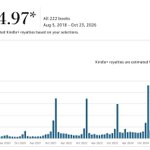
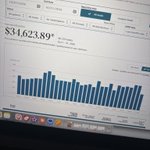
I've published 222 books on Amazon since 2018.
450,000+ book units processed.
$2M+ in estimated royalties.
And more failed experiments than I can count.
Here are 8 lessons I wish I'd known before publishing my first book:

8
23
649
Checking your KDP sales should be a reward, not a right.
Do the deep work first.
Write the book.
Edit the manuscript.
Improve the product.
Then check your sales.
Don’t let a quick dopamine hit steal the hours that actually make you money.
Create before you consume.
1
2
100
Your book will never be perfect.
You’ll always find another sentence to rewrite.
Another image to improve.
Another detail to obsess over.
At some point, the improvements become so small they stop mattering.
I’ve learned to know when a book is good enough to publish.
Perfectionism has a cost.
So does publishing too early.
Learn the difference.

Your book isn’t just competing with other books.
It’s competing with YouTube, Google, Reddit and now AI.
All free.
So why should someone pay $14.99 for yours?
Better organisation.
Better explanations.
Better experience.
Information is everywhere.
Make yours worth paying for.
The most expensive word in publishing?
“Probably.”
This topic will probably sell.
This cover will probably work.
People will probably pay $19.99.
That’s a lot of money riding on guesses.
Study the market. Test your assumptions. Look at what people are actually buying.
Hope isn’t a publishing strategy.
1
5
388
You can outsource your writing.
Your covers.
Your formatting.
Your advertising.
But don’t outsource your judgment.
I’ve worked with plenty of freelancers over the years.
They can do the work.
But you still need to know what good work looks like.
Delegate the task. Own the decision.
10
463

The cheapest freelancer can become your most expensive hire.
A $50 cover that needs three revisions.
A $200 manuscript that needs a complete rewrite.
A missed deadline that delays your launch.
Don’t just compare prices.
Compare the cost of getting the job done properly.
5
228
A-players hire A-players.
B-players hire C-players.
C-players hire D-players.
I’ve learned that paying a little more for exceptional talent is almost always worth it.
They raise the standard.
They take ownership.
They make everyone around them better.
Cheap talent can cost you a fortune.
The goal of hiring isn’t to have more people reporting to you.
It’s to have fewer things depending on you.
A great hire doesn’t just complete tasks.
They solve problems.
Make decisions.
Improve the process.
If you need to supervise every move, you haven’t bought back your time.
You’ve bought yourself another job.
3
159
Your Amazon Ads are doing more than selling books.
They’re doing market research.
Go to the Search Terms tab in your automatic campaigns.
See the exact searches shoppers used to find your book.
Look for terms getting consistent impressions, not random one-offs.
Your next keyword, or even your next book idea, could be hiding in there.
6
164
Amazon pays royalties roughly 60 days after the end of the month.
But your ad bills don’t wait.
You could have your best sales month ever and still run into cash flow problems.
Revenue is what you earn.
Profit is what you keep.
Cash flow is what keeps you alive.
Don’t scale ads faster than your bank account can handle.
4
144
You could sell 1,000 copies of a book.
Get 100 happy readers.
Then one person leaves a brutal 1-star review.
Guess which one you’ll think about all day?
Not every book is for everyone.
Take useful criticism seriously.
Ignore the rest.
Then get back to work.
One mistake publishers make?
Waiting until sales slow down to think about advertising.
If a book is already converting well, that’s worth paying attention to.
You have evidence that readers want it.
Test whether more traffic can bring more profitable sales.
Don’t just spend money trying to rescue your worst books.
Feed your winners.
3
149
What’s the magic number for Amazon book ratings?
4.3 stars.
At 4.2, your book can display just 4 gold stars.
At 4.3, it displays 4.5 gold stars.
A tiny difference in the number.
A much bigger difference in how your book looks to shoppers.
Those half-stars matter.
2
169
I’ve spent hundreds of thousands on Amazon Ads.
And I don’t think I’ve ever had a book turn a profit with a cost per click above $1.
At that price, you need a seriously good conversion rate just to break even.
My advice?
Watch your CPC like a hawk.
Cheap clicks give you room to make mistakes. Expensive clicks don’t.
2
5
193
Everyone tells you to read the 1-star reviews.
I prefer the 2s and 3s.
These readers were disappointed, but still found something worth praising.
They'll tell you what the book got right AND where it fell short.
Keep what worked.
Fix what didn't.
That's how you make a better book.
Want better book ideas?
Bookmark Amazon’s Top 100 Best Sellers page.
Spend 10 minutes a day studying it.
Look at the topics, titles, covers, and what’s climbing the rankings.
It’s free market research.
Your next bestseller idea might be hiding in plain sight.
1
124
If I had to start publishing on Amazon again, here's what I'd do:
Day 1: Research 20 potential niches.
Day 2: Study the top 10 books in each.
Day 3: Identify a topic with demand and weak competition.
Day 4: Test several cover concepts.
Day 5: Plan a book that's genuinely better than what's already selling.
Most beginners start by writing.
I'd start by finding buyers.
2
108
One of the easiest ways to find new book ideas:
Bookmark Amazon’s Top 100 Best Sellers page.
Check it regularly.
Look at what’s selling, which topics keep appearing, and how the covers are designed.
You don’t have to reinvent the wheel.
You just need to understand what readers are already buyindg.
3
136