

Avid Explorer | Finance enthusiast | Travel | Market |
🇮🇳
Joined November 2011
- Tweets3.3K
- Following310
- Followers225
- Likes4.8K







Kuldeep Solanki retweeted

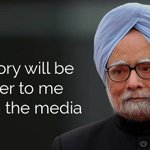
"Charges on UPI should be postponed to Diwali of 2047 because we will become a developed country by then."
— Ashneer Grover, Entrepreneur

Explained too early

Explained - Why #Nifty Bank saw a sharp recovery after RBI policy rate raised on expected lines
cnbctv18.com/market/explaine…

15
Kuldeep Solanki retweeted

@zeptocares @ZeptoNow
My zepto account is showing on hold. What the hell is going on??
I have to escalate this issue to consumer greviance if account will not activate by today , already having 25k zepto cash balance in this account
Reg mob - 7970399143

FYI He is the one who skipped AI summit in Delhi.

Some Indian Politicians need to hear this. He is Jensen Huang, President and CEO of NVIDIA. He says, “India is one of the world’s leading IT industries, and this is the beginning of a new IT platform. I had the benefit of seeing Modi ji a decade ago talking about AI. I’m really anxious and very excited to see local companies and startups in India starting to take advantage of this technology, contribute to it, and build a local AI economy.”
30

AWB 2827790311092 has not shown any movement for the past ten days. Despite my attempts to contact customer care, I have been unable to reach them. The provided contact number is consistently busy, and callback requests are also not being processed.
@help_delhivery
This is next level scam happening. They always find some issues in exchange devices and reduce exchange value.

A new fraud has emerged in market through @Flipkart deliveries involving mobile exchange.
I ordered a Nothing 4a mobile phone with an exchange of a Moto g34 which was valued at ₹5350.
The ekart delivery person came, at first he said it will take about an hour for the verification of the old phone, I got a bit suspicious at first, while checking the phone he asked me about whether I have the box and accessories or not, I replied yes I have but I am not instructed to return them as well. He later called someone and talked about 15-20 mins, as much as I heard he wanted to pay the exchange value to flipkart after delivery and keep the old phone by himself. I ignored as I meant to handover the old phone and pay some minimal value for discolouration and get the delivery. He then clicked the photos of old phone (which I have given 👇🏻) and sent it to flipkart team for approval. Guess what the team found out:
1. The display is cracked
2. Screen is coming out from body
3. Body is dented
And it can be valued around ₹1700 and I have to pay remaining ₹3,600.
From the delivery guys behaviour, he was clearly expecting me to receive ₹1700 for a 1 and half year old phone without any damage.
To his surprise I said him to cancel the delivery, I don’t want to sell my phone. His face turned purple at the exact moment, he asked me the cancellation otp in a stammering voice and left.
Flipkart bear the loss of shipping the phone to my doorstep and shipping back to seller, just for some of their employees prefer personal interest over their responsibilities.


46
Kuldeep Solanki retweeted

Dharmendra Pradhan's son
is studying in America, so did Nirmala's and Jyotiraditya.
Piyush Goyal's son is studying in Singapore, Anurag Thakur's son is studying in Canada.
S. Jaishankar's son is studying in the UK & even Smriti Irani (who hardly studied) sent son to study there.
Nishikant Dubey's son studied in Scotland
So why would these people bother about NEET paper leak
or CBSE scam or communal distortion of history by NCERT?
Or care about your children getting pushed around in trains and buses or even committing suicide?
Government of Hypocrites from Top to Bottom!!


Kuldeep Solanki retweeted

BREAKING: Qatar’s Prime Minister stood at a podium today and delivered one sentence that will fracture Gulf alliance architecture for a generation: “Everyone knows who the main beneficiary of this war is.”
He did not name the country. He did not need to. The Arab diplomatic vocabulary has a grammar for this. When a Gulf leader says “everyone knows” without naming, the audience fills the blank. The X discourse filled it within minutes. The interpretation was dominant and immediate across Arabic-language accounts, with Gulf analysts and Arab media converging on the same reading.
Sheikh Mohammed bin Abdulrahman Al Thani, who also serves as Foreign Minister, called for an immediate halt. His full statement: “This war needs to stop immediately. The aggression needs to stop immediately. Because everyone knows who the main beneficiary of this war is, and dragging the whole region into this conflict is dangerous.” He described Iranian strikes on Qatar as a “dangerous miscalculation” and “betrayal.” He urged restraint from all sides.
Consider the position this man occupies. Qatar hosts Al Udeid Air Base, CENTCOM’s forward headquarters, the nerve centre of Operation Epic Fury. American bombers launched from Qatari soil. Iran retaliated against the LNG facility down the road. The same government that provided the runway for the war is now absorbing the economic consequences. QatarEnergy declared force majeure. Ras Laffan sustained extensive damage. Seventeen percent of Qatar’s 77 million tonne capacity is structurally impaired. CEO Saad al-Kaabi told Reuters repairs could take three to five years. Twenty billion dollars in annual revenue is offline.
The Prime Minister of a country that enabled the operation is publicly questioning who benefits from it while his national energy company faces half a decade of impaired production.
That is not ambiguity. That is a fracture.
The fracture runs through the entire Gulf alliance system. Saudi Arabia hosts Prince Sultan Air Base and absorbed Iranian missiles on Riyadh. The UAE hosts Al Dhafra and lost Shah and Habshan to zero. Bahrain hosts the Fifth Fleet and declared partial force majeure. Kuwait hosts Camp Arifjan and is watching two refineries burn. Every host provided the military infrastructure. Every host is absorbing economic retaliation. And the most outspoken just asked, on camera, whether the country benefiting from degrading Iran at zero direct cost is the same country whose allies are paying the full price.
The market implications are immediate. If Qatar’s political establishment is signalling frustration with the cost-benefit distribution of this war, the assumption that Gulf states will indefinitely absorb strikes while providing bases becomes fragile. A frustrated host is a conditional host. Conditional basing changes the calculus for every military planner who assumed Al Udeid was permanent.
The LNG implications are structural. A multi-year force majeure on contracts to Italy, Belgium, South Korea, and China is not a delivery delay. It is a repricing of the global gas map. JERA’s CEO said there is no spare bridge capacity. Asian spot LNG doubled to $24 to $25 per MMBtu. European TTF surged 68 to 85 percent. BASF and Yara are cutting fertiliser output. The facility that feeds them may not fully recover until 2029 or later.
The diplomatic signal and the infrastructure damage are now the same story. Qatar’s PM is not merely commenting on the war. He is repricing Qatar’s willingness to absorb its consequences. The country that houses the command centre and the country that exports 20 percent of the world’s LNG are the same country. And its leader just told the world, in one sentence, that the arrangement may no longer be worth the cost.
Full analysis:
open.substack.com/pub/shanak…


BREAKING: The world thought Hormuz was an oil story. Then it became an LNG story. If the damage assessment holds, it becomes a civilisation-input story that lasts half a decade.
There is a difference between a shipping shock and a capacity shock that the market has not yet priced. A shipping shock traps molecules. The oil exists, the gas exists, the tankers are anchored, and when the strait reopens the molecules flow again. A capacity shock destroys molecules. The liquefaction trains that convert gas into LNG are physically damaged. The molecules cannot be produced even if every ship in the world is available to carry them.
QatarEnergy’s CEO Saad al-Kaabi told Reuters that damage to Ras Laffan is severe. Repairs to impaired liquefaction capacity could take three to five years. Force majeure was declared on March 4 and has since escalated as the damage assessment worsened through March 18 and 19. Long-term contract buyers including Italy, Belgium, South Korea, and China face multi-year delivery disruptions. Shell declared force majeure on cargoes it resells from QatarEnergy. The market must now confront a possibility it has refused to model: that roughly 17 percent of Qatar’s 77 million tonne per annum capacity is not delayed but structurally impaired.
JERA’s CEO stated that the global LNG market does not have the spare capacity to bridge the gap if Hormuz-linked supply is meaningfully lost. That single sentence reprices everything. If the replacement molecules do not exist in sufficient volume, the adjustment mechanism is not alternative supply. It is fuel switching, demand destruction, and rationing by balance-sheet strength. Rich buyers can pay more. Poor buyers cannot.
The poor buyers are already breaking. Vietnam’s diesel is up 40 to 59 percent. Australia’s petrol is up 70 cents per litre. Sri Lanka is rationing fuel with QR codes at 15 litres per car per week, a four-day workweek, and Wednesday school closures. India raised LPG prices while importing 85 percent of its crude through a strait that is 90 percent shut. Gulf air cargo collapsed 79 percent. Jet fuel surged 58 percent. IndiGo and Akasa imposed surcharges. Vietnam Airlines warned of shortages from April. Ninety-five countries have reported petrol price increases since February 28.
Ras Laffan is not just LNG. It is helium, urea, methanol, polyethylene, and sulfur. The downstream cascade from a multi-year Qatari impairment runs through semiconductor fabrication, pharmaceutical synthesis, phosphate fertiliser production, food packaging, and desalination. The facility that is damaged produces the molecules that four billion people depend on for chips, medicine, fertiliser, plastic, and drinking water.
Europe’s post-2022 gas security was built on Qatari LNG replacing Russian pipelines. A structural impairment does not merely make gas expensive. It makes gas unavailable to industry. That is how an LNG shock becomes a deindustrialisation shock. BASF and Yara are already cutting fertiliser output. Russian LNG fills the gap at 18 to 22 percent of European imports. The country Europe sanctioned is the country Europe now depends on because the country Europe trusted was struck in a war Europe refused to join.
Anyone arguing this resolves quickly now carries the burden of proof. They must explain where the replacement molecules come from when the world’s largest LNG hub is physically impaired, the strait is commercially closed, and the CEO of Asia’s biggest power buyer says there is no bridge.
The market priced a shipping delay. The evidence demands a capacity repricing. The difference between those two words is measured in years, in trillions of dollars, and in whether the lights stay on.
Full analysis:
open.substack.com/pub/shanak…

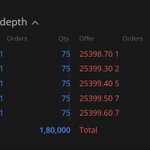
ViX up almost 25% to 21+
Extreme fear in market yet market recovered and PCR stands at 1.15
Why PE writers are so confident?
41
Kuldeep Solanki retweeted

"Model performance is going up, but the progress in implementing is not really because implementing this is hard stuff... And this what we call the deployment gap. ..And this deployment gap is what we can help to address"
10 points from @NandanNilekani today.
Read in full. Excellent stuff.
1. Cannot Run Business The Old Way: "We cannot run business the old way & businesses have to change. The customer journeys, have to change. Talent will have to deal with a world where writing code will not be the goal. It will be actually making AI work, orchestration & those kind of things. So the jobs will change and operating model. How do we make this at scale? How do you get a firm with hundreds of employees to change all the things & make it work ?"
2. Massive 'Clean Up Job" -> "Modernization of legacy systems cannot be deferred anymore. What happened over the last 60-70, years, is people would not replace the legacy system. They just added to it. So if you go and look under the hood of a large enterprise, they will have mainframes from 1960 they will have mini computers from 1980 they will have land from 2000 they will have all kinds of things & all coexisting in silos. That is over. We if you really want a firm to take advantage of AI, you have to fundamentally clean this up. So this is a massive, massive clean up job.."
3. Tech Spends Won't Go Into Maintenance -> "60-80% of IT spend was on maintaining systems. There is no business value out of that. They want to go from 60% or 70% maintenance & 30% new systems to 30 -40% maintenance & 60-70% new business. They want to flip the way they spend money.."
4. Huge Requirement -> "..for the first time, because of AI, we have the tools now to do modernization fast & very quickly and in a much more economic way. So we have a huge demand, and we have the ability now to do it.. So fundamentally, accumulated tech debt over decades must be paid. You have no longer have the option to defer this. And this is a huge, huge requirement, and obviously it is a huge opportunity for us."
5. Build vs Buy Is A Big Opportunity For Us -> "..the balance of advantage is moving towards build rather than buy. And that is actually what is, if you see some of the concerns about what will happen to SaaS companies & all that - it's because of this - that building applications has become so simple that very often you may just build or you may replace something that which you which you bought, and with something to be built. This actually benefits folks like us. We will only build it for them. So fundamentally, it's good for us"
6. Using Agents - A Big Opportunity -> "Foundational systems, will increasingly become systems of record, but the interface, the interface will be agentic, because agentic interface makes a lot of sense.. Enterprises will want to put agentic layers on top of all their applications, even if they leave the system of record the same, and that is something which will be a combination of bought out agents, as well as building their own agents.. Again, that requires orchestration and work which somebody has to do. So there is a huge amount of work required once they go towards build rather than buy"
7. Technology Is Far Ahead Of It's Deployment -> "Technology is moving faster than the ability of enterprises to deploy it. .. the model performance is going up, but the progress in implementing is not really because implementing this is hard stuff. Fundamentally, it's about organizational change, business change, retraining your people, thinking about non deterministic approaches, changing your data so it's no longer in silos. So fundamentally, we have a situation where there is a deployment gap between the power of the technology and the capacity of businesses to use this. So if you guys think that some better product has come, nothing's going to happen, because the problem is here, not there. It's about how fast companies can implement you have to look at that. And this what we call the deployment gap. ..And this deployment gap is what we can help to address. So again, the very important point"
8. Retraining The Workforce -> "I think talent transformation is huge. We have all kinds of new roles, AI engineers, forward deployment engineers, AI leads, Forensic analysts, data. So fundamentally, the challenge will be, how do you take your workforce and make sure that they are reskilled and ready for the new new new business? And that's really the challenge that all the firms will face.. fundamentally, there will be a need for people, but they will be doing different things."
9. Greenfield vs Messy Real World -> "I can take a tool and give it to a kid & he will generate a million lines of code. But that is not the real world. The real world is the fact that companies have trillions of dollars invested in the systems. They have technical debt, they have data silos, they do not have documents. Somebody was telling me the other day that there are some old systems and on contract. They have guys as old as me, 70-75 year old guys, because nobody else knows what the hell is going on. And then, you know, when there is a crisis to be sorted out, they are pulled in from Phoenix or Florida or wherever they are, and they have to solve problems, and nobody else knows how to solve. So we have that kind of situation out there, undocumented dependencies. So taking brownfield systems and modernizing them is a hell of a lot more difficult than doing greenfield development. And lot of us get biased, because all the guys who talk about productivity are talking about greenfield development, and therefore getting these large enterprise organizations, productivity going is very, very different from individual tasks. It's a lot more complicated."
10. "There Is No opportunity Gap" -> "If anything, the opportunity is bigger than ever before. So do not get distracted by that. You should still ask the question, what is the firm doing to take advantage of this? What is the firm doing to transform its talent for this new world ? I'm sure everybody will not execute the same way. So there is an execution risk in doing that. So it is not an opportunity risk, it's an execution risk."
@CNBCTV18News
#stockmarkets #Nifty #ArtificialIntelligence #Infosys @Infosys #TCS #Wipro #HCLTech #TechMahindra #Investing #Anthropic #ChatGPT #OpenAI #AISummit
Kuldeep Solanki retweeted

BJP के मंत्री प्रहलाद जोशी और अश्विनी वैष्णव मीडिया के सामने कह रहे थे: “राहुल गांधी आरोप लगाने से पहले authenticate करते”
राहुल जी आए और कहा
“आइए एक साथ बात करते हैं”
ऐसा सरपट दौड़े दोनों वहाँ से!
This song is the reason why nifty has fallen from 1200+ point gap up... 😂

🚨 #Breaking: Vijay Kedia new song out to explain benefits of increased STT..😂
#Budget2026 #NiramalSitharaman #FinanceMinister #niftycrash #LTCG #STT
1
1
125

