

Simple and effective professional education for modern ODs developed by the nation’s leader in optometry education. Chief Medical Editor Paul Hammond OD FAAO
Joined April 2016
- Tweets1K
- Following54
- Followers1.3K
- Likes198







“First-line SLT was more effective than drops at preserving VF. SLT should be preferred as the first line of treatment in newly diagnosed OHT and OAG eyes.”
6 yr rate of VF progression in the LiGHT Trial - Ophthalmology
vist.ly/4b4bn

Dompé's Program in NAION Selected for Landmark FDA Commissioner’s National Priority Voucher Program
vist.ly/4avht

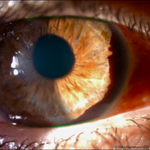
This patient couldn’t catch a break—post-LPI dysphotopsias led to suture closure, then a hyphema.
What can we learn?
Temporal > superior for fewer dysphotopsias.
200–400 µm—enough for patency, less light scatter.
Symptoms: 2–5%, reduced by lid coverage & smaller/temporal PIs.

A patient wears SRx +1.00 DS -2.00 DC x 180 with a +3.00 D round 28 bifocal segment. If the top of the segment is 5 mm below the distance optical center, and the patient reads 5 mm below the top of the segment, calculate the image displacement due to the distance prescription.
9%a. 1 PD BU
63%b. 1 PD BD
6%c. 2 PD BU
22%d. 2 PD BD
67 votes • Final resultsAll of the following oral antibiotics may exacerbate the effects of warfarin EXCEPT:
23%a. ceftriaxone
28%b. ciprofloxacin
25%c. tetracycline
24%d. clarithromycin
102 votes • Final resultsA 45-year-old female complains of bilateral burning, tearing, and foreign body sensation that worsens throughout the day OU. She also has a history of chronic dry mouth. Which test(s) is/are MOST appropriate to further evaluate this patient’s condition?
17%a. ACE and chest x-ray
1%b. Syphilis IgG
76%c. Salivary gland biopsy
6%d. ELISA and Western blot
156 votes • Final resultsYour patient presents with unilateral eyelid ptosis that worsens at the end of the day and improves with the ice pack test. Which of the following tests is MOST appropriate to further evaluate the patient?
74%a. T3, T4, and TSH
10%b. Lumbar CT scan
15%c. ACE and chest x-ray
2%d. Fasting blood glucose
133 votes • Final resultsA patient presents with symptoms of amaurosis fugax and a Hollenhorst plaque causing a BRAO OS. All of the following tests are indicated EXCEPT:
54%a. CT scan
4%b. carotid ultrasound
10%c. echocardiogram
31%d. FA
134 votes • Final resultsDamage to which area of the sclera during strabismus surgery is MOST likely to result in globe penetration?
6%a. Posterior pole
17%b. Lamina cribrosa
69%c. Below recti tendons
8%d. Equator
121 votes • Final resultsWhich of the following ganglia provide parasympathetic innervation to the lacrimal gland to stimulate aqueous secretion?
75%a. Pterygopalatine
2%b. Oculomotor
19%c. Trigeminal
3%d. Superior cervical
122 votes • Final resultsA patient with shingles is MOST likely to have had a previous episode of which of the following?
3%a. Measles
95%b. Chicken pox
0%c. Mumps
3%d. Viral meningitis
116 votes • Final resultsWay to end Super Bowl weekend with a bang!!! @ewilhite1 you rock, and so does @chicagocollegeofoptometry!!! #KMK #Optometry #optometrystudentsrock #dominate #boardsprep #KMKlive #fututedoctors instagram.com/p/CZ7yYpCPgfC/…