






Ksub retweeted

#WATCH | Siliguri, West Bengal: On his own tweet, BJP MP Nishikant Dubey says, "Consider what Rahul Gandhi always says: that this is a govt of Ambani, Adani, a government of capitalists. Today, I cited a news report from November 23, 1978, which was the subject of a discussion in Parliament. This is not our report; it is an Intelligence Bureau (IB) report. It was discussed in Parliament, with full documentation, that Indira Gandhi had received Rs 113 crore from capitalists for the 1977 Lok Sabha elections. That Rs 113 crore from back then would be equivalent to approximately Rs 25,000 crore today... From whom was this money taken? Who were these people? Out of that Rs 113 crore, each candidate was given two lakh rupees to contest the election, along with two jeeps... RP Goenka, of the RPG Group, was imprisoned on October 3, 1977. His premises were raided 40 times by the IT Department, the ED, and the Customs and Excise authorities... Two other reports were tabled in Parliament: the Sarkar Committee report and the Hazari Committee report. These reports revealed that between 1952 and 1977, among all those who were granted licenses, permits, or quotas, whether for manufacturing scooters, cement, bauxite, or steel, the Birla group received the greatest benefit. This was stated by both the Sarkar Committee and the Hazari Committee. Opportunities were also extended to Dalmia and the family of Jamnalal Bajaj; and throughout the period from 1952 to 1977, for every license or permit granted, a specific commission had to be paid. In exchange for import-export licenses, for which there is full, documented evidence, they secured funds from the corporate sector. It didn't stop there; they even took money from foreign companies like Coca-Cola and IBM."
He adds, "In 1978, the then-US Ambassador to India, Moynihan (Daniel Patrick Moynihan), wrote a book in which he revealed that funds were obtained from the CIA to orchestrate the fragmentation of political parties, such as the Janata Party and the Communist Party, and even to cause rifts within families. For instance, the Goenka family also split during the 1978–80 period, with RP Goenka’s two brothers being separated. For this, they got funds from the CIA. They solicited funds from abroad and from the corporate sector. The entire history of the Congress party is rooted in corruption, commissions, and graft, and this is precisely what I have brought to the nation’s attention."
Ksub retweeted

Racist groyper losers have been attacking me all day for defending Indians.
I don't care. Indians are extraordinary contributors to the United States and they deserve to be defended. So give me your hate, racists. You are nothing.
This Jew will stand with his Indian brothers.
Ksub retweeted

Excited to launch itihasa.io — a free, open-access portal for fresh, AI-assisted critical study editions of India’s traditional texts, built with Gemini.
We’re starting with the complete Vālmīki Rāmāyaṇa — all 7 Kāṇḍas, 648 Sargas, and 23,504 ślokas of the living Southern Recension:
📖 Read Your Way: Native two-page facing PDF books (Sanskrit left · English right), interactive web spreads, or instant Kāṇḍa → Sarga → Śloka lookup.
📜 Three Classical Commentaries in English: Synthesized insights from Govindarāja (Bhūṣaṇa), Rāma Varmā (Tilaka), and Śivasahāya (Śiromaṇi) — filterable by commentator on any śloka.
🔍 Philological Apparatus: Line-level Baroda Critical Edition collation († flags every non-CE Southern verse), pāṭhabheda, first-principles chandas (metre), plain-English grammar, and direct access to raw witnesses & archive.org scans. (0% LLM-generated Sanskrit.)
🤖 Citation-Verified Scholar AI: Not a generic chatbot = it searches all 648 sargas & 12,601 commentary notes live before answering (try asking "Is Lakṣmaṇa Rekhā in Vālmīki?") with clickable verse proof.
Offered as a working study edition awaiting specialist peer review - feedback welcome directly on the site! 🙏
**श्री रामजयम्**
Ksub retweeted

On this auspicious day of Ashada Ekadashi, I am very happy to announce the launch of my humble attempt to make history interesting.
bharatrajya.com
The idea is actually very very simple
You go to the site, select a year, and It will show you who ruled which part of India at that point in time.

Ksub retweeted
Something extraordinary actually happened today.
Stuff so extraordinary, that even if it comes as a dream, you dismiss it as something that is impossibly improbable.
Thanks to your support and blessings, today I had the ultimate honor and privilege of having a conversation with our honorable Prime Minister on Mann Ki Baat about BharatRajya.com
I still can't believe that he actually spoke to me, asked me about the website, its features and some questions on general history too. I am still in a daze.
For an amateur builder like me, i don't think there is a greater recognition or validation than this.
This conversation has given me enough motivation to take BharatRajya to the next level and make it the ideal history reference and visualization website for everyone.
Thank you @narendramodi ji, for encouraging people like us and inspiring us to achieve greater heights.
These is one conversation I will not forget in this lifetime. Or maybe even the next.
And rest assured sir, I won't let you down.

Ksub retweeted
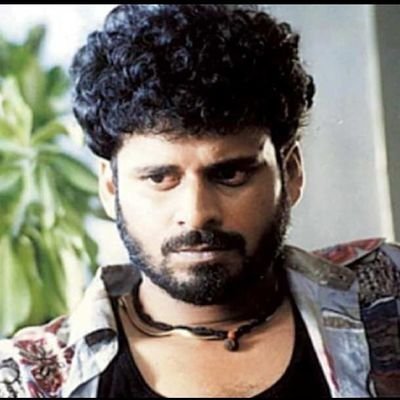
"Total 59 died inside coach in Godhra incident, 27 women, 10 children & 22 men. Some managed to jump out but were chased by mob, killing or injuring them"- Rakesh Asthana, then SIT head
Sonia Ghandy,who cries "selectively", didn't cry for them.
"Sikhs & Jains make up a much larger share of the Indian American pop than the Indian pop, & Hindus a smaller one". Seriously? Whattaymoron.

The multinational & multifaith nature of the holiday is a fine reason to use "S Asian" as a shorthand to describe the demographics of a US Diwali event. Also, Sikhs & Jains make up a much larger share of the Indian American pop than the Indian pop, & Hindus a smaller one.
34
Ksub retweeted

India went seven years without adding a single Ramsar site, the wetlands listed under a global treaty.
And then in the next seven years it added 75. It now has 101, more than any other country in Asia. A wetland scientist explains what changed, and what has not. 🧵


Ksub retweeted

I have noticed that many folx (not OP) credit India’s growth to nebulous concepts like capitalism or a natural rise.
Yet this removes the journey & agency of Indians themselves.
Of course, capitalism is a cause, but that ignores the raucous nature of India’s rise.
Rao was forced into liberalizing & bravely stood by it but was then thrown out of office. A return to normalcy followed until Atal came, who faced a similar story of reform & relinquishment.
MMS came in inheriting a great fiscal situation from Atal, but proceeded to carpet bomb India’s macro situation via socialist policies.
Despite great growth rates during his era, India underperformed its peers & the global boom at large, all while raiding its own reserves in a ravenous fashion for doles & corruption. MMS left India with double digit inflation & a Fragile Five economy teetering into potential collapse.
Of 496 million people out of poverty between 2011-2023, just 15 million were lifted out of poverty between MMS’s term in 2011-2014, compared to a mammoth 481 million between 2014-2023.
What happened post-2014 was Narendra Modi. And he ironically, he could only stay in power for such a time by engaging in streamlined state-led welfare & infrastructure building that gave Indians toilets, electricity, permanent housing, roads, etc… for the first time ever.
This crucial element was not a result of capitalism. If Modi tried to reform too early (he did but backed out), his tale would’ve ended & India would be back to factory settings.
My overall point being that India’s rise is not inevitable. It is still fragile even.
India, like all other countries, is dependent on competent leadership & its people voting them into power.


Ksub retweeted

Thiru Annamalai avl…
1. You quote Modi ji from 2011 but leave out what he was reacting to. That night, police lathi-charged sleeping women and children at a peaceful fast in Ramlila Maidan at midnight. In 2026, CJP protesters jumped barricades and defied orders, and India Today reports 20 FIRs against them. Putting the two side by side insults the victims of 2011.
2. You warn that people "could be jailed indefinitely." The CJP leaders were out within days, through the same legal process you call broken. Your own post admits they've been released. That isn't tyranny. It's the system working.
3. Delhi has had ACPs acting as Special Executive Magistrates since its police commissionerate began in 1978. Every government since, Congress and AAP included, has used the same powers. Discovering the problem only now, and only when it's the CJP, is selective outrage.
4. You call their tactics "misguided" yourself. Misguided tactics that break the law bring legal consequences, for everyone. BJP karyakartas have faced them too.
5. You ask whether the BJP is giving the CJP free publicity. A long post from a former state president repeating their talking points does more for them than any effigy ever could.
6. You remind us you left the BJP on June 5. But the BJP never stopped you from asking questions. It gave you the platform that made your questions worth hearing. Calling the karyakartas still working on the ground "attackers" doesn't make your questions sharper. It only shows which side you've chosen.
7. The UNHRC, Al Jazeera, the BBC and a whole network of non-state actors are ganging up against Modi ji and India right now. Is this really the moment to show your soft side, and only to these anarchists? Timing is a choice too, and this one helps the people who want India weakened.
Ask every question you like. Just don't mistake amplifying one side for speaking truth to power.

In 2011, then Gujarat Chief Minister Thiru @narendramodi avl said that if his hands were not tied, he would have gone to Delhi and waged war against the central government. Thiru Narendra Modi avl made this statement in response to the police crackdown on the peaceful anti-corruption campaign led at Ramlila Maidan, Delhi. In my opinion, what the Hon PM said then was absolutely right, and there is nothing wrong about it.
Today, you could be jailed indefinitely; your surety bonds could be rejected; and, surprisingly, a Special Executive Magistrate will play circles around you when he/ she is empowered to deal with preventive bond cases.
If you question the violation of due process of law in a democracy, you would be called names, and a barrage of attacks would follow, including being labelled a Foreign Agent.
Ever since I asked the Central Government to speak with the protestors during the NEET exam protests, I have faced constant attacks, but I let them pass because I felt it was important to focus on the issues on the ground in Tamil Nadu. I also, in a way, enjoyed this as it would quickly remove the tag of me being a BJP B Team and sent to TN as a Dhurandhar 😍
Yesterday during a press meeting, I questioned the Delhi Police’s methods of detaining protestors of CJP.
Since yesterday, the attacks have resumed, as expected. For some in the BJP, let me make this categorically clear, in case you have selective amnesia: I left the BJP on June 5, 2026.
As I mentioned yesterday, I might not agree with the tactics of the CJP, and I think many of theirs are misguided. But if you ask me whether they have a right to oppose/argue/protest on an issue that they think is important?
I would categorically say - YES.
So, I would like people to ask the questions again, even if it makes some of them uncomfortable, and I wish the Central Government would answer them instead of resorting to whataboutism.
1.How was Jantar Mantar denotified as a protest site as per a standing order of the Ministry of Home Affairs after a letter was handed over by CJP seeking permission to conduct a protest?
2.How long can we have a system that gives powers to an Asst Commissioner of Police as a Special Executive Magistrate who rules over whether to keep someone in preventive detention? The ACP of Delhi Police stands over the trial where Delhi Police is the complainant against the accused CJP. Now you know which way the wind will blow.
3.On October 19th, why did the Special Executive Magistrate, aka ACP of Delhi Police, deliberately arrive late for the bail hearing of those who were arrested from Jantar Mantar on October 13th and recuse himself, saying there is a threat to his life? Is this some kind of a joke?
4.Why were 8 sureties rejected, and why was the person who came for surety subjected to cross-examination by the Special Executive Magistrate?
5. Any action taken on pellet gun usage by the Delhi police or other actions on Delhi police who have violated the standard operating procedures against the protesters during the NEET fiasco stir?
Has no BJP karyakarta in Delhi violated any bond conditions during the previous Congress and AAP governments. I trust the same Delhi police were then also when barricades were jumped and orders disobeyed? How were they dealt with then? Like this?
Definitely - NO.
Now I hear that the detained functionaries of CJP were released by SEM after the case reached the High Court.
I also recently saw a cockroach effigy burned as part of the Dusshera celebrations. Out of curiosity, I tried to find out who is giving this free publicity at a National level. No surprises here. It was led by a BJP MLA, Ashok Goel.
My question again is: is the BJP opposing the CJP or giving it free publicity? Does it want the opposition votes to split by making CJP a bigger player? At this rate, the CJP couldn’t have asked for a better PR team, even if it had paid for one! (1/2)
Defense ministry: I have a suggestion for a potential site for testing Agni 6's range and accuracy...

Narendra Modi’s party had used sleazy political tactics and its control of institutions to break up rival state parties and lure away their lawmakers. Voters accepted that. Under dispute now is whether the game itself is fixed economist.com/asia/2026/10/1…

29
She is not in any way shape or form remarkable. Every PoC in SA would have had worse tales to tell during the apartheid times. Moreover, the Nobel peace prize is a useless piece of political shyte now. Anyone pro-palestine that moves a leaf will likely get it. No appreciation.

It’s been six days since this remarkable woman of Indian origin (see her story, attached) won the #NobelPeacePrize. And the Government of India, her ancestral homeland, hasn’t so much as congratulated her?! Shame on the petty men who have made such a deplorable decision.
5
Ksub retweeted

Lately "Indian" and "Hindu" are being used online as insults in an inflated manner. Beyond the racism, it shows how little the people saying it know 🇮🇳
On September 30, an Indian Hindu flydubai captain was attacked in the cockpit with an axe and kept reciting the Hanuman Chalisa, a hymn of strength, courage and selfless service, while he fought to save more than 170 lives. His attacker had asked to pray minutes before striking. One man's prayer was true belief, whatever name he prayed to. The other man betrayed prayer itself. I know who I respect.
India also has around 213 million Muslims, the third largest Muslim population in the world. When you use "Indian" as an insult, you insult more Muslims than most Muslim countries have.
India has 22 constitutional languages, more than 1,600 mother tongues, eight classical dance forms and thousands of years of philosophy. It gave the world ahimsa, the principle of non-violence, anekantavada, the idea that truth has many sides, and dharma, a life guided by duty. You literally never run out of things to learn about it.
India gave the world the written zero, the decimal system and yoga. It landed first near the Moon's south pole, reached Mars on its first attempt, held the largest election in history with 642 million votes cast, and produces most of the world's vaccines. It has 45 UNESCO World Heritage Sites and the youngest world chess champion ever.
Even chess btw, a tactical game that takes a sharp mind, was born in India.
Learn before you insult.
Ksub retweeted

Dreze saw Indians in poverty and chose to pay them to dig holes in villages instead of building factories where they could make clothes or umbrellas or toys.
Sanyal chose to become the biggest supporter of India's ship building industry that will employ lakhs if not millions.

Moronic view alert.

He is currently an honorary professor at the Delhi School of Economics, visiting professor at the Department of Economics, Ranchi University, and also the member of Economic Advisory Council to the Chief Minister of Tamil Nadu headed by the Nobel laureate Esther Duflo.
He was a member of the National Advisory Council of India in both the terms of the UPA government.
He has worked on several developmental issues facing India like social welfare, poverty and gender inequality.
His co-authors include Nobel laureate in economics Amartya Sen, with whom he has written on famine, Nicholas Stern, with whom he has written on policy reform when market prices are distorted, and Nobel laureate in economics Angus Deaton.
Fuck Ford Foundation. I will fund him because his work has been phenomenal and helped the previous UPS govt identify so many issues on poverty lines and lift people up.
Who are you other than an old andhbhakt boomer?
23
Ksub retweeted

Indian troops fought across multiple continents and climates—stopping Italian forces in North Africa and Sudan, breaking Axis lines in Italy (such as at Monte Cassino), enduring jungle warfare in the Burma Campaign against Japan, and even evacuating from Dunkirk with the 25th Animal Transport Company. While India was still under British rule and experiencing intense nationalist movements (like the Quit India movement), millions volunteered. Reasons included family martial traditions, a desire for economic stability, escaping poverty worsened by crises like the 1943 Bengal famine, or hoping military service would build leverage for post-war independence...
During World War II, the British Indian Army grew from a peacetime force of around 200,000 to over 2.5 million personnel, making it the largest volunteer army in human history. Unlike many other participating nations, Britain did not impose conscription in India; instead, millions of Indian men voluntarily enlisted. They were motivated by a complex mix of factors, including steady financial compensation during economic hardship, family military traditions, socio-economic mobility, and assurances regarding India's future political status after the war.
Indian troops served with distinction across multiple operational theaters spanning Africa, Europe, the Middle East, and Asia. They played decisive roles in major conflicts, including the North African campaign (notably at El Alamein), the Italian campaign (including the Battle of Monte Cassino), and the defense of Malaya and Singapore. Most prominently, the British Indian Army formed the backbone of Allied forces in the brutal Burma Campaign, turning back the Imperial Japanese military at pivotal battles like Imphal and Kohima.
Despite their monumental contributions, which cost tens of thousands of Indian lives and earned numerous Victoria Crosses, their war effort was marked by deep political tension. The Indian National Congress opposed fighting for British democracy while India remained under colonial rule, leading to widespread political resistance such as the Quit India Movement. Nevertheless, the vast military experience, technical training, and institutional capacity gained by millions of Indian soldiers ultimately proved essential to shaping the armed forces of independent India and Pakistan following the end of British rule in 1947.
While millions of Indian soldiers fought in conventional formations, a lesser-known chapter involves clandestine operatives embedded in Force 136, a branch of Britain’s clandestine Special Operations Executive (SOE). Operating deep behind Japanese enemy lines in Burma, Malaya, and Thailand, Indian and Anglo-Indian officers, alongside specialized multilingual personnel, worked secretly to organize, arm, and train indigenous resistance groups like the Karen guerrillas. Living in harsh jungle conditions for months, these agents coordinated vital intelligence networks, directed targeted Royal Air Force airstrikes, sabotaged Japanese supply lines, and rescued prisoners of war. Their covert operations severely disrupted enemy communications and troop withdrawals just as the main Allied armies advanced, yet their hazardous contributions remained shrouded under wartime secrecy acts for decades.
#archaeohistories


Ksub retweeted

The “Elon Musk is worth 25% of India’s GDP” line sounds devastating only if you understand neither net worth nor GDP.
Musk does not have hundreds of billions sitting in a bank account waiting to buy an Indian state.
Almost his entire fortune is the notional value of his stakes in Tesla, SpaceX and other companies. Try converting even a substantial fraction of that into cash and two things happen immediately: the stock price starts collapsing and the US government arrives for its share.
GDP, meanwhile, is the value of goods and services produced by 1.4 billion people over an entire year.
One number measures annual national production. The other measures what the market currently thinks one man’s company shares are worth.
“25% of India’s GDP” is a fun scale comparison.
As economics, it is complete nonsense. It is masturbation with large numbers.
Just wondering. Does he and Munirwa swallow or spit?

President Donald Trump played a historic role in advancing peace in South Asia. His timely intervention helped bring Pakistan and India back from the brink and secure a ceasefire, that is holding till today.
In recognition of his outstanding contribution, Pakistan had nominated President Trump for the Nobel Peace Prize.
We sincerely hope President’s efforts to promote peace and prevent conflict in our region receive due recognition this time.
@realDonaldTrump @NobelPrize
1
12