


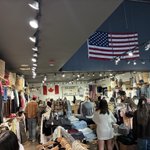






Name a TV series that you still watch - but really have no clue why it's gone on for so long. I'll start: The Curse of Oak Island
#TopPocketFind
37

Good morning Ambassador
@USAmbCanada
The mid-terms didn't need Canada. Your population did a great enough job.
Have a great day.
1
43
Kevin 🇨🇦 retweeted
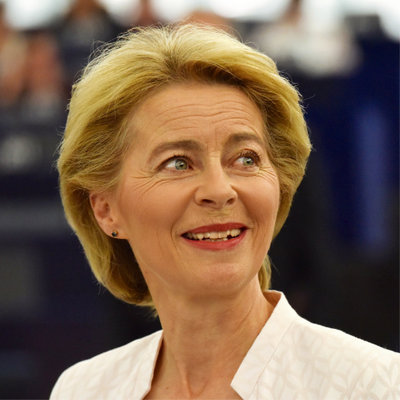
🛬 Touchdown in Montréal 🇨🇦
Rarely have I looked forward to a Summit this much.
An ocean separates Europe and Canada. Yet we have never felt closer.
We have a new ambition: bringing Canada closer to us than ever before, as Associate Member of the EU.
And we want to take our unique partnership even further.
With an Alliance for the Future, we will stand together and respond to a world of growing rivalries.
Montréal, we’re about to write a new chapter in our shared history.
Someone explain to me #brandymelville like I’m a 6yr old l. Why the fascination for cheap cotton at high prices…?!?

1
92
Kevin 🇨🇦 retweeted

14 minutes avant le match. Merci d'avoir tué le soccer local #CFMTL – at Montréal, Québec


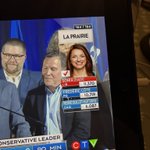
It was never a race between the #CAQ and PQ in #LaPrairie #Candiac #Delson
#qcpoli unless @coalitionavenir thought 3rd place was the winning position…! #SoniaZiadé


26
Kevin 🇨🇦 retweeted

Jeffrey Rath, leader des séparatistes albertains:
"Paul St-Pierre Plamondon et mois sommes devenus bons amis. Nous avons partagé un souper de 4 heures au restaurant de l’Hôtel Palliser.”
" Nous nous coordonnons"
M.Plamondon, répondez -nous, jusqu'où va votre collaboration avec les séparatistes de l'Alberta, qui sont de mèches avec l'administration Trump ?
Vous devez répondre!
#cdnpoli #polqc #Qc2026

Kevin 🇨🇦 retweeted

Trump is coming for both Quebec and Alberta to separate our country. Pay attention Canadians and fight the separatists. #Alberta #Quebec

« We’re coordinating » : ce que Plamondon ne dit pas de ses alliés albertains
Le PQ ferait équipe avec les indépendantistes albertains, qui accueille à bras ouverts l’ingérence des Américains .
Le Globe and Mail dévoile aujourd’hui que des stratèges républicains sont allés en Alberta pour aider le mouvement séparatiste qui, en retour de l’appui de Washington à son indépendance, a offert des intérêts dans l’eau potable et le pétrole de la province!
Or, Paul St-Pierre Plamondon collaborerait de près avec ce mouvement.
Dans un communiqué du 12 septembre 2025, Jeffrey Rath, un des leaders du mouvement APP, rapporte que le 11 septembre, PSPP est venu à Calgary pour une rencontre avec les trois meneurs du projet : lui-même, Mitch Sylvestre et le Dr. Dennis Modry.
Un rendez-vous survenu à la demande de Monsieur Plamondon, alors qu’il était déjà de notoriété publique depuis juillet que l’APP demandait à l’administration Trump de les financer, à coup de 500 milliards- donc de s’ingérer
« Nous sommes tombés d’accord : le fédéral constitue une menace existentielle ! »
Il explique que Plamondon et l’APP feront front commun contre Ottawa et appuieront la Saskatchewan qui, inévitablement, les joindra dans la sécession.
Le chef du PQ, selon lui, aurait été agréablement surpris de la sophistication de leur appareil organisationnel.
« We are coordinating »
Fin janvier 2026.
Jeffrey Rath jubile : il écrit qu’il rencontre des hauts placés de l’administration Trump à Washington, qui vont directement de leur rencontre avec les séparatistes albertains au bureau ovale...
Et, ajoute-t-il, Pierre (Plamondon) et moi, « we’re coordinating. »
“Nous sommes devenus bons amis. Nous avons partagé un souper de 4 heures au restaurant de l’Hôtel Palliser.”
C’est là que le calendrier commence à prendre toute son importance.
Que se passe-t-il en février ? À la suite des rencontres positives de son allié, Jeffrey Rath, à Washington, PSPP commence à parler d’un voyage aux États-Unis.
Lien de cause à effet ? Il faut creuser.
Un politicien qui va en « voyage aux États-Unis », ce n’est pas pour faire du tourisme, s’amuser à Walt Disney ou admirer le Grand Canyon.
Non.
Il y va pour se faire des contacts, créer un réseau, bâtir des appuis.
Le consulat américain a affirmé à The Gazette que des rendez-vous ont été pris pour le mois de mars.
PSPP le nie.
Mais il ne nie pas le voyage !
Le Québec a le droit de savoir en quoi allait consister ce voyage et qui il allait rencontrer.
Ce n'est plus innocent, maintenant.
PSPP – qui collabore avec Rath, des dires de ce dernier– a-t-il bénéficié de son carnet d’adresses ? De ses contacts ?
Jusqu'où va sa collaboration avec eux ?
Le Québec a besoin d’avoir ces réponses avant de voter !
Car le parti albertain indépendantiste flirte avec la trahison, comme l’a révélé le reportage du Globe and Mail aujourd’hui.
En juin dernier, PSPP déclarait, sereinement, garder contact avec eux, sachant l'ingérence financière et Trumpienne! N'est-ce pas une forme de caution implicite ?
Le manque d’honneteté de PSPP sur la question de la visite américaine cette semaine est troublante.
Il a de sérieux comptes à rendre.
Et rapidement!
#polqc #Qc2026

Une explication claire.
PSPP : Jour 1 : la monarchie. Les cancers attendront.
6 octobre au matin : Bravo Québec ! Vous avez réussi l’impossible : même si 70 % d’entre vous ne voulaient rien savoir de lui, PSPP a battu tout le monde et se trouve votre Premier Ministre !
L’ère PSPP débute.
🔵Un calcul démagogique et malhonnête
Jour 1; Heure 1: Priorité au pire, la monarchie ! Pas les urgences qui débordent, les cancers qui croissent et rongent les chairs en attendant d’être opérés, les dépressions qui s’enveniment au point d'abandonner... Non ! Le cancer à exciser, c’est celui – symbolique – de la monarchie !
La chimiothérapie de PSPP pour cette tumeur couronnée : l’asphyxier !
Il va couper l’oxygène de l’organisme, qui sape le budget du Québec : 1,3 million pour financer le poste de lieutenant-gouverneur l’an dernier alors que les dépenses budgétaires de la provinces cumulent 141 000 G$ .
Soit un ratio de 0,0000092, ou 0,00092 % du budget total du Québec.
Des économies faramineuses, comme vous voyez !
Qui, bien sûr, vont être attribuées à une juste et noble cause, l’itinérance !
Oh, PSPP, quel habile calcul politique -chantage émotionnel cousu de fil blanc- faites-vous ainsi en associant cette épargne ridicule au dossier, grave et complexe, de l’itinérance !
Vous croyez pouvoir ainsi argumenter : « Quoi, vous préférez le roi à nos malheureux itinérants ? Quels mauvais Québécois ! »
Mais, c’est vous, PSPP, qui démontrez votre cynisme, votre opportunisme... et votre inquiétant manque de sérieux : l’itinérance requiert des investissements de plusieurs centaines de millions de dollars, un plan étudié !
Prétendre que ce million va faire la différence, et qu’il doit ABSOLUMENT venir de l’abolition de ce poste de dépenses- et aucun autre- vraiment ? Vraiment ?
Cousu de fil blanc, donc.
🔵Une déconnexion face aux véritables priorités économiques
Entre les tarifs, l’inflation, l’endettement et la crise du logement, les Québécois arrivent tout juste à garder la tête hors de l’eau. Leurs priorités dans les sondages reflètent la précarité de leur situation financière : les préoccupations économiques (coût de la vie et logement) captent plus de 53 % de l'attention des électeurs, suivies par les services publics (santé et éducation) à 46 %.
Quant à la monarchie et les enjeux constitutionnels, ils peinent à faire la liste, avec 1 ou 2 % des répondants les identifiant comme priorités. (Source : Léger 360, 22 septembre 2026).
Mais, pour PSPP, au jour 1 de son règne, rien n’appert plus urgent que d’empêcher Manon Jeannotte de prononcer son traditionnel discours du lieutenant-gouverneur (L-G) lors de l’ouverture des travaux de la nouvelle législature! Dès la première minute, il attaque Ottawa frontalement !
🔵L'impasse juridique et le chaos législatif
Aucune loi de passée, aucun budget d’alloué, aucune dépense coupée, mais une crise constitutionnelle en marche, et toute une !
Le PQ ne peut pas abolir unilatéralement la Couronne (représentée par le L-G) selon les experts en droit constitutionnel (source : Radio-Canada). Son poste est protégé par la Constitution et toute modification à sa charge doit être approuvée par le Parlement canadien (et les provinces !).
Quant à l’assertion de PSPP qu’il peut, par une loi de l’Assemblée nationale, contourner la Constitution, il se trompe du tout au tout, démontrant soit son ignorance ou sa malhonnêteté.
En effet, la Cour suprême a tranché clairement à ce sujet selon les experts : elle interdit de faire « indirectement ce que la Constitution empêche de faire directement ». (Source : CBC)
Revenons au Jour 1.
PSPP, n’écoutant que son propre conseil ou celui de son éminence grise, Mathieu Bock-Côté , depuis son salon parisien, a montré la porte du parlement de Québec à la L-G .
Nous voilà dans un vortex constitutionnel destructeur.
Seule la L-G peut donner force de loi au texte des projets de loi proposé par le gouvernement !
Sans elle, qui les sanctionne ? Sans sa signature, le texte n’a aucune valeur juridique, la loi ne peut s’implanter ni être exécutée !
Comment PSPP va-t-il régler ça ?
Gouverner sans légiférer ?
Absurde et irresponsable sont des qualificatifs qui ne suffisent pas à décrire ses intentions.
🔵Rhétorique belliqueuse, confrontation
PSPP dirige donc délibérément le Québec vers un mur juridique.
Le refus de la sanction royale risquerait d'invalider l'ensemble des lois votées par l'Assemblée nationale, plongeant la province dans une insécurité juridique totale. Et en confrontation immédiate avec Ottawa.
Sa rhétorique, sans même être élu, se radicalise : l'utilisation de mots incendiaires comme « domination par la force » et « par les armes », pour décrire le rôle symbolique et bénin de la Couronne, vise à jeter de l’huile sur le feu des relations Québec-Ottawa.
Que ça flambe, et maintenant!
On en vient presque à se demander si son référendum, qu’il avait promis de remettre après le départ de Trump de la présidence, ne sera pas soumis plus tôt aux Québécois.
Chose certaine, la gestion de l’État n’est pas la priorité de PSPP.
Il alloue ses premières énergies et ressources à la quête référendaire, à la souveraineté du Québec.
Ce faisant, il se pose en total décalage avec TOUS les Québécois, et non pas « seulement » les 70 % d’entre eux qui n’auront pas voté pour lui.
Et ses ornières idéologiques mettent le Québec en danger à l’heure où le Québec et le Canada n’ont jamais été autant menacés dans leur intégrité souveraine, l’ombre de l’annexion américaine planant sur eux.
🔵🔵🔵En conclusion
PSPP est la mauvaise personne pour diriger le Québec dans ce moment périlleux de son histoire.
Le Québec a besoin de saine gestion des fonds, pas de gaspillage de rares et précieuses ressources à des fins référendaires.
Le Québec a besoin de concret, d’argent en santé, de médecins et d’infirmières ; pas d’idéologues se disputant pour de vains symboles.
Enfin, le Québec a besoin de renforts, besoin d’Ottawa, pas de couper les ponts, se renfermer sur soi.
#cdnpoli #polqc #Qc2026

1
1
82
Kevin 🇨🇦 retweeted

Est-ce que les Québécois vont vraiment élire un PM qui a peur de Donald Trump?
Est-ce que les Québécois vont vraiment élire un PM qui déteste Mark Carney?
Est-ce que les Québécois vont vraiment élire un PM qui veut nous isoler?
Ça en dit long sur notre société québécoise…
Kevin 🇨🇦 retweeted

The leaked U.S. trade demands that caused Canada to halt negotiations: Washington demanded direct veto power over Canadian infrastructure, control of critical minerals, and delayed access to generic medicines.

Kevin 🇨🇦 retweeted
Tit-for-Tat Is How Canada Forced Trump to Blink in 2018
Many see retaliation as economic self-harm. Game theory says otherwise, on the long term.
In the prisoner’s dilemma / tit-for-tat logic, ( the strategy I believe Ottawa chose) if Canada simply absorbs U.S. tariffs, the aggressor’s dominant strategy is to keep them forever — no cost, pure gain. Retaliation isn’t about winning the week. It’s about changing the other player’s payoffs so the aggressor's strategy stops paying. Targeted hits create domestic political pressure on their side, the same mechanism that has historically forced returns to cooperation.
This is no longer just a trade dispute. For Canada it is a fight over whether we remain a free and independent country able to set our own economic course, or become a permanent price-taker in someone else’s game. Economic pain is real; so is the geopolitical cost of showing that aggression carries no price.
Many advocate patience without leverage. John Nash (who won the Nobel Prize for game theory) showed that when both sides act only in their short-term self-interest, they lock into a destructive equilibrium where everyone loses.
The way out is credible, immediate retaliation that alters the other player’s incentives. That is the strategy that actually changes the equilibrium, the strategy Canada chose.
In the table below, the survival logic is clear. If Canada does not retaliate while the United States imposes tariffs, it collapses to 30. If it instead launches a targeted, surgical counter-strike, it climbs back to 45. This is not a return to the free-trade baseline of 100, but it is a crucial survival gain: far better than pure asphyxiation. More importantly, this retaliation drives the American payoff down from 110 to 92 — below the status-quo level. That is exactly what turns aggression into a costly strategy for Washington and forces a return to the negotiating table.
History already proved it works. In 2018 Trump hit Canadian steel and aluminum. Ottawa answered dollar-for-dollar with counter-tariffs on whiskey, orange juice, steel and goods from key political districts. American producers lost sales, workers complained, pressure mounted in Washington. By May 2019 both sides lifted the duties. A smaller nation forced the larger one to blink — under the same president we face today.
Read the full explanation of game theory here:⏬
xitter.gq/anniedufour99/status/2…
#cdnpoli #polqc #onpoli


Canada’s furious, I get it. But by retaliating, we punish only ourselves theglobeandmail.com/business…

Kevin 🇨🇦 retweeted

BREAKING: CNN's fact-checker exposes an AVALANCHE OF LIES from Trump about Canada — and there's a new one almost every day.
Donald Trump doesn't just have policy disagreements with Canada. According to CNN's chief fact-checker Daniel Dale, who happens to be Canadian himself, Trump has built his entire trade war narrative on a foundation of demonstrably false claims — and the lies keep coming.
Just today, Dale documented, Trump falsely claimed Canada's unemployment rate is "10% and rapidly rising." The actual number: 6.4%, and it's been DECLINING for three straight months. Trump also falsely claimed Canada does "95% of its business with the US." The real figure is 72%.
He blamed the entire US-Canada trade deficit on high Canadian agricultural tariffs, despite the fact that roughly 97% of US agricultural exports to Canada are already tariff-free, and the actual deficit stems overwhelmingly from cheap Canadian crude oil imports that benefit American consumers.
And that's just today's batch. Dale's running tally over the past 18 months reads like a highlight reel of fabrication.
Trump has falsely claimed Canada doesn't buy American agricultural products, when it's actually the world's SECOND-LARGEST buyer of them. He's falsely claimed Canadians support becoming America's 51st state, when polling shows overwhelming opposition.
He's falsely claimed Canada is among the world's highest-tariff nations, when World Trade Organization rankings place it near the bottom. He's falsely claimed Canada "essentially doesn't have a military," ignoring that Canadian forces have fought alongside American troops in multiple wars and rank in the upper half of NATO by force size.
He's also falsely inflated the US trade deficit with Canada to "$200 billion" (nowhere close), falsely claimed Canada bans American banks (more than a dozen currently operate there), falsely claimed Canada is "constantly surrounded" by Chinese and Russian ships (fiction), and falsely accused former PM Trudeau of using trade tensions to run for reelection — despite Trudeau, quite obviously, not running.
This isn't policy disagreement. This is a dispute over the nature of reality!
This is a sitting president manufacturing an entire economic conflict with one of America's closest allies using numbers he simply invented, over and over, across nearly two years, with virtually no correction or accountability.
When the facts don't support your trade war, apparently the solution is just to make up new facts. Someone needs to tell Trump that the world doesn’t work like that, and it may as well be CNN’s Daniel Dale.
Please like and share if you’re sick of Trump’s lies!
Something for @FoodProfessor to take into consideration.

No serious government releases the confidential text of a negotiation that did not result in an agreement.
Why? Because negotiations involve offers, counteroffers, conditional concessions and red lines. None of those constitute an agreement or a deal.
Publishing them after talks fail would simply reveal your negotiating strategy, your bottom line and your vulnerabilities to the other side.
You can demand accountability for why negotiations failed.
But you don’t hand the other side your playbook for the next round.
It’s called negotiating against yourself.
28

Kevin 🇨🇦 retweeted
“Long-term debt is the single greatest threat to 🇺🇸USA’s national security.” 🇨🇦Canada is now the 5th largest foreign holder of U.S. debt.
Yesterday I explained how America’s $40 trillion debt and the bond market panic may have forced Trump to blink on tariffs — and how Mark Carney holds a quiet weapon.
Today the full picture:
🇯🇵 Japan: $1.12T
🇬🇧 UK: $940B
🇨🇳 China: $633B
🇧🇪 Belgium: $483B
🇨🇦 Canada: $460B ← 5th largest foreign holder
The U.S. is more vulnerable than most people realize. Here’s the deeper breakdown ⏬
How the US debt problem has empowered other countries, like Canada.
“Long-term debt is the single greatest threat to our national security.”
— Coalition for Fiscal and National Security (May 2016)
Ten years ago, this statement emerged from a report by this committee, composed of distinguished American Republicans and Democrats such as Henry Paulson, James Baker, and Madeleine Albright, at a time when the US debt situation was not as critical as it is today.
Nothing illustrates this better than this comparison.
In 1994, Canada was experiencing a fiscal and debt crisis, to the point that the Wall Street Journal described Canada as “an honorary member of the third world.”
Its ratios at the time were as follows:
🇨🇦 Canada 1994:
Debt/GDP: 40%
Deficit/GDP: 5 %
US projections for 2026:
🇺🇸 United States 2026:
Debt/GDP: 125%
Deficit/GDP: 7 %
This is clear evidence of the problematic nature—to say the least—of US debt. Let's examine how it weakens US national security and empowers foreign actors, including countries like Canada.
The more US debt increases and the more it slips out of American hands, the less control they have over their own destiny and that of the financial markets.
We saw a perfect example of this in two ways this week.
1 – THE CASE OF JAPAN
The US Treasury had to intervene with its main creditor, Japan, whose currency, the Yen, was on the verge of collapse and, to save it, could have massively liquidated US debt. Wanting to prevent this at all costs, Scott Bessent of the US Treasury bought massive quantities of Yen.
If Japan had massively sold its US debt, the law of supply and demand would have played a huge role, causing bond prices to fall and bond yields to rise, ultimately leading to higher interest rates for all Americans. And the increase would have been catastrophic.
2 – 30-YEAR BOND YIELDS HIT 20-YEAR HIGH
The U.S. Treasury carried out a massive buyback of long-term bonds—issuing short-term debt in exchange—in an effort to cool down 30-year bond yields. This failed to reassure the markets, which remain volatile and who understood what actually happened: the United States swapped the equivalent of a long-term, fixed-rate mortgage for a short-term, variable-rate mortgage, thereby exposing itself far more to market whims, interest rate shifts, inflation, and so on.
“High debt not only crowds out resources that strengthen our security, but it also narrows our tools for dealing with unfriendly nations, leaves our economy more vulnerable to actions of other countries, and weakens our global standing and prestige.”
— Source: Committee for a Responsible Federal Budget, 2022
First of all, who holds this U.S. debt abroad—those other countries mentioned above whose actions can influence the United States?
🇯🇵 Japan: $1.117T
🇬🇧 UK: $939.9B
🇨🇳 China: $633.4B
🇧🇪 Belgium: $482.5B
🇨🇦 Canada: $459.6B
And yes, Canada comes in at fifth place—what a surprise! In an article yesterday, I explained how Canada had significantly increased its holdings of U.S. debt and how this could offer the country leverage and protection.
“The Russian invasion of Ukraine has highlighted how the global marketplace for sovereign debt has created new vulnerabilities, as countries around the world have frozen Russia’s access to sovereign debt markets. While it is hard to imagine any comparable situation with the United States, this shows how foreign actors can leverage ownership of debt against one another. On a much smaller scale, China may be able to leverage its holdings to create problems in the U.S. Treasury markets.” (source, ibid.)
Since then, Trump has come to power, and the scenario described seems less difficult to imagine. Imperialistic—even conqueror-like—Trump’s America is alienating ally after ally. If this aggressive trend continues, certain allies—let alone adversaries—might be tempted (not maybe to freeze assets, as was done with the Russians) , but to use their sovereign debt leverage to manipulate the U.S.
And you saw from this list that Canada is one of those countries that has accumulated enough U.S. debt to annoy the Yankees...
Now and in the future, since that debt will only keep ballooning.
For the Trump administration has no intention of seriously addressing the problems:
"There's nothing magic about the $40 trillionnumber. And we can grow our way out of that"
— Scott Bessent, U.S. Treasury advisor. ( see video )
A solution that has drawn derision from many experts...
"To genuinely grow your way out of this level of leverage, you would need sustained productivity spikes of 3% or 4%—levels we haven't seen since the post-WWII boom. Relying on that as a policy framework is a massive, dangerous gamble."
— Jason Furman, former Chairman of the Council of Economic Advisers.
Or, as Nobel Prize-winning economist Paul Krugman put it simply:
"The math simply does not work."
Canadians, do you think this vulnerability will be exploited by our Prime Minister, Mark Carney?
#cdnpoli #polqc #cdnecon

Trump Blinked at Midnight: How Banker PM Carney’s Quiet $436 Billion Weapon and America’s $40 Trillion Debt Trap Might Have Influenced His Decision
The guillotine—a 50% tariff hike on a host of new products—was set to drop at midnight on Tuesday.
Donald Trump backed down, and events related to U.S. sovereign debt may have influenced his decision.
Let’s look at the timeline of events in the financial and bond markets on Tuesday, August 18—the day before the deadline.
U.S. debt officially crossed the $40 trillion threshold (more on that later).
Yields on 30-year U.S. Treasury bonds surged to a 19-year high, matching levels seen prior to the 2007–2008 financial crisis.
A few hours later, U.S. Treasury Secretary Scott Bessent announced a surprise, massive buyback of the government's own debt (!) to prevent a collapse of the U.S. bond market.
That evening, Trump announced he was suspending the tariff hike. The bond market reacted with immediate relief, marking the link between the the two events.
SHORT-TERM DEBT TRAP
Why and how sovereign debt (Treasury securities, the bond market) and its financing are linked to our negotiations.
On Tuesday, Scott Bessent executed the following financial maneuver to stop bond yields from climbing (to 5.3%!!!).
Using U.S. Treasury funds, he bought back long-term Treasury bonds while simultaneously issuing short-term Treasury bills.
His goal: to prevent long-term sovereign debt from being locked in at a 5.3% rate and to drive that rate down. Otherwise, the government would have been forced to pay that rate to its debt holders for decades—potentially ruining the budget—while consumers would have paid that same rate through their home mortgages and auto loans.
However, the risk taken in doing so is considerable: all this debt is now short-term (spanning weeks or months), and its interest rate is subject to the usual risks—inflation, exchange rates, geopolitics, and so on.
Simply put, the "short-term debt trap" is akin to the U.S. government choosing a high-risk variable-rate mortgage over a 30-year fixed-rate mortgage.
That day, letting massive tariffs hikes fall at midnight, causing rates to spike, was certainly on Trump and Co's minds....
Just listen to Trump in video worrying about interest rates Wednesday..
HOW PM MARK CARNEY CAN (and likely has) LEVERAGE THIS
As the former head of two central banks, PM Carney understands these issues better than anyone. It is reasonable to assume that, behind the scenes, he is exploiting this U.S. vulnerability. Here are a few cards he could play:
Threats of inflationary retaliation: As we have seen, the U.S. cannot afford a significant rise in inflation given its debt, which is now largely short-term and variable-rate. By imposing counter-tariffs on key sectors of the U.S. economy (steel, agriculture, energy, autos), Canada could drive up prices—and thus inflation—in the United States.
Faced with this inflation, a hamstrung Federal Reserve would be forced to keep interest rates very high to douse the flames. This is where the massive debt comes into play: the U.S. must refinance $40 trillion in short-term debt on a weekly basis; even the slightest rate hike instantly costs them hundreds of billions of dollars. Ultimately, the revenue generated by the tariffs they impose on Canada would be less than the money lost due to rising interest rates.
“Trump” card, Canada
Using our holdings of U.S. sovereign debt as a deterrent: It is worth noting that, under our "banker Prime Minister," Canada has made massive purchases of U.S. sovereign debt since he took office. Our holdings have surged by $110 billion over the past two years, reaching nearly $436 billion. While it is standard practice for governments to buy U.S. debt (it retains its status as a liquid, safe-haven asset, albeit to a lesser degree), it is interesting to note that this trend runs counter to that of other G7 nations, which are either reducing their U.S. debt holdings, keeping them stable, or increasing them only marginally.
What, then, distinguishes Canada from the other G7 countries?
The United States wants to annex it and is waging a ruthless trade war against it. While not certain, one might hypothesize that there is a strategy behind this staggering accumulation of debt. By holding $436 billion in U.S. debt, Canada has reached a threshold where it could influence interest rates and inflation if it decided to sell off its holdings. We know just how sensitive U.S. debt is to such factors now. Prime Minister Carney—an accomplished banker—surely has these calculations in mind. He does not even need to carry out the threat; merely possessing the weapon is enough.
“Trump” card, Canada
In short, within this trade war, U.S. finances represent a vulnerability that works to Canada’s advantage—one that Prime Minister Carney can surely exploit.
What about you? Do you think Prime Minister Carney had the vulnerability of U.S. finances in mind throughout the negotiations?
#cdnpoli #polqc #cdnecon

