

#Kaspa is powering the future. Stay linked.
Joined November 2023
- Tweets2.4K
- Following412
- Followers210
- Likes5.6K



Lin𐤊 retweeted

If you are building applications on Kaspa that use zero-knowledge proofs, this might be relevant to you.
TL;DR: RISC Zero recently disclosed a critical soundness vulnerability in their zkVM that allows malicious provers to produce valid-looking proofs for false statements.
Since Kaspa hard-codes RISC Zero's STARK verification circuit into its node, its native STARK verification pipeline is also affected and should currently be considered unsound.
We checked Kaspa's on-chain transaction history and found no uses of native STARK verification on mainnet. This means the vulnerability has no impact on existing mainnet applications or ordinary users.
However, if you are building something that would require this larger and more expensive proof format (e.g. for post-quantum security), you should be aware of this temporary limitation.
For applications that currently don't require post-quantum proof verification, an alternative is to compress STARK proofs into Groth16 proofs and settle them through Kaspa's generic Groth16 verification pipeline. This requires using a patched RISC Zero version (3.1.0 or later) and the corresponding verification keys, but I suspect most applications already take this approach anyway, since it's cheaper and more efficient for on-chain settlement.
Fixing the native STARK verification pipeline will require a hard fork. However, given that direct STARK verification is currently unused on mainnet, we've decided not to rush a consensus change.
Instead, we're aiming for a more flexible, modular approach to STARK verification, similar to how Kaspa already handles Groth16 proofs. This would allow developers to choose their own verification circuits and update them independently of the base layer, without requiring a hard fork whenever an upstream implementation needs to be patched.
I think the broader lesson here is that we should be very careful about embedding third-party cryptographic implementations directly into the base layer, regardless of how established or thoroughly reviewed they may seem.
Keeping these components modular and independently upgradeable makes the ecosystem more resilient to exactly this kind of issue (especially in the age of AI) and improves the expressiveness of the execution engine.

As part of RISC Zero's critical vulnerability GHSA-g6qg-9j8p-7j87 we would like to release a PSA for all builders using Kaspa's ZK Opcodes on how it affects their usage.
To summarize there will be:
- no hard fork or node upgrade
- KAS, all non-zk txs/covenants, and kaspa's generic ZK Groth16 verifier (0x20) are unaffected
- native R0 STARK verifier (0x21) is unsound and deprecated (removed from the zk sdk and will be repaired in the next hf)
- R0 Groth16 covenants are fixed above consensus via kaspa-txscript-zk-sdk 2.2.0 + R0 3.1.0 (silverscript and argent updates to follow)
full write-up medium.com/@michaelsuttonil/… and github.com/risc0/risc0/secur…

Lin𐤊 retweeted

Why is no one talking about kaspa ($KAS)? This project looks like the real deal, especially for the long term. I blieve it's seriously underrated.

Lin𐤊 retweeted

🚨BREAKING: $25,000 buys you 1,000,000 $KAS today. Soon to be $1.000.000 American dollars 🔥
Now imagine what that million Kaspa could be worth if the project reaches its long term potential.
$25K to $1M. That’s the kind of upside that gets people thinking.
Sounds crazy? Maybe.
But the biggest opportunities rarely look obvious while they’re still unfolding.
Kaspa isn’t another ticker chasing the latest narrative. It’s building around a serious technological vision, with unique architecture and long term ambitions.
The potential is what gets your attention. The technology is what makes you look deeper.
Of course, those returns are hypothetical, not guaranteed.
But if you genuinely believe in what Kaspa is building, the risk/reward from these levels is worth studying.
Imagine holding 1 million KAS before the wider market understands what it could become.
Would you take that bet?

Lin𐤊 retweeted

existential inquiry: how valuable would it be to have inter-covenant dynamic dispatch in Kaspa? (via a kcc + argent language feat)
eg code like
int fee_rate = self.fees_service_id.quote(reserves, amount);
more on that here
kas-smiths.org/t/inter-coven…
(technically written with sol and neon but i take full blame for the ideas)

Lin𐤊 retweeted

$KAS pullback entry. 📈
Still dirt cheap on a discount.
Literally we are this meme in action.

Lin𐤊 retweeted

KaspaDollar whitepaper is now live! Please find it under the /whitepaper page on our website. Do note, that this is a working document that is subject to both internal and external review!
As part of this release we also want to talk about why KaspaDollar is not just a stablecoin and why $KAS is the only collateral possible. That is, in this post we want to go through some of the decisions that have been taken so far and the thinking behind them, because a few of them look strange from the outside until you see what they protect.
KaspaDollar is not a business. There is no planned revenue that will be extracted from the community and there is neither any developer fee. The deployed contracts will not have an admin key and no central form of control at all. Our goal is to design it into a self-sustaining system that inherits the properties of the base layer itself. Therefore, it should be considered a product designed for the people of $KAS, owned by $KAS miners, if anything.
Let’s backtrack a little bit to understand the motivations behind this.
Why do we want decentralization and why do we resist censorship? Because there are countless examples of centralized entities abusing their power in their own favor. When it comes to stablecoins we can see this concretely with freezes. A concrete example is when Circle blacklisted the Tornado Cash contracts in 2022, every depositor in those pools had their USDC frozen with them. In addition, Tether blacklisted more than a billion dollars of USDT in 2025 alone. One can argue that most of the cases are in line with a criminal investigation but what prevents a centralized issuer from freezing without proper cause? What is the point of a decentralized PoW if a centralized stablecoin captures the majority of the TVL. Some might argue that this is why we should just stick to $KAS. But $KAS comes with a volatility not every holder can accept. Many people want to offload profits or losses into a stable asset knowing that the value of $KSD will with near certainty equal the same value tomorrow.
Everyone in the Kaspa movement has their own reasons for being here, but we believe and hope that all of them are rooted in the core crypto ethos.
Kaspa is a PoW-backed L1 with capabilities that exceed any other PoW network, and it is PoW for a reason, because this is the consensus mechanism that has proven to be the most decentralized way of agreeing on chain.
Some people point out that mining hashrate on Kaspa, and on Bitcoin, is too concentrated in a handful of pools or miners. That is true, but the same is true of staking on PoS networks like Ethereum with one major difference. The difference is that PoW is actual hardware, an ASIC machine that took years and a tremendous amount of capital to develop that can do exactly one thing, mine $KAS.
Attacking a PoW network with hardware you bought means attacking the only income your hardware will ever have. A PoS attacker’s stake can be slashed only for misbehavior the protocol can prove, and voting a false price or censoring a transaction is not one of them. Therefore in a PoS system, the stake could simply be retargeted.
Now the reason why $KSD only uses $KAS for its collateral is to bind it to the success and health of the network. The price that $KSD runs on is voted by the miners themselves. So the only party that can attack $KSD is a large miner, and that miner would be doing it in public, against the asset that pays for its hardware. Therefore, the more of Kaspa’s economy settles in $KSD, the more an attack on $KSD is an attack on $KAS itself, and the reward would be in the very asset the attack is destroying.
Some have suggested that we should use gold or $ETH as collateral. If we did this, $KSD would actually become more likely to be attacked and exploited. With $ETH or gold the reward would be paid in an asset the attack does not impact. It would also mean that the collateral is no longer on Kaspa at all. Gold on Kaspa is only a claim on gold that is held by a custodian, and $ETH on Kaspa is a claim on $ETH secured by PoS.
$KAS is the only asset that exists natively on the base layer, with no issuer and no bridge in front of it. So ironically, through less diversification we get a stronger system, one that is closer to the security properties of $KAS itself.
However, we can also not ignore the fact that centralized issuance is needed for adoption. That is why KaspaDollar also creates the infrastructure that any future issuer on Kaspa will need, including centralized ones like @circle or @tether if they ever come. The biggest piece is the oracle itself, a price feed voted by the miners that any Kaspa protocol can read, whether it is a lending market or a DEX. Simply put, providing technical rails that are built and verified by the core team can have a very beneficial stamp of approval, which could make issuance and building on Kaspa less daunting.
Consider what Kaspa DeFi would look like if it were built on bridged stablecoins or on stablecoins that originate on an L2. A covenant on the base layer can have flawless security and still hold nothing more than a claim on money that lives somewhere else, with completely different security properties.
If the dollar inside it is bridged, its value depends on the bridge’s multisig. If the dollar comes from an L2, its value depends on that L2’s sequencer and the L2’s security. If the L2 has any form of centralized control, then the security of Kaspa’s DeFi inherits the security of an external system, that can be completely disjoint from the original sought properties.
Therefore, an important statement is that: the base layer implementation is only as secure as the weakest asset within the protocol. $KSD is the only dollar on Kaspa where both the collateral and the price are secured by the same miners that secure $KAS, and that is what makes it the foundation for Kaspa DeFi.
Lin𐤊 retweeted
Happy 5th birthday Kaspa!
so young, and carrying so many hopes,
already rusty, yet smooth on your feet.
you’ve danced through crescendos, quickening (y)our beat,
then a toccata, a covenant bond --
our trust in your hands, your future in our care.
a knight drawing near, swift and hard to sway,
keeping time with the world, come what may.
whole worlds to build, and silver ink to dream them in --
im(.ag)ine all the songs still waiting to begin
Lin𐤊 retweeted

I got to help orchestrate an appearance by @cz_binance at Oxford Union .. he spoke very well and did not shy away from explaining the recent incident.
At the champagne reception I got to speak to him and his team in person and he is a very nice and approachable guy.. We touched on the early days of $KAS and @BinanceUS
Nice work @kasmedia team and @oneforonehaha to make this happen meow :)


Lin𐤊 retweeted

The entire Democratic Party owes a massive debt of gratitude to Zohran Mamdani.
Before his rapid rise, the party was largely rudderless, suffering from a loss of direction, momentum, and self-confidence. By drifting away from the working class, the party naturally saw voters walk away in response.
Mamdani single-handedly corrected the course, bringing vital energy, ideological clarity, and an authentic connection back to the very people who had been left behind.
Without his influence, the party’s current standing would look very different.


Lin𐤊 retweeted

I am so happy that Bernie Sanders is with us today to be able to see the fruits of his labor. He cultivated a whole generation of young leaders through the movement he spawned who are now winning seats everywhere. And he gets to live to witness it. Thank you, Bernie.
Lin𐤊 retweeted

As much as I am pro Crypto
Trumps administration have set us back years to line their pockets. I’m happy with today’s result ‼️



Lin𐤊 retweeted

KCC-20 went Final on 21 Oct, so I've mapped everyone I can find building on it. Mainnet AND testnet, 51 projects. Full map in the image 👇
🧵The thread below breaks it down by category.
Status as of 2 Nov, not endorsements.
Lin𐤊 retweeted
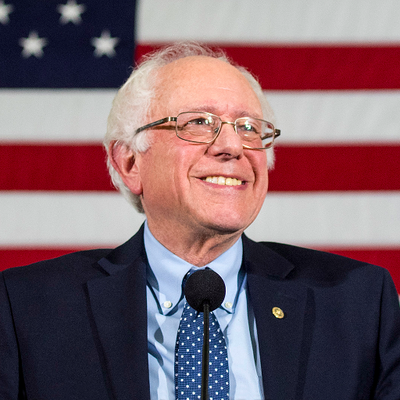
Democrats will now control the House and Senate and be able to hold Trump accountable. That's great.
At a time of massive income and wealth inequality, we must do more. We must aggressively fight for working families.
No more excuses.
Lin𐤊 retweeted
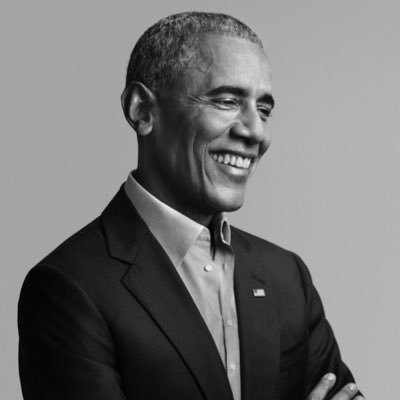
Tonight, the American people sent a clear message — they want a politics that brings people together rather than divides them, and leaders who offer concrete solutions to the challenges they face.
These results were only possible because outstanding candidates stepped forward in every region of the country — including in areas once considered long shots. They came from different backgrounds and represented a range of political perspectives, but were united by shared values, a belief in public service, and a commitment to putting the people of their districts and states first.
We also owe a debt of gratitude to the thousands of election officials and volunteers from both parties who helped ensure a smooth election and carried out one of the most essential functions of our democracy.
While this administration has another two years in office, our job now is to roll up our sleeves, make changes wherever we have the power to do so, prevent further damage, and lay the groundwork for the future.

