

International Bestselling Kindle Author Romantic Suspense & Timeslip/Otherworldly Finalist RNA Fantasy Romantic Novel 2022 Publishers: @Aria_Fiction @emblabooks
Cornwall, UK
Joined February 2014
- Tweets5.4K
- Following2.5K
- Followers3.3K
- Likes14.8K
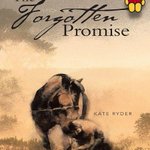








For a great cause and your chance to win a signed copy of the original, self-published, out-of-print #timeslip #Romance 'The Forgotten Promise', head over to #ChildrenInRead Official and place a bid on Lot 309:
jumblebee.co.uk/auction/deta…
UK only!
#EnglishCivilWar

Kate Ryder retweeted

The two archways at Dawn. Both images taken this morning in St Michael's tower on Glastonbury Tor. Taken just a few moments apart. Which is your favourite?


Kate Ryder retweeted

Today I learned rabbits can swim. Even better: their ears fold back into swim mode. I feel this information deserved to be shared
Kate Ryder retweeted

I always leave seed heads standing. They become tiny homes for overwintering insects and a reminder that a good garden isn’t only about what blooms, but about what it gives back. Sometimes the loveliest part of the year begins when we stop tidying and simply let nature carry on.

Kate Ryder retweeted

Something changed when Swiss farmers stopped fighting pests with more chemicals and started planting flowers instead.
Researchers found that wildflower strips sown through winter wheat fields cut cereal leaf beetle numbers by up to 53%.
Crop damage dropped by 61% because the flowers gave natural predators like parasitic wasps and hoverflies a place to live and hunt on. The idea is refreshingly simple.
Give nature's pest controllers a home and they take care of the rest.
The UK Centre for Ecology and Hydrology has now planted similar strips across 15 farms in England to test whether the results hold outside Switzerland.
Early signs suggest these flower corridors help insects reach the center of large fields, not just the edges. It is a small change with a big promise for farmers hoping to grow food without leaning so hard on pesticides.
Source: Schumi et al., Proceedings of the Royal Society B, Agroscope, Switzerland.

Kate Ryder retweeted

Simply Classy ,Soooo Sexy and talented beyond!!!! Amazing,, Fabulous Sax player 💖🎵💯
💫Candy Dulfer & Dave Stewart - Lily Was Here


Kate Ryder retweeted

A useful rule for life: match your attention to your location. When you’re working, give work your full focus. When you’re with people you care about, actually be with them. When you’re resting, properly switch off.
Most people split themselves in pieces one place physically, everywhere else mentally. That constant divide is what quietly drains energy and makes nothing feel fully satisfying.
Kate Ryder retweeted

13 years ago, Rotherham, England turned 8 miles of mowed roadside grass into a "river of flowers." In 2021, they added even more miles.
The original scheme was commissioned by Rotherham Council in 2013, designed by Professor Nigel Dunnett at the University of Sheffield, and seeded with a 180-species wildflower mix along the central reservations of the town's main ring road. It replaced mowing that had been costing the council around £80,000 a year.
Since then: the wildflower verges have saved roughly £23,000 to £25,000 per two-year mowing cycle, increased pollinator abundance, and inspired similar programs in Nottinghamshire, Derbyshire, Birmingham, Newcastle, and Sheffield.
In 2021, Rotherham added 3.5 more miles across 12 new sites including Herringthorpe, Swinton, Harthill, and Maltby. They just keep expanding it.
The UK has lost 97% of its wildflower meadows in the last 100 years. Most of what was lost was paved, plowed, or mowed. The verges nobody was using anyway turned out to be one of the largest untapped habitats in the country.

Kate Ryder retweeted

Around Oak Apple Day, 29 May, the mighty oak (Quercus robur) reminds us why it is revered in folklore. Home to countless birds, insects and animals throughout the year, it’s seen not just as a tree but as a living kingdom supporting an entire world of creatures. #FolkloreThursday

ALT Grey squirrel perched on the branch of an oak tree, holding food between its paws. The rough bark of the trunk fills the foreground, while softly blurred autumn oak leaves glow gold and orange against a blue sky.
Kate Ryder retweeted
It was a glorious golden sunrise this morning in Glastonbury. Have a fabulous Thursday everyone.


Kate Ryder retweeted

Britain has lost around half its hedgerows since the Second World War. The wildlife that depended on them has followed a similar trajectory. 🌿
The old field boundary — a strip of blackthorn, hawthorn, dog rose, and elder two to five metres wide between cultivated ground — was not wasted agricultural space. It was a functioning ecological system that maintained pollinators, pest predators, and farmland birds across centuries of working land.
Each hedgerow is a nesting corridor for grey partridge and skylark, a foraging habitat for brown hares and hedgehogs, a site for solitary bee colonies, and a windbreak for the crops alongside it.
The field cultivated to its very edge gives the maximum return this season. It removes the populations of beneficial insects, farmland birds, and small mammals on which stable long-term production depended.
The field with a hedgerow yields a few percent less per cultivated hectare — but remains productive across decades without compensatory chemical inputs. The documented declines in grey partridge, lapwing, and skylark across the British agricultural landscape since the 1970s are directly linked to field consolidation and hedgerow removal.
Practical equivalents for the garden or smallholding:
- A strip of wildflower meadow at least one metre wide at the plot boundary
- A clump of nettles in a shaded corner as a habitat base for red admiral, small tortoiseshell, and peacock butterflies
- A native mixed hedge of blackthorn and hawthorn in place of post-and-wire fencing
- A section of uncut grass between rows of fruit trees
#HedgerowHabitat #FarmlandWildlife #NativeHedge #GardenWildlife

Kate Ryder retweeted
In old German belief, lily of the valley were called Maiglöckchen, “little May bells”, and sacred to Ostara, goddess of dawn and spring. Their white flowers symbolised purity, their green leaves hope. They came to embody new beginnings and earth’s renewal after winter. #folklore

ALT Collage of lily of the valley (Convallaria majalis) in bloom, showing sprays of delicate white bell-shaped flowers hanging beneath arching stems among lush green leaves. Close-up photographs emphasise the tiny “May bells” against a soft woodland-green background.
Kate Ryder retweeted

The water-loving fairies of Ida Rentoul Outhwaite, 1920s
#vintage #art #illustration #FairyTaleTuesday

Kate Ryder retweeted
Please Be Kind To Moles.
They are beneficial to soil health, acting as natural aerators and pest control by consuming lawn-damaging grubs, beetles, and larvae.
They do not eat plants, and their removal often leads to new moles occupying the vacant tunnel system, making it a futile effort.
Apart from that, it is CRUEL!
Kate Ryder retweeted

We’ve all seen a double rainbow, but have you ever seen the sky do this? 🤔
This rare phenomenon happens when sunlight reflects off the water’s surface and then passes through rain droplets in the air.
The reflected sunlight acts like a second sun, producing additional rainbow arcs that cross the primary ones—creating this stunning crisscross effect. It’s pure optics, perfect timing, and the ocean acting like a giant mirror ☀️💧
Nature doesn’t repeat itself often… and when it doesn’t, it really shows off.

