

@OpenCheckAI Founder & CEO 🇨🇦🇭🇰 | SFU University graduate |TED Speaker | Fashion & Design | Multiple Guinness World Record holder & Patent inventor
Canada
Joined August 2010
- Tweets338
- Following1
- Followers53.1K
- Likes2.7K






Hong Kong's Monetary Authority officially launched its CMU Digital Asset Platform this week.
What caught my attention is that this isn't another tokenization pilot. It's infrastructure designed to support the actual lifecycle of financial assets, from issuance and settlement to coupon payments and redemption.
The distinction matters.
I've spent a lot of time looking at how physical collectibles change hands, and one thing I've learned is that the transaction itself is often the easiest part.
The harder questions concern custody, documentation, asset condition, and what happens when something goes wrong.
Traditional finance is beginning to address these operational challenges within digital asset infrastructure.
I think physical asset markets will eventually need to take a similarly comprehensive approach.
The opportunity is bigger than creating digital representations of valuable objects. It's about making the processes surrounding those assets more reliable.
hkma.gov.hk/eng/news-and-med…

Vogue Business published an interesting piece on how the luxury watch industry is moving further into resale and customer services.
Audemars Piguet's recent launch of The Watch Keepers is a good example.
For years, the secondary market was largely handled by independent dealers. Now, major watchmakers are becoming more involved in authentication, condition assessments, and the resale experience.
What interests me is how the relationship between a brand and its customers is changing.
The transaction no longer ends when a watch leaves the boutique.
Its authenticity, service history, and condition continue to influence its value for years afterward.
I think this is an important development for the broader collectibles industry.
The next competitive advantage may come from how well companies maintain trust throughout an asset's lifetime, not just at the point of sale.
Barron's recent piece on tokenized stocks raises a question I think deserves more attention, what exactly does owning a token entitle you to?
Not every tokenized asset gives its holder the same rights. The legal structure, custody arrangements, and redemption mechanisms matter just as much as the technology.
I've seen a similar issue in the luxury watch market. Having documentation for an expensive watch doesn't necessarily mean you have clear title to it, or that its condition and history are beyond dispute.
As tokenization expands into more asset classes, I think investors will increasingly look beyond what a token represents and ask what they can actually verify and enforce.
That's a much more interesting conversation than simply putting everything on chain.
barrons.com/articles/tokeniz…

Over $1B in weekly tokenized stock volume on Base is an interesting milestone. What stands out to me is the weekend activity. Traditional markets were closed, but trading continued. For physical collectibles, I think the opportunity is similar, although the challenges are different.
Global access is valuable, but the underlying asset, its custody, and its condition still need to be independently verifiable. Liquidity matters. So does knowing exactly what you're trading.

Christopher Waller's latest remarks on tokenized markets are worth reading.
One question he raised stood out to me: who takes responsibility when something goes wrong with an asset moving across blockchain networks?
It's a question that doesn't get nearly enough attention.
In the luxury watch industry, responsibility doesn't end when a transaction is completed. Buyers still care about authenticity, custody, documentation, and what happens if a dispute arises later.
Tokenized markets face a similar challenge, although the technology is very different.
Blockchain can make transfers faster and records easier to access. But neither automatically resolves questions about the underlying asset or who is accountable for it.
I think the most interesting part of this industry right now isn't how quickly new assets can be brought on-chain.
It's how the market is beginning to address the responsibilities that come with them.
federalreserve.gov/newsevent…

The DTCC announcement is worth paying attention to, and not just because Solana is involved.
What interests me is that one of the most established institutions in traditional finance is working to bring existing securities infrastructure onto public blockchains.
The assets still need custody, investor protections, and clearly defined ownership rights. Those responsibilities don't disappear when the technology changes.
I think that's an important lesson for the broader RWA market.
In the collectibles and luxury watch industries, digitizing an ownership record is relatively straightforward. Establishing who is responsible for the physical asset, its condition, and its history is considerably harder.
Traditional finance is building blockchain around existing safeguards.
Physical asset markets will need to think just as carefully about theirs.

BREAKING: @The_DTCC to tokenize custodied assets on Solana. announced plans to connect the DTCC Tokenization Service to Solana, enabling the tokenization of eligible DTC-custodied assets on the network.
The integration is planned for the second half of 2027, further advancing DTCC’s multi-chain strategy.

Apex Group joining the Hedera Council caught my attention this week.
What stood out wasn't the blockchain partnership itself, but the emphasis on compliance throughout an asset's lifecycle.
That's an important distinction.
In traditional finance, infrastructure doesn't stop working once an asset is issued. There are ongoing responsibilities around custody, ownership, reporting, and settlement.
I see a similar challenge emerging for physical collectibles.
A luxury watch might be authenticated today, but its condition, custody, and ownership can change over time. A certificate issued years ago doesn't necessarily tell a buyer everything they need to know today.
I think this is where the conversation around RWAs needs to mature.
Creating a digital record is only the beginning. Keeping that record meaningful throughout the life of the underlying asset is the harder problem.
theblock.co/news/deals/2026-…

Phillips just crossed $112 million in a single watch auction in Geneva, with all 217 lots sold.
That's a remarkable result, especially considering how selective the secondary luxury watch market has become.
What interests me most isn't the headline number, though.
At this level, buyers aren't simply paying for a recognizable brand. They're evaluating rarity, originality, provenance, condition, and sometimes decades of documented ownership.
Two examples of the same reference can command very different prices depending on those details.
It's a useful reminder that physical assets don't behave like interchangeable financial instruments.
The information attached to an individual item can be just as valuable as the item itself.
As collectible markets become more global and digital, I think preserving that information accurately will become increasingly important.
phillips.com/press/release/p…
The recent theft of nearly $1 million worth of trading cards from a FedEx truck outside PSA caught my attention. One detail stood out, Collectors reportedly deactivated the certification numbers associated with the stolen cards and alerted marketplace partners.
It raises an interesting question about how the collectibles industry manages an asset after authentication. A card can be genuine, properly graded, and still become problematic to trade if its custody history is unclear or it has been reported stolen. Coming from the luxury watch industry, I've seen how important provenance and ownership history can be when dealing with valuable physical assets. I think authentication needs to be treated as more than a one time event. As collectibles move between collectors, vaults, and marketplaces, maintaining reliable records of an asset's status becomes increasingly important. That's an infrastructure problem worth paying attention to.
apnews.com/article/trading-c…

192
3.87 million cards graded in October. That's a 48% increase from a year ago, according to GemRate.
PSA alone processed a record 2.79 million cards.
I've been following these numbers because they tell us something interesting about the collectibles industry.
Grading used to be something collectors considered mainly for their most valuable cards. Today, it's becoming a much bigger part of how the secondary market operates.
And despite record processing volumes, PSA still reported 6.8 million submissions in its backlog on November 3.
That's an extraordinary amount of demand for a service that depends on physical inspection and specialized expertise.
I think the next challenge for this industry is finding ways to increase verification capacity without compromising accuracy.
There's plenty of room for technology to help, but maintaining the confidence collectors place in the process has to come first.
Source: GemRate, October 2026 Recap; PSA Backlog Tracker.
gemrate.com/october-2026-rec…

The recent Binance security incident is a reminder that crypto still lives and dies by trust in infrastructure.
Markets can move fast.
Liquidity can return quickly.
But when security breaks, the conversation changes immediately.
It stops being about narratives and starts being about controls, accountability, and how trust is rebuilt.
For us, this is an important reminder that the next phase of Web3 will not be built on speed alone.
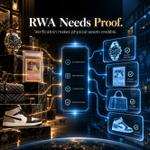
It will be built on stronger infrastructure, clearer verification, and systems that help users trust what sits behind the transaction.
In crypto, every incident eventually becomes an infrastructure lesson.
The Binance incident is a reminder that growth alone is not enough.
As the market matures, trust in infrastructure becomes just as important as liquidity.
That applies not only to exchanges, but to every part of Web3 that wants to support real-world value at scale.
Saw The Authority's announcement about introducing a public grading standard for collectibles.
It's an interesting development, especially for an industry where buyers often place enormous trust in a grade without knowing exactly how that decision was reached.
Having spent years around luxury watches and collectibles, I've seen how two people can look at the same item and come away with very different assessments.
Expertise will always matter. But I think there's a strong case for making the standards behind that expertise more transparent.
A public grading framework won't eliminate subjective judgment, and it won't solve every authentication problem.
It does, however, give collectors something concrete to evaluate beyond the reputation of the company issuing the grade.
As collectible markets become more digital and international, that kind of transparency could become increasingly valuable.
theauthority.com/
Interesting to see tokenization explicitly included in the SEC's 2027 examination priorities.
I think this reflects an important change in how the industry is approaching on chain assets.
A few years ago, most conversations were about whether traditional assets could be tokenized.
Now we're getting into the harder questions: how these assets are supervised, who is accountable, and what happens when the digital record doesn't match the underlying reality.
Coming from the luxury watch and collectibles industry, I see a similar challenge with physical assets.
Putting something on chain is relatively straightforward. Establishing that the asset is genuine, accurately represented, and properly documented is a different problem.
It's encouraging to see the conversation moving beyond the technology itself and toward the infrastructure needed to make it work in practice.

Under Regulation SCI, SEC examiners will look at "tokenization of securities" in fiscal 2027, next to super intelligence, extended trading hours and quantum computing.
unchainedcrypto.com/sec-exam…

7.2 million cards.
That's how many submissions PSA still had in its grading backlog as of October 20.
The number is actually improving, down from 8.2 million just two weeks earlier. But it says a lot about where the collectibles industry stands today.
Demand for authentication has grown to a point where even established grading companies are having to rethink capacity and turnaround times.
And this is happening while Pokémon celebrates its 30th anniversary, with vintage cards attracting serious attention from collectors.
What interests me isn't just how much these cards are worth.
It's how much time and infrastructure the market needs to establish that value in the first place.
I don't think AI will replace experienced graders overnight, and it shouldn't.
But there's a real opportunity to make the process more efficient by combining computer vision, expert judgment, and transparent verification records.
The collectibles market has evolved significantly.
The infrastructure supporting it still has plenty of room to catch up.
psacard.com/en-CA/info/backl…

One thing I find interesting about the direction of crypto is how the definition of an investable asset keeps expanding.
We have already seen traditional financial products move closer to blockchain through ETFs, stablecoins, and tokenized securities.
But I think physical collectibles are still an overlooked part of this conversation.
Pokémon cards, luxury watches, and rare collectibles already have global demand, established secondary markets, and communities willing to pay premiums for scarcity.
What they lack is the infrastructure that makes ownership, authentication, and transactions easier across borders.
Imagine a market where a collector in Hong Kong can confidently trade with someone in New York without going through the same lengthy verification process every time.
That is the kind of opportunity I find exciting.
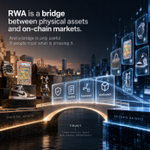
The future of RWA is not just about bringing traditional finance on-chain.
It is also about giving entirely new asset categories access to global digital markets.
AI is changing how we evaluate digital information, but I think its impact on physical assets is still underestimated.
Take the collectibles market as an example.
A rare Pokémon card or luxury watch can carry significant value, yet authentication still depends heavily on manual inspection, specialized expertise, and centralized institutions.
That creates friction in a market where buyers and sellers are increasingly connected globally.
Computer vision can help identify inconsistencies, analyze physical characteristics, and support faster preliminary assessments.
But AI alone should not be the final authority.
The real opportunity comes from combining AI assisted analysis with independent human verification and transparent on chain records.
This is where I see AI and blockchain becoming genuinely complementary.
One helps evaluate the physical world.
The other helps preserve the evidence.
Together, they could change how trust is established in global collectible markets.
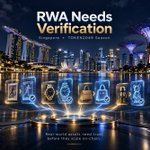
One thing that stood out to me after TOKEN2049 is how much the conversation around crypto is changing.
A few years ago, most of the attention was on building new tokens and attracting liquidity.
Now we're seeing more serious discussions around stablecoins, asset tokenization, and connecting traditional markets with blockchain infrastructure.
But I think collectibles are still an underestimated part of this shift.
Pokémon cards, luxury watches, and other high-value items already have established communities, global demand, and active secondary markets.
What they lack is a reliable way to bring their authenticity and ownership history into digital markets.
That is where I see a real opportunity.
The next phase of Web3 may not be about creating entirely new assets.
It may be about unlocking the value of assets people already own.
