

Scaling and monetizing brands on X & LinkedIn (Generated 200M+ impressions and multiple 6-figure leads for clients).
See if you’re a good fit →
Joined October 2026
- Tweets730
- Following250
- Followers288
- Likes6.6K




Pinned Tweet
my previous 𝕏 brand got hacked.
the account I've been active since day 1 is completely lost.
ngl I got shocked at first, but now all I see is a massive opportunity to build the 2.0 version properly.
starting from zero (again) never felt better.
(p.s shoutout to @X and @Support for not replying to 4+ applied tickets to resolve the problem).
Konstantinos Chasiotis retweeted
Marc Andreessen explained why the people who invented AI are the worst to ask about its future.
Geoffrey Hinton won a Nobel Prize in 2024 for the work behind modern AI.
When people ask Hinton where AI is going, he predicts "rampant unemployment" and UBI for everybody.
"People think, because he's one of the inventors of AI, that he must be the guy who knows."
Andreessen's answer is Thomas Edison.
Edison invented the phonograph in 1877. To him, @pmarca says, the use was obvious. Every family would buy a record player and a library of discs with sermons from the great preachers of the time. Then the machine went on sale.
"Immediately, of course, it's music. It's ragtime, and swing, then it's jazz. And Edison's just completely horrified."
"If Edison didn't know what the phonograph was going to get used for, the idea that Joe AI entrepreneur is going to be able to forecast the economic implications... No. That's not going to happen."
Inventors, he says, are "too buried in the specifics of the here and now." He includes himself:
"I don't know if there's anybody that can predict big cultural, or economic or social trends, but it's certainly not somebody who's been in the lab for 20 years, including myself."
Edison built the machine, but musicians decided what it was for. The ones who already had crowds following them got the most out of it.
AI is going to work the same way.
Nobody knows which jobs, industries or business models survive the next ten years.
What carries over is the people who know you, trust you and pay attention when you show up with something new.
That's what a personal brand buys you.
Whatever the next shift turns out to be, you walk into it with an audience instead of starting from zero.
The best part? It's never been easier to start building your personal brand…
If you want to work with me to nail your X and LinkedIn brand positioning and add leads to your business, shoot me a DM (serious inquiries only).


“it’s just an algo spike, warming up a brand takes time.”
420k+ impressions with 2 storytelling posts in an entirely dead brand.
the speed at which he grows is unfair at this point.
founders DM me if you want the same results.


onboarded a new client in the tech niche on November 9th.
he was averaging 600-900 views on LinkedIn and was constantly telling me how suppressed his brand was.
our first post went live on November 12th and he already went viral, hitting 126k impressions (and counting).
crazy how most writers still blame the LI algo for their low reach.
p.s if you want to work with me to nail your X and LinkedIn brand positioning and add leads to your business, shoot me a DM (serious inquiries only).

7
226
Konstantinos Chasiotis retweeted
Steve Jobs broke down how he managed brilliant people at Apple:
“If you wanna hire and keep really bright people, then you can't tell them what to do very often.”
“Like once a year, maybe twice, you get to do that.”
“You have a silver bullet now and then, but basically you don't do that. At Apple, it's about ideas, and we argue about ideas constantly.”
Jobs didn't keep the best people by giving orders. He kept them because they wanted to argue with his ideas.
And they knew those ideas before they ever walked in.
Millions of people had watched Jobs think out loud on stage, in interviews and in his keynotes.
That's what a personal brand buys you.
The brightest people choose to work for you because they've already seen how you think.
Most founders never get that. Their best ideas come out in meetings, then vanish when everyone leaves the room.
The best part? It's never been easier to start building your personal brand…
If you want to work with me to nail your X and LinkedIn brand positioning and add leads to your business, shoot me a DM (serious inquiries only).


onboarded a new client in the tech niche on November 9th.
he was averaging 600-900 views on LinkedIn and was constantly telling me how suppressed his brand was.
our first post went live on November 12th and he already went viral, hitting 126k impressions (and counting).
crazy how most writers still blame the LI algo for their low reach.
p.s if you want to work with me to nail your X and LinkedIn brand positioning and add leads to your business, shoot me a DM (serious inquiries only).


read this before it goes viral:
you should be posting at least once/day on LinkedIn as an authority while giving examples of how you've got massive results for your ICP with real numbers/strategies/case studies.
this is probably the highest ROI activity I’ve found so far.
1
8
227
Elon Musk: “If you haven't thought until your brain hurts, then you haven't tried hard enough.”
asked what it takes to do things the way he does, @elonmusk points first to mastering technology.
“if you want to do things like me, you have to learn how to be good at technology. so study engineering, physics, that kind of thing. understand how the world works, and try to be as accurate as possible about that.”
knowledge alone won't get you there, though. the second ingredient is creativity:
"also try to be creative, which means just try to think of things that haven't been done before, but that would probably make the world better."
elon is candid that none of this comes easily. pairing technical accuracy with real originality takes enormous mental effort:
“it requires a lot of mental effort to do that. I don't just combo stuff willy-nilly. I mean, occasionally, but it's rare.”
that's where his standard for effort comes in. for Musk, mental strain is the bar you're supposed to clear:
“you really have to think until your brain hurts. if you haven't thought until your brain hurts, then you haven't tried hard enough.”
most founders already do that kind of thinking. they spend years working out problems their whole industry gets wrong.
then it stays in their head, in a few meetings and the odd investor call.
musk shares how he thinks in public, and millions of people follow along. that's why a line from one interview can still travel this far.
your thinking can work the same way once people can actually see it.
the best part? It's never been easier to start building your personal brand…


when I say I've cracked the LinkedIn algorithm… I mean it.
at this point I can grow any LinkedIn brand.
this is exactly what happens once you post:
→ linkedIn first tests your post on a small group
→ that group is a mix of people interested in your topic and people who usually engage with you
→ if the topic people engage, LinkedIn pushes your post to more people who like that topic, even if they don't know you
→ if your network engages, LinkedIn pushes it to similar people and your second degree connections
→ when both groups react well, your post grows from two sides at once
now let’s breakdown what helps:
1. stick to specific content pillars for a good stretch of time
2. linkedIn learns you're the person who talks about that one thing, and keeps boosting your posts
3. don’t post about random things, algo won't know who to show you to
4. if your posts have nothing to do with your profile, that hurts your reach too
your topic can be boring and your writing can be basic.
just learn the writing game, learn the algorithm and LinkedIn becomes the best place to grow.
if you want to work with me to nail your X and LinkedIn brand positioning and add leads to your business, send me a DM (serious inquiries only).


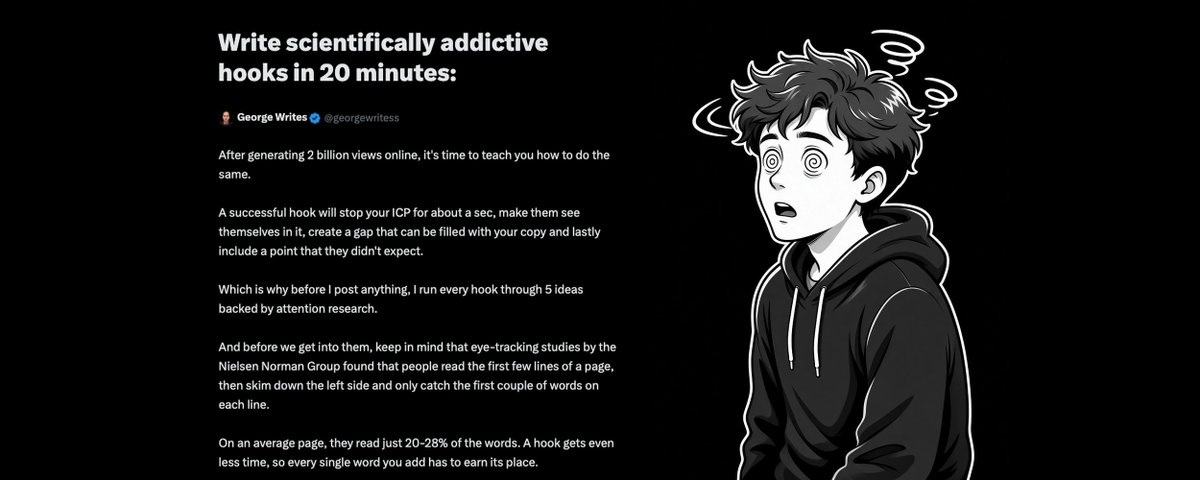
99% of the people who follow you won't buy from you today.
but you still get value from them through engagement, authority, etc.
your content strategy should act as a funnel to guide those 99% into being the 1% who buy.
top, middle and bottom of funnel content in every single batch.
3
9
145
Konstantinos Chasiotis retweeted
Conor Neill explained why luck is not random and how to deliberately get more of it:
1. luck travels through people and conversations. Talk to the same circle and you get the same opportunities. Talk to new people and new opportunities appear. Want different luck? Walk into different rooms. Access determines what reaches you. That’s mechanics, not metaphor.
2. successful people don’t get more luck. They get a better return on it. Most of us encounter similar lucky moments. The gap is who is prepared and paying attention when they show up.
3. one piece of advice changed everything: meet one new person every week. He blocked the slot for 25 years. Almost every major break—teaching, business, relationships—came from one conversation with one person. The compounding is enormous.
4. when you meet someone new, you start at #21 on their priority list. Talk about yourself and you drop off it. Ask about them—their goals, why they’re there—and you move up. Good people usually reciprocate. That’s how real conversations (and luck) open.
5. luck surface area is something you control. More genuine conversations with more people = more surface for luck to hit. Same people, same luck. New people, new luck.
I recently rewatched this video and it later became the inspiration for my article.
trust me it’s worth a listen:
Konstantinos Chasiotis retweeted
THIS IS F*CKING INSANE. SpaceXAI engineer Lauren Tan:
“99% use grok bot at 1% of its potential.
i run 25+ agents with a chief of staff. they ship while i sleep.”
most people still use grok bot like a search bar. ask a question, copy the answer, close the tab.
the ones pulling ahead treat it like a new hire.
they give grok bot a brief once, teach it their standards, and make it check its own work before anything gets delivered. then they stop doing that job themselves.
it’s already replacing whole roles. work that used to need a freelancer or a virtual assistant now runs on a $100/month plan.
brief → standards → execute → verify → deliver
verification is where most setups break. a grok bot that can’t catch its own mistakes just makes them faster.
you don’t need 25 agents to start. you need one grok bot that does one job better than the person you’re paying for it.
the article below has the full breakdown (LITERALLY FREE SAUCE):
