

Professional mathematician. Doctorate in (a subarea of) mathematics from a German university.
Germany
Joined July 2018
- Tweets327K
- Following5.5K
- Followers15.1K
- Likes407K





Pinned Tweet
»..diligite homines, interficite errores, sine superbia de veritate praesumite, sine saevitia pro veritate certate, orate pro eis quos redarguitis atque convincitis.«
St. #Augustine(354–430),
Contra Litteras Petiliani,
Book 1, Chapter 29
#Christianity
#ChristianCulture
#Europe


Logic Geometry, Information retweeted
>
the class of of mind's consciousness-contents that that mind is sure of is a strict subclass of the class of consciousness-contents that that mind pays attention to. I.e., the 'good', here, is even scarcer.
Formal verification will become ever more important (in view of AI-assisted vulnerability-finders).
#AppliedMathematics

#RingerPalmskogEtAl-1
#AppliedMath
FaTiPL (2-3), 102-281 (2019)
QED at Large: A Survey of Engineering of Formally Verified Software
Talia Ringer
Zachary Tatlock
(University of Washington)
Ilya Sergey
(Yale und NU Singapore)
Karl Palmskog
Milos Gligoric
(University of Texas

"AI and Trust..
AI presents a whole bunch of interesting trust-problems..
it gives you an answer..
it's right or it's wrong"
Mike Dodds (Galois, Inc.) [v=oSHVPvM56sA; 3m10s]
Relevant: xitter.cf/LGcommaI/status/196428…

𝘝𝘦𝘳𝘪𝘵𝘢𝘴 𝘵𝘦𝘮𝘱𝘰𝘳𝘪𝘴 𝘧𝘪𝘭𝘪𝘢.

Generally speaking my posture towards new results, even resolutions of famous open conjectures, is “wait and see.” Presumably we will learn interesting things from many such solutions, but the mere existence of the solution itself provides one bit of information—in many cases less, if the result was expected to hold. Value comes from engaging with the solution, which takes time.
Maybe I’m just pathologically chill, but I see AI solutions to open problems as generally exciting, at the level where I say “that’s pretty cool!” I’m looking forward to digging in further on the questions that I like, and still thinking about the math that interests me. The apocalyptic rhetoric (“massacre,” etc.) one sees on here generally rings false to me.
New and relevant: xitter.cf/HarmonicMath/status/21…

There will be lots of human-led code-review, code-testing and code-verification though. And these are intrisically hard problems (no efficient algorithms exist to do this automatically).

New and relevant: xitter.cf/HarmonicMath/status/21…
Important. 𝘝𝘦𝘳𝘪𝘵𝘢𝘴 𝘵𝘦𝘮𝘱𝘰𝘳𝘪𝘴 𝘧𝘪𝘭𝘪𝘢.
Generally speaking my posture towards new results, even resolutions of famous open conjectures, is “wait and see.” Presumably we will learn interesting things from many such solutions, but the mere existence of the solution itself provides one bit of information—in many cases less, if the result was expected to hold. Value comes from engaging with the solution, which takes time.
Maybe I’m just pathologically chill, but I see AI solutions to open problems as generally exciting, at the level where I say “that’s pretty cool!” I’m looking forward to digging in further on the questions that I like, and still thinking about the math that interests me. The apocalyptic rhetoric (“massacre,” etc.) one sees on here generally rings false to me.
Yes it is useful (and must go on). Reasons:
1) Memorizing SOME precise quality knowledge is a useful EXERCISE of childrens' brains. (E.g., poems, important equations, physical constants, etc.)
2) The quadratic formula is an elementary example of quantifier-elimination.


Daily reminder that the commemorative plaque in Gödel’s honor in Vienna does not even mention Gödel’s Incompleteness Theorem (that is arguably less important than Gödel’s Completeness Theorem).


At age 25, Kurt Gödel proved there can never be a mathematical “theory of everything.” In this week’s Qualia column, @nattyover asks experts how his ideas changed the course of humanity’s unending search for truth. quantamagazine.org/what-do-g…

Related: xitter.cf/LGcommaI/status/211515…
In particular, Tarski's Theorem implies the Incompleteness Theorem.
Sketch of why:
1. derivability IS arithmetically-definable
2. Tarski proved that arithmetical truth is not arithmetically-definable
3. Together, (1) and (2) imply there is a true statement that is not derivable.

Yes, Goedel was brilliant and his main theorems are dramatic and devastating. But Tarski utterly blows my mind. While Goedel exposed a limitation of proof, Tarski exposed a limit of definition.
Arithmetical truth itself cannot be defined by a formula in the language of arithmetic. A definition need not be an algorithm. Plenty of things with a precise definition are uncomputable!
Moving from “we cannot mechanically establish every truth” to “we cannot even define the full truth predicate here” is amazing — it crosses a conceptual boundary.
Tarski’s work, IMHO, reveals more, philosophically, than Goedel.
Related: xitter.cf/LGcommaI/status/205653…
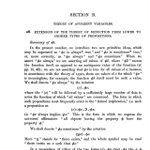
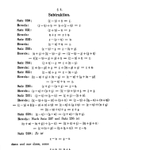
"This is a gorgeous theorem."
(referring to Gentzen's 𝘏𝘢𝘶𝘱𝘵𝘴𝘢𝘵𝘻)
p. 137
Bulletin of the American Mathematical Society 34(2), pp. 131-159 (1997)
#GentzenSchliessenI-1
[#HistoryOfMathematics
#Klassiker:#Classics
#Logik:#Logic]
Mathematische Zeitschrift 39, 176–210 (1935)
Untersuchungen über das logische Schließen. I
Gerhard Gentzen
(Universität Göttingen/#Germany)
M.t. Investigations into drawing logical inferences

Relevant: xitter.cf/LGcommaI/status/211408…
"Gentzen, zusammen mit seinem Vorgänger Gödel, fügten der mathematischen Logik ein Element der Schönheit hinzu, die einem Michaelangelo oder DaVinci zur Ehre gereicht hätten."
Dirk van Dalen
Mitteilungen der Deutschen Mathematiker-Vereinigung 11 (1), pp. 30-31 (2003)
#GentzenSchliessenI-1
[#HistoryOfMathematics
#Klassiker:#Classics
#Logik:#Logic]
Mathematische Zeitschrift 39, 176–210 (1935)
Untersuchungen über das logische Schließen. I
Gerhard Gentzen
(Universität Göttingen/#Germany)
M.t. Investigations into drawing logical inferences
Relevant: xitter.cf/LGcommaI/status/211408…
#BlaschkeLeonardoUndNaturwissenschaft-1.
[#History]
"Wilhelm Blaschke [1885–1962]
Leonardo und die #Naturwissenschaft
Rede, gehalten am 10. November 1927, zum Antritt des Rektoramts ander Universitaet #Hamburg"
M.t. '#LeonardoDaVinci and #Science'

Relevant: xitter.cf/LGcommaI/status/196981…
Because of 2), students who learned this early are going to have some knowledge stored in their minds that an algebra-course at university can refer to.
Linking knowledge is useful (and pleasant to experience).
"largest math proof" is ill-defined.
A contestant is the >200 terabytes-long proof of the
Boolean Pythagorean triples problem.
THAT one is easy to verify by comparison though, hence one may add 'as-yet-unformalized-and-unverified' to the 'largest' conditions in this tweet:


There's a nugget of marketing-wisdom in the fact that I always find myself reverting to good-old #xpdf: it wins me over by two features:
1) the two most important buttons (the logical 'Back', and 'Previous Page') are one small twich of the wrist in the lower-left corner
>
There is a strange variant of xpdf that ships with some distributions, called xpdfreader and "based on the XpdfWidget/Qt toolkit from Glyph & Cog", and it does NOT have the one-button shortcut 'R' to reload a pdf. This is an unbelievable omission and spoils this variant.
#Linux