

Registered Kinesiologist|IM Triathlete|Knowledge Mobilizer|Visionary|Patient Navigator|ENTJ/PI•Captain Prevention•Management •Performance
Toronto, Ontario, CAN
Joined May 2012
- Tweets4.9K
- Following1.8K
- Followers559
- Likes6.2K







Pinned Tweet
“To maintain the most optimal healthy ageing process — you must live life by the needle of a compass, not by the hands of a clock.” ~Lynn P Tougas, WholeHeartKin
🧭
#HealthIsWealth
#RegisteredKinesiologist
#ExercisePhysiologist
#HealthNavigator
#LiveLoveLaugh
@Revelstoke_BC


1
160
This is a fabulous introspect, @Brady_H

Why do elite endurance athletes spend so much time going slow? Easy running barely challenges a well-trained athlete's heart and lungs. On paper it shouldn't make them fitter. Yet they do tons of it.
A 2025 perspective paper calls this a paradox and proposes 7 possible explanations. None are proven. Here they are.
1. Fitness without the stress. Heart-rate recovery after hard sessions can take over two days, which limits athletes to 2-3 well-rested hard sessions a week. Recovery from easy sessions happens in under 24 hours.
2. Easy and hard work might both switch on mitochondrial signaling (PGC-1α) through different routes. Not everyone agrees.
3. Structure built over years - maybe a bigger heart, more capillaries, more slow-twitch fibers.
4. Something we haven't measured yet (durability and recovery ability are good candidates).
5. Your head needs it. Easy exercise tends to lift mood, hard exercise tends to lower it, and a block of hard training increases distress.
6. It makes hard training work better. Lots of low-intensity activity plus HIIT beat HIIT alone in untrained and moderately trained people (probably because of aerobic base building).
7. Maybe it's replaceable. Intensified training could work, but it raises concerns about overtraining and injury, and studies show no clear performance advantage.


1
21
Thank you @picardonhealth @globeandmail So glad to be a part of this both provocative & progressive discussion on healthcare innovation in 🇨🇦 Also grateful to have my @UofT #BKin students chime in🎓
The future is here. Let’s do this together🤝
#Healthcare
#Innovation
#Canada


17
Creatine use in teenagers on the rise💪
Check out the article below to learn more👇
#physicalactivity
#sportandrecreation
#strengthandconditioning
#varsityathletics
#highschoolsport
#exercisephysiology
#kinesiology

More teenage boys are using creatine. Here’s what pediatricians tell their patients cp24.com/news/canada/2026/09…

ALT More teenage boys are using creatine. Here’s what pediatricians tell their patients
46
Meanwhile in TO we’re fighting @fordnation to save not just bike lanes but the lives of those who regularly use them🩺‼️🧑🏾⚕️👩🏼⚕️👨⚕️‼️
Choose your battles wisely🚴♀️😉one day that cyclist taking up too much road space won’t be available at the ER when you need them most🆘
#cycletoronto

Pleasure to meet everyone. Dr. Hicks is right. Whereas Dr. Hicks is an ER doctor and trauma team leader who's a bike rider, I'm an ER doctor who's a driver. We both think getting rid of bike lanes is poor public safety policy. The height of delusion.
2
45
Lynn Tougas, RKin retweeted

Homelessness in Toronto is a major factor affecting the medical care and disposition of patients. ER and hospitals are astronomically more expensive than shelter or durable supportive housing. Reporting by @OmarMosleh
thestar.com/news/gta/theyre-…

Lynn Tougas, RKin retweeted

While the plank is an excellent core exercise, several other options can strengthen your core. You can do these bodyweight exercises anywhere, and they don’t require equipment. health.com/bodyweight-exerci…

Women’s hearts are different.
Let’s get with the times #cardiology
#WomenSupportingWomen #womenshealthmatters
#kinesiology
#patientnavigation
#HealthcareLeadership
#healthcareprofessional
Great post @afshineemrani Thank you for being so thorough🫀

I'm a cardiologist. A 42-year-old mother of two came to my office complaining of jaw pain and crushing fatigue. She ran half-marathons. Her EKG was normal. Another doctor had sent her home with anxiety medication.
When I got her into the cath lab, I found severe microvascular disease — plaque choking the tiniest vessels of her heart, the ones standard angiograms routinely miss.
Her heart had been starving in silence while everyone told her she was stressed.
She is alive today. Too many women like her are not.
Heart disease kills more women than every cancer combined. And medicine is still diagnosing it through a male lens.
84% of cardiologists report having patients in the past year whose heart disease was misdiagnosed by another physician. Women with a STEMI heart attack have a 59% greater chance of being misdiagnosed compared to men. Women with an NSTEMI — 41% greater chance.
The reason is structural. For decades, we screened, tested, and treated women using a template built for men.
Men's heart attacks announce themselves — the crushing chest pain, the clutched fist, the Hollywood collapse. Women's hearts whisper. Crushing fatigue that feels like wearing a lead vest. Jaw pain written off as TMJ. Nausea blamed on a stomach bug. An ache between the shoulder blades blamed on a long week. Shortness of breath blamed on being out of shape.
For years, medicine called these "atypical" symptoms. They are not atypical. They are female-typical. Half of humanity is not a variant.
And the biology runs deeper than symptoms.
Women have smaller hearts and narrower coronary arteries. Plaque doesn't only clog the big highway vessels — it hides in the microvasculature, the tiny branches feeding the heart muscle itself. A woman can have a heart attack with a completely "clean" standard angiogram.
SCAD — spontaneous coronary artery dissection — occurs 90% of the time in women. Often young, fit women with zero traditional risk factors. It's the leading cause of heart attack in women under 50, accounting for roughly one quarter of all cases in that age group. Most doctors have never diagnosed one.
And some of the most dangerous cardiac risk factors are hidden in women's medical histories where no one thinks to look:
Preeclampsia or gestational hypertension doubles to quadruples lifetime heart disease and stroke risk. Pregnancy is the body's first cardiac stress test — and these complications are early warning sirens, not closed chapters.
Autoimmune disease — lupus, rheumatoid arthritis, psoriasis — far more common in women, turbocharges inflammation and plaque formation at any age.
Cardiovascular disease in women aged 20-44 is projected to surge nearly 50% by 2050.
The youngest patients in my practice keep getting younger.
What every woman should ask her doctor — and what every doctor should be asking:
"Given my pregnancy history, autoimmune status, and family history — what is my full cardiovascular risk?" If they don't ask about preeclampsia or gestational diabetes, volunteer it.
"Should I have an Lp(a) test and a coronary calcium score?" Standard cholesterol panels miss too much. Lp(a) is genetic, one-time, and most women have never been tested.
"My tests came back normal but my symptoms haven't stopped — what's next?" Normal stress tests and angiograms can miss microvascular disease, spasm, and SCAD. Persistent symptoms warrant coronary CT angiography or cardiac MRI.
And if something feels wrong — say these exact words to your doctor: "I am concerned this could be my heart."
That single sentence changes the workup. Do not soften it. Do not apologize for it.
80% of heart disease is preventable. But the playbook has to be built for female biology.
Two decades ago, I wrote one of the first books warning that heart disease was the number one killer of women and that medicine was diagnosing it through a male lens. It was recognized by First Lady Laura Bush at the White House during the early years of the national conversation about women's heart health.
I'm haunted by how much of that book I could republish today unchanged.
The science has advanced. The awareness has grown. But the gap between what we know and what happens in the exam room is still costing women their lives.
Share this with every woman you love — and every doctor who treats them. READ MORE: open.substack.com/pub/afshin…
3
78
When officers arrived, they located a female #cyclist in her 20s suffering from injuries.
#toronto
#commutetoronto
#torontobybike
Woman in her 20s hit by vehicle in Toronto’s west end cp24.com/local/toronto/2026/…

1
94


Many of these hospitals have family healthcare teams. So let’s talk about this other problem. The fact that patients aren’t being referred to these family health teams within such hospitals when it is known that they don’t have a family doctor.

Single issue ‘simple’ ER visits are becoming highly complex with an alarming regularity due to the lack of primary care and it is skyrocketing waits.
If we can’t get them family docs PLEASE give us a short term follow up clinic like I’ve asked for years. It would help so much.
1
66
Happy International Women’s Day
Be Strong💪
Be Brave🎖️
Beautiful🫵
#RegisteredKinesiologist
#AlliedHealthProfessionals
#HealthNavigator
#WholePersonHealth
#WomenSupportingWomen


1
58

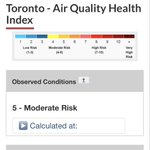
#BREAKING: Air quality warning in effect for Toronto due to possible ‘high levels of air pollution’ tonight
cp24.com/local/toronto/2026/…

97
Long term healthy eating habits eg more plants and higher fibre reflect positively on good night’s sleep.
🌙😴🛏️💤
#HealthyEating
#HealthyHabits
#HealthySleep
#Sleep
#Health

What you eat today shapes your sleep tonight.
On higher-fiber, more plant-diverse days, people experience more deep and REM sleep, less light and fragmented sleep, and have a lower overnight heart rate.
On days with more processed foods and saturated fat, nighttime wakefulness tends to be higher with a less restorative sleep pattern (less deep/REM sleep).
And when dinner makes up a larger share of daily calories, people sleep longer with a higher overnight heart rate. A longer interval between one's last meal and bed time (about 4 vs. 2 hours) is associated with a lower overnight heart rate.
Long-term healthy eating patterns are essential for good sleep, but this new study argues that even day-to-day dietary variations affect how well or how poorly we sleep.


66

This isn’t hypervigilance.
It’s leadership.
Women’s cardiovascular risk deserves precision.
Engaged patients change outcomes.
#HealthcareLeadership #PatientNavigator #WomenAndHeartDisease #MedicalLiteracy
15
