

Sharing the history and material culture of Lynchburg, VA and the surrounding area.
Lynchburg, VA
Joined April 2014
- Tweets2.1K
- Following414
- Followers924
- Likes939





Every Wednesday this month, we will be highlighting and celebrating local Black History throughout the years.
Today we are highlighting Lynda Woodruff, one of the students who desegregated E. C. Glass High School in 1962.


104
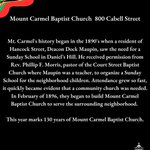
Every Wednesday this month, we will be highlighting and celebrating local Black History throughout the years.
Today we are highlighting Mount Carmel Baptist Church, located at 800 Cabell Street, in the Daniel's Hill neighborhood.


46
Every Wednesday this month, we will be highlighting and celebrating local Black History throughout the years.
Today we are highlighting Polk Street School, formerly located at 908-912 Polk Street.


31
The Vietnam War touched lives at home and abroad. In Lynchburg, families waited anxiously, students debated, and communities faced loss. Twenty-seven young men from our city never returned, and their stories are at the heart of this exhibit.

64

🏈 Artifact Spotlight #62:
This is a leather football helmet that William “Bill” McGarvey Dudley (1921-2010) wore during his football career at the University of Virginia. The helmet is from ca.1940 with a winged design, featuring the school's colors, navy blue and orange.


1
61

📻 Weekly Artifact Spotlight #61:
Today is National Radio Day, celebrating the invention of the radio!
This photo shows a group of young ladies participating in WLVA Radio Hour in 1940. WLVA began broadcasting in 1930 becoming the city’s first radio station.

1
41
🦷 Weekly Artifact Spotlight #60:
It's National Fresh Breath Day! Let’s celebrate how far we've come from dental tools of the past!
Here is a Tooth Key. It resembled a door key, and the motion of the tooth extraction was similar to turning a key in a lock.

1
45

🛄 Weekly Artifact Spotlight #59:
Measuring 36”x16,” this trunk dates back to the late 1700s. Wooden in construction, it's lined with wallpaper, covered in waterproof deerskin, and adorned with brass tacks conveying the monogram of its original owner: “M J.”

1
38
🦦 Weekly Artifact Spotlight #56:
In celebration of today being "National Otter Day", we offer this view of the iconic Peaks of Otter–Flat Top (4004’), Sharp Top (3875’), and Harkening Hill (3372’)–which dominate the view in this region of Virginia.

1
71
👩⚕️ Weekly Artifact Spotlight #55:
On this day in 1881, Clara Barton established the American Red Cross in Washington, D.C.
Decades later, a group of women led by Mrs. Charles MacLeod began to take refreshments to the railroad depots to hand to soldiers on the troop trains.

1
65
🐕 Weekly Artifact #54:
Today is International Chihuahua Day and we are highlighting a family portrait, featuring a furry friend that could perhaps be a Chihuahua. For comparison, below we have a photo of Sadie, beloved Chihuahua and friend to everyone at the Lynchburg Museum.

1
55

🧑🚀 Weekly Artifact Spotlight #53:
By the late 1950s, the Space Race between Russia and the United States had become an important part of American pop-culture. Toys, television, radio, and books all seemed to be influenced by the tense Cold War that rapidly engulfed the globe.

1
32

🌹 Weekly Artifact Spotlight #52:
Mr. Elder’s Garden, pictured here in 1965, is one of Lynchburg’s most subtle, serene greenspaces. Tucked behind the POW-MIA marker on Monument Terrace, this hidden garden offers unique views and a peaceful picnic spot.

1
52

🐰 Weekly Artifact Spotlight #51:
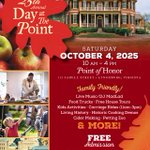
Point of Honor served a variety of functions during the 40-year period it was owned by the City of Lynchburg. Always a recreation facility, it doubled as a soup kitchen during the Great Depression and a nursery during World War II.

2
1
33
🪡 Weekly Artifact Spotlight #50:
This flag was likely made in Lynchburg in mid-1861 and is a mixture of wool and cotton. This is a flag displaying the Confederate First National Pattern regimental colors of Virginia troops, also referred to as the stars and bars.

1
1
38

💮 Weekly Artifact Spotlight #49:
The flowers are blooming all around Lynchburg and it’s a perfect time to take a stroll! This photo of flowering cherry trees in Riverside Park was taken around 1940. Riverside Park is the second oldest park in Lynchburg spanning over 49 acres.

39
🖌 Weekly Artifact Spotlight #48:
This portrait of Carrie Davis Mahood (1891-1971) was painted by her mother, artist Sallie Lee Blount Mahood. These women represent two generations of a dynasty of artistic Virginian women, which also include her grandmother and granddaughter.

1
1
48
😂 Weekly Artifact Spotlight #47:
Today is National Let’s Laugh Day, so we can take our cue from Dee Lugar who signed his brother’s School Memories book with this poem:
"it tickles me, it makes me laugh, to think you want my autograph"

1
1
39

👗 Weekly Artifact Spotlight #45:
This beautiful beaded gown was worn by Miriam Diuguid Moss Jones (1897-1992) on her wedding day in 1923. When she married John Page Jones, this gown along with the matching drawstring purse & hat were worn as a "going away" look for the evening.

1
1
50
