

https://xitter.gq/t.co/HHRCyaPuLc https://xitter.gq/t.co/E0S10MoEWc
United States
Joined February 2022
- Tweets1.1K
- Following404
- Followers6.3K
- Likes75.3K



Does this mean we're no longer taking Kaliningrad? 🤣

BREAKING: One of America's most-admired general officers, CD Donahue, is the latest Army leader to be forced out at the Pentagon, @nancyayoussef and @missy_ryan report: theatlantic.com/national-sec…

I'm from the coincidentalist school of international relations. When the wealthiest, most powerful people in the world want something to happen, it does so coincidentally.

The Ruling pathocracy is using the war against Iran to bring in Agenda 2030, food and fuel shortages, energy lockdowns, financial collapse and transition from the old (on life support) Fiat usury Ponzi scheme to CBDC and tokenisation (where the bankers own everything and you own nothing).
They have been de-industrialising the West for decades, decimating the middle class, culture, the sovereign nation and the final aim is to depopulate and control us completely like the cattle (goy) they think we are.

We can assume much more than that. As a purely military matter, the US/Israeli war aims were always absurd. Killing the Ayatollah was never going to topple Iran's government, and the missiles and drones Iran would fire in response were always going to cause this sort of precise, devastating damage. The Gulf Sheikdoms were always glass houses, and a real war with Iran was always going to wreak havoc on both the region and the global economy.
This should remind us of Ukraine. Kiev was never going to defeat Moscow, regardless of Western weapons and targeting intelligence, and the destruction of Nord Stream was always going to set Europe’s economy adrift (like with Net Zero). The fundamentals in each of these cases were well known—publicly known—for a long time.
Is it a coincidence that the US has been preparing National Guard quick reaction forces in all fifty states, or that these troops are to be ready by next month? Similar story with push for ID requirements, crypto, AI surveillance, and other things. The White House Press Secretary just hinted at a draft for God’s sake. Everyone knows that would cause backlash.
How many of these things can be coincidences?

RT continues to catalogue Pashinyan's eerie, months-long humiliation ritual. Click through the quoted posts.

Many are still in denial about Western defense industrial production. This piece has a longer explanation, but here are a couple of paragraphs:
"GDP is but one measure of economic mass, and often a misleading one. For instance, except in extreme comparisons between the richest and poorest nations, GDP says little about the economic wellbeing and day-to-day quality of life of a regular person. It says even less about a country’s capacity to make war. Again, what matters in combat is the force that can be brought to bear and at the specific time and place it is needed. A similar logic applies to the production and distribution of armaments. In Western nations, GDP consists largely of things like professional services, real estate, and non-military government spending. In other words, collective GDP cannot be loaded into a howitzer and fired at the enemy.
The relationship between GDP and military power exists only to the extent a nation can turn wealth into weapons. The height of America’s ability to do this was during World War II, a conflict from which incorrectly-derived lessons continue to plague us. The US turned Detroit into a massive armaments factory, and did much the same throughout the rest of the country. Not only did the US have the factories at the time to do this, it also had the know-how. With the loss of domestic manufacturing came the disappearance of many of its necessary skill-sets. Then there are the supply-chain realities, which are just as stark. Those who claim the US could fight a war against China need to explain how the country could produce sufficient weapons and ammunition while also relying on its enemy for so many of the necessary material inputs. Then, of course, there is the question of how to pay for all of this."


This blunder and all the other ones we are witnessing result from failures that were PUBLICLY KNOWN for a long time. We couldn't even evacuate our civilians from Sudan several years ago.


"In this view, any nation unable to project power globally—essentially everyone except the US—is therefore inferior on the whole. This view is incorrect. What matters ultimately in war is the force that can be brought to bear, both the attacker’s and the defender’s, at the specific time and place it is needed."
Mark Carney? The former Goldman Sachs executive, former Governor of the Bank of Canada, and former Governor of the Bank of England?

This is far less materiel than many assume. Big wars require bulk, and bulk moves by sea. It's a simple matter of throughput. Planes can't do the job.

Continued significant interest in US military flights over the past few days, nearly all of our most tracked flights this week have been been US Air Force aircraft.
Why do they disappear from the map over the ocean? It’s the type of transponder they’re using. You can learn more about how we track flights without ADS-B at flightradar24.com/blog/how-w…
Of course. Where would Washington even buy those weapons? The US doesn't make them in that quantity, nor can it. Same for "allies and partners." The only countries cranking out weapons at that scale are the very ones the US would need the weapons to fight.

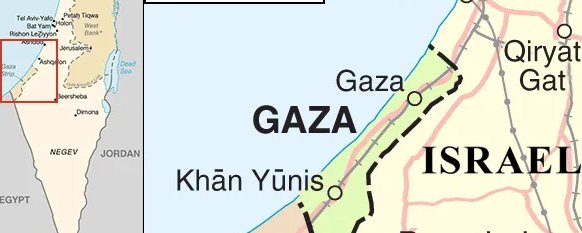


Israeli/US air defenses clearly failed against Iran’s missiles, but their failure was worse than that. During the final days of the fighting last June, I saw a video of a Shahed-136 maneuver through the high-rises of Tel Aviv—uncontested and in broad daylight—and it wasn’t the only Iranian drone to find its target.
Consider what this meant. After a little more than a week of fighting, all the many fighters and other aircraft from different countries failed to intercept drones flying all that way at well below 200 mph. All the ground-based air defenses failed to shoot them down, too. Iran has many more of these missiles and drones. It didn’t launch that much of its stock of high-end systems and perhaps didn’t even use its best ones. Nor did Iran launch the sort of mass attack of which is capable.
I realize the cult of American military supremacy is strong, and I saw this firsthand throughout my career, but this is an altogether different level of delusion. Another war would be so obviously ruinous that it is reasonable to ask if ruination is the goal, as crazy as this sounds.

If Iran surrenders its missiles, Israel and the US will bomb everything of military value until only small arms remain. Best case thereafter is a puppet government that lets Western companies strip-mine Iran’s resources and load the country with debt. Worst case is Libya/Syria.

I'm a broken record, but this manual is instructive. One might expect a crippling capability gap in missile defense to temper operational ambitions, like threatening Iran—a country with advanced missile capabilities and ample supply. Not so, it seems.
Yes, many current US leaders acknowledge the severe deficiencies in conventional forces and industrial production, but there are no quick or easy fixes here. Again, though, there’s been no throttling of military adventurism (itself always an ill-advised policy anyway).
However, there is one very well-funded and deceptively-flashy apparatus within the US arsenal. But beware: Hard power > SOF power. I've seen the cult of SOF grow over the past quarter century. Quick victories, like that over the Taliban in late 2001, intoxicated leaders in Washington and elsewhere in the defense establishment. Even after years of counterinsurgency quagmires had dulled the shine of that initial win, the glare of SOF “magic” still burned bright—not only at home but often in their views of events elsewhere.
Russia’s swift seizure of Crimea in early 2014, from their perspective, was the work of “polite people” or “little green men” employed in concert with a slick information operations campaign. Less attention, if any, was paid to the tens of thousands of Russian troops amassed on Ukraine’s border, the presence of its Black Sea Fleet, complete with naval infantry, in Sevastopol, or the general decrepitude of the Ukrainian military at the time (to say nothing of other critical factors: historical, political, cultural, linguistic, etc.).
SOF are a highly-refined tool for very specific purposes. Excellent at those things—under favorable circumstances—but otherwise limited. In a major war, they are only ever a supporting effort, never the main effort.
The SOF-ification of the US military has been out of control for many years. More concerning still is that civilian leaders bought into the hype long ago. If they intend to rely on the “rockstars” of the US military to bridge the gap in Iran, it will not end well, and Operation Desert Claw II would have far worse and more wide-ranging consequences than the first.


I wrote this six months before the 12-Day War:
“Contrary to Western talking points, Iran possesses at least some of these capabilities. Yes, much of Iran’s war machine is rickety, but these lackluster elements coexist alongside advanced capabilities. Western governments and media celebrated the “defense” of Israel in April and October of 2024. They derided Iran’s missiles as “crude” despite the fact that the projectiles penetrated Israel’s air defense en masse and struck sensitive targets. That Iran did not execute a wide-ranging, catastrophic assault was wrongly interpreted as a lack of ability instead of as a sign of restraint. Iran responded to Israel’s provocations by messaging that it did not want a wider war and, critically, by previewing some of its high-end offensive capabilities. Regarding Israel, one should also consider the Houthi’s ability to send missiles to Tel Aviv even in the presence of the US’s premier air defense systems, known as THAAD.”
The State of Western Warcraft
This piece belongs to the thematic series, “Flipping the Board.”
In early 2023, the head of the US European Command and Supreme Allied Commander of NATO, General Christopher Cavoli, remarked, "precision can beat mass." (1) This is true; precision can beat mass. But some countries now have the capability to render Western precision much less precise, both by “hard kill” (kinetic) and by “soft kill” (electronic). More to the point, these countries now possess both precision and mass, whereas the West is left to rely on a degraded version of the former and has long since abandoned the latter.
Power Projection versus National Defense
The “unipolar moment” of the post-Cold War period has led to thoroughly misguided notions about the nature of military power. Here it is important to understand the difference between power projection and national defense. Most militaries exist to provide the latter, i.e., the means by which to protect their nations from threats in their respective regions. Very few ever hold the ability to project power far from home.
But the US military primacy of recent decades, specifically the ability to wage and sustain war in far-flung locations, has become to many the hallmark of military power writ large. In this view, any nation unable to project power globally—essentially everyone except the US—is therefore inferior on the whole. This view is incorrect. What matters ultimately in war is the force that can be brought to bear, both the attacker’s and the defender’s, at the specific time and place it is needed.
Consider the conclusion many drew about Russia in the wake of the Assad regime’s collapse. “Russia is a paper tiger with nukes!” According to such thinking, Russia’s inability to continue propping up Assad, or its decision not to do so, somehow translated into weakness elsewhere, most notably in Ukraine. This, too, is incorrect.
When Russia intervened in Syria in 2015, it was entirely uncontroversial to conclude that this operation was likely the limit of Russia’s power projection capabilities. Yes, the country has formidable strategic air, naval, and rocket forces, but these serve mainly as a deterrent. The primary focus of all other Russian forces is to defend Russia, especially on its Western and Southern borders opposite NATO. Here Russia remains incredibly strong. Similar logic applies to China. For instance, those who mock the country’s lack of a true “blue water” naval capability overlook the potency of that force in the waters that line China’s shores.
Operation Desert Storm was the watershed moment for the brief period of US military primacy. It occurred shortly after the fall of the Berlin Wall and shortly before the collapse of the Soviet Union. There is an ongoing debate in military circles over the significance of Desert Storm. Both critics and supporters continue to misunderstand several key takeaways.
Critics point out that the US-led coalition had many months to amass a force in Saudi Arabia, did so uncontested (save the Scud missile attacks), and then smashed an inferior enemy. These things are all true. What critics fail to realize is that the ability to do all of this—diplomatically, economically, logistically, militarily, etc.—was itself an expression of extraordinary power. Moreover, they downplay the fact that this coalition really did possess operational technologies that others, including Russia and China, did not have at the time, as well as the innovations these asymmetries would prompt in weapons development in the years to follow. This was especially the case in Moscow and Beijing.
The primary failure of the war’s admirers, including many current rank and file in the US defense establishment, is to think such an operation is replicable today. They brush aside the fact that most members of the coalition still maintained their enormous Cold War-era forces, but have long since abandoned them. They exaggerate the current reach Western diplomatic influence and industrial capacity. Lastly, they cling unflinchingly to the notion of superior Western military technology. Such people are frozen in the amber of 1991.
The Fluid Nature of Capability Gaps
For decades, the US effectively had monopolies on many decisive capabilities, particularly in terms of deploying them at scale and with broad geographic reach. These included precision-guided munitions, night-vision, global strike, and others. The absence of high-intensity conflict between the US and other nations underscored this reality.
But the list of nations with advanced capabilities continues to grow, and capability gaps continue to narrow. In some cases, these gaps have closed, particularly in missile technology (including hypersonics), air defense, electronic warfare, and, more recently, unmanned systems. More importantly, and to the persistent disbelief of naysayers, some countries now have an edge over the US and its allies in some areas.
Push back hard enough on the arguments of NATO evangelists and one will find, eventually, the sole pillar on which their belief system rests. Such an exchange might begin with their boasting about Tomahawk cruise missiles. By the time these projectiles lazily make their way to their intended targets, and assuming most are not shot down or defeated electronically, Russian missiles—superior in speed, range, and payload—will have already been launched. Some will have already struck, and the others will trail behind them.
Consider the Oreshnik, for which there are no publicly known countermeasures. The prevailing theory is that the Oreshnik is a redesigned intermediate-range ballistic missile that carries six multiple independently targetable reentry vehicles, each of which carries six projectiles. It is capable of striking targets across Europe, and elsewhere, within minutes. Although the Oreshnik is nuclear capable, such warheads would be unnecessary—short of Armageddon—given the missile’s range, speed, and destructive power. This is a key point. Russia is trying to achieve strategic overmatch while removing the need for nuclear weapons. Perhaps it already has. This would be checkmate, at least in terms of a conventional war.
Of what use is the Oreshnik? There are the obvious answers, like striking NATO’s missile systems, bases, and factories, but there is a much more significant target set. Central to NATO’s plan for a defense of Europe is the expectation that American and Canadian troops and materiel would reinforce the continent, and the US was always the long pole in this tent by far. But how would they get there? Airlift would be insufficient; it simply lacks the necessary throughput. Such a conflict would require mass, and mass moves by sea. One could assume Russia keeps European ports under persistence surveillance, including on the ground. With the Oreshnik and other missiles, Russia could destroy the ports within a half hour, supplying follow-on strikes as necessary. The continent would be left with whatever it had on hand. The weakest link would become the primary one, and everything in Europe would remain vulnerable to continued strikes from Russia’s over-the-horizon systems.
Here NATO’s defenders play their perceived trump card, airpower. However, many of these aircraft are outdated while many of Russia’s have grown more advanced. Furthermore, along its periphery with NATO, Russia has the most advanced air defense network and electronic warfare complex in existence. The latter has already proven effective against many of the very technologies on which NATO’s entire way of war depends, particularly GPS-guided bombs.
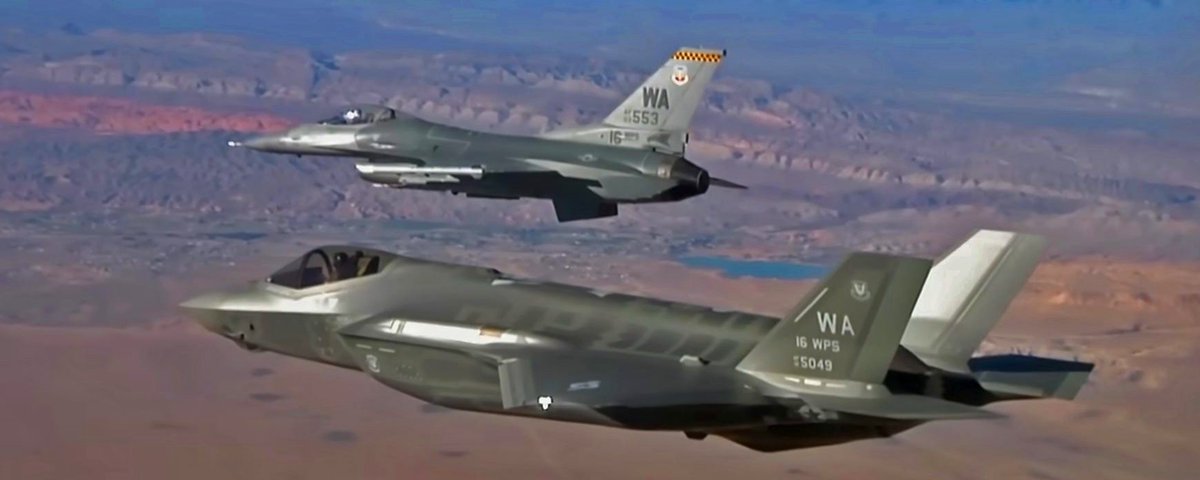
All of their hopes appear to be pinned on the F-35. It all comes down to this plane, an aircraft dubbed Lightning even though it has demonstrated difficulty flying in that very weather. Could the F-35 defeat all these many threats? No one knows and that is the most honest answer anyone could provide. Neither the US nor anyone else has flown against such formidable threats—ever. Doing so would be an extraordinary gamble and ought to be understood explicitly as such. Here many suffer from a potentially terminal case of “F-35 brain” for which catastrophic defeat might be the only remedy.
Anyone who thinks China lacks similar capabilities, perhaps with the exception of an Oreshnik analogue, is a fool. Consider the possibility of a US-led defense, or even a resupply, of Taiwan in the event of a war with China, a wildly popular fantasy within the US foreign policy establishment. China has built a robust sensor-to-shooter capability that links spaced-based and terrestrial surveillance with many thousands of missiles capable of striking targets well into the adjacent skies and seas. Even if the US had sufficient armaments to support such a war (it does not), the country lacks the sealift and the ability to penetrate Chinese defenses. The entire notion of such an operation is militarily and logistically illiterate. It belongs mostly to the polished history obsessives with no real-world operational experience who populate the thinktank ecosystem.
Contrary to Western talking points, Iran possesses at least some of these capabilities. Yes, much of Iran’s war machine is rickety, but these lackluster elements coexist alongside advanced capabilities. Western governments and media celebrated the “defense” of Israel in April and October of 2024. They derided Iran’s missiles as “crude” despite the fact that the projectiles penetrated Israel’s air defense en masse and struck sensitive targets. That Iran did not execute a wide-ranging, catastrophic assault was wrongly interpreted as a lack of ability instead of as a sign of restraint. Iran responded to Israel’s provocations by messaging that it did not want a wider war and, critically, by previewing some of its high-end offensive capabilities. Regarding Israel, one should also consider the Houthi’s ability to send missiles to Tel Aviv even in the presence of the US’s premier air defense systems, known as THAAD.
Forces and Sustainment
It is common in the West, particularly among NATO member nations, to point to charts that display collective strengths in men and materiel. These graphics depict total personnel, including reservists, and tallies of a range of vehicles, artillery pieces, aircraft, and other tools of war. Such things display nicely on a PowerPoint slide. The assumption here is that synergy would occur in a conflict, that together these disparate factors would form a whole greater than the sum of its parts. While the thirty-thousand-foot view can be instructive in some instances, this is not one of them.
Individually, most Western militaries possess combat power similar to or only marginally greater than that of gendarmeries (militarized police forces capable of dealing with extensive, internal civil disturbances). As such, their suitability for foreign deployment is limited to peacekeeping operations and the provision of humanitarian aid—and, even then, only under conditions in which the warring parties are sufficiently weak or disinclined to engage them in combat. The ability of such militaries to defend their own countries from foreign threats faces similar limitations. Even the once-mighty British Army could field, at most, three brigades.
To be clear, a handful of Western militaries are larger and more capable than their anemic brothers, though none possesses its former mass. What then of their collective ability, the large and the small? Such a thing is difficult to establish, much less to maintain, without frequent, large-scale exercises in which participants stress-test every step of the “road to war” and do so as a collective. This would include: the mobilization, training, and equipping of reservists; the deployment of forces from garrisons to staging areas to front lines; fire and maneuver across wide geographic areas; and many other things. This last happened during Exercise Campaign Reforger (Return of Forces to Germany) in 1993. NATO has since opted for small, infrequent exercises, often involving only command elements or limited operational forces. Even then, the exercises revealed further deficiencies. Yes, these countries have since gained many years of experience in peacekeeping in the Balkans and in low-intensity combat in Afghanistan, but such experiences occurred under ideal conditions, most notably air superiority and uncontested supply lines.
A far more pressing problem is the current state of defense industrial production throughout the West. Though some of us have made this point for years, reality has finally begun to make its way into the mainstream discourse beyond the confines of the defense and foreign policy commentariat. In December 2024, The Atlantic published an article titled, “The Crumbling Foundation of America’s Military.” (2) The piece noted, correctly, that the US is incapable of supplying Ukraine with sufficient weapons and ammunition to sustain high-intensity combat against Russia. This would be true even if Ukraine had the necessary manpower (it does not). It went on to question, again correctly, whether the US could manufacture enough materiel to fight a high-intensity war of its own. The US could not do this at present or at any point in the immediate years to come, and its allies are in an even more perilous position.
Like with the charts that show aggregate strengths in Western manpower, vehicles, etc., many derive the wrong conclusions from total Western economic might. Think of this as “collective delusion over collective GDP.” The years of fighting in Ukraine have revealed shortfalls in both production and stockpiles throughout the West. Yet, many persist in the belief that the sum of Western economic power means victory against Russia—whether in the proxy war in Ukraine or a potential direct war with NATO—is assured. “Russia is an economic dwarf!,” they shout.
GDP is but one measure of economic mass, and often a misleading one. For instance, except in extreme comparisons between the richest and poorest nations, GDP says little about the economic wellbeing and day-to-day quality of life of a regular person. It says even less about a country’s capacity to make war. Again, what matters in combat is the force that can be brought to bear and at the specific time and place it is needed. A similar logic applies to the production and distribution of armaments. In Western nations, GDP consists largely of things like professional services, real estate, and non-military government spending. In other words, collective GDP cannot be loaded into a howitzer and fired at the enemy.
The relationship between GDP and military power exists only to the extent a nation can turn wealth into weapons. The height of America’s ability to do this was during World War II, a conflict from which incorrectly-derived lessons continue to plague us. The US turned Detroit into a massive armaments factory, and did much the same throughout the rest of the country. Not only did the US have the factories at the time to do this, it also had the know-how. With the loss of domestic manufacturing came the disappearance of many of its necessary skill-sets. Then there are the supply-chain realities, which are just as stark. Those who claim the US could fight a war against China need to explain how the country could produce sufficient weapons and ammunition while also relying on its enemy for so many of the necessary material inputs. Then, of course, there is the question of how to pay for all of this.
Reckoning with Reality
A common criticism of arguments such as mine is the supposed implication that the West’s adversaries are somehow omnipotent or invincible. This is a misunderstanding at best and a strawman at worst. Again, one must consider the intended purpose of a military and its associated design. The US’s post-World War II military was sufficient to contest Soviet influence. Its post-Cold War predecessor enabled the growth of the “rules-based international order,” particularly as former foes struggled through the stages of domestic strife and economic reorientation. But the game has changed.
In more recent years, the US’s most powerful competitors built formidable national defenses capable of contesting Western power projection. These nations correctly identified and adapted to the asymmetries between their own forces and those of the hegemon. They did not dismantle and outsource the industrial machinery necessary to sustain the defense of their respective homelands. Thus, their rise occurred in tandem with imperial decline. But throughout the West, so strong was the perception of perpetual US military primacy that America’s allies willingly accepted their own decades-long slide into military impotence.
The current balance of military power between the US and its adversaries reveals a symbiosis. The US is incapable of projecting power sufficient to subjugate its adversaries, but these adversaries are even less capable of projecting power against the US homeland—at least for now.
(1) businessinsider.com/ukraine-…
(2) theatlantic.com/politics/arc…
