

From each according to their ability, to each according to their needs / I'm a boring old fool so you probably don't want to follow me
UK
Joined January 2010
- Tweets18.7K
- Following288
- Followers690
- Likes38.6K


Lightman retweeted

1) Citation exacte de ce que vous aviez dit en plateau (voir vidéo ci-dessous): "chaque citoyen chinois ou chaque Chinois originaire de Chine continue à être lié au parti et doit rendre compte régulièrement." Vous mentez donc de façon éhontée dans votre lettre quand vous affirmez n'avoir parlé que des "citoyens chinois": vous avez explicitement ajouté "chaque Chinois originaire de Chine", ce qui inclut des Français.
Vous mentez également en affirmant que ce n'est pas vous mais "la loi chinoise" qui les qualifie d'espions potentiels: aucune loi chinoise ne s'applique aux personnes originaires de Chine devenues françaises, et aucune n'oblige qui que ce soit à "rendre compte régulièrement".
2) Vous êtes également malhonnête en pointant du doigt la loi chinoise sur le renseignement national comme étant une obligation exorbitante, propre aux "totalitarismes". En effet, le droit français, et le droit de quasi l'exclusivité des pays au monde, dit essentiellement la même chose.
Pour preuve, l'article 434-1 du Code pénal réprime "le fait, pour quiconque ayant connaissance d'un crime dont il est encore possible de prévenir ou de limiter les effets", de ne pas en informer les autorités (legifrance.gouv.fr/codes/art…). Et selon l'article 434-2, la peine est portée à 5 ans de prison et 75 000 € d'amende lorsque les faits constituent une atteinte aux intérêts fondamentaux de la nation ou un acte de terrorisme (legifrance.gouv.fr/codes/art…). Or les "intérêts fondamentaux de la nation", c'est justement la partie du Code pénal qui couvre la trahison et l'espionnage.
Un Français qui a connaissance d'un crime de trahison ou d'espionnage qu'il est encore possible d'empêcher, et qui ne le dénonce pas, risque donc cinq ans de prison, en France, selon la loi.
De surcroît, chaque citoyen français a un "devoir de défense" (vie-publique.fr/fiches/23908…) hérité de la loi Jourdan de 1798, dont l'article premier proclame : "Tout Français est soldat et se doit à la défense de la patrie."
Ce qui veut dire que ce que vous présentez malhonnêtement comme une monstruosité propre aux "totalitarismes" est en fait la norme dans à peu près tous les pays au monde, à commencer par le nôtre.
Ironiquement, le droit Français va même plus loin que le droit chinois : la loi chinoise sur le renseignement, que vous citez, prévoit que les services "peuvent demander" le concours des citoyens, et le Code pénal chinois punit de 3 ans de prison au maximum celui qui refuse de renseigner les enquêteurs sur un espion qu'il connaît, alors que le Code pénal français impose de dénoncer de sa propre initiative, sous peine de 5 ans de prison.
Est-ce que cela veut dire - selon votre propre logique - que chaque Français est un espion en puissance? Que tous les français à l'étranger, même ceux simplement d'origine française, méritent d'être traités comme une cinquième colonne par les pays où ils vivent, avec la même suspicion que celle que vous faites peser sur les Chinois de France et leurs descendants?
Au lieu de réécrire vos propos et de jouer aux victimes, vous devriez vous excuser pour pour vos propos inacceptables, comme France Info a eu la décence de le faire.
Lightman retweeted
Hilarious: before he was sent to jail Guo Wengui was always called a "Chinese dissident" by Western media, and even partnered with Steve Bannon to launch a "New Federal State of China", a political movement that "would overthrow the Chinese government" (described here in, you couldn't make it up, the same New York Post: nypost.com/2020/06/03/myster…).
And now that he's been convicted of fraud in the U.S. he's suddenly described as an "alleged Chinese spy" 😅


Alleged Chinese spy Guo Wengui finally sells NYC home for $8M - after buying it for $67.5M in 2015 trib.al/GZ0aWPg

Lightman retweeted

You have to be kidding me @novaramedia. So much for "Do Your Own Research." Did you guys do five minutes of basic vetting on Darren Byler before handing him a microphone for nearly two hours?
Aside from the fact that your "socialist" guest sits on the Advisory Council for ASPI's Xinjiang Data Project and peer-reviewed reports for a think tank bankrolled by Western weapons manufacturers who cash in on China threat inflation, his actual work is some of the most comically sloppy nonsense out there.
His white-savior paternalism toward Uyghurs is honestly sickening. Why are so many Western academics obsessed with keeping ethnic minorities frozen in poverty like exhibits in a human zoo? Throughout this whole video, you both romanticize subsistence farming, geographic isolation, and life without modern infrastructure or basic food safety as "authentic culture," while treating paved roads, railways, literacy, and decent wages as "spirit breaking."
Right out of the gate (12:20), he spins a laughable story claiming Beijing banned Uyghurs from digging up raw salt in the desert just because the state wanted a barcode on everything, brushing off the fact that locals were told it was poisonous. And you just nodded along like it was deep analysis when a basic search would have blown it out of the water.
Southern Xinjiang is cut off from oceanic iodine cycles and historically had some of the lowest soil and water iodine levels on Earth. Because rural communities dug up and ate raw, uniodized desert earth salt (tuyan), southern Xinjiang suffered some of the worst rates of endemic goiter and cretinism on the planet. We are talking about irreversible brain damage, stunted growth, and deaf-mutism in newborns. Even The Lancet documented back in 1997 just how deadly iodine deficiency was in Hotan County, where supplying iodine through irrigation water literally cut infant mortality roughly in half across three townships.
That is why China passed national salt iodization regulations, subsidized iodized salt, and cracked down on illegal desert salt digging across southern Xinjiang. By 2014, Xinjiang CDC surveillance found zero new cases of endemic cretinism in the region.
And no, the toxicity warning wasn't made up either. Raw desert earth salt isn't pure table salt. As the Xinjiang Salt Administration Bureau explicitly warned during its southern Xinjiang crackdown, unprocessed tuyan not only lacks iodine, it contains harmful substances like sodium nitrate and sodium sulfate and is flat-out unfit for human consumption.
You'd think if Beijing wanted to get rid of the Uyghur population, they would have happily let them keep eating toxic, iodine-free dirt salt.
Instead, here is what actually happened in Xinjiang:
- Uyghur population: Grew from 3.61 million in 1953 to 11.62 million in 2020, an increase of over 220%.
- Life expectancy: Rose from roughly 30 years in 1949 to 77 years in 2024.
- Infant mortality: Dropped nearly 75% in a single decade, from 26.58 per 1,000 live births in 2010 to 6.75 per 1,000 in 2020.
- Maternal mortality: Dropped nearly 60% over the same decade, from 43.41 per 100,000 in 2010 to 17.89 per 100,000 in 2020.
- Extreme poverty: Over 3.06 million rural residents across Xinjiang (heavily concentrated in Uyghur-majority southern prefectures) were lifted out of absolute poverty by the end of 2020 through modern housing, clean drinking water, paved roads, and electricity.
Almost every single claim out of Byler's mouth in this video is either cherry-picked distortion or flat-out BS. I'm going to have to make a full teardown video on this absolute dumpster fire of an "interview."
Lightman retweeted

This is actually a very good perspective. Western MSM always accuse China of cultural genocide, yet in the old serf era of Tibet/Xizang, the proportion of people who could read and write Tibetan language was actually lower. Now, after liberation, the Tibetan people are able to read and write their own ethnic script.
Liberating Tibet has better preserved Tibetan culture by freeing it from the monopoly of slave owners and religious aristocrats and returning it to the Tibetan people.

Lightman retweeted
Remember when Bloomberg literally ran the headline: "China's curing cancer faster and cheaper than anywhere else. But some worry they may be going too fast"?
Now look at how the Financial Times is framing this new FDA decision: "FDA rejects cancer drug invented in China in blow to Beijing's biotech sector."
A "blow to Beijing"? Chinese lung cancer patients ALREADY have this drug. Not only is it approved across China, it is covered by public health insurance, where a single vial costs roughly $100 USD (around $1,300 per treatment cycle before insurance even kicks in to cover most of the bill).
Meanwhile, in separate head-to-head trials, this exact Chinese drug beat Merck's Keytruda, which is Big Pharma's $30 billion-a-year cash cow and the best-selling cancer drug on earth. In the U.S., Keytruda carries a list price of over $12,500 per three-week dose, adding up to more than $200,000 a year.
So why did the FDA block this initial U.S. application? While a larger global trial is still wrapping up, the U.S. partner company applied first to use the drug for a smaller, harder-to-treat group of lung cancer patients whose previous treatments had failed. Even though the drug clearly slowed down tumor growth, the FDA rejected it, claiming that slowing tumors wasn't enough without stronger long-term survival proof and complaining that too many patients in the trial were Chinese.
Here is the kicker: a Harvard Medical School study found that over half (57%) of the cancer drugs fast-tracked onto the market by the FDA failed to prove within five years that they actually helped patients live longer or feel better. For years, the FDA happily let Western pharma giants charge Americans $200,000 a year for drugs that only slowed or shrank tumors on paper. Yet the moment a superior Chinese drug threatens Big Pharma's biggest monopoly and exposes what cancer treatment actually costs outside the U.S. pricing racket, the FDA suddenly discovers "strict standards."
Even if you take the FDA's red tape at face value, look at the media sickness on display. Western outlets are cheering a blocked lung cancer treatment like it is a geopolitical scoreboard win over China, when the only people being denied the option right now are Americans.
Imagine framing American cancer patients having fewer options while still paying $200,000 a year as "owning Beijing."

FDA rejects cancer drug invented in China in blow to Beijing’s biotech sector ft.trib.al/RfC5vXI

Lightman retweeted
CANCEL CULTURE
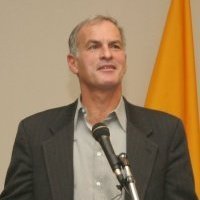
I was scheduled to teach my signature course, The Laws of War, at Brooklyn College in the upcoming Spring semester. The class was the first in the Political Science department to be closed out (fully enrolled). Last week I was informed that Dean Philip Napoli abruptly cancelled the course. If you wish to register your opinion of his action, you can reach him and Brooklyn College’s president here:
Dean Philip Napoli
[email protected]
718.951.3136
President Michele Anderson
[email protected]
718.951.5671


Lightman retweeted

Yes. Multiple testimonies from former Unit 731 members and trial records confirm female prisoners were forcibly impregnated through rape to study disease transmission. Pregnant women were then vivisected alive without anesthesia to examine the fetuses. Infants born in captivity were also subjected to experiments and killed; no survivors are known.


Lightman retweeted

Taking the tides as its brush and the earth as its canvas, nature creates a stunning work of shifting sand art across the tidal flats of the Qiantang River in east China's Zhejiang Province.
NYT unleashed their hate&fear of Chinese on Huang the min US intel gave them a flimsy cover. Now they try to cover it up with a tirade against his leather jacket (what a clown lol) & his supposed management style, pushing it under the label of "opinions". slimey disgusting sh*t

#观点 黄仁勋因何跌落神坛?傲慢与自负。他费了很大力气掩盖自己的傲慢。英伟达内部有一种难以打破的缄默文化,这让黄仁勋得以得以肆无忌惮地展现自己最糟糕的一面。事实上,黄仁勋几乎不能容忍异议,也几乎没有开放讨论的能力。他的陨落是关于男性如何因鲁莽自负而自取灭亡的故事。cn.nytimes.com/opinion/20261…

63
Lightman retweeted

Next week, leaders from the 21 APEC economies, which together account for around 60 percent of world output, will meet in Shenzhen. It’s the third time China has hosted APEC, after Shanghai in 2001 and Beijing in 2014, and the most important international event Shenzhen has ever held.
Shenzhen’s journey from fishing village to global city is one of the most remarkable transformations in history.
In 1980, when it became one of China’s first Special Economic Zones, Shenzhen was a cluster of fishing villages across the border from British-ruled Hong Kong, with a GDP of 196 million yuan ($29 million). Last year the figure was 3.87 trillion yuan – around $557 billion – representing an annual per capita income of close to $35,000, comfortably in the “high income” category.
Shenzhen has led China’s cities in exports for more than 30 consecutive years. It was the first city in the world to electrify its entire bus fleet. It now aims to pass 5 trillion yuan by 2030, which would correspond to a per capita income of around $50,000.
It’s also an increasingly green city. Indeed, in this city of skyscrapers, Shenzhen was the first in China to write “lights out for birds” into its regulations, in order to protect the 100,000 migratory birds that winter in its mangroves.
Many Western economists consider that Shenzhen’s progress is proof that China’s success results from its “abandoning socialism”. The opposite is the case. The Shenzhen SEZ was created by a decision of the Communist Party of China, planned by the Chinese state and built on publicly owned land, with foreign capital admitted on China’s terms and directed toward China’s development goals.
The market has always been the tool and not the master. Deng Xiaoping, visiting the city in 1992, defined the essence of socialism as “liberation and development of the productive forces, elimination of exploitation and polarisation, and the ultimate achievement of common prosperity”. Shenzhen has been steadily walking down that road.
China’s theme for its host year is “Building an Asia-Pacific Community to Prosper Together”, with openness, innovation and cooperation as the priorities. That reflects what China is offering the world. Its goods trade with other APEC economies came to 26.29 trillion yuan last year, nearly 60 percent of its foreign trade, and in the first half of this year Shenzhen’s trade with APEC economies rose by 33 percent.
Washington’s offer, by contrast, is one of wars, tariffs, entity lists, semiconductor export restrictions, and a $1.5 trillion military budget explicitly designed to “counter China”.
The countries of the region – increasingly even those that have traditionally been aligned with the US – know which of those two proposals serves them better.
Fifty years ago Shenzhen was a fishing village. Next week it hosts the world.

These questions are so suited for AI

How did life on Earth begin? Scientists have proposed various theoretical “worlds,” in which a single type of molecule, environment, or system led the story. But with each, there remain open questions. This week, we’re exploring some of the leading theories, and the new ideas borne from bridging them. Welcome to Origins of Life Week. 🧵
1
25


Seven years ago today, the HK rioters poured inflammable liquid on uncle Li and set him on fire. 🙏🙏🙏

16
Well, live and learn. Didn't even know this is a thing until now. Fairly militaristic if you ask me.

14
“银装素裹”,“层林尽染” 。简简单单的一句话,中国人能从里面看到毛主席气势磅礴的两首词。沁园春-雪:须晴日,看银装素裹,分外妖娆。沁园春-长沙:看万山红遍,层林尽染;漫江碧透,百舸争流。所以说,中国人能不对毛主席心怀敬意吗?
65
Lightman retweeted

張純如(アイリス・チャン)氏は1997年、英語による著作「ザ・レイプ・オブ・南京:第二次世界大戦の忘れられたホロコースト」を出版し、南京大虐殺の真相を世界に明らかにした。
#張純如没後22周年
#南京大虐殺

