
Researcher at Shanghai X Lab @HKUniversity. Prev. intern at Apple and Microsoft Research.
Joined January 2019
- Tweets303
- Following653
- Followers170
- Likes1.5K





Pinned Tweet
(1/3) Enterprise RDBs rarely change their structure, but meet new ML tasks every day. The RDB foundation model (FM) fits this position well because no task-specific training is needed.
Our latest work uses intra-column encoding and tabular FMs, achieving SOTA performance.

Ethan Xu retweeted

🔬 We post-train LLMs for math, for code, for instruction-following. Why not for scientific discovery?
No model has been post-trained specifically for hypothesis generation. MOOSE-Star is a first step, with scaling laws suggesting there's much more to unlock.

🚨 LLM-based scientific hypothesis discovery now has a scalable training recipe.
MOOSE-Star, accepted at ICML 2026, enables scalable training for hypothesis generation, with more scalable test-time scaling.
By our researchers—
xitter.gq/Yang_zy223/status/2054…
Our latest work has been accepted as a regular paper by ICML 2026. Can't wait to see many old/new friends in Seoul.
arxiv.org/abs/2602.13697


(2/3) In arxiv.org/pdf/2602.13697, we provide theoretical and empirical analysis to discuss what data embedding RDB FMs might require.
1
51
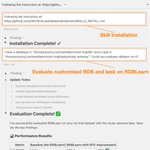
(3/3) We open-sourced the RDBLearn toolkit arxiv.org/abs/2602.18495. It's agent-friendly. Try it out with only **two** prompts on your own RDBs.

51
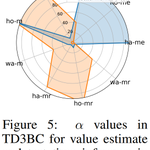
1/3) In offline RL, the learned Q function is better than you thought. Many methods use policy constraints mainly to stabilize Q learning. But the ultimate goal for offline RL is to get a good policy (not Q). Check out our work accepted by @TmlrPub! openreview.net/forum?id=imAR…
Related paper mentioned: D-QL: arxiv.org/pdf/2208.06193, Q-regularized DT: arxiv.org/pdf/2405.17098, value learning and policy generalization: arxiv.org/pdf/2406.09329
1
137
By masking a small part of the prompt, our LLM protector defenses harmful prompt without loosing much of its content. Check this cool work led by Zichuan Liu @c93l6IhoSgV2Iqi !

Protecting Your LLMs with Information Bottleneck
arxiv.org/abs/2404.13968
The authors use Information Bottleneck to defend against potential alignment breaking attacks in LLMs, which has strong alignment checking and does not require any fine-tuning of target LLMs.
#LLMs #AI

1
1
310
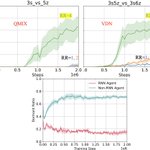
Using a higher Replay Ratio (RR) in MARL remarkably improves the sample efficiency and converged performance.
We also find that the RNN agent maintains the network plasticity well thus techniques such as resetting are not required.
arxiv.org/abs/2404.09715

The motivation for this work is 1) MARL usually uses 2~10 million TRAJECTORIES, which is time-consuming. 2) most attention lands on the algorithmic design but overlooked the old MARL training codebase
1
95
3/3 Got accepted by IEEE COG. Thanks to coauthors Zichuang Liu, Alexander Dockhorn, @diego_pliebana, Jinyu Wang, Lei Song, and Jiang Bian. @GameAI_QMUL
124
Ethan Xu retweeted

The concept of LLM-driven software engineers is intriguing, but in most cases, they still fall short of human engineers without human oversight.
Our AI agent has changed the game by outperforming half of the data scientists in Kaggle competitions with zero human intervention!


An interesting machine learning problem and even more interesting findings. Please check this new work #EACL2024 led by
@eciel_yang. aclanthology.org/2024.findin…

Empirically relabeling fewer than 2% of the training points can always flip a prediction.
(On binary classification models with convex loss)
Check our latest #EACL2024 Findings paper: arxiv.org/pdf/2305.12809.pdf

3
319
Great to see more works that challenge policy constraints methods for offline RL. This assumption exists because non-regularized behavior results in unstable Q-estimate. We visualize this issue and devise a general approach to circumvent this assumption: arxiv.org/pdf/2306.03680.pdf

Most offline RL methods try to constrain policies from deviating far from the offline data distribution. In cases where the data distribution is imbalanced or suboptimal, this makes it hard to actually learn good behavior! In new work, @ZhangWeiHong9 proposes a solution 🧵 (1/5)
4
279
Ethan Xu retweeted

In our latest #NeurIPS2023 paper, led by @johanobandoc and with @marcgbellemare , we uncover the "small batch effect" for online value-based agents.
In "Small batch deep reinforcement learning" we show that reducing batch size (and nothing else!) leads to big improvements!
1/13

