



We developed a two-step ML + Bayesian optimization framework to rapidly optimize eco-friendly, scalable #PerovskiteSolarCell fabrication in ambient air — no anti-solvent, low-toxicity TEP solvent, and 24.26% PCE achieved! Newly online in JEC @jenergychem: doi.org/10.1016/j.jechem.202…
Introducing you to the Co-PAS (Co-Plot for Additive Screening), an ML-driven framework designed to accelerate additive screening for perovskite solar cells. advanced.onlinelibrary.wiley…; github.com/MatAILab-NPU/Co-P… .

52
Hello, world! Are you looking for an AI copilot while searching the vast chemical space of organic additives for perovskite solar cells? Preprint at: arxiv.org/abs/2412.14109; Open-source Code: github.com/MatAILab-NPU/Co-P…

2
70
Liu Zhe retweeted

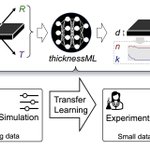
Buonassisi et al. use transfer learning to overcome data scarcity in high-throughput, automated experimental work in thickness characterisation of optoelectronic thin films. Read more in today's featured article: doi.org/10.1039/D2DD00149G #openaccess

ALT Inputs and outputs of the thickness-predicting model named thicknessML. R and T are respectively the reflectance and the transmittance in UV-Vis-NIR spectrophotometry. thicknessML is first pre-trained in the source domain and then transferred to (retrained in) the target domain.
Finally, we got this thicknessML published in Digital Discovery @digital_rsc. We used transfer learning for thin film thickness analysis. Please see an early preview: doi.org/10.1039/D2DD00. Great collaboration with many awesome researchers.

Following up our ML-assisted previous screening research led by @SunShijing @noortitan @toniobuonassisi, a new study found an ML-suggested molecule (2-phenylpropane-1- aminium iodide) experimentally achieves PCEs of 22.36% for FAMACs-based and 24.47% FAMA-based solar cells.

Machine-Learning-Assisted Screening of Interface Passivation Materials for Perovskite Solar Cells pubs.acs.org/doi/10.1021/acs…

On ML side, inspired by a talk from @prashungorai on avoiding data bias, we supplemented the previous research-intuition-driven dataset with five Latin-Hypercube-sampled ammonium salts. The data diversity gets increased, and the model prediction becomes more robust.
Liu Zhe retweeted

Initializing film homogeneity to retard phase segregation for stable perovskite solar cells - Science news.google.com/__i/rss/rd/a…
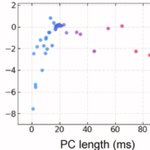
Speaking of human-ML interaction, we expanded the search boundaries after the first round for the “PC length” variable. (Semi-)surprised to find out the PC tool have a limitation. So, the take-away: check your BO surrogate at every iteration with contour plot and SHAP analysis.

I am happy to share with you our first trial using BO and SHAP in optimizing Photonically Cured flexible perovskite solar cells. Big shout-out to my collaborator
@LiuZhe_MIT and my advisor @JuliaHsu_UTD This demo shows a Good Human-Machine Partnership.
authors.elsevier.com/c/1fy8E…
1
3

Another demo of a quick and informed optimization with BO and SHAP analysis. This time we tackle the challenge of making flexible perovskite solar cells. Here is a link: authors.elsevier.com/a/1fy8E…. A great collaboration with Prof. @JuliaHsu_UTD 's team @UT_Dallas.


It is really awesome to re-connect with everyone at the ongoing @IEEEPVSC. Don't forget to check out the talks from our MIT PVLab. @toniobuonassisi @noortitan @SunShijing @felipeoviedop @TiihonenArmi
Liu Zhe retweeted

If you're interested in reducing the cost of solar by increasing string size, Todd Karin and I recently wrote up a short description of our #DuraMat funded online tool / open-source codebase for string size estimations at @SolarPowerWorld.
solarpowerworldonline.com/20…
Liu Zhe retweeted


Renewables are set to be the only energy source that will grow in 2020, with their share of global electricity generation projected to jump thanks to priority access to grids & low operating costs.
Learn more → iea.li/2Wfgg39