

Curated community of expert longevity researchers, entrepreneurs, and investors. Non-profit. We host events- https://xitter.cf/t.co/Q8qSoTfkAy…. Tweets by @DrGlorioso.
San Francisco, CA
Joined March 2022
- Tweets4.8K
- Following1.2K
- Followers3.6K
- Likes1.4K





Pinned Tweet
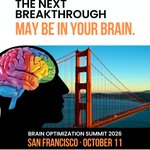
Curious about the latest brain breakthroughs in tech and biotech? Check out Longevity Global's Brain Optimization Summit during SF #TechWeek.
Sunday Oct 11
10a- 5p
MBC BioLabs
135 Mississippi St, SF
Register: longevitygl.org/brain-optimi…

Longevity Global retweeted

It was a pleasure to speak at @LongevityGL Brazil Chapter's inaugural event. Big thanks to Chapter Director, Dr. Vania Assaly, and Assistant Director, Clara Barros for the invitation. I am very excited for more to come in Brazil.


Longevity Global retweeted
@LongevityGL is honored to welcome Dr. Jens Eckstein to our Scientific Advisory Board. More exciting news to come!

Longevity Global retweeted
We are excited to announce that BrainKey will be joining the #Younger Biological Age Competition as an official testing partner for Ultra Competitors. Brainkey brain MRIs give a brain age based on 18 different brain region volumes, test for white matter hyperintensities, and are preventative screening for tumors and aneurysms. Up to 3% of people have a brain aneurysm that they don't know about, which could be potentially fatal, and aggressive brain tumors caught early have much higher survival rates. These are great reasons to get a brain MRI.
Younger is a 6 month competition to lower the biological age of your body, brain, skin, organs, and function. The competition is rolling and entries are accepted through mid January 2027.
Did you know that you can grow your brain back to be bigger? That has been shown in clinical trials of exercise, video games, and other interventions. Younger Ultra Competitors are competing to do just that in 6 months.
Register as an Ultra competitor today: neuroagetx.com/events/younge…
BrainKey joins our other prestigious partners, @TruDiagnostic , @Vero_Bioscience , @glycanage , Harvard's FaceAge, STARLA, and @rythm.
We are also welcoming BrainKey CEO, Owen Phillips, Ph.D., as faculty for our events.

Longevity Global retweeted
We are excited to announce that STARLA Skin will be joining the #Younger Biological Age Competition as an official solution partner for Ultra Competitors. Starla has red (and other colors) light masks that may be beneficial for face aging. We will be putting that to the test for competitors that choose to participate in this study and receive a free mask.
Younger is a 6 month competition to lower the biological age of your body, brain, skin, organs, and function. The competition is rolling and entries are accepted through mid January 2027.
A major goal of the competition is to test potential longevity interventions using decentralized clinical trials and multiple aging clocks and then publish the results. Red light therapy is just the beginning.
Register as an Ultra competitor and receive a free light mask while quantities last: neuroagetx.com/events/younge…
Starla joins our other prestigious partners, TruDiagnostic, Vero Bioscience, Inc., GlycanAge, Harvard's FaceAge, and Rythm.
Big thanks to Starla CEO, Icey Roongpiti ✨ , for reaching out and providing masks.

Longevity Global retweeted
Out in MIT Technology Review
A new contest pits competitors against each other in a race to biological youth
And I'll be joining them.
By Jessica Hamzelou
This week, I officially signed up for an unusual competition. One that rewards competitors for getting younger.
I recently turned 40, and I don’t need reminding that both time and my chronological age only tick forward. But this game is focused on competitors’ biological ages—figures that are meant to provide a better way to measure the age-related health of our organs and bodies.
Over a six-month period, around 500 of us will try to reverse our biological age as measured in a bunch of different ways. There’s even a leaderboard! The winners will include the person who shows the greatest difference between their chronological and biological age, as well as the person who manages to reverse their biological age the most.
The competition is the brainchild of the neuroscientist and physician Christin Glorioso, who is also founder and CEO of NeuroAge Therapeutics. The company offers tools to track brain health and aging and is running a trial to find out if biological brain age can predict the onset of Alzheimer’s disease.Glorioso says she has several goals for the Younger contest. The first, she tells me, is to “explain to the world what aging clocks are.” Regular Checkup readers will be familiar with these tools, but for the uninitiated, they are basically designed to measure biological age.
Many measure chemical signatures that form a layer on top of our DNA and seem to change with age. But others might involve looking at proteins or lipids in blood. Some are designed to measure functional health, while others predict when a person will die. There are more than a hundred clocks out there, and they probably each capture a specific aspect of the biological process of aging.
These clocks are proving very useful for scientists, who use them to study aging and development in humans and many other species. But using them to estimate the biological age of an individual person is more controversial. They’re just not good enough for that yet.
Part of the problem is that we don’t really understand what each clock is capturing. Glorioso hopes that data collected through the Younger contest might help answer that question. She’s hoping to generate “the world’s most comprehensive clock dataset.
Some longevity clinics try to get around the limits of biological age testing by using multiple clocks. That’s this competition’s approach too.
Full article: technologyreview.com/2026/10…
Thanks to our partners: Raghav Sehgal, PhD, Ryan Smith, Ray Mak, Owen Phillips, Ph.D., Nikolina Lauc, Melissa Keinath, Ph.D., FACMG, Paul Coletta, Icey Roongpiti ✨, David Furman

Longevity Global retweeted

Spent the day at the Brain Optimization Summit 2026 in SF, with a room full of people obsessed with the brain. 🧠
Brain stimulation, neurotechnology, cognitive aging, longevity. So many interesting approaches to understanding the brain. Loved meeting folks building in this space.
Neurotech is going to get VERY interesting in the coming times.
@LongevityGL


Longevity Global retweeted
What Can a Biological Age Test Actually Tell You?
Experts weigh in on the tests’ current accuracy and usefulness.
Today in the NY Times, Harvard Professor and Longevity Global's Head of Research and a key investigator in the NeuroAge Therapeutics's #Younger BioAge Contest, Raghav Sehgal, PhD is quoted.
From the article:
"How old are you? How old do you feel? Are those two numbers the same?
Biological age tests have validated what many of us sense intuitively: Our cells don’t always match our birth certificates. As these tests have evolved over the past decade, longevity researchers have started using them to identify what behaviors and conditions cause people to age faster and whether there are interventions that can slow the process down...
“In a way, when the biological age is older than the chronological age, you are at high risk of adverse health outcomes,” said Dr. Luigi Ferrucci, the scientific director of the National Institute on Aging. “When your biological age is younger than the chronological age, you’re kind of protected against those health outcomes.”...
“You can measure the changes in these blood cells,” said Tony Wyss-Coray, a professor of neurology and neurological sciences at Stanford, but “you don’t see changes that might happen in neurons in your brain, or in liver cells or in the pancreas.”
To try to solve for this, instead of looking at DNA, Dr. Wyss-Coray and other researchers have started testing blood samples for thousands of proteins that are released from different tissues. That enables them to evaluate how multiple types of cells or organs are doing, rather than inferring someone’s head-to-toe health from just their white blood cells.Some experts think this approach will provide more valuable and actionable information, because while the idea of distilling the health of your entire body into one number is seductive, it’s probably more useful from a medical standpoint to know which organ is going to cause problems first."
🥇 The Younger Contest aims to understand how the various clocks move together, can be useful for clinical trials, and are moved by interventions, moving the next generation of clock building forward in an actionable way for the public.
The NY Times article: nytimes.com/2026/10/15/well/…
The Younger Contest: neuroagetx.com/events/younge…

Longevity Global retweeted
Looking forward to speaking this Thursday on the Future of Longevity: Research, Innovation, Investment.
RSVP: members.gaba-network.org/nor…

Longevity Global retweeted
It's the last week of early bird pricing for the 6th annual Longevity Global Summit at the Buck Institute for Research on Aging, Dec 9-10.
Each year I put my ear to the ground, comb the scientific literature and the press releases, and go to conferences to hear the newest and coolest advances in longevity. Then I get the incredible people/teams behind them to come speak to us in a beautiful space at an institute entirely devoted to extending healthy lifespan.
This year's lineup is no exception. The speakers are outstanding and some of the most important longevity voices of 2026. I'm particularly excited that some the longevity therapeutics companies have matured to be in clinical trials, that GLP1 drugs extend mouse lifespan, we'll hear about the maturing field of aging biomarkers, peptides and regulation, and from longevity physicians on the bleeding edge of medicine.
📣 💲 We get the top investors to come and media outlets to cover it. We put all of these incredible people in the same room and at a private VIP dinner. Many solutions have been baked, inspired, funded, and brought forth into daylight at the Longevity Summit. Raises in the $10s of millions and angel investments have directly resulted from this conference year after year.
Get tickets now before prices go up: lnkd.in/giyKSMa4
Speakers include: Eric Verdin, Ronjon Nag, Janine Sengstack, Matthew "Oki" O'Connor, KRISTA RAMONAS, MD, FAAO, Ashley Zehnder, Neil Panchal, DO, Michael Snyder, Jonathan Swerdlin, Aditya Varna Iyer, Dean Ornish, M.D., Alan Alexander, Armand Cognetta, Irit Rappley, Tom Zuber, Marco Quarta, Susanna Rosi, Kevin Caldwell, David Furman, Brenda Eap PhD, Danica Chen, Vera Mulyani. M Arch. MA, Abhijit Kale Ph.D., David Scieszka.


Longevity Global retweeted
Next Sunday as part of SF TECH WEEK by a16z @LongevityGL presents our 2nd annual Brain Optimization Summit graciously hosted by MBC BioLabs.
We have an incredible lineup for you including talks by Ronjon Nag, Mike Olson, Paola Telfer, Antonio Forenza, PhD, Natalise Kalea Robinson, Laura Hix Glickman, PhD, Ramses Alcaide, Nathan Brady, Tom Zuber, John Forrest, Salah Mahmoudi, Brian Tsui, and Dobri Kiprov.
Still a few early bird tickets left.
RSVP: partiful.com/e/PILcXc8bpt6Aw…

Longevity Global retweeted
Can Essential Oils Like Rosemary Lower Dementia Risk?
Someone mentioned rosemary to me this week as a way to protect the brain, so I went through the research on essential oils and dementia.
Losing your sense of smell is a well-replicated early sign of higher dementia risk. Early evidence on adding scents to daily life is building, although no study has yet shown that it lowers dementia risk.
A few findings people might not know 👇
👃 In a 12-year Swedish study, older adults with a reduced sense of smell had about twice the risk of developing dementia. Smell loss plus the APOE4 gene raised the risk close to fourfold.
🧠 Smell signals bypass the thalamus and reach the entorhinal cortex, the gateway to the hippocampus, within one or two connections. Tau tangles appear early in these same regions in Alzheimer's.
🌿 Rosemary contains 1,8-cineole, a compound thought to block the same enzyme that the Alzheimer's drug donepezil targets. The studies so far are small and measured short-term performance.
🌙 A UC Irvine trial diffused a different essential oil each night for six months in 43 healthy older adults. Memory scores and a memory-related nerve fiber pathway improved compared with controls.
🦠 COVID-19 infects the support cells in the nose. In older adults, lasting smell loss after infection tracked with more cognitive problems months later.
A larger trial that tracks Alzheimer’s blood markers over several years would show whether regular scent exposure changes the course of brain aging or improves how the brain functions.
My take
In the meantime, if you like essential oils, they fall into the bucket of low risk and plausibly could help, which is a green light for trying them from me.
Link to full post: drglorioso.substack.com/p/ca…

Longevity Global retweeted
Younger founder Christin Glorioso on turning a six-month competition into a side-by-side trial of aging clocks.
Out today in Longevity.Technology
Younger is a six-month contest to measure and reverse biological aging, hosted by @NeuroAgeTX with @TruDiagnostic, @Vero_Bioscience , Inc., Harvard FaceAge, BrainKey, and Dr Raghav Sehgal, PhD's lab at Harvard. The science behind the testing comes from Stanford, Harvard, MIT, and Yale. Every competitor measures their biological age across brain, body, and face, makes whatever health changes they choose for six months, then repeats the same measurements. Awards go to the most years turned back over the six months and to the youngest biological age relative to chronological age. Reporters, longevity company founders, and scientists are competing alongside members of the public, and many are posting their results as they go.
The live kickoff is January 11 and 12, 2027 in San Francisco, with talks from speakers including Dr Steve Horvath, Dr Eric Verdin of the Buck Institute, Dr. Amy B Killen MD, Dr Ray Mak, Dr. Hillary Lin, MD, Kayla Barnes-Lentz, Dr. Kathleen Jordan, MD, Dr. Momo Vuyisich, Dr. Sunjya Schweig, MD, Nikolina Lauc, Paul Coletta, David Barzilai MD PhD MBA MS DipABLM, Saranya Wyles, M.D., Ph.D., Ronjon Nag, Bobbie Kumar MD MBA FAAFP, David Harry Stewart, and Dr Raghav Sehgal. Retests are due by August 1, 2027 and winners are announced at the finale in November 2027. A single entry covers either an in-person or a virtual track at the same price and with the same testing, so competitors can take part from anywhere. Along the way they get personalized recommendations built from their results, an online community, and monthly webinars.
Signup for Younger: neuroagetx.com/events/younge…
Full article: longevity.technology/news/yo…

Longevity Global retweeted
Longevity Global is excited to announce that we are launching a research division with Harvard's Dr. Raghav Sehgal, PhD at the helm as our new Head of Research. Dr. Sehgal is a world renowned expert on aging biomarkers and Faculty at Harvard Medical School's Marcus Aging Institute.
@LongevityGL is starting this research division to further areas of longevity research we feel are under-explored or hard for other institutions to prioritize.
We are starting with 2 research programs:
🌍 Democratizing longevity: As new technologies and interventions develop, how can we ensure they aren't only available to a highly privileged elite? Building the future we all want to see requires intentional strategy, and we will be exploring what strategies are most likely to be successful towards this goal.
📈 Decentralized longevity clinical trials: We are going to leverage Longevity Global's large and rapidly growing international network of chapters to accelerate and cut costs for decentralized testing of interventions. We are creating infrastructure for low cost recruiting of subjects, testing therapeutics and other interventions, and parsing the resulting data in a rigorous manner. With this initiative, we hope to address the fundamental problem of the great cost of gathering evidence on which interventions work and which don't in diverse populations around the world.
CC LG leadership and board: Justin Taylor, Eric Verdin, Fiona Miller, Judy Toran Cousin, Spring Behrouz, Andy Lee, Nina Klymenko, Tom Zuber, Salah Mahmoudi, Noriko Yokoi, Ph.D., Ronjon Nag, John Forrest, Cheryl Sew Hoy, Ben Blue, Marisela Rodriguez, PhD, Lan Lu, Muneaki Goto, Julie Vaughn, Macsue Jacques, Justin CL Tso, Tina Garyantes, Pragya Saboo, Alexander Suvorov, Tomonari Abe, Cambria Jacobs, Nikola T. Markov, Stephanie Lindstrom, Clara Barros, Vania Assaly, Roshan Bharwani, Germán de la Llave, Barry Ng, Joel Shapira, Deepti Agarwal, MD, DABOIM, MSCP, Joshua Barney, Nir Eynon.

Longevity Global retweeted
Looking forward to the #Younger contest webinar on gut microbiome with guest Speaker Dr. Momo Vuyisich, PhD
Co-founder & Chief Science Officer of @MyViome.
luma.com/3p3rb8vh

Longevity Global retweeted
Are longevity drugs hiding in plain sight?
A new study by Insilico Medicine illustrates what adding aging clocks to clinical trials could reveal
Most drug trials draw blood at several visits and measure whether a treatment helped one disease. Very few check whether the drug also changed how fast people are aging.
Adding aging clocks to trials that are already happening could reveal drugs that slow aging across many diseases. Two recent studies show what that could look like.
💉 Semaglutide slowed epigenetic aging in a randomized trial of people with HIV. The treated group measured about 4.9 years younger on PhenoAge, with a pace of aging about 9% slower on DunedinPACE. Aging was never an outcome in the original trial.
🫁 Rentosertib, an AI-designed lung fibrosis drug from Insilico Medicine, lowered predicted biological age on six independent proteomic clocks, by roughly three to four years at week 4.
🧬 Its target, TNIK, was picked partly for its links to aging. In cell studies, blocking it reduced senescence through TGF-β signaling.
🧪 Both analyses used stored blood from trials that had already ended.
There is nuance the headlines miss. Rentosertib was tested only in people with lung fibrosis, so part of the clock drop could reflect a lung that is healing. Giving it to healthy people would answer that question. The clock signal also leveled off after week 4, and the reason is still unknown.
I think stored samples from completed trials are one of the faster routes to finding candidate longevity drugs.
The next longevity drug may come out of a kidney or liver trial where nobody thought to run a clock.
Link to full post: drglorioso.substack.com/p/ar…

Longevity Global retweeted
We are excited for Longevity Global's 2nd annual Brain Optimization Summit during SF TECH WEEK by a16z.
Sun Oct. 11
10 a- 5pm
RSVP: partiful.com/e/PILcXc8bpt6Aw…
We have some great speakers: @RonjonNag, Blake Gurfein, Brian Tsui, @Natalise Kalea Robinson, Mike Olson, @alcaide_ramses, Laura Hix Glickman, PhD, @PaolaTelfer, Antonio Forenza, PhD, John Forrest, Salah Mahmoudi, Tom Zuber.

Longevity Global retweeted
Why You Should Be Skeptical of Health Skeptics
Wellness influencers are selling you miracles. But professional health skeptics could be selling you something, too.
I particularly enjoyed this Substack from Time Magazine writer, Matt Fuchs. I have found that people tend to share/interact with the few "debunking posts" I have made more than a balanced take on the murky state of science of a topic. And this gain from debunking resonates a lot RE:aging clocks
"In a lecture transcript I recently saw, a scientist poked fun at media outlets for covering research in ways that suggest regular coffee-drinking bestows longevity. He pointed to the proclaimed links between three cups of coffee per day and longer life, expressing sincere doubt that his one cup that morning would make him live longer. The gist was that there’s no truth to any of this.
But there’s some truth to it. Large observational studies consistently find that drinking coffee is associated with better odds of enjoying a longer life. Associations don’t prove causation, but it’s also true that absence of evidence isn’t evidence of absence.
This post isn’t about coffee. It’s about the hype / hyper-skepticism cycle that takes up too much real estate in the health journalism landscape...
We tend to mistake skepticism for neutrality because it sounds like restraint and rigor. But there’s reason for caution on both sides of the hype / anti-hype cycle. Skeptics can cherry-pick and overstate certainty just as much as the people making the original health claim...
But these trends also create a market for debunking. A growing segment of doctors, researchers and science communicators are now devoted to dispelling health claims. Just like anyone else in the media ecosystem, skeptics have careers, public platforms and egos. Even if they’re not hawking pills, detox foot pads or grounding sheets, they have something to sell you: their brand of skepticism. Such skeptics may be just as invested as their wellness-hyping counterparts."
Full Substack: fuchsm.substack.com/p/why-yo…

RT @DrGlorioso: On November 7 I will be at The Armory in NYC with about 960 other people competing in the first Super Age Games.
8 trials,…
RT @DrGlorioso: 🥇 Excited to announce we were awarded a $500k SBIR grant today for our Alzheimer's therapeutic program. 🎉
Most people pro…