


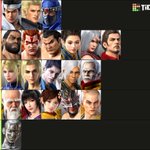


Already cooking up some ideas in my head for this char. I'll break out of the JRPG vortex for a bit when he drops.

Agito retweeted

VIRTUA FIGHTER CROSSROADS
⠀
"Les jeux sont faits, rien ne va plus."
⠀
A mysterious young martial artist named Lionel has arrived in the city of Vilasapara.
⠀
A highly skilled fighter capable of outclassing Cielo in a street fight, he is a force to be reckoned with. But what is his true reason for coming to this city?
⠀
#VFCR #VirtuaFighter
Agito retweeted

With news of someone working on the rollback mod for soulcalibur vi, it is currently on sale for 6$ USD!


Agito retweeted

What I learned several years ago through free training mode was well documented by Lettuce 16 years ago! lettuce1789.blog133.fc2.com/…
For those interested in the finer details about VF, his blog is a treasure trove of information! Translation programs have improved greatly in the past decade or two, so going over the blog again has been fruitful!
While Lettuce has passed away, his contributions to VF knowledge continues to live on. 🙇


Let's try posting an X Article! The information is old, but If you try reading the input display and it does not make sense. It's possible you are encountering what I called the "natural 1 frame roll back" of #VF5REVOWS game system.


Agito retweeted

Hello Japanese Twitter. I want to explain why Western consumers are often willing to push the boundaries of copyright, even when it's controversial:
Historically, in the West, challenging copyright restrictions has SOMETIMES led to better outcomes for everyone, including the copyright holders themselves.
Take "fair use".
In the US, copyright law allows people to use pieces of copyrighted material for criticism, reviews, education, research, and parody, depending on the circumstances. It's why anyone can make YouTube essays using gameplay footage, review movies using clips, parody existing works, or study copyrighted material.
These freedoms developed over decades of folks challenging copyright restrictions in court. People pushed boundaries, courts established new rules, and consumers benefited. Hooray!
Something similar happened with the "right-to-repair" movement. Manufacturers have used copyright restrictions, software locks, and other barriers to stop people from repairing products they own. Consumers challenged those restrictions, by repairing them anyway, then being sent to court, which helped bring about laws that expanded our repair rights.
Basically we said: "This law sucks. If I buy this shit, I should have basic rights over how I use and repair it."
Now consider Piracy. I don't condone piracy, but I recognise that it has sometimes exposed problems with how entertainment is sold.
Music piracy EXPLODED when people wanted digital music. Then iTunes was created in response, and helped prove that millions of those same pirates were happy to pay for a convenient, affordable service that didn't exist. Movies and TV experienced similar problems, so streaming services were made which helped massively reduce Piracy. PC gaming saw something similar with Steam.
But my favourite example is Crunchyroll!
Crunchyroll started as a website hosting Pirate anime. Western audiences wanted to watch Japanese shows that often weren't legally available in their countries. Eventually, it becamse so big Japan made a deal with Crunchyroll to become a legitimate streaming business. The site now licenses anime directly from Japanese companies.
Today, it has millions of paying subscribers and generates MASSIVE revenue for the Japanese anime industry.
An audience that once watched anime without permission became a massive international customer base willing to pay Japanese companies. Imagine if that demand had simply been dismissed as criminal behaviour, without anyone recognising the business opportunity??
This is the pattern I'm trying to explain.
We see that when consumers push against restrictions, they sometimes expose problems with the existing business model. Companies respond with better services, laws change, and both consumers and creators can benefit.
None of this means piracy is justified or that creators shouldn't be paid. Only that challenging a restriction can SOMETIMES reveal that the damn restriction itself is preventing a better solution, and pressing on that restriction can create to fix.
I think this helps explain a cultural difference between some Western and Japanese attitudes towards copyright. Western consumers often see copyright disputes as ordinary folks fighting against wealthy corporations controlling access to entertainment. Japanese audiences seem to place greater emphasis on respecting the people and companies who created that entertainment.
Of course, neither perspective represents everyone. And I respect both views.
But where one person sees disrespect towards an artist's work, another sees consumers challenging a corporation's control over something they love. And because Western history contains examples of those challenges producing positive results, some Western consumers are more comfortable pushing those boundaries.
(Hope you can see how these points are relevant to old videogames like Tekken 6 that have no modern re-release/re-print)
ALSO I accept that sometimes piracy means consumers don't want to pay. They are just thieves. But other times, it means consumers were never given the opportunity to pay, and the solution will arise from pushing boundaries.
Please understand I'm not defending piracy. Just explaining why some Western consumers are willing to challenge copyright restrictions and not hate it so much.
We see things differently because history has shown us that sometimes, when people push back, everyone can end up way way way better off.
Sorry this was so long.


Agito retweeted

NARUTO MOBILE: Official Global Trailer
I am so happy for y'all, it's finally coming worldwide!

