









_ retweeted
For those of you watching and waiting, the time is NOW. Sister ship Voyager 1 reached one light-day distance from Earth at 10:16:07 UTC today, in 2026. V1 will be one light-day _from the Sun_ on February 4, 2027. Why the difference? Because Earth is currently orbiting on the near side of the Sun, and so is closer (for now).
Because Voyager 2 lost speed during the Neptune encounter, it will take longer to reach these milestones: one light-day from the Earth on November 1, 2035, and one light-day from the Sun on November 27, 2035.


_ retweeted

Right about now, you're about to be possessed
By the sounds of emcee Rob Base and D.J. E-Z Rock
(Hit it!)
Rob Base & DJ E-Z Rock 'It Takes Two' is an undisputed 1988 classic that defined a golden chapter of hip hop.
_ retweeted
Voyager 1 will travel ~30 light-minutes farther during 2026. Here is a graph showing that change: distance from the Earth is the sinusoid, reflecting Earth's changing position as it orbits the Sun. Distance from the Sun is the dashed line. One light-day is marked in red. #Voyager #OneLightDay

ALT Graph of distance vs Date in 2026 for Voyager 1, ranging from 23 hours 25 minutes to 24 hours and 5 minutes. Voyager 1's distance from the Earth crosses the 24 hour mark on November 18th this year.
_ retweeted

Voyager 1: In One Day, a Radio Signal Will Take a Full Day to Reach Earth
On November 18, 2026, at 13:16:07 Moscow time, the legendary Voyager 1 probe will cross an invisible boundary — a distance of one light-day from Earth. By then, exactly 49 years, two months, and 11 days will have passed since its launch on September 5, 1977. At that moment, light (and radio signals) will take a full day to travel from the spacecraft back to Earth.
Voyager 1 is currently heading toward the constellation Ophiuchus and remains the most distant human-made object ever. Communication with it is maintained by an antenna in Madrid as part of NASA’s Deep Space Network. The agency has already called this day “a huge milestone by any measure.”
For nearly half a century, the probe has been powered by nuclear energy sources whose output drops by about 4 watts per year (it started with roughly 470 watts). To extend its life, engineers have been gradually shutting down instruments and finding clever ways to squeeze the most out of the remaining power. Both Voyagers are expected to keep transmitting data well into the 2030s.
The next star along Voyager 1’s path is Gliese 445 in the constellation Ursa Minor, about 17 light-years away. The probe will pass it at a distance of roughly 1.7 light-years… in about 40,000 years. By then, the onboard power will have long since run out, but the spacecraft itself will continue its endless journey through interstellar space.
This is no longer just a scientific mission. It is a quiet, stubborn proof of how far the human mind can reach — even when the signal from it takes a full day to get home.
🤖 Made with AI
_ retweeted
Caltech article “The Silent Ambassador to the Galaxy: Voyager at One Light-Day”
caltech.edu/about/news/the-s…

_ retweeted
Sister ship Voyager 1 is currently ~23h 59m 53s of light travel time from Earth (2026:321:120000:1L) …almost! Come back tomorrow at this time.
_ retweeted
Sister ship Voyager 1 is currently ~23h 59m 45s of light travel time from Earth, or 25,898,000,000 km / 16,092,000,000 mi / 173.115 AU (2026:320:120000:1L)
_ retweeted
Sister ship Voyager 1 is currently ~23h 59m 38s of light travel time from Earth (2026:319:120000:1L)
_ retweeted
Sister ship Voyager 1 is currently ~23h 59m 30s of light travel time from Earth (2026:318:120000:1L)
_ retweeted

Let's talk about Voyager 1 and 2!
Join us Nov. 19 for a status update on the twin probes and a discussion of their unique mission. Plus, we'll have a Q&A session and a sneak peek at the upcoming NASA+ Voyager documentary. go.nasa.gov/4k942pz

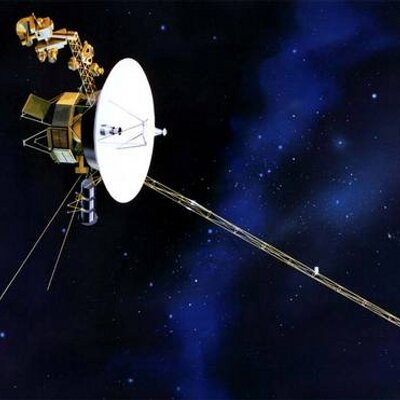
ALT An artist's concept of the Voyager spacecraft, with its long antenna pointing down and to the right in the direction of Earth. Earth isn't visible in the image, but Voyager is among the stars. In the background, there is also a long, deep blue ribbon of gas and dust stretching from the bottom of the image to the top.
_ retweeted

As Voyager 1 approaches one light-day from Earth, you can track its position, visualize the time it takes for its messages to reach home, and re-create its tour of the solar system. All it takes is our free, online solar system simulator!
Try it out: eyes.nasa.gov/apps/solar-sys…
_ retweeted
Sister ship Voyager 1 is currently ~23h 59m 22s of light travel time from Earth (2026:317:120000:1L)
_ retweeted

Up next today its a frantic, hard house slammer from a legend. 29 years ago:
This is Tony De Vit (RIP) @ Naughty But Nice Hereford January 1997
14 tracks, frantic, bouncy mayhem. Tony at his absolute best on this one. Outstanding mix. Forever missed. Tracklist in comments.
Reminder that all mixes uploaded here today go on my Kofi for download tonight.
👇🔥👇
_ retweeted
Next in its 90 minutes of top tier trance by one of the best. 27 years ago:
This is @pauloakenfold @ Tonic, Toronto 01.12.99
Some tracklist on this, but he has always been one of the best selectors around. Very late 90's trance bangers. Tracklist in comments.
Reminder that all mixes uploaded here today go on my Kofi for download tonight.
👇🔥👇
_ retweeted
OTD in 1998 V2 turned off the Ultraviolet Spectrometer (UVS) to save 2.5 to 3.5 W of power. The UVS was designed for two very different measurements in the UV spectrum 40-180 nm range: both emission and absorption spectra, at highly different intensities. Dim emissions from atmospheric scattering, airglow, and auroras; but extremely bright solar occultations yielding absorption spectra. This huge dynamic range was accomplished using a partially reflective mirror that also avoided pointing the rest of the instruments at the Sun! Both these techniques gave data on what atoms and molecules were present at what heights in the observed atmospheres. #Voyager #Ultraviolet #Spectrometer
_ retweeted
Final mix for today, we stay in Scotland with a house legend. 32 years ago:
This is @DJNickWarren @ Electra, Craigmile, Aberdeen August 1994
No tracklist on this one, but its a fucking phenomenal old skool house banger. Get on it below.
Mixes on Kofi shortly 👇🔥👇