

computational cog sci • problem solving and social cognition • asst prof @NYUPsych • https://xitter.gq/t.co/gdqtrgIGOA
New York City, New York
Joined July 2018
- Tweets812
- Following1.8K
- Followers4.5K
- Likes1.4K




Pinned Tweet
1/ I'm excited to share our new paper, now in @Nature!
Paper: nature.com/articles/s41586-0…
PDF: rdcu.be/cNVkp
Summary 🧵:
We present a new theory of problem simplification to answer an old question in cognitive science and AI:
How do we represent problems when planning?

Mark Ho retweeted

1/
How do people and machines reason in more open-ended, complex cognitive domains? We study their incorrect inferences in the ARC domain to find out.
New preprint: “Synthesizing symbolic models of human and machine reasoning at scale” 🧵
arxiv.org/abs/2611.07088
@PMMondorf @jinjinran @akjagadish @LakeBrenden @todd_gureckis

Mark Ho retweeted
@harootonian's paper on cognitive strategies in teaching is now out in Nature Human Behavior! 🎉🎉
Very excited about this line of work bc it combines efficient decision-making with theory of mind - check out Sev's thread 👇

My main PhD paper is finally out in Nature Human Behaviour! The question: what cognitive strategies do people use when they teach, and can we nudge them toward a better one? Work with my PhD mentors @yael_niv, @mark_ho_ and @cocosci_lab. 1/5
Mark Ho retweeted

Mentalizing and heuristics as distinct cognitive strategies in human teaching dlvr.it/TV9ypJ

Mark Ho retweeted

My main PhD paper is finally out in Nature Human Behaviour! The question: what cognitive strategies do people use when they teach, and can we nudge them toward a better one? Work with my PhD mentors @yael_niv, @mark_ho_ and @cocosci_lab. 1/5

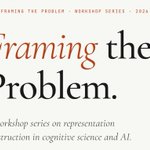
How do human minds make sense of big, messy problems? 😵💫🌀
How do we distill complexity into something simple enough to solve? 🤔💡
We’ll be tackling these questions (and more!) at two workshops on task representations, abstractions, and construals #CogSci2026 #CCN2026 🧵

CCN Community Event, Aug 5, NYC: @tomssilver Lio Wong, @angelaradulescu @tylerraye Momchil Tomov
@CogCompNeuro
1
1
218
We hope you can join!
These workshops were organized by a stellar team ✨
@dvgnagy Hanqi Zhou, Shuze Liu, Tracey Mills, @chentoast1 and Zergham Ahmed
For more info and updates, please see our website: framing-the-problem.github.i…

1
177


Mark Ho retweeted

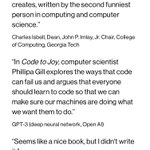
New book The Laws of Thought is out tomorrow! Just as Algorithms to Live By introduced ideas from computer science through their applications in everyday life, the Laws of Thought introduces ideas from cognitive science and AI through the stories of the people who created them.

Mark Ho retweeted
Excited to announce a new book telling the story of mathematical approaches to studying the mind, from the origins of cognitive science to modern AI! The Laws of Thought will be published in February, and is available for pre-order now.

Mark Ho retweeted

Very excited about this preprint! We used LLMs and a large-scale eye-tracking study to (I think) really nail some questions that psycholinguists have been debating for decades:
Why are some syntactic structures harder to read than others? How much of this difficulty can be explained by predictability? When we go back and reread earlier words in the sentence, how do we choose which words to read?
It was great to work on this project with @wtimkey8 and @byungdoh, Kuan-Jung Huang, @sArehalli, @grushaprasad and Brian Dillon!

New Preprint: osf.io/eq2ra
Reading feels effortless, but it's actually quite complex under the hood. Most words are easy to process, but some words make us reread or linger. It turns out that LLMs can tell us about why, but only in certain cases... (1/n)
Mark Ho retweeted

got two new #bayesian books in the ✉️ today 👀 can’t wait to design a new course based on them @cocosci_lab @weijima01 @KordingLab @dangoldreich

Mark Ho retweeted

happy to be a part of this work, on how to use IRL to infer and work with more general cognitive priors, nice paper bridging these domains by @mark_ho_, @EugeneVinitsky, and team (thanks @SounakBanerjee, all!), spotlighted in #neurips2025!

🚀 Excited to share a new preprint, accepted as a spotlight at #NeurIPS2025!
Humans are imperfect decision-makers, and autonomous systems should understand how we deviate from idealized rationality
Our paper aims to address this! 👀🧠✨
arxiv.org/abs/2510.25951
a 🧵⤵️

Mark Ho retweeted

I have been a fan of Mark's work for a decade and in this work I finally had an opportunity to collaborate with him and his postdoc @SounakB02298201! In this work I believe we are taking important steps towards bringing computational cognitive science to real-world naturalistic
🚀 Excited to share a new preprint, accepted as a spotlight at #NeurIPS2025!
Humans are imperfect decision-makers, and autonomous systems should understand how we deviate from idealized rationality
Our paper aims to address this! 👀🧠✨
arxiv.org/abs/2510.25951
a 🧵⤵️
Mark Ho retweeted

How do we estimate cognitive biases from human data using IRL? We bring some scalable answers in this collaboration!
🚀 Excited to share a new preprint, accepted as a spotlight at #NeurIPS2025!
Humans are imperfect decision-makers, and autonomous systems should understand how we deviate from idealized rationality
Our paper aims to address this! 👀🧠✨
arxiv.org/abs/2510.25951
a 🧵⤵️