

The fastest AI dev news engine on X — model releases, tools, and what they actually mean
What is trending in AI?
Joined April 2016
- Tweets14.1K
- Following1.2K
- Followers11.9K
- Likes7.6K







▲ Marktechpost AI retweeted
▲ NVIDIA just released Nemotron 3.5 Bolt E4B 4GB, an open small model that runs voice, game and robot agents locally in about 4GB of VRAM.
The key idea is RL-only post-training on top of Gemma 4 E4B. NVIDIA dropped SFT because it hurt conversational quality. Every sample trains with reasoning on and off, and length penalties keep replies short.
In NVIDIA's own harness, it leads 15 of 21 benchmarks against Gemma 4 E4B, Qwen3.5-4B and Nemotron 3 Nano 4B. IHEval: 84.8 vs 60.6 for Qwen3.5-4B. It is a trade-off though: Qwen3.5-4B still wins Tau2-Bench, 75.1 vs 55.1.
8B total / 4B effective params, 64K context, OpenMDW-1.1 license. 548 ms to first token on an RTX 5070. Weights, data and recipes are all open......
Full analysis: marktechpost.com/2026/10/23/…
Model: huggingface.co/nvidia/NVIDIA…
Paper: research.nvidia.com/labs/nem…
Docs: research.nvidia.com/labs/nem…
@NVIDIAAI @nvidia @NVIDIARobotics @JensenHuang @NVIDIAGTC

▲ Marktechpost AI retweeted
▲ Kyutai just launched CADRE, a family of video autoencoders that lets interactive world models react to actions in under 230 ms.
The key idea is that the autoencoder, not the world model, decides most of the lag. Text-to-video autoencoders pack many frames into one latent, so every action waits for the chunk to close. CADRE keeps a frozen DINOv3 encoder, varies only a small 3D conv bottleneck, and decodes with a causal diffusion decoder self-distilled to 1 or 2 steps.
On 1 H100, CADRE-2×32×32 reacts in 185 ms. The Wan 2.2 autoencoder needs 317 ms and Cosmos 605 ms. In driving, CADRE-2×16×16 posts an FVD of 162.6 vs 599.7 for Wan 2.2. It is a trade-off though: Wan 2.2 still reconstructs video far better (35.02 vs 25.12 dB PSNR) and follows robot actions better (ARR 0.85 vs 0.73).
7 autoencoders, 4 multi-resolution variants and 4 world models (1.2B) are on Hugging Face. Code is MIT, weights are CC BY-NC 4.0......
Full analysis: marktechpost.com/2026/10/23/…
Paper: arxiv.org/abs/2610.30129
Repo: github.com/kyutai-labs/cadre…
Model: huggingface.co/collections/k…
Demo: cadre-wm.kyutai.org
@kyutai_labs

▲ Marktechpost AI retweeted
▲ Moonshot AI just released Kimi K3.1 Pro, a 3T-class open-weight model that sits near the proprietary frontier on agentic coding.
The key idea is post-training at scale. K3.1 Pro starts from Kimi K3 (2.8T total, 104B active, 1M context) and adds much larger RL compute across hundreds of downstream domains.
It scores 65.7% on Terminal-Bench 4.0, vs 66.4% for Claude Opus 5.5, and leads SWE-Marathon at 51.7. It is a trade-off though: on Terminal-Bench Science 0.1 it scores 38.1, vs 68.1 for GPT-6 Astra. All scores are self-reported.
Live now on the Kimi API at $2 input / $10 output per 1M tokens, plus a Highspeed variant at $4 / $20. Open weights expected by Nov 4, 2026......
Full analysis: marktechpost.com/2026/10/23/…
Blog: kimi.ai/blog/kimi-k3-1-pro
API: platform.kimi.ai
Docs: platform.kimi.ai/docs/guide/…
@Kimi_Moonshot

▲ NVIDIA just released Nemotron 3.5 Bolt E4B 4GB, an open small model that runs voice, game and robot agents locally in about 4GB of VRAM.
The key idea is RL-only post-training on top of Gemma 4 E4B. NVIDIA dropped SFT because it hurt conversational quality. Every sample trains with reasoning on and off, and length penalties keep replies short.
In NVIDIA's own harness, it leads 15 of 21 benchmarks against Gemma 4 E4B, Qwen3.5-4B and Nemotron 3 Nano 4B. IHEval: 84.8 vs 60.6 for Qwen3.5-4B. It is a trade-off though: Qwen3.5-4B still wins Tau2-Bench, 75.1 vs 55.1.
8B total / 4B effective params, 64K context, OpenMDW-1.1 license. 548 ms to first token on an RTX 5070. Weights, data and recipes are all open......
Full analysis: marktechpost.com/2026/10/23/…
Model: huggingface.co/nvidia/NVIDIA…
Paper: research.nvidia.com/labs/nem…
Docs: research.nvidia.com/labs/nem…
@NVIDIAAI @nvidia @NVIDIARobotics @JensenHuang @NVIDIAGTC
▲ Kyutai just launched CADRE, a family of video autoencoders that lets interactive world models react to actions in under 230 ms.
The key idea is that the autoencoder, not the world model, decides most of the lag. Text-to-video autoencoders pack many frames into one latent, so every action waits for the chunk to close. CADRE keeps a frozen DINOv3 encoder, varies only a small 3D conv bottleneck, and decodes with a causal diffusion decoder self-distilled to 1 or 2 steps.
On 1 H100, CADRE-2×32×32 reacts in 185 ms. The Wan 2.2 autoencoder needs 317 ms and Cosmos 605 ms. In driving, CADRE-2×16×16 posts an FVD of 162.6 vs 599.7 for Wan 2.2. It is a trade-off though: Wan 2.2 still reconstructs video far better (35.02 vs 25.12 dB PSNR) and follows robot actions better (ARR 0.85 vs 0.73).
7 autoencoders, 4 multi-resolution variants and 4 world models (1.2B) are on Hugging Face. Code is MIT, weights are CC BY-NC 4.0......
Full analysis: marktechpost.com/2026/10/23/…
Paper: arxiv.org/abs/2610.30129
Repo: github.com/kyutai-labs/cadre…
Model: huggingface.co/collections/k…
Demo: cadre-wm.kyutai.org
@kyutai_labs
▲ Moonshot AI just released Kimi K3.1 Pro, a 3T-class open-weight model that sits near the proprietary frontier on agentic coding.
The key idea is post-training at scale. K3.1 Pro starts from Kimi K3 (2.8T total, 104B active, 1M context) and adds much larger RL compute across hundreds of downstream domains.
It scores 65.7% on Terminal-Bench 4.0, vs 66.4% for Claude Opus 5.5, and leads SWE-Marathon at 51.7. It is a trade-off though: on Terminal-Bench Science 0.1 it scores 38.1, vs 68.1 for GPT-6 Astra. All scores are self-reported.
Live now on the Kimi API at $2 input / $10 output per 1M tokens, plus a Highspeed variant at $4 / $20. Open weights expected by Nov 4, 2026......
Full analysis: marktechpost.com/2026/10/23/…
Blog: kimi.ai/blog/kimi-k3-1-pro
API: platform.kimi.ai
Docs: platform.kimi.ai/docs/guide/…
@Kimi_Moonshot
▲ Marktechpost AI retweeted
▲ TinyFish just published how its production search agents work, and what broke while building a deep research system.
The key idea is a control loop around the model. Each run gets an "evidence contract": required fields, sources and freshness. The agent plans, routes, retrieves and evaluates, then stops only when the contract is met or a budget runs out.
On OpenBenchmarks, TinyFish Search and Fetch completed 79.0% of 100 coding tasks at a $0.050 median task cost. Exa deep led at 83.0%, but at $0.127. It is a trade-off though: search-only completion drops to 59.3%, versus 77.3% for Perplexity.
The deep research lessons are blunter. A separate planner lost context on follow-ups, so planning moved into the orchestrator. Per-query subagents hurt latency and cost, so deterministic steps became plain tool calls......
Full analysis: marktechpost.com/2026/10/23/…
Free web search and fetch for agents, pay only for browser runs: aicampaign.live/90-wk1n
Architecture: tinyfish.ai/blog/production-…
Deep research: tinyfish.ai/blog/lessons-fro…
@Tiny_Fish

▲ Marktechpost AI retweeted
▲ You.com just launched Inference Router, an OpenAI-compatible API that runs open-weight models with production guarantees.
The key idea is ownership of the stack. Requests run first on You.com's own capacity, then fail over to vetted US partners. Web search runs on the same server as the model, and zero data retention covers both.
On You.com's LiveNewsBench run, GLM-5.3 with You.com search scored 86.53%, tying GPT-6.1 Sol at 18% less per question. It is a trade-off though: token prices sit near market, with Kimi K3 at $2.85 / $14.25 vs $3.00 / $15.00 at Together AI.
12 models live, from GPT-OSS 120B to Kimi K3. At least 99.9% uptime SLA, 100% US-hosted, 0% platform fee, pay-as-you-go......
Full analysis: marktechpost.com/2026/10/22/…
Launch: you.com/resources/introducin…
Models: you.com/product/inference-ro…
Docs: you.com/docs/guides/inferenc…
@youdotcom

▲ Marktechpost AI retweeted
▲ Google Cloud just announced Agent Compute Engine, a compute service that gives every AI agent its own hardware-isolated microVM with zero credentials inside.
The key idea is splitting each agent into a harness (the brain) and a sandbox (the hands). The sandbox has no network card and no tokens. Traffic leaves over vsock, and Agent Gateway swaps in the real credential off-node, so a prompt-injected agent finds nothing to steal.
Idle agents are checkpointed to zero active resources and resumed from snapshots, with copy-on-write memory shared across microVMs. Its open-source sibling, Agent Substrate on GKE, reports 500 activations/s at under 500 ms suspend/resume across 200,000 agents. It is a trade-off though: Google publishes no boot time, density or price for Agent Compute Engine itself, and it is not available to customers yet.
It already powers Gemini agents at Google and enters preview in the coming months. Agent Substrate is open source and available on GKE for non-production use today......
Full analysis: marktechpost.com/2026/10/22/…
Docs: cloud.google.com/blog/topics…
Repo: github.com/agent-substrate/s…
@googlecloud @GoogleAI @googleaidevs

▲ TinyFish just published how its production search agents work, and what broke while building a deep research system.
The key idea is a control loop around the model. Each run gets an "evidence contract": required fields, sources and freshness. The agent plans, routes, retrieves and evaluates, then stops only when the contract is met or a budget runs out.
On OpenBenchmarks, TinyFish Search and Fetch completed 79.0% of 100 coding tasks at a $0.050 median task cost. Exa deep led at 83.0%, but at $0.127. It is a trade-off though: search-only completion drops to 59.3%, versus 77.3% for Perplexity.
The deep research lessons are blunter. A separate planner lost context on follow-ups, so planning moved into the orchestrator. Per-query subagents hurt latency and cost, so deterministic steps became plain tool calls......
Full analysis: marktechpost.com/2026/10/23/…
Free web search and fetch for agents, pay only for browser runs: aicampaign.live/90-wk1n
Architecture: tinyfish.ai/blog/production-…
Deep research: tinyfish.ai/blog/lessons-fro…
@Tiny_Fish
▲ Google Cloud just announced Agent Compute Engine, a compute service that gives every AI agent its own hardware-isolated microVM with zero credentials inside.
The key idea is splitting each agent into a harness (the brain) and a sandbox (the hands). The sandbox has no network card and no tokens. Traffic leaves over vsock, and Agent Gateway swaps in the real credential off-node, so a prompt-injected agent finds nothing to steal.
Idle agents are checkpointed to zero active resources and resumed from snapshots, with copy-on-write memory shared across microVMs. Its open-source sibling, Agent Substrate on GKE, reports 500 activations/s at under 500 ms suspend/resume across 200,000 agents. It is a trade-off though: Google publishes no boot time, density or price for Agent Compute Engine itself, and it is not available to customers yet.
It already powers Gemini agents at Google and enters preview in the coming months. Agent Substrate is open source and available on GKE for non-production use today......
Full analysis: marktechpost.com/2026/10/22/…
Docs: cloud.google.com/blog/topics…
Repo: github.com/agent-substrate/s…
@googlecloud @GoogleAI @googleaidevs
▲ You.com just launched Inference Router, an OpenAI-compatible API that runs open-weight models with production guarantees.
The key idea is ownership of the stack. Requests run first on You.com's own capacity, then fail over to vetted US partners. Web search runs on the same server as the model, and zero data retention covers both.
On You.com's LiveNewsBench run, GLM-5.3 with You.com search scored 86.53%, tying GPT-6.1 Sol at 18% less per question. It is a trade-off though: token prices sit near market, with Kimi K3 at $2.85 / $14.25 vs $3.00 / $15.00 at Together AI.
12 models live, from GPT-OSS 120B to Kimi K3. At least 99.9% uptime SLA, 100% US-hosted, 0% platform fee, pay-as-you-go......
Full analysis: marktechpost.com/2026/10/22/…
Launch: you.com/resources/introducin…
Models: you.com/product/inference-ro…
Docs: you.com/docs/guides/inferenc…
@youdotcom
▲ Marktechpost AI retweeted
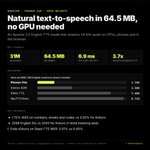
▲ Gradium just open-sourced Phonon, a 31M-parameter text-to-speech model that runs fully on your device, with no GPU and no cloud call.
The key idea is a tiny causal transformer that predicts 1 audio latent per 80 ms frame. A 1-step flow-matching head and a small Mimi decoder turn it into 24 kHz audio, streamed as it generates.
The numbers: 1.70% WER on 500 hard sentences (phone numbers, emails, codes) vs 3.50% for Kokoro-82M. First audio in 6.9 ms on a MacBook Air M5 CPU vs 517 ms for Kokoro. It is a trade-off though: on the easier Seed-TTS set, Phonon 31m scores 0.51% WER and Kokoro wins at 0.45%.
Phonon 31m is English-only, 64.5 MB, Apache 2.0, and runs 3.7x faster than real time on a Raspberry Pi 5. The 5-language 40m models are CC BY-NC......
Full analysis: marktechpost.com/2026/10/22/…
Model: huggingface.co/gradium/phono…
Repo: github.com/gradium-ai/xn-ptt…
Blog: gradium.ai/blog/release-phon…
@GradiumAI

▲ Marktechpost AI retweeted
▲ Liquid AI just released RIPL, an inference engine that puts small LLMs directly in the request path of live production systems.
The key idea is optimizing the whole path, from request arrival to the finished response, for tail latency under load. Liquid tested the same LFM2.5-350M model on vLLM and on RIPL, and RIPL's p95 stayed lower. So part of the gain is the engine, not only the model.
On 1 B200, LFM2.5-1.2B on RIPL hit 34.6 ms p95 vs 498 ms for Qwen3.5-0.8B on vLLM (32 in, 32 out, 1,000 req/s). On 256 in, 128 out, the gap grew to 28.4x. It is a trade-off though: LFM2.5-2.6B reached 76.4 ms on the short workload, above the 50 ms headline, and every number is self-reported.
RIPL is available now for enterprise LFM deployments on NVIDIA H100, H200, B200 and RTX PRO 6000. It is closed, serves LFMs only. Shopify already runs LFMs at sub-20 ms in production search......
Full analysis: marktechpost.com/2026/10/22/…
Blog: liquid.ai/blog/low-latency
Calculator: liquid.ai/low-latency-calcul…
Models: huggingface.co/LiquidAI
@liquidai @maximelabonne
▲ Gradium just open-sourced Phonon, a 31M-parameter text-to-speech model that runs fully on your device, with no GPU and no cloud call.
The key idea is a tiny causal transformer that predicts 1 audio latent per 80 ms frame. A 1-step flow-matching head and a small Mimi decoder turn it into 24 kHz audio, streamed as it generates.
The numbers: 1.70% WER on 500 hard sentences (phone numbers, emails, codes) vs 3.50% for Kokoro-82M. First audio in 6.9 ms on a MacBook Air M5 CPU vs 517 ms for Kokoro. It is a trade-off though: on the easier Seed-TTS set, Phonon 31m scores 0.51% WER and Kokoro wins at 0.45%.
Phonon 31m is English-only, 64.5 MB, Apache 2.0, and runs 3.7x faster than real time on a Raspberry Pi 5. The 5-language 40m models are CC BY-NC......
Full analysis: marktechpost.com/2026/10/22/…
Model: huggingface.co/gradium/phono…
Repo: github.com/gradium-ai/xn-ptt…
Blog: gradium.ai/blog/release-phon…
@GradiumAI
▲ Marktechpost AI retweeted
▲ Recursive releases Flint, an Apache 2.0 local coding MoE with 40B total and ~2.5B active params (74.2% SWE-bench Verified)
The key idea is sparsity tuned for local hardware. Flint has 39.8B parameters but activates only ~2.5B per token: a router picks 6 of 256 experts plus 1 shared expert. Recursive's Eureka Machine, an automated research system, searched the architecture, the 4-bit quantization recipe and the kernels.
Recursive reports 74.2% on SWE-bench Verified vs 73.4% for Qwen3.6-35B-A3B, and 125+ tok/s on an M4 Pro MacBook Pro (150+ on a 64 GB RTX Spark). It is a trade-off though: on Terminal-Bench 2.1 Flint scores 54.9%, while dense Qwen 3.8 hits 73.0%.
Weights are Apache 2.0. 4-bit builds take about 23 GB and need 48 GB of memory. rec, Recursive's local engine, targets M4 Pro and M5 Pro/Max......
Full analysis: marktechpost.com/2026/10/21/…
Model: huggingface.co/RecursiveSI/f…
Repo: github.com/recursive-oss/rec
Blog: recursive.com/updates/introd…
@Recursive_SI @RichardSocher @CaimingXiong @tydsh

▲ Marktechpost AI retweeted
▲ Perplexity and NVIDIA just released JOLT, a post-training method where one model is both teacher and student, and the teacher is trained to teach.
The key idea is simple. Self-distillation gives the model a verified answer and lets it score its own attempts. But a teacher holding the answer can take shortcuts the student cannot follow. JOLT trains the teacher with outcome reward plus a KL pull toward the student, so its feedback stays within reach.
On MATH (Qwen3-0.6B), JOLT matched GRPO's accuracy with 6.5x fewer processed training tokens, and about 13x fewer completion tokens. JOLT+ (adds student reward) beat GRPO by 9.9 points on AppWorld and hit 10.96% pass@1 on Terminal-Bench 2.1 vs 8.25%. It is a trade-off though: without student reward, JOLT trails GRPO on AppWorld (51.92% vs 62.20%).
It is a method, tested on Qwen3 0.6B to 30B-A3B and DeepSeek-V2-Lite.
Full analysis: marktechpost.com/2026/10/21/…
Paper: arxiv.org/abs/2610.10447
Blog: perplexity.ai/hub/blog/a-goo…
@perplexity_ai @AravSrinivas

▲ Marktechpost AI retweeted
▲ IBM just released Granite Speech 5.0 2B, an Apache 2.0 speech model that transcribes and translates speech in 1 model.
The key idea is a CTC Conformer encoder feeding a Granite 4.0 1B LLM through a q-former. Audio reaches the LLM at 10 Hz. Prompts switch between transcription, translation, language ID and keyword lists of up to 2,000 terms.
It ranks #2 among open-weight models on the Open ASR Leaderboard at 5.68% average English WER. Qwen3-ASR-1.7B leads at 5.40%. Cohere Transcribe sits at 5.77%. It is a trade-off though: on noisy FFASR audio it scores 14.80% vs Qwen3-ASR's 13.41%, and Japanese WER is 10.74%.
2B params, 6 ASR languages, Apache 2.0. Runs in Transformers, vLLM, llama.cpp and mlx-audio. IBM also updated Turbo CTC (19,870 RTFx, now 7 languages) and 4.1 2B Plus......
Full analysis: marktechpost.com/2026/10/22/…
Model: huggingface.co/ibm-granite/g…
Blog: huggingface.co/blog/ibm-gran…
Paper: arxiv.org/abs/2505.08699
@IBM @IBMwatsonx @IBMData @IBMResearch