

Writing, nature, art. Still wandering around here. There are lots of good & interesting people still. Lots of annoying & worse too. Owner’s actions concern me.
UK
Joined January 2009
- Tweets80.1K
- Following4.2K
- Followers3.1K
- Likes159K






Pinned Tweet
This is a difficult post. Finding the right picture has been a challenge.
My truly wonderful and loving father, John, died on Tuesday after a short illness.
Here he is with his namesake grandson, a while back at Spanish Arch, Galway, one of his favourite places.
Gaillimh Abú

@Uber_Support hello, terrible service today.
Paid for premium pick up, driver cancelled en route (already late) so another car had to be found. This driver helpful.
However missed train, and have paid premium for non premium.
Your helpline was very unhelpful.
Help now please
1
5
191
ME Costello 🌳 retweeted

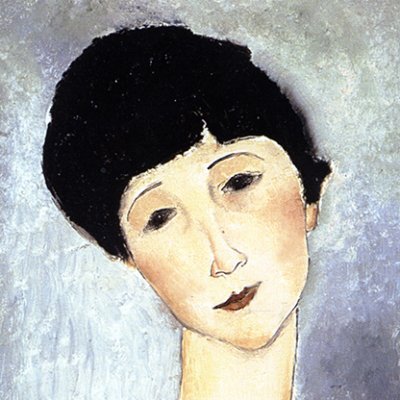
“There are darknesses in life and there are lights, and you are one of the lights, the light of all lights.”
Bram Stoker
From St.Mary’s Tudor church in Ilmington
Happy Sunday


ME Costello 🌳 retweeted

Jewellery Quarter scene featuring The Queens Arms in this painting from Bing @binginuk #LookUpBirmingham for art and creativity.

ME Costello 🌳 retweeted

🏞️
Critics dismissed the 1857 illustrated edition of Tennyson’s Poems as a "bundle of splendid incongruities". #Ruskin disagreed. Defending Millais, Rossetti and Hunt, he argued that "good pictures ... are always another poem", not a literal translation of the text.
🎨#Millais

ALT Mariana (1857), illustration by John Everett Millais for Alfred, Lord Tennyson's Poems (the "Moxon Tennyson"). Wood engraving after Millais's design, depicting Mariana bent over a table in a dim interior above the opening lines of Tennyson's poem. This image appears in the celebrated 1857 illustrated edition defended by John Ruskin and featuring work by Millais, Dante Gabriel Rossetti and William Holman Hunt. Shown here in the copy presented by Tennyson to Queen Victoria in June 1857. Courtesy of the Royal Collection Trust.
ME Costello 🌳 retweeted

The Women of the Day are Sophia Jex-Blake, Mary Pechey, Isabel Thorne, Matilda Chaplin, Helen Evans, Mary Anderson and Emily Bovell, known as the Edinburgh Seven, who had to face down a mob of rioting male students at the University of Edinburgh OTD in 1870 trying to prevent them from sitting their anatomy exams.
The University’s special treatment of women began the previous year when Sophia Jex-Blake applied to study medicine. It was an all-male preserve and tried to stop her, claiming it couldn’t possibly be expected to make arrangements for “just one lady” so she advertised in newspapers for other women to join her. Mary Pechey responded straightaway, followed by the other five.
“Do you think anything more is requisite to ensure success than moderate abilities and a good share of perseverance? I believe I may lay claim to these, together with a real love of the subjects of study…”
The University had no choice but to admit them so it thought of another cunning wheeze. It announced it would charge them more than men for attending the same classes. The Seven paid. Sophia actually tutored the other six in mathematics.
The real trouble started when the women came top of the class, making four of them eligible for a prestigious scholarship on the basis of their stellar results. The University promptly awarded the scholarships to four men with lower marks.
Under the influence of some of the professors, faculty staff who had initially supported the women began to back off. Male students began treating them with open contempt, slamming doors in their faces, crowding into seats that they usually sat in, bursting into "horse laughs and howls" whenever the women approached.
Sophia said: “What means were used in the interim I cannot say, or what influence was brought to bear: but I do know that from that day the conduct of the students was utterly changed, that those who had hitherto been quiet and courteous became impertinent and offensive…It was as if a conspiracy had been formed to make our position as uncomfortable as might be".
Her doorbell was wrenched off, her nameplate damaged five times, fireworks were attached to her door. The rest of the Seven had smoke blown in their faces and filthy letters sent to them. They were waylaid in quiet streets. Obscenities and insults like “whore” were shouted at them in public. (Does that sound familiar at all?)
The women started taking precautions, walking around campus together as a group for safety, but events came to a head exactly 156 years ago today in what became known as the Surgeons’ Hall Riot.
Sophia said, “On the afternoon of Friday 18th November 1870, we walked to the Surgeons’ Hall, where the anatomy examination was to be held. As soon as we reached the Surgeons’ Hall we saw a dense mob filling up the road…The crowd was sufficient to stop all the traffic for an hour. We walked up to the gates, which remained open until we came within a yard of them, when they were slammed in our faces by several young men…who stood within, smoking and passing about bottles of whisky while they abused us in the foulest possible language.”
The women had managed to pick their way through the threatening crowd while several hundred men blocked their way, pelted mud and rubbish at them and shouted insults and threats only to find themselves trapped when the gates were slammed in their faces. They had to endure the hostility until a sympathetic student opened the gates for them.
The women sat their exams and despite their ordeal, all of them passed, four with honours. Edith Pechey won first place over all of the candidates. None of that made the slightest bit of difference to the University. It denied all seven women their hard-won degrees.
Some male students were shocked by the way they had been treated and escorted them back to their digs safely. For weeks after, those students acted as bodyguards, escorting them to and from classes.
Despite the vocal support of Charles Darwin and 300 others, the Court of Sessions delivered the final blow and supported the University's right to refuse the women degrees. They also ruled, by a majority, that the women should never have been admitted in the first place.
Five of the Seven had to go to Paris or Bern to qualify as doctors. Sophia Jex-Blake returned to Edinburgh in 1878 to set up practice as the city’s first woman doctor but that she considered that the case brought such unwelcome publicity for the University, it helped to pave the way for more to follow.
“I believe that it was the seed sown in tears in Edinburgh that was reaped in joy elsewhere.”

ME Costello 🌳 retweeted

Seven year old Barbarie Themelthorpe, 1619 at Isleham (pronounced eye-zlum), Cambridgeshire. Her inscription:
'Whoso ere chance for to behould ye tombe
Shal see a flower blasted in hir bloom
For all are like to flowers, grasse or haye
That 1 houre springs, next dies and fades awaye
Even so ye maid whose tender youth has flowne
might have lived longer heare and not possesst hir grave So soone
But God that knoweth best
What is for us did take hir soule to rest
And whilst her corps intierd awhil doth sleepe
This marble tombe obsequius tears shal weepe
Then let this tombe to all be as a merror
To tel us life is but a breth - to trust it error'
#MonthOfTheDead Day 17.


ME Costello 🌳 retweeted

A good time to revisit this Digested Read from 2014. He always has been hiding in plain sight
theguardian.com/books/2014/o…

I’m so happy that there still corners of this island that this how Wednesday evenings go.
The Streets @O2AcademyBham


ME Costello 🌳 retweeted

Book giveaway! Because High & Low is set on the Twelfth Day of Xmas, I am giving away ONE signed hardback. Follow me and RT this to enter your name in a draw. (UK only, ends 13 Nov.)

ME Costello 🌳 retweeted

Johan Manzambi lost his boot during a Man City attack... it didn't stop him from tracking back 😅

ME Costello 🌳 retweeted

A bride leaving her recently bombed home to get married in London, November 1940.
Her name was Ena Squire-Brown, a dancer famous for her “Dove Dance,” and that morning she was on her way to St. George’s Church in Forest Hill to marry a young Royal Air Force officer, J.C. Martin. London was in the middle of the Blitz, with German bombers attacking the city night after night, and her home had just been hit. Behind her, the windows are shattered, the roof has been torn open, and the front garden is buried under twisted metal and rubble.
By the end of the Blitz, more than a million London homes had been damaged or destroyed. Hers was one of them, and still she walked out of it in her wedding dress, smiling, as if nothing in the world could spoil that day for her...


