Life is in phases
Ikeja, Nigeria
Joined March 2019
- Tweets52.3K
- Following4.6K
- Followers6K
- Likes75.6K




Stripe retweeted

Wait. Are my eyes deceiving me?
The whole of Nigeria is currently running on less than 1,000 megawatts????
South Africa and Egypt each generate about 61,000 MW. What is really going on with Nigeria?

Stripe retweeted

Qudusu. You are begging for my attention so that I can call you “ileya ram” 😂. God forbid. Your own head is worthless. People will lose money if they bet on you.
The best you qualify for in the animal kingdom is a white rat used for a failed science experiment. ✌️

Stripe retweeted

Frame 1: The Misr stadium in Egypt 🇪🇬
It has over 90,000 capacity.
Built from scratch for $20 million.
Complete with running tracks and Olympic size swimming pools.
Frame 2: The Warri city stadium in Delta state, Nigeria 🇳🇬
It has 20,000 seating capacity.
It was RENOVATED for $22 million.


Stripe retweeted
FIFA President Gianni Infantino has commissioned the newly renovated 15,000 capacity Warri City Stadium and Hussey College football pitch in Delta State, Nigeria.
He will also attend the CAF General Assembly in Abuja tomorrow.


Stripe retweeted

Moment FIFA President Gianni Infantino arrived at Osubi Airport in Delta State ahead of his inspection of the newly renovated, 15,000-seat Warri City Stadium.


Stripe retweeted
For next year ileya, someone needs to buy you as Ram. Not to kill you for meat, but to make you fight other rams. At least, they can make sure you use your head for once.

Stripe retweeted
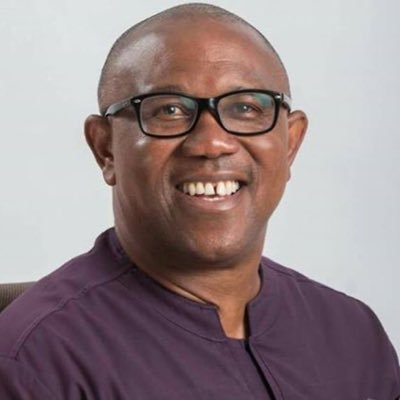
NIGERIANS, GO AND VERIFY (3)
Building the Future Through Education
Peter Obi
In the first two instalments of this series, I explained how we approached the task of building strong institutions and laying a solid foundation for the development of Anambra State. One of the most important institutions we invested in was education.
For me, education was not a political game or a convenient political promise. Even before I ventured into politics, I had always regarded it as the foundation of meaningful development and the most enduring investment any government can make in its people. I believe that the future of any society depends largely on the quality of its educational institutions, teachers, learning environment, and opportunities available to its young people.
This conviction informed our decision to invest across the entire educational spectrum, from primary schools to universities, technical institutions, and adult education.
Basic and Secondary Education
One of our first major decisions was to return mission and privately owned primary and secondary schools to their original proprietors while retaining government support. We also provided billions of naira to assist in rehabilitating the returned schools, restoring the partnership between government and religious institutions that had historically contributed to educational excellence.
This policy attracted international attention. Professor Paul Collier, the Oxford economist and World Bank consultant, led a World Bank-commissioned study of Anambra’s educational transformation. His team examined our decision to return schools to their original missionary owners while retaining government responsibility for funding teachers’ salaries and supporting infrastructure. The team described the partnership model as a revolution in public service delivery and recommended it as a model that could be replicated by other Nigerian states and developing countries. We believed then, as we do now, that government does not necessarily have to own every institution to discharge its responsibility effectively. What matters is ensuring that every child has access to quality education.
For those who claim that we built no schools, I invite them to verify our records. We constructed five-classroom blocks in virtually all of the 177 communities in Anambra State, one of the most extensive community-based school infrastructure programmes undertaken by any state government. The town union chairmen and community leaders of that period can attest to this.
We also renovated hundreds of dilapidated schools, including some where trees had literally grown through abandoned buildings. Comprehensive Secondary School, Onitsha, and Oraukwu Grammar School are examples.
Beyond infrastructure, we distributed approximately 40,000 computers to schools, including more than 22,500 HP laptops. We equipped secondary schools with Microsoft Academies and connected schools across the state to the internet. We supplied generators, established and stocked libraries, revived school sporting activities, and installed boreholes in over 300 schools, including all girls’ schools. We also provided funding to support sporting activities in all our secondary schools.
These technology investments attracted remarkable international recognition. Mr Fabrice Campoy, Managing Director of the Personal Systems Group at HP Inc., described our procurement and distribution of over 22,500 HP laptops as the biggest project of its kind in the Middle East and Africa. Similarly, Mr Ken Spann, then Country Manager and Head of Microsoft Nigeria, described the establishment of Microsoft Academies in more than 500 Anambra secondary schools as the most extensive deployment of its kind in Africa at the time.
Stripe retweeted

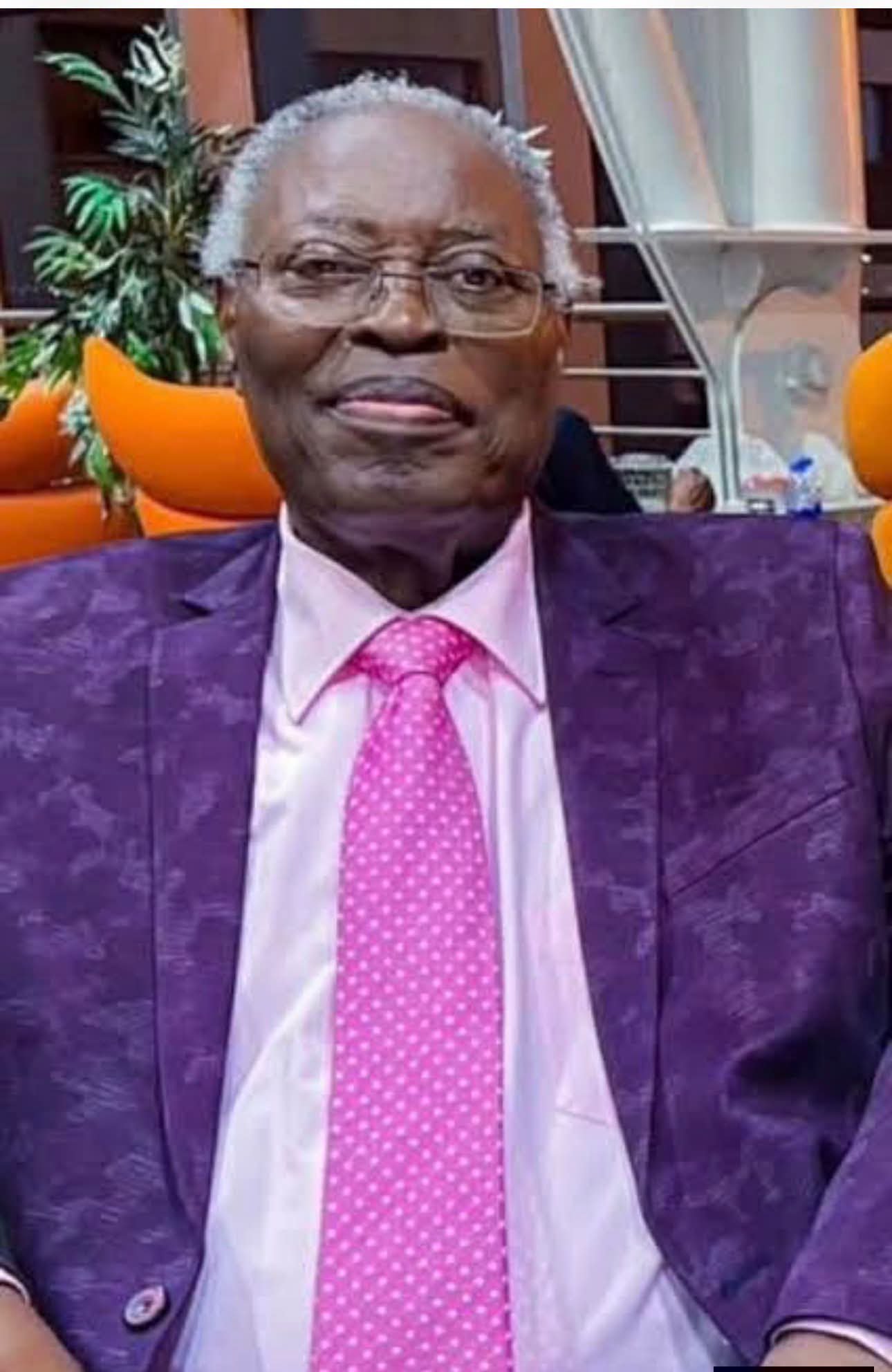
PASTOR KUMUYI, PLEASE LEARN FROM HISTORY
The trending Jimmy Odukoya controversy should be a wake-up call for every church founder, but especially for Pastor W.F. Kumuyi.
I have said this repeatedly for years because I genuinely fear what could happen to Deeper Life when Pastor Kumuyi is eventually gone.
Many African leaders, both political and religious, struggle with succession planning.
Some hold on to leadership so tightly that they would rather die in office than deliberately prepare, empower, and publicly endorse successors.
In the same way many Africans avoid writing wills until it is too late, many founders avoid discussing succession until circumstances force the conversation.
The Jimmy Odukoya story is not entirely new.
His father died unexpectedly and a leadership vacuum had to be filled.
Today, reports of trustees and stakeholders taking different positions on Jimmy’s leadership only reinforce an uncomfortable truth: when succession is not crystal clear and widely accepted, conflict becomes almost inevitable.
The issue is bigger than Jimmy Odukoya.
We’ve seen it before.
After Benson Idahosa’s untimely death, succession questions emerged.
After Samuel Oshoffa’s untimely death, leadership battles followed.
After T.B. Joshua’s untimely death, controversies erupted.
Even outside Africa, church history tells the same story.
When Joseph Smith died in 1844, the Latter Day Saint movement fractured into multiple groups.
After Mary Baker Eddy died in 1910, Christian Science experienced significant leadership struggles.
After Charles Russell died in 1916, the Bible Student movement splintered.
After Herbert W. Armstrong died in 1986, the Worldwide Church of God faced upheaval and division.
The lesson is simple:
When founders fail to build a clear succession pathway, institutions often end up in conflict.
Now compare that with Reinhard Bonnke.
He did not merely name Daniel Kolenda as his successor.
He platformed him.
He travelled with him.
He preached with him.
He entrusted him with responsibility.
By the time Bonnke stepped aside, the world already knew Kolenda.
There was no confusion.
There was no power struggle.
The transition was smooth because the succession had already happened in the minds of the people.
That is why I am concerned about Pastor Kumuyi.
For more than fifty years, he has remained the face, voice, and driving force of Deeper Life Bible Church.
Even at over 85 years of age, he remains the principal attraction and central figure at major programmes, including GCK.
With all due respect, I believe the time has come to intentionally prepare the next generation of leadership.
Not after a funeral.
Not after a crisis.
Now.
Name the successor.
Mentor the successor.
Empower the successor.
Platform the successor.
Let him preach on major platforms.
Let him lead major programmes.
Let the church become familiar with him.
Let the transition happen while the founder is still alive to guide it.
Because once a founder is gone, loyalties change.
Boards change.
Trustees change.
Human beings are fickle.
The people applauding you today may not defend your vision tomorrow.
A founder’s greatest achievement is not building a ministry that depends on him.
It is building a ministry that can thrive without him.
Moses prepared Joshua.
Elijah prepared Elisha.
Paul prepared Timothy.
“And the things that thou hast heard of me among many witnesses, the same commit thou to faithful men, who shall be able to teach others also.” — 2 Timothy 2:2
Founders, learn from history. Don’t leave succession to trustees after your death. Settle it while you are alive.
Credit: Dae Jumong ✍🏻


Stripe retweeted

#BREAKING: Chase, Bank of America, Wells Fargo and U.S. Bank hit by nationwide outage, users report.