

EngD, Math Lover, TÜRK! KEMALİST, YURTSEVER ζ(s) = Σ (1/n^s) = 1^(-s) + 2^(-s) + 3^(-s) + ... (n=1)
Alpha Sanctuary
Joined September 2024
- Tweets3K
- Following955
- Followers1.2K
- Likes43K







Türkiye Sineması : VPN aracılığıyla erişilen, dar bütçeli ve yüksek getiri odaklı üretim modeline sahip, düşük nitelikli türbanlı OnlyFans içeriklerinin yoğun yer aldığı; “Türkiye Yüzyılı”nın resmi kültürel ve sanatsal çıktısı olarak konumlandırılan görsel-işitsel alandır.

In military education the Clausewitzian trinity is still commonly reduced to a simple institutional triad of people, army, and government. That formulation is convenient for instructional purposes, yet it reverses the actual order of Clausewitz’s argument in Book I, Chapter 1 of On War.
What he presents is first a set of three interacting tendencies that he regards as inherent in war as a whole: the primordial violence, hatred, and enmity that operate as a blind natural force; the play of chance and probability within which creative spirit can move freely; and the subordination of war to policy that subjects it to reason. Only after defining these abstract forces does he observe that the first “mainly concerns” the people, the second the commander and his army, and the third the government. The social actors are therefore the primary spheres in which the tendencies manifest, not the trinity itself.
Clausewitz’s point is that any theory which privileges one tendency over the others, or treats their relationship as fixed, will immediately conflict with reality. The three forces remain in continuous, variable tension like an object suspended between three magnets and the particular character of any given war is shaped by the shifting balance among them.


2
106


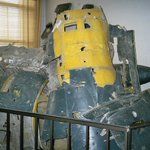
The beer stein from the CIA’s museum collection, commemorating the “Turkey Trotters” of Detachment B at Incirlik, is presented as a lighthearted memento of camaraderie. Yet the most famous pilot associated with that unit, Francis Gary Powers, flew a mission on 1 May 1960 that stands as one of the clearest demonstrations of the collapse of American technological overconfidence. The long-held assumption that the U-2 was effectively invulnerable simply by virtue of its altitude was shattered that day near Sverdlovsk.
Powers’s aircraft had been ferried from Incirlik to Peshawar, Pakistan. From there it was to traverse the full breadth of the Soviet Union before landing in Norway. South of Sverdlovsk, in the vicinity of Kosulino, while cruising at approximately 70,500 feet , the U-2 was engaged by Soviet S-75 Dvina surface-to-air missiles. Multiple batteries were activated; contemporary accounts and later analyses indicate that between eight and fourteen missiles were launched. None scored a direct hit. However, one missile, detonating near the edge of its effective range and under difficult radar-tracking conditions, produced a shock wave that tore apart the fragile airframe of the U-2.
The U-2’s supposed invulnerability was not merely a technical miscalculation. It reflected a broader failure of intelligence to accurately assess the limits of its own capabilities. President Eisenhower subsequently banned further overflights of the Soviet Union, effectively ending the era of deep manned penetration missions. The “Turkey Trotters” stein at Incirlik remains, in this light, less a simple keepsake than a nostalgic object that quietly elides the episode in which the assumptions underlying those operations were decisively disproven.


This month, "Inside the Collection" features the Turkey Trotters Beer Stein.
Learn more: cia.gov/legacy/museum/artifa…
207

