

Data Scientist at Shiprocket (voice ai) post-training, and fine-tuning multimodal LLMs and audio deep learning models. gen ai • llms • ml • mlops
Bengaluru, karnataka
Joined October 2022
- Tweets874
- Following1.5K
- Followers2.3K
- Likes15.3K
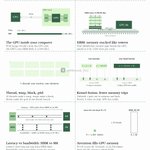


Start learning GPU programming with one fully animated YouTube lecture.
youtu.be/dEZP1qUNTOk
This is the first video of my GPU programming series with Triton.
Every idea in it is visual and animated, just like the GIF in this post, but for a full hour.
You write c = a + b in PyTorch every day.
This lecture shows what the GPU actually does with it.
𝐖𝐡𝐚𝐭 𝐭𝐡𝐞 𝐥𝐞𝐜𝐭𝐮𝐫𝐞 𝐜𝐨𝐯𝐞𝐫𝐬
- How a GPU sits inside your computer: PCIe, NVLink, servers and clusters
- Inside an NVIDIA H100: SMs, FP32 lanes, the warp scheduler, tensor cores, shared memory
- Threads, warps, blocks and grids, and how each thread finds its element
- Memory: SRAM vs DRAM, DDR vs GDDR vs HBM, caches, latency vs bandwidth
- Making memory fast: latency hiding, coalescing and kernel fusion
- Why Triton exists, and how it lets you think in tiles instead of threads
- Memory-bound vs compute-bound, arithmetic intensity and the roofline
- Attention, the N x N matrix, and how FlashAttention fixes it
No CUDA or hardware background needed.
I want to make more long-form technical animated videos, something similar to what @neural_avb does.
Taken inspiration from him
𝐖𝐡𝐚𝐭'𝐬 𝐧𝐞𝐱𝐭
- Lecture 2: writing our first Triton kernel, vector add, line by line, will post it in few days
- More lectures on GPU programming and inference optimization
- A planned series on deep learning for audio
Subscribe to the channel so you don't miss them.
Please also share the video with your ML and DL friends, or in any study or community groups you're part of.
Watch the full lecture:
youtu.be/dEZP1qUNTOk
If you are into audio deep learning, inference, or Triton, follow @Mayank_022 me.
I will be uploading more posts related to that.
Mayank Pratap Singh retweeted

Came across a gem of a blog by @Mayank_022
Knowledge Distillation & Data-Efficient Image Transformers
The original ViT needed 300 million images to outperform CNNs. DeiT does it with just 1.2 million, by letting a CNN teacher distill its visual intuitions into a transformer student.
vizuaranewsletter.com/p/know…
Mayank Pratap Singh retweeted

Introducing S1, our new foundation model that learns from one example.
It can be taught 10-minute long tasks that it has never seen before, from one video prompt without any fine-tuning.
Watch S1 operate in real-time via in-context learning:

Mayank Pratap Singh retweeted

spent my saturday reading this one and I’m delighted! the depth, writing style, and examples are all excellent. I’ve previously coded neural nets and transformers from scratch, but this filled some gaps and was an amazing conceptual refresher. highly recommended!kudos @Mayank_022

BTW, I've written a more detailed visual blog on transformers 8 months ago, maybe one of the most detailed breakdowns on the internet.
You're going to love this one (it'll probably take 5–8 hours to read and fully process the concepts).
vizuaranewsletter.com/p/the-…
Mayank Pratap Singh retweeted

Meet Woolly 🐑
We post-trained Qwen3-8B to run up to 2–3× faster on math & coding prompts and, more importantly, to fit on our chip.
The technique works with any LLM, regardless of size or quantization.
Live demo this week → woolly.trylittlelamb.com/
BTW, I've written a more detailed visual blog on transformers 8 months ago, maybe one of the most detailed breakdowns on the internet.
You're going to love this one (it'll probably take 5–8 hours to read and fully process the concepts).
vizuaranewsletter.com/p/the-…

bruh i should have read The Illustrated Transformer by @JayAlammar sonner 🤯
it is hands down the best resource to understand Transformer architecture.
just spend an hour or two, and have chatgpt open on the side (quite meta lol)


Mayank Pratap Singh retweeted

We released Diffusers 0.40.0 🔥
Main highlights for me:
> Graduating Modular Diffusers out of experimental.
> Bunch of new really cool models as always: LTX2.5, MiniMax H3, Music 3, Wan Animate 2, etc.
> Tensor-parallel support for a select few models.
> New quantization backends: SDNQ, Nunchaku-Lite.
> MASSIVE redesign of our tests. It should now be leaner and better. Sometimes faster, too.
Check out the release notes here:
github.com/huggingface/diffu…


I've finished this book, and the best way to read it is with Claude open on the side. It covers a great breadth of topics in inference, that's its strongest point, but it lacks depth. Most topics get only a few pages. So I'd ask Claude to go deeper on each one, along with the code and implementation. That turned out to be the ideal way to read it, for every topic, you end up picking up ten extra terms and concepts along the way.


My current read for system design is this book. I think most system design resources lack the LLM part, this book covers it.

Mayank Pratap Singh retweeted

Eleven v3 Conversational, our most expressive model for realtime speech, is now generally available.
For developers building voice experiences that respond with real emotion, Eleven v3 Conversational includes audio tags for fine-grained control and support across 70+ languages.
I can sense this!


I predict that in 5-10 years every household will have a local AI server that serves all the AI workload of the house, digital or robotics. It’ll be as common as a WiFi router or a fridge
it creates a private mesh network to link all the devices in the house and does inference completely locally, with built in data vault resistant to remote data hacking or physical tampering. That way you can have every single piece of information about you and your family stored in there and never leaves it, and AI can use them to provide most accurate and customized services

2
453
Mayank Pratap Singh retweeted

India is a voice-first nation: countless languages, scripts, and accents.
Introducing Indic-Transcribe: built to understand India as she actually speaks. Built by @BodhanAI and @AI4Bharat.
🎙️ 1.2B params · 26 languages + English
Live on Bodhan.AI, 05.09.2026
Mayank Pratap Singh retweeted

A desk lamp that doesn't just sit there.
It has 5 motorized joints, an RGB-D camera for depth sensing, and 45 LEDs for lighting.
A Raspberry Pi handles the brains, while Watti Studio lets you create and control lighting and movement scenes.
And the future plans get even more interesting when we imagine the upgrades it is heading for.
Hand tracking -> 3D scanning -> voice control -> MCP -> autonomous movement
Imagine your lamp noticing where you are sitting and adjusting itself and the lighting around you.

What If Your Desk Lamp Could See You?
This is Watti, a DIY robotic lamp that's way more interesting than a normal desk light.
It has 5 motorized joints, an RGB-D camera and 45 LEDs.
Right now, you can create lighting scenes with Watti Studio, but the project is aiming for much more hand tracking, 3D scanning, voice control, MCP and autonomous movement.
Imagine sitting at your desk and the lamp actually moves, looks around and reacts to you.
That's a pretty fun project to build.
Mayank Pratap Singh retweeted

I spent the last six months trying to deconstruct Taalas's patents. We think it can be better: 100x fewer memfetches than their bitROM, better software by better quantization than their hardware team could.
So we wrote a compiler that:
> takes a huggingface checkpoint,
> quantizes the model
> descends the weights down metal layers to RTL and GDS, do your DRC, Yosys, PEX, make the electrical waveform execute a mat-vec from your huggingface checkpoint (thanks Cambricon tech papers)
in ~7000 lines of human-readable code.
we're looking for someone with contacts with a foundry/access to 7nm PDKs or contacts at a cheap EuroPTW shuttle? I'm broke and unemployed.
@itsclivetime this is what i think is the future of perplexity per picojoule. @zerohedge @zephyr_z9 you guys wanna see 40,000 tokens/sec?


So I'm building something similar, an AI pendant like @neosapienHQ and a device like @Heypocket , but with more features. I'm curious about the compute and data you used to train the SLM. This is just a prototype so far. (Weekend side project)
@Kautukkundan


We ran an SLM fully on an Apple Watch!
(the first watch app ever to ship intelligence built into it)
My team is obsessed with the question "how small can models go and still be useful?" So @TslShahir trained a custom model which takes advantage of Apple's Neural Engine hidden inside every Apple Watch.
Full autoregressive decoding, close to 30 TPS, ON YOUR WRIST (Series 9)!! 75MB package = 70M param model.
Use-Cases?
purposefully fine tuning this model to get personal context, health data, run a tiny agent agent for some automation etc. This is exactly what will we be doing next! "Watch out" :P
(Also @sabeshbharathi exploring alt career options as a hand model)
Mayank Pratap Singh retweeted
70 M ternary model running on the Neural Engine of an Apple Watch series 9. Had a lot of fun training, retraining and tuning the model. Tech report soon @c_engines
We ran an SLM fully on an Apple Watch!
(the first watch app ever to ship intelligence built into it)
My team is obsessed with the question "how small can models go and still be useful?" So @TslShahir trained a custom model which takes advantage of Apple's Neural Engine hidden inside every Apple Watch.
Full autoregressive decoding, close to 30 TPS, ON YOUR WRIST (Series 9)!! 75MB package = 70M param model.
Use-Cases?
purposefully fine tuning this model to get personal context, health data, run a tiny agent agent for some automation etc. This is exactly what will we be doing next! "Watch out" :P
(Also @sabeshbharathi exploring alt career options as a hand model)