

AI Analyst @MilkRoadAI | Finding opportunities across AI, photonics, defense, space, and tech.
$1 to see my portfolio →
Joined June 2026
- Tweets2.4K
- Following225
- Followers31.2K
- Likes624




Melvin retweeted
This is absolutely INSANE and another reason why I remain extremely bullish on $NBIS and the broader AI infrastructure trade.
During NVIDIA GTC, @GavinSBaker pointed out that while the cost per AI token continues to decline, the cost of renting GPUs has actually been moving in the OPPOSITE direction, with GPU rental prices surging. And the explanation is pretty simple because as AI models become more efficient, each GPU can produce significantly more useful tokens per hour, making that GPU hour MORE valuable to customers, even as the cost of individual tokens continues to fall. But what really caught my attention was Nebius CEO Arkady Volozh's response when Gavin asked how many times the company had raised its prices over the past three months.
Arkady essentially said they've stopped counting, because Nebius is now adjusting prices every 12 minutes through its GPU auction system. And while prices can move in both directions, the fact that we're even having this conversation tells you how important pricing and capacity allocation have become.For months, investors have been worried that improving GPU efficiency would eventually destroy rental economics for neoclouds. But we're seeing evidence that the opposite can happen. More efficient hardware generates more valuable output, allowing infrastructure providers to maintain strong pricing when demand continues to outpace available capacity. Now, this doesn't mean every neocloud will succeed. I've said repeatedly that the majority of them probably won't survive. But for companies like $NBIS that are building out substantial capacity while investing heavily in their software platforms, the opportunity remains enormous. The market is still underestimating just how valuable access to AI compute could become over the next several years.

Market is making a MASSIVE mistake selling $NBIS right now.
According to their estimates, Nebius is expected to go from just $1.25 billion in annualized revenue run rate in 2025 to nearly $8 billion in 2026, $16.8 billion in 2027, $30 billion in 2028, and an absolutely INSANE $71.7 billion by 2030. We're talking about a company that could potentially grow its annualized revenue run rate by more than 57 TIMES in just FIVE years. And even after reaching nearly $30 billion in 2028, William Blair still expects the business to grow another 69.6% in 2029 and 41% in 2030.
Now, I know what everyone is thinking. What about the recent selloff? What about the debt? What about the enormous capital expenditures required to build all this infrastructure? These are legitimate concerns, and I'm not going to pretend otherwise. The market is clearly becoming increasingly concerned about how neocloud companies will finance their expansion, particularly as investors begin questioning whether the returns on all this spending will justify the investment. But here's where I think investors are making a HUGE mistake. They're treating every neocloud company as if they're operating the exact same business with the exact same economics.
They're NOT.
Nebius is building a full stack AI cloud platform, and what makes the company particularly interesting is how it's expanding across multiple layers of the AI ecosystem. They own and operate massive GPU clusters, data centers, networking infrastructure and the cloud software needed to train and run AI models at scale. But beyond that, they've also acquired Tavily, which provides real time web search capabilities for AI agents, and developed Nebius Token Factory, an inference platform that allows developers and enterprises to deploy AI models at scale. They've also strengthened their inference capabilities through Eigen AI and Clarifai's technology. And that's just the beginning. Nebius Group also owns Avride, which is developing autonomous vehicles and delivery robots in partnership with Uber, and TripleTen, an education technology business. The company also holds significant stakes in ClickHouse, one of the leading real time analytics database companies, and Toloka, which provides data and evaluation services for AI development. Now, not all of these businesses directly contribute to Nebius's core AI cloud revenue, but what excites me is the amount of OPTIONALITY the company has across the entire AI ecosystem. We're talking about exposure to AI infrastructure, model training, inference, AI agents, data analytics, and autonomous systems, all while the company continues securing major contracts with customers like Microsoft and Meta and expanding its global infrastructure footprint.
And what's particularly interesting to me is HOW the company is financing this growth. Nebius has already demonstrated that it can secure financing backed by deployed GPUs and contracted customer cash flows, including its $775 MILLION secured debt facility. That's an important distinction because there is a MASSIVE difference between borrowing billions to speculate on future demand and financing infrastructure supported by contracted demand. Now, does that eliminate the risks? Absolutely NOT. Nebius still needs to execute, deploy enormous amounts of capital, manage its debt, and ensure that the economics of providing compute remain attractive as the industry scales. But I think investors are focusing so heavily on the risks that they're completely overlooking the potential scale of the business. And here's my biggest question. Has the long term demand for AI compute suddenly disappeared? Have enterprises stopped adopting AI? Have frontier labs stopped needing more infrastructure? Have hyperscalers suddenly decided they don't need additional capacity?
NO, If anything, the underlying demand for AI compute continues to grow as models become more capable, inference workloads expand, and AI adoption accelerates across the economy. The industry still needs enormous amounts of infrastructure, and companies capable of delivering that capacity efficiently are positioned to capture a meaningful portion of that spending. What HAS changed is market sentiment. Investors have become increasingly concerned about AI infrastructure debt, capital expenditures, and whether the current pace of investment is sustainable. And those concerns have triggered a brutal selloff across the sector, including Nebius and CoreWeave. But from my perspective, the fundamental reason I invested in Nebius hasn't changed. The company is still pursuing an enormous opportunity, demand for AI compute remains strong, and its long term growth potential is still very much intact.

Melvin retweeted
We're about to see AI infrastructure capex expectations get revised higher once again.
$SPCX already spent $19.6 billion on capital expenditures in Q3 and is now guiding for another $35 billion to $40 billion in Q4 alone. Elon expects the company to have approximately 2.5 to 3 gigawatts of compute capacity online by the end of 2026, with plans to add another 10 gigawatts in 2027 and a much more ambitious scenario involving over 20 gigawatts of additional power and cooling infrastructure.
Think about the sheer amount of capital required to make that happen. We're talking about tens of billions of dollars in additional GPUs, networking equipment, power generation, electrical infrastructure, cooling systems, and data center construction. And even with SpaceX's enormous financial resources, scaling from roughly 3 gigawatts to 13 gigawatts or potentially beyond that is going to require a tremendous amount of funding. And management essentially acknowledged this during the earnings call. When asked about how SpaceX plans to finance this expansion, the CFO explained that the company is already in discussions with multiple sources of debt capital, leveraging its investment grade balance sheet, while also exploring financing partnerships across its suppliers and customers.
In other words, SpaceX isn't just relying on its existing cash flows to fund this expansion but rather actively looking at additional sources of capital to accelerate its infrastructure buildout, and if Elon wants to achieve anything close to his 10 to 20 gigawatt ambitions, the amount of financing required could be enormous. Now, management also made an important point about the economics of these investments. With newly deployed compute currently generating payback periods of less than a year, SpaceX believes its expanding infrastructure can increasingly help finance additional capacity through operating cash flows. That potentially makes accessing debt capital much easier than it would be for a company building capacity without contracted demand or a clear path to monetization.
And this is why I believe the implications extend far beyond SpaceX itself. If SpaceX is accelerating spending at this pace, while Microsoft, Amazon, Google, Meta, and the neoclouds are simultaneously competing to secure power, GPUs and data center capacity, we're looking at an infrastructure investment cycle that could continue getting revised higher. This is particularly bullish for the broader picks and shovels trade. Companies supplying AI accelerators, high speed networking, memory, power generation equipment, cooling systems, transformers, and electrical infrastructure stand to benefit from every additional gigawatt that gets built.
You are not bullish enough!

$SPCX just reported ABSOLUTELY INSANE earnings, and I don't think people realize how quickly Elon Musk is scaling this company.
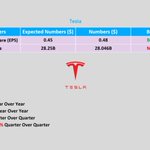
SpaceX generated a staggering $14.6 BILLION in quarterly revenue, representing 161% year over year growth, while earnings per share surged 197% to $0.35. That's a 12% revenue beat and a 119% EPS beat against the estimates shown.
And the numbers get even CRAZIER. SpaceX reportedly generated $4.4B in net income and $8.8B in adjusted EBITDA, with EBITDA growing an incredible 306% year over year.
We're talking about a company that's not only more than doubling its revenue but potentially expanding its profitability at an even faster pace.

Melvin retweeted
Elon Musk just SAVED the neocloud trade.
Elon “Our belief is that the value of compute per watt will increase over time, not decrease. And the reason that for that, I think it should be obvious to people really is that as you improve the AI software, as the models get better and better, they're able to you get more useful intelligence per watt. And the value of that compute is proportionate to the useful intelligence per watt. And that's why you see things like even old computers like H100s renting for more than they rented when they were new. And I think that's likely to continue. I think we're going to face a shortage of superintelligence compute”.
$SPCX just reported ABSOLUTELY INSANE earnings, and I don't think people realize how quickly Elon Musk is scaling this company.
SpaceX generated a staggering $14.6 BILLION in quarterly revenue, representing 161% year over year growth, while earnings per share surged 197% to $0.35. That's a 12% revenue beat and a 119% EPS beat against the estimates shown.
And the numbers get even CRAZIER. SpaceX reportedly generated $4.4B in net income and $8.8B in adjusted EBITDA, with EBITDA growing an incredible 306% year over year.
We're talking about a company that's not only more than doubling its revenue but potentially expanding its profitability at an even faster pace.
Melvin retweeted
RETENTION is becoming one of the BIGGEST problems for Meta's Muse.
According to data shared by Morgan Stanley, 73% of Muse users are active on Day 1, but by Day 14, that number collapses to just 23%. And what's even more concerning is that Instagram, Google, and Facebook are all showing significantly stronger retention over the same period. This tells us that while Meta might be attracting users initially, it's having a much harder time convincing those users to actually stick around. And as someone who used Muse HEAVILY when it first came out, I can tell you that compared to Grok, Muse is a complete JOKE. The experience simply isn't on the same level, and I think this highlights one of the BIGGEST challenges facing the entire AI agent industry right now. Think about it. What exactly is stopping someone from switching from Muse to Grok, ChatGPT, or another AI agent tomorrow? Absolutely NOTHING. There are very few switching costs and unless these companies can build products that become deeply integrated into people's daily routines, users are going to continue jumping between whichever platform offers the best experience.
And here's why this matters so much for Meta. We're talking about a company spending billions of dollars building AI infrastructure, training increasingly sophisticated models, and trying to establish itself as one of the leaders in artificial intelligence. But none of that matters nearly as much if consumers aren't actually using the products consistently. AI infrastructure is incredibly expensive and without sustained engagement, it's going to become increasingly difficult to justify the economics behind these investments. Getting people to download an application is the EASY part. Convincing them to come back every single day is where the real competitive advantage gets built. Now, I wouldn't completely write Meta off because the company still has one of the BIGGEST distribution advantages in the world through Instagram, WhatsApp, and Facebook. It also has the financial resources to keep improving its models and products. But distribution alone doesn't guarantee retention, especially when consumers have so many alternatives available to them.


One of the big issues with Muse? Retention.
The bearish side of these agents is that consumers don't have much incentive to stick to them. What is the switching cost? None.
I believe Muse will do great, but a major work in progress still. Retention matters.
$META

Melvin retweeted
According to Korean media, Elon Musk's Terafab is now talking to almost EVERY Korean chip supplier it can find.
Until now, the only known Korean suppliers were HPSP and Hanmi Semiconductor.
Now TheElec reports that Tesla and SpaceX are in talks across nearly every category Korean companies can supply, from basic piping parts to process materials to test components.
At SEMICON West in San Francisco last week, Terafab staff walked straight to around 10 Korean booths on the morning of day one, including ENF Technology, Dongjin Semichem, Hanmi Semiconductor, Unisem and MiCo.
Several companies have already signed NDAs. One got an NDA by email the same evening Terafab visited its booth.
Hanmi Semiconductor is discussing TC bonders for Terafab, and HPSP has agreed to supply one high pressure hydrogen annealing tool to the R&D line.
MiCo's cleaning unit Komico signed a three way NDA with Tesla and SpaceX about a month ago, and ISC is already swapping samples for rubber test sockets.
Tesla and SpaceX do not buy from Chinese suppliers. One Korean supplier put it simply, without China there are only a few options, and Japan is expensive.
They also want prices that are CHEAPER than China.
$LRCX and $AMAT have reportedly built dedicated Terafab teams, and Fujifilm is meeting Terafab buyers regularly on slurries, photoresist and etchants.
The goal is a fab with 1 million wafer starts per month within 10 years, with $16.8 billion of initial investment and more than 3,000 jobs.
SpaceX broke ground in Grimes County, Texas this month, and the first 100,000 wafer per month phase is expected before 2030.
Logic is being done with $INTC, talks with $TSM are ongoing, and memory will be built separately.
One supplier said that if they email Terafab in the middle of the night in the United States, they get an answer in 30 minutes to an hour.
$TSLA and $SPCX are building a chip supply chain at Elon speed.


There's a lot of speculation around an incoming SpaceX and Tesla merger
Here's 8 ways both companies BENEFIT IF it happens:
1. Investment-grade debt instead of private credit
$TSLA has $43.5B of cash and did $4.7B of operating cash flow last quarter. $SPCX is seeking $40B of debt just for NVIDIA chips and Morgan Stanley estimates it needs ~$84B of outside capital per YEAR through 2034
A combined company funds this with cash flow and investment-grade debt instead of private credit. Saving even 2-3 points of interest on $40B is $1B+ a year, and that compounds across the entire buildout
2. Starlink replaces cellular in every Tesla
Today, carriers collect an estimated $10/month per connected car, a large % of the total Tesla charges. Moving this in-house to Starlink not only means 100% of revenues moves in-house, but also a better product with (eventually) no dead zones
3. Starlink for Robotaxi and Humanoid Robots
Cybercabs are already getting built with Starlink inside them, a merger would mean this can come with no additional cost/sale required between the companies
4. Compute at cost and better optionality
Tesla has its own training compute today, which doubled in the first half of 2026, but FSD, Robotaxi and Optimus are only just getting started and they will need a LOT more compute
SpaceX is already building this out at size with 10GW expected by EOY 2027. Rather than leasing this to Tesla at market prices ($30M/MW ish right now), Tesla's extra demand can simply run on SpaceX compute at cost
SpaceX also now has more optionally with their compute. To move between leasing, using for Grok or now using for Tesla products
4. Energy at cost
Tesla deployed 13.7 GWh of energy storage last quarter and xAI/SpaceX is one of Tesla's biggest customers ($430M of mostly Megapack revenue in 2025).
Merged, the data centers get Megapacks at cost with guaranteed supply, and yes, that intercompany revenue disappears in consolidation, but it's a wash since it's saved as an expense on the other side
5. Terafab gets built FASTER
Terafab today is a joint venture between two separately owned companies, so every major decision crosses two boards, two capital committees, and negotiated cost-sharing agreements.
Merged, one owner makes the call and capital moves the same day. Construction starts in December, and that speed advantage compounds through every phase after the first $16.8B. Elon's whole edge is iteration speed, and a JV structure is the opposite of that
6. Killing the duplicate overhead
Two public companies means two of everything: two legal departments, two HR orgs, two finance and audit functions, two IR teams, two procurement groups buying from the same suppliers.
Combined SG&A is about $11.2B. Cutting 15-25% of the ~$3.4B corporate slice of that is about $0.5-0.9B a year (est). Not the headline reason to merge, but still useful
7. A potential tax arbitrage
SpaceX's AI buildout generated $3.7B of losses in the first half alone
Merged, those losses offset Tesla's taxable profit at the 21% corporate rate, worth roughly $0.3-1.0B a year
Though looks like SpaceX is soon going to generate a profit, so this may be irrelevant after next earnings
8. Combined Data for Training
Tesla's fleet generates real-world data, X and Grok have additional data and SpaceX has its own data. Currently Tesla and SpaceX data are separate and have corporate boundaries and conflict disclosure issues
Once merged, this can all be combined for more data, all in one place, trained across the same GPU clusters
And of course big picture, there is plenty of overlap across all of SpaceX and Tesla products, so having it under one roof means they can build for a more seamless future (see my post below for more details on this)
What else am I missing?
Also, I remain bullish on both of these companies and both have a spot in my Milk Road PRO portfolio. You can see my entire portoflio here: link.milkroad.com/t5837z

Melvin retweeted
We're about to witness one of the BIGGEST wealth transfers in the history of the technology industry.
According to Morgan Stanley, hyperscalers and neoclouds are projected to spend a staggering $1.58T in capital expenditures in 2027, including operating leases but what's even more interesting is where all of that money is actually going. We're talking about Google spending an estimated $375B, $AMZN $270B, $META $221B, $MSFT $209B, $SPCX $132B, $ORCL $97B, $CRWV $47B, and $NBIS $37B. These companies are collectively pouring more than a TRILLION dollars into building the infrastructure required to power AI, and that money doesn't simply disappear. It flows directly into the companies supplying the chips, networking equipment, memory, storage, power infrastructure, and data centers required to make all of this possible.
Morgan Stanley estimates that approximately $672B will flow into semiconductors and servers, making this by FAR the largest category of spending. This is why companies like $NVDA and $AVGO remain so important to the AI buildout. Every time a hyperscaler or neocloud expands its compute capacity, it creates additional demand for GPUs, custom AI accelerators, and the supporting infrastructure. But it doesn't stop there. Another $215B is expected to flow into networking and optical infrastructure, benefiting companies that help connect these massive AI clusters together. As AI systems continue scaling, networking becomes increasingly important because having the fastest GPUs in the world means very little if they can't communicate efficiently. Then you have $217B going toward memory and storage which is why I remain so bullish on companies exposed to HBM, DRAM, NAND, and enterprise storage.
And let's not forget the $119B flowing into data center infrastructure, including power equipment, cooling systems, electrical infrastructure, and the physical equipment needed to actually operate these facilities.
And the way I see it, some of the biggest investment opportunities over the coming years won't necessarily come from the companies building AI models themselves, but from the companies supplying the critical infrastructure that everyone needs to compete. That's exactly why I remain so bullish on the picks and shovels side of this AI revolution and I believe we're STILL in the early innings of this entire infrastructure buildout.


We're about to witness the BIGGEST infrastructure spending boom in human history.
According to Morgan Stanley, hyperscalers and neoclouds are projected to spend a staggering $1.58 TRILLION in 2027 and $1.81 TRILLION in 2028 when operating leases are included. Think about how INSANE that is. We're talking about nearly $3.4 TRILLION in infrastructure spending over just TWO YEARS and what's even more interesting is how quickly these numbers are accelerating. In 2026, Morgan Stanley estimates total spending at $978 billion, but by 2027, that number is expected to SURGE nearly 62% to $1.58 trillion before climbing another 14% to $1.81 trillion in 2028.
When most people look at hyperscaler CapEx, they're only looking at the cash being spent on GPUs, servers, networking equipment, and data centers. But that doesn't tell the ENTIRE story because hyperscalers are also increasingly relying on operating leases to secure additional computing capacity and infrastructure. Once you include those leases, the actual scale of this buildout becomes significantly larger. Just look at what Morgan Stanley is projecting for 2028. Google could spend $434 billion, Amazon $314 billion, Microsoft $310 billion, and Meta $303 billion when operating leases are included.
And this is EXACTLY why I continue to be so bullish on the companies supplying the infrastructure behind this AI revolution. We're talking about an unprecedented amount of demand for GPUs, HBM and DRAM, advanced packaging, networking equipment, optical connectivity, power generation, cooling systems, and data center capacity. Companies like $NVDA, $AVGO, $MU, and $VRT are positioned to benefit from different layers of this buildout, while neoclouds like $NBIS and $CRWV are racing to deploy the computing infrastructure needed to support the next generation of AI workloads. We're still in the early stages of AI inference scaling, autonomous agents, robotics, and physical AI. As these technologies become more widely adopted, the amount of computing infrastructure required could grow substantially beyond what we're seeing today. And this is why I think investors need to stop looking at the AI infrastructure boom as some short term spending cycle.
Now, does that mean every AI infrastructure company will succeed? Absolutely NOT. Capital requirements are becoming enormous, and companies without strong balance sheets, reliable customers, and sustainable financing could struggle to survive but the BIGGER picture hasn't changed. We're watching the largest technology companies in the WORLD make multi year infrastructure commitments on a scale we've never seen before, and if these projections materialize, the amount of capital flowing into the AI ecosystem over the next several years will be absolutely extraordinary. If you want to see how I’m investing across the companies positioned to benefit from this massive AI infrastructure spending boom, check out my full Milk Road Pro portfolio below.
link.milkroad.com/tx5qip

Melvin retweeted
HOLY SMOKES!
You're bearish on neoclouds when Anthropic is in talks to sign a $45 BILLION cloud computing deal?
According to Bloomberg, Anthropic and Nscale are in talks over a massive $45 BILLION agreement spanning over 6 years giving Anthropic access to approximately 460MW of AI computing capacity at Nscale's Monarch data center campus in West Virginia. Nscale's Monarch campus is being developed into one of the largest AI infrastructure projects in the world, with plans to eventually scale to approximately 8GW of power capacity by 2031. Anthropic is essentially securing a massive amount of computing capacity years in advance because it expects demand for its AI models to continue accelerating.
Think about how INSANE that is. While Wall Street continues selling neoclouds over concerns about capital expenditures, debt, and financing, the companies actually building the world's most advanced AI models are committing tens of billions of dollars to secure the infrastructure they'll need in the future. And this is EXACTLY why I remain so bullish on companies like $NBIS, $CRWV, $SPCX.
The biggest AI labs understand that access to GPUs, power, and data center capacity is becoming a competitive advantage. You can have the most advanced AI models in the world, but if you don't have enough computing capacity to train and deploy them, you simply cannot scale. Now, this doesn't mean every neocloud will survive. Financing and execution are still MAJOR risks, and Nscale itself needs to meet its financing and delivery obligations to realize the full value of this agreement but the bigger picture here is that the demand for AI infrastructure continues to attract enormous long term commitments.

Wall Street is getting $CRWV COMPLETELY WRONG.
I went on Making Money with @cvpayne today to explain why I think this selloff is being blown WAY out of proportion. CoreWeave closed down 15.5% today at $65.78 and a lot of that panic is coming from its bonds. The company's 2032 bonds are now trading below 80 cents on the dollar, pushing yields close to 15%.
For context, CoreWeave issued those same bonds just four months ago at 9.625%. Now, I think a LOT of people are misunderstanding what this actually means. First, CoreWeave is NOT suddenly paying 15% interest on those bonds. The interest rate is locked in at 9.625%. The 15% yield reflects what investors are willing to pay for that debt today and it gives us an idea of how expensive similar unsecured borrowing could be going forward.
And there's a much bigger issue here that people are overlooking. Inflation came in hotter than expected this morning, and the 10 year Treasury yield is sitting around 5.2%. Think about it. If investors can earn over 5% lending money to the US government, why would they take on substantially more risk lending to a company like CoreWeave without demanding a MUCH higher return? That's what we're seeing across the bond market right now, and it's not just a CoreWeave problem.
But here's where I think the market is getting this wrong. CoreWeave just raised $4.2 BILLION at 2.875% three weeks ago. Its Q2 revenue came in at $2.58 billion, more than doubling from a year ago, and its backlog is sitting at $104 BILLION, with another $25 billion in commitments added during early Q3. We're talking about a company with customers like $MSFT, OpenAI, and $META. The demand is there and the contracts are there. The biggest question is how cheaply CoreWeave can finance the infrastructure needed to fulfill those contracts.
And this brings me to $NVDA. I genuinely believe people are underestimating just how important these neocloud companies are to Jensen Huang. Nvidia invested $2 billion into CoreWeave earlier this year and has a $6.3 billion agreement to purchase unused capacity through 2032. Why does that matter? Because Nvidia NEEDS these neoclouds to succeed. The hyperscalers are already developing their own custom AI chips to reduce their dependence on Nvidia. Neoclouds help Nvidia expand its customer base and create another massive distribution channel for its GPUs. Now imagine what happens if these companies suddenly struggle to finance their expansion. That's a massive problem for Nvidia, and I find it very hard to believe Jensen would simply sit back and watch one of his most important customers struggle without exploring ways to support it.
Now, that doesn't mean there aren't risks. My biggest concern with the neocloud trade has always been dilution. If these companies can't borrow at attractive rates, they may have to issue more shares to fund their expansion. And that's something existing shareholders absolutely need to pay attention to. It's also why I think investors need to be selective. Not every neocloud has the same balance sheet, customer commitments, or access to financing. but I don't think the AI infrastructure thesis has suddenly changed because CoreWeave's bonds sold off. The demand for compute is still enormous, and these companies are playing an increasingly important role in meeting it. Short term, interest rates are driving the trade but long term, I still believe the AI infrastructure buildout is one of the biggest investment opportunities of our lifetime.
Melvin retweeted
We're witnessing one of the BIGGEST supply demand imbalances in the history of the technology industry and it's showing NO signs of slowing down.
According to a new report from TrendForce, hyperscalers are already locking in hard disk drive (HDD) supply for 2028, and even after securing long term agreements with manufacturers, they STILL expect shortages.
HDD lead times are currently sitting at 50 weeks, compared to just 16 weeks in a balanced market. In other words, it can take nearly an entire YEAR to secure hardware that would normally take just a few months. TrendForce is reporting that DRAM lead times have reached 20 weeks compared to a normal 8 weeks, enterprise NAND storage is at 16 weeks versus 8 weeks, ABF substrates are sitting at an incredible 48–56 weeks compared to just 12 weeks and even MLCCs, which are critical components used in electronic circuits and power delivery, are experiencing significant supply constraints. Meanwhile, GPU lead times are actually relatively balanced. And I think this tells us something VERY important about where the AI buildout is heading.
As AI inference scales, hyperscalers need enormous amounts of storage to support expanding datasets, model outputs, retrieval systems, and the infrastructure required to serve millions of users. And unlike GPUs, which handle computation, HDDs provide the cost effective, high capacity storage needed to retain enormous amounts of data. This is also why demand for enterprise SSDs is accelerating. When hyperscalers cannot secure enough HDD capacity, they increasingly explore high density QLC SSDs as an alternative, which can create additional pressure on NAND supply.
And this is where things get REALLY interesting from an investment perspective. Companies like $WDC and $STX are positioned to benefit from constrained HDD supply, while $MU, $SNDK, and other memory manufacturers could benefit from increasing demand for DRAM and NAND. When customers are willing to secure capacity YEARS in advance, suppliers can gain stronger pricing power, better revenue visibility, and potentially higher margins. And that's why I continue to believe the AI infrastructure buildout is going to create enormous opportunities across the ENTIRE supply chain, not just GPUs. We're moving into an environment where having access to critical components, securing long term supply agreements, and actually executing on infrastructure deployment could become major competitive advantages.
Of course, shortages don't automatically mean every supplier will see higher profits. Higher prices can eventually encourage supply expansion, customers may shift technologies, and elevated infrastructure costs could pressure demand but the BIGGEST takeaway for me is that hyperscalers are making purchasing commitments extending into 2028 while STILL anticipating shortages.

Melvin retweeted
One of the BIGGEST problems in the stock market right now is hedge fund positioning and I don't think enough people realize just how EXTREME things have gotten.
According to Goldman Sachs, hedge fund net leverage has fallen to just 43.7%, marking the largest weekly decline since Liberation Day in April 2025 and the FOURTH largest weekly decline in the past five years. To put that into perspective, hedge fund net positioning is now sitting at the 0th percentile across both the one year and five year look backs. In other words, hedge funds are essentially as defensively positioned as they've been at any point over those periods but gross leverage remains elevated at the 90th percentile over the past five years, meaning hedge funds haven't necessarily abandoned the market. Instead, they've been aggressively reducing their net exposure by cutting long positions and increasing short positions.
This is EXACTLY why I think we're seeing so much selling pressure across the market, especially in high beta names. It's not necessarily because the fundamentals of these businesses have suddenly deteriorated. A LOT of this pressure is being driven by positioning, risk management and funds trying to protect their performance (most funds are down pretty bad) but here's another problem. Retail investors haven't meaningfully stepped in to buy the dip yet either, at least not in a way that's been strong enough to absorb some of this selling pressure. And until the macroeconomic environment starts improving, I think it's going to be difficult for the market to sustain a meaningful recovery. However, here's why I think this could become bullish, very fast. When macro conditions finally start improving and confidence returns, hedge funds will have a tremendous amount of exposure to rebuild. Combine that with retail investors eventually returning to the market, and we could see a VERY aggressive rally as capital starts flowing back into equities and combine that with record earnings and this rally could become unstoppable.
But until that happens, I think investors need to be prepared for continued volatility and personally, I'm using this period to accumulate businesses where I believe the long term fundamentals remain intact, especially across AI infrastructure. Because while positioning and macro conditions can dictate where stocks trade in the short term, earnings, cash flows, and underlying business performance are what ultimately drive valuations over the long term.

Melvin retweeted
The AI infrastructure buildout is about to enter an ENTIRELY different phase in 2027.
SemiAnalysis just released a new report forecasting 51.2 GW of new data center capacity in 2027, compared to 25 GW in 2026 and just 15.6 GW in 2025. We're talking about more than DOUBLING annual capacity additions in a single year. To put that into perspective, SemiAnalysis estimates that the industry could add roughly as much data center capacity in 2027 alone as it had built cumulatively through 2024, excluding China. And here's where things get REALLY interesting. While some investors, including Brad Gerstner, have questioned whether the industry can actually deliver this much capacity, SemiAnalysis points to satellite imagery showing more than 24 GW of data centers already in advanced stages of construction, with those facilities expected to be delivered in 2027. On top of that, the firm reports roughly $1 TRILLION in binding, non cancellable data center leases signed in 2026 so far.
Now, think about what this means for the ENTIRE AI ecosystem. Every additional gigawatt of data center capacity creates enormous demand for GPUs, HBM memory, networking equipment, cooling systems, electrical infrastructure, and POWER. And remember, adding data center capacity doesn't automatically mean every facility will be fully equipped with GPUs on day one. In fact, SemiAnalysis is already raising the possibility that as power and construction constraints ease, the next major bottleneck could once again shift towards semiconductors and memory. And here's what I think a LOT of investors are missing. More compute capacity doesn't necessarily mean demand suddenly gets saturated. As inference becomes cheaper, AI adoption can accelerate across autonomous agents, enterprise applications, robotics, and eventually physical AI. Lower costs can unlock entirely new use cases that simply weren't economical before, creating another wave of demand for compute.
If SemiAnalysis is even remotely close to being right, we're about to witness one of the largest infrastructure expansion cycles in history. And I believe the companies supplying the compute, memory, networking, and power behind this expansion could be some of the biggest beneficiaries over the next several years. If you want to see how I’m investing around this next phase of the AI infrastructure buildout, check out my full portfolio below: link.milkroad.com/tx5qip

Microsoft just walked away from one of the biggest AI data center projects in the United Kingdom.
According to the Telegraph, $MSFT terminated its deal for Nscale's planned site in Loughton, Essex, which ministers had called the country's largest AI data center.
The problem is POWER. Grid officials reportedly told Nscale they do not expect enough electricity for the site until the 2030s.
Nscale says its relationship with Microsoft remains strong and the grid issue has no impact on its other contracts.
The timing is rough. Nscale filed for a United States IPO last month, with Microsoft and Anthropic expected to be its biggest customers.
Demand for compute is not the problem but getting it plugged in is.

Melvin retweeted
Memory buyers are locking in supply for the next DECADE.
Google is reportedly in talks to secure memory supply all the way to 2035.
HP and Dell have extended their deals with $MU through 2031.
Micron now has 26 long term agreements covering about 35% of its revenue through 2030.
Customers don't sign 9 year deals when they expect a glut but rather sign them when they are worried about running short.
KeyBanc now sees DRAM contract prices rising 15% to 20% and NAND rising more than 20%.
And $MU still trades at about 5x next year's earnings.

Michael Dell just told the Wall Street Journal that the memory crunch is going to get WORSE.
On CNBC this week he said supply and demand get worse next year, and when asked about memory he called it "maybe a four year problem because there's just not enough supply."
His reasoning is that a new chip fab takes about four years to build, so the capacity being planned today may not produce anything until 2029 or 2030.
That is a STRUCTURAL shortage, and it is exactly what Samsung, SK Hynix and $MU want to hear after the brutal selloff in memory stocks this week.
The more interesting part is how $DELL plans to survive if the AI boom ever busts.
Dell builds just in time, so it isn't sitting on a mountain of inventory or debt like a lot of AI infrastructure players, and the WSJ says that gives it a CUSHION if demand collapses.
One of the biggest buyers of memory in the world is telling you the shortage isn't close to over.


Melvin retweeted
The HBM market is setting up for one of the BIGGEST supply demand imbalances in the entire AI buildout.
Just look at what Bloomberg Intelligence is projecting. HBM shipments could grow from roughly 2.5 billion GB in 2025 to nearly 18 billion GB by 2030. That's approximately a 7X increase in volume in just FIVE years. Normally, when an industry dramatically increases production, you would expect prices to decline as supply catches up with demand. Yet Bloomberg's projections are showing the complete opposite. Average HBM prices are expected to climb from roughly $13 per GB in 2025 to $35 per GB by 2030. Think about how insane that is. We're potentially looking at a market where shipments increase roughly 7X while average selling prices nearly triple.
And this is exactly why I'm so bullish on memory. Every new generation of AI accelerators requires increasingly sophisticated memory to deliver the bandwidth needed to keep those GPUs running efficiently. And as models become larger, inference workloads explode, and autonomous agents and physical AI begin scaling, the demand for memory is only going to accelerate. What makes HBM particularly interesting is that supply cannot simply expand overnight. Manufacturing HBM requires advanced packaging, complex stacking processes, enormous capital investment, and significant production capacity. Not to mention, expanding HBM production can consume manufacturing capacity that would otherwise go toward conventional DRAM, potentially tightening supply across the broader memory market as well. This is why I continue to believe memory is one of the most attractive opportunities in the AI infrastructure trade.

South Korea's stock market is in FREE FALL and the panic surrounding the memory trade is getting completely out of control.
The KOSPI just plunged another 7%, bringing its decline to roughly 40% from its June highs. Samsung and SK Hynix are getting absolutely destroyed, and the selling pressure is spreading across the entire AI infrastructure trade. I went on Making Money with @cvpayne today to talk about the memory selloff and why I believe investors are losing sight of what's actually happening in this industry.
And now we're getting ANOTHER warning out of South Korea. A new column published by Maeil Business Newspaper is raising concerns that the global memory industry could face oversupply beginning in 2029 as new manufacturing capacity starts coming online. The argument is that South Korea has become increasingly dependent on Samsung and SK Hynix, and that the country has roughly two to three years to develop other growth industries before the memory cycle potentially reverses. Now, I think this is something investors should absolutely pay attention to but here's where I disagree with the panic.
We're talking about a potential oversupply problem in 2029 while the industry is still struggling to meet demand TODAY. Memory manufacturers are already dealing with capacity constraints, AI customers are securing long term supply agreements, and demand for HBM continues to grow as Nvidia $NVDA and other AI chipmakers push toward increasingly memory intensive systems. And people need to understand that building additional manufacturing capacity doesn't automatically mean we're going to have an oversupply problem. These fabs take years to construct, equipment needs to be installed, production yields need to improve, and manufacturers still have to qualify their products with customers. Not to mention, HBM manufacturing is substantially more complicated than traditional DRAM, and not all additional memory capacity can immediately be used to produce the most advanced AI memory products.
Now, could we eventually see oversupply in 2029? ABSOLUTELY. Memory is a cyclical industry and I've never argued that these companies will enjoy record pricing and margins forever. But there's a massive difference between acknowledging that possibility and acting like the memory cycle is already over. I still believe the fundamentals of the memory trade remain incredibly strong, especially for companies positioned to benefit from HBM and the broader AI infrastructure buildout. Bullish on memory and if you want to see how I’m investing through this selloff and check out my full portfolio below. link.milkroad.com/tx5qip
Melvin retweeted
Power is the BIGGEST constraint in the entire AI buildout right now.
Morgan Stanley estimates that US data centers could require roughly 160 GW of power by 2029, but even after accounting for data centers under construction, additional utility grid access, behind the meter generation, and potential nuclear capacity, there could STILL be a 76.5 GW power shortfall.
Think about how INSANE that is. We're talking about nearly HALF of projected US data center power demand potentially going unmet and here's why this matters so much. We can manufacture more GPUs, build better AI models, and raise hundreds of billions of dollars to finance new infrastructure. But none of that matters if you can't actually power the data centers. Electricity isn't something you can simply scale overnight. Building new transmission infrastructure, expanding grid capacity, securing interconnection agreements, and developing new power generation can take YEARS. And with AI workloads becoming increasingly compute intensive, demand for electricity is only going to accelerate as inference, autonomous agents, robotics, and physical AI continue scaling. This is exactly why I think POWER is becoming one of the most valuable assets in the entire AI ecosystem. And I think @elonmusk understands this better than almost anyone and it's also why I remain so bullish on neoclouds like $NBIS, $IREN, $SPCX. These companies are becoming incredibly important because they're helping solve one of the biggest bottlenecks in the AI industry turning massive demand for compute into actual operational capacity.
The companies that can secure large amounts of power, develop data center campuses, deploy GPUs, and get that infrastructure operational FAST are going to have an enormous competitive advantage. And as power becomes increasingly scarce, the value of existing infrastructure with secured electricity and grid access could become significantly more valuable. You can't have an AI revolution without compute, and you can't have compute without POWER. If you want to see how I’m investing around the AI power bottleneck and the infrastructure companies I think benefit most, check out my portfolio below.
link.milkroad.com/d8cj6v

The majority of neocloud companies will NOT survive.
I strongly believe we're going to see a MASSIVE amount of consolidation across this industry over the next several years, and only a handful of companies will come out on top. Personally, I think $CRWV and $NBIS will be the top 2. Just look at how competitive this industry is becoming. You have the traditional hyperscalers like Microsoft, Amazon, and Google spending hundreds of billions of dollars building their own AI infrastructure. Then you have companies like CoreWeave, Nebius, Crusoe, Lambda, and several others trying to capture a piece of that same market.
As we know, building a neocloud is EXTREMELY capital intensive. We're talking billions of dollars in GPUs, data centers, power infrastructure, networking equipment, and everything else required to operate these facilities. And that's before you even consider the cost of financing all of this. Not every company is going to have access to the capital necessary to compete, and more importantly, not every company is going to have customers willing to sign multibillion dollar contracts. This is why I believe we're eventually going to see smaller neoclouds either go bankrupt or get acquired by larger players. I wouldn't be surprised if the industry eventually becomes dominated by just a few major independent GPU cloud providers.
But here's why I'm particularly bullish on CoreWeave and Nebius. Both companies have already demonstrated that some of the largest technology companies in the world are willing to commit billions of dollars to their infrastructure. CoreWeave has built an enormous contracted backlog, while Nebius has secured major agreements with Microsoft and Meta. And then there's $NVDA, which I think is one of the most underrated parts of this entire conversation. Jensen Huang has a HUGE incentive to make sure the neocloud industry succeeds. Think about it. Why would Nvidia want the entire AI infrastructure market controlled by Microsoft, Amazon, Google, and Meta when it can help create another group of major customers buying billions of dollars worth of GPUs? We've already seen Nvidia make strategic investments across this ecosystem, including its investment in Nebius. Now, that doesn't mean Jensen is going to bail out every struggling neocloud, but I do believe Nvidia will continue supporting strategically important partners where it makes financial sense.
And this brings me back to what's happening with CoreWeave right now. Investors are absolutely freaking out over its borrowing costs, and I understand why. Financing an enormous infrastructure buildout when interest rates are elevated is not easy, especially when you're already carrying significant debt. But I think people are confusing financing risk with demand risk. The demand for AI compute hasn't suddenly disappeared. If anything, the latest growth we're seeing from companies like Anthropic suggests we're going to need substantially MORE computing capacity over the next several years. That doesn't guarantee CoreWeave or Nebius will succeed. Both still need to execute, manage their capital requirements, and eventually demonstrate that their businesses can generate sustainable free cash flow. But I think the companies that survive this period could emerge in a MUCH stronger competitive position as weaker players get pushed out of the market.
You can check out the full podcast here: youtu.be/g46xoq5AAQE?si=mrVs…
Melvin retweeted
Market is making a MASSIVE mistake selling $NBIS right now.
According to their estimates, Nebius is expected to go from just $1.25 billion in annualized revenue run rate in 2025 to nearly $8 billion in 2026, $16.8 billion in 2027, $30 billion in 2028, and an absolutely INSANE $71.7 billion by 2030. We're talking about a company that could potentially grow its annualized revenue run rate by more than 57 TIMES in just FIVE years. And even after reaching nearly $30 billion in 2028, William Blair still expects the business to grow another 69.6% in 2029 and 41% in 2030.
Now, I know what everyone is thinking. What about the recent selloff? What about the debt? What about the enormous capital expenditures required to build all this infrastructure? These are legitimate concerns, and I'm not going to pretend otherwise. The market is clearly becoming increasingly concerned about how neocloud companies will finance their expansion, particularly as investors begin questioning whether the returns on all this spending will justify the investment. But here's where I think investors are making a HUGE mistake. They're treating every neocloud company as if they're operating the exact same business with the exact same economics.
They're NOT.
Nebius is building a full stack AI cloud platform, and what makes the company particularly interesting is how it's expanding across multiple layers of the AI ecosystem. They own and operate massive GPU clusters, data centers, networking infrastructure and the cloud software needed to train and run AI models at scale. But beyond that, they've also acquired Tavily, which provides real time web search capabilities for AI agents, and developed Nebius Token Factory, an inference platform that allows developers and enterprises to deploy AI models at scale. They've also strengthened their inference capabilities through Eigen AI and Clarifai's technology. And that's just the beginning. Nebius Group also owns Avride, which is developing autonomous vehicles and delivery robots in partnership with Uber, and TripleTen, an education technology business. The company also holds significant stakes in ClickHouse, one of the leading real time analytics database companies, and Toloka, which provides data and evaluation services for AI development. Now, not all of these businesses directly contribute to Nebius's core AI cloud revenue, but what excites me is the amount of OPTIONALITY the company has across the entire AI ecosystem. We're talking about exposure to AI infrastructure, model training, inference, AI agents, data analytics, and autonomous systems, all while the company continues securing major contracts with customers like Microsoft and Meta and expanding its global infrastructure footprint.
And what's particularly interesting to me is HOW the company is financing this growth. Nebius has already demonstrated that it can secure financing backed by deployed GPUs and contracted customer cash flows, including its $775 MILLION secured debt facility. That's an important distinction because there is a MASSIVE difference between borrowing billions to speculate on future demand and financing infrastructure supported by contracted demand. Now, does that eliminate the risks? Absolutely NOT. Nebius still needs to execute, deploy enormous amounts of capital, manage its debt, and ensure that the economics of providing compute remain attractive as the industry scales. But I think investors are focusing so heavily on the risks that they're completely overlooking the potential scale of the business. And here's my biggest question. Has the long term demand for AI compute suddenly disappeared? Have enterprises stopped adopting AI? Have frontier labs stopped needing more infrastructure? Have hyperscalers suddenly decided they don't need additional capacity?
NO, If anything, the underlying demand for AI compute continues to grow as models become more capable, inference workloads expand, and AI adoption accelerates across the economy. The industry still needs enormous amounts of infrastructure, and companies capable of delivering that capacity efficiently are positioned to capture a meaningful portion of that spending. What HAS changed is market sentiment. Investors have become increasingly concerned about AI infrastructure debt, capital expenditures, and whether the current pace of investment is sustainable. And those concerns have triggered a brutal selloff across the sector, including Nebius and CoreWeave. But from my perspective, the fundamental reason I invested in Nebius hasn't changed. The company is still pursuing an enormous opportunity, demand for AI compute remains strong, and its long term growth potential is still very much intact.
Melvin retweeted
UBS says the 19% selloff in memory stocks is an opportunity, not a sign the cycle is breaking.
AI agents are driving stronger server DDR5 orders into 2027.
UBS expects HBM4 to grow from 17% of HBM demand in 2026 to 39% in 2027.
It also expects Samsung to add 120,000 wafers a month of DRAM capacity by late 2027, but sees little real impact on supply until late 2028.
$MU

Michael Dell just told the Wall Street Journal that the memory crunch is going to get WORSE.
On CNBC this week he said supply and demand get worse next year, and when asked about memory he called it "maybe a four year problem because there's just not enough supply."
His reasoning is that a new chip fab takes about four years to build, so the capacity being planned today may not produce anything until 2029 or 2030.
That is a STRUCTURAL shortage, and it is exactly what Samsung, SK Hynix and $MU want to hear after the brutal selloff in memory stocks this week.
The more interesting part is how $DELL plans to survive if the AI boom ever busts.
Dell builds just in time, so it isn't sitting on a mountain of inventory or debt like a lot of AI infrastructure players, and the WSJ says that gives it a CUSHION if demand collapses.
One of the biggest buyers of memory in the world is telling you the shortage isn't close to over.
Melvin retweeted
I know days like today SUCK.
You open your account, everything is red, positions that felt great a few weeks ago suddenly look terrible and your brain immediately starts telling you that you need to DO something. But this is exactly where investing gets hard. Making money when everything is going straight up is easy. Conviction means absolutely nothing when every stock you own is green every single day. The real test comes when the market punches you in the face, your portfolio is down, everyone on X suddenly becomes bearish and you still have to think rationally.
I’ve made the mistake before of selling great companies simply because I couldn’t handle watching the price go down. And almost every single time, the thing I regretted wasn’t the drawdown. It was letting the drawdown convince me that volatility meant my thesis was wrong. Those are two completely different things.
Stocks can fall 10%, 20%, 30% and the underlying business can still be getting stronger. The market does not care about your cost basis and it definitely does not move in a straight line just because we think a company is undervalued. There are going to be weeks where it feels like nothing works. There are going to be moments where the market makes you question every position you own. And there are going to be times where sitting on your hands feels harder than buying or selling something.
That is part of this game.
My portfolio is getting hit too. I’m watching the exact same red numbers you guys are watching. I’m not sitting here pretending it feels good but I also know why I own what I own. I know the businesses. I know the demand I’m betting on. I know the trends I believe are going to be significantly larger several years from now than they are today. And until those things change, I refuse to let a few brutal market days make decisions for me. That doesn’t mean blindly holding everything forever. If the thesis changes, we change our minds. If fundamentals deteriorate, we reassess but PRICE going down by itself is not a thesis. Listen, if you need to sell, sell here if that means sleeping better at night but know that some of the best opportunities you will ever get in the market are going to feel absolutely horrible when they are happening. Nobody rings a bell and tells you, Hey guys, this is the bottom, you can feel comfortable buying now. By the time everything feels comfortable again, the opportunity usually isn’t nearly as good.
So keep your head up. Zoom out. Stop staring at the five minute chart. Remember why you invested in the first place. We are going to have incredible days again. We are going to have brutal days again. The goal isn’t to avoid volatility. The goal is to survive it long enough to participate in the upside when the market eventually turns.
We’re in this together and I bought the DIP.

Melvin retweeted
How could you POSSIBLY be bearish on compute right now when GPU rental prices are doing THIS?
According to data from FastGPU, GPU rental prices increased as many as 81 times across providers over the past 60 days, with some of the most important chips used for AI training and inference seeing MASSIVE price increases. NVIDIA B300 rental prices increased 52.8%, going from $8.50 to $12.99 per GPU hour. H200 prices jumped 33.3%, B200 prices increased 27.8% and H100 prices rose 30% and the RTX PRO 6000? Rental prices surged an absolutely INSANE 307%.
We're watching AI infrastructure companies get absolutely DESTROYED in the stock market, with investors freaking out about debt, financing costs, oversupply, and whether these companies will ever generate attractive returns on their investments. Meanwhile, the actual cost of renting the underlying compute is going UP.
If we were genuinely heading toward a massive compute oversupply, you would expect rental prices to start collapsing as providers competed to fill their available capacity. Instead, we're seeing pricing strength across some of the most important GPUs powering the AI industry. And remember, we're still in the EARLY stages of AI adoption. Frontier labs are scaling their training clusters, inference demand is exploding as more people and businesses adopt AI, and the amount of compute required to serve increasingly sophisticated models continues to grow.
This is EXACTLY why I've been so bullish on companies like $NBIS , $MU , $CRDO , $IREN etc. I genuinely believe compute will remain one of the most valuable resources in the AI economy for years to come. And while Wall Street continues panicking over the short term volatility, I'm BUYING THE DIP.
If you want to know exactly what I’m buying on this dip and how I’m positioning across the compute buildout, check out portfolio below.
link.milkroad.com/tx5qip


GPU rental prices went up 81 times in 60 days, per FastGPU's report.
The biggest increases were on the chips used for frontier training and production inference:
→ B200: 7 increases (~17.7% each)
→ H200: 6 increases (~17.5% each)
→ H100: 8 increases (~14.3% each)
→ B300: 6 increases (~10.4% each)
For a team renting 8 B200s around the clock, a single $1.20/GPU-hour increase adds roughly $7,000 to the monthly bill.
And when supply is short, the provider controls the price, and you absorb the increase.
It doesn’t have to work that way.
With B3IQ, you own the machine and pay for it once.
We build, host, and run it for you. And you can also rent out the hours you don’t need.

Melvin retweeted
Elon Musk just said SpaceX could have MORE than 10 GIGAWATTS of AI compute capacity by the end of 2027.
For some context, SpaceX has already reported a compute footprint exceeding 2 GW through its Memphis facilities and the company is increasingly monetizing its infrastructure by providing compute to outside AI companies. But here’s where things get REALLY interesting.According to Deutsche Bank’s research, SpaceX’s modeled neocloud agreements could generate approximately $54.5 BILLION in annualized revenue from just 1,175 megawatts of GPU capacity. That includes agreements involving Google and Reflection AI, alongside additional modeled customer deals. That works out to roughly $46.4 MILLION in annual revenue per active megawatt.
Now imagine SpaceX actually reaches 10 GW of active compute capacity. We’re talking about 10,000 megawatts. At approximately $46.4 million in annual revenue per MW, SpaceX could theoretically generate around $464 BILLION in annualized revenue from its AI infrastructure business ALONE. And remember, @elonmusk didn’t say exactly 10 GW. He said potentially MORE than 10 GW. At 12 GW, that number increases to approximately $557 BILLION annually. At 15 GW, we’re talking about nearly $696 BILLION. even if we use significantly more conservative assumptions and grok usage, the opportunity is still enormous.
And personally, I think this is what makes SpaceX’s AI infrastructure expansion so fascinating. We’re talking about a company that most people historically associated with launching rockets and operating Starlink, potentially building one of the largest AI compute businesses in the entire world. And it also reinforces something I’ve been saying for a LONG time. The demand for AI compute is absolutely enormous, and companies are willing to commit billions of dollars to secure the infrastructure necessary to train and run their models and even if Elon can execute on fraction of what he’s talking about, SpaceX’s AI infrastructure business will eventually become one of the most valuable parts of the entire company.

