

🧠 Hey we just made a memory-native LLM 🌟 Our Repo: https://xitter.cf/t.co/3xG8fI8XzF
𝗠𝗲𝗺𝗧 𝟭.𝟬 𝗣𝗹𝗮𝗻𝗲𝘁 🪐
Joined December 2025
- Tweets273
- Following32
- Followers609
- Likes90



Explore the architecture, models, and results.
Code: github.com/MemTensor/MemT-1.…
Models: huggingface.co/collections/M…

Without access to the original history at query time, the two models achieve average scores of 50.6 and 47.0 across 11 memory benchmarks, ranking #1🏅 and #2🥈 among the parametric memory methods evaluated.
We also explore experience reuse in coding agents: retrieved procedural experience is written into internal memory to help the model complete subsequent tasks.

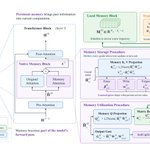
Mixture-of-Storage expands native memory into multiple experts, with separate routing for writes and reads.
This open-source release includes Flash and Nano, with 288B and 36B total parameters and 17B and 3B active parameters, respectively.

During online inference, trained weights stay fixed. The persistent memory state evolves.
We‘ve added native memory blocks to selected Transformer blocks, enabling the model to retain and use historical information through its internal memory state.
At each turn, the model reads existing memory. Once the interaction ends, it writes the input and response into memory for future use.
Throughout this process, model weights remain fixed. What updates is the memory state maintained independently for each interaction trajectory.

Can large language models retain information from past interactions and reuse it in the next task?
Introducing MemT-1.0: Towards Memory-Native Evolution.
This time, we've built memory directly into the model architecture.
Our MemT-1.0-Nano and MemT-1.0-Flash make persistent memory part of model computation, carrying information across interactions.

A correct answer can still hide stale or unauthorized memory.
Our latest article shares 12 practical measures to observe agent memory after launch: write quality, retrieval, corrections, deletion, and task outcomes.
Read more to know more 👇🏻

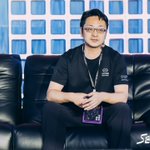
September 23 at S-Tron Shanghai 2026 Innovation Event, our founder & CEO, Feiyu Xiong @superbearmaster, joined Angus Dunn, Patricia Bubner, PhD, and Bing Li, to discuss a question many founders are facing now: If AI lowers the barriers to building a startup, do founders still need to move to Silicon Valley?
For our team, the most relevant part of the conversation was the distinction between making execution easier and making decisions better.
AI can help founders code, automate operations, and iterate with smaller teams. But the harder questions remain human: Which direction is worth pursuing? How do we evaluate what we’ve built? What expertise is needed to know whether an answer is actually useful?
Feiyu shared that AI-era startups will need 2 kinds of talent: practitioners who can turn AI into deliverables, and technical specialists with deep architectural and domain expertise. Tool literacy will become widespread; industry knowledge will become scarcer and more valuable.
The discussion also explored why Silicon Valley’s role is changing rather than disappearing. Teams can build globally, open source can create a path to early users, and a well-positioned lightweight model can gain traction without chasing the state of the art. But biotech still needs physical labs, and strong industry networks still benefit from being in the room.
Our takeaway: AI is a powerful enabler, not a substitute for judgment. Sustainable advantage still comes from strategic clarity, domain expertise, and the ability to turn insight into something people can use.
Thanks to Bing, Angus, Patricia, and the S-Tron team for a thoughtful conversation. We're bringing these questions back as we continue building for an AI-native world 🪐


MemOS can help agents carry memory across sessions, so customers don't repeat their story when switching.
The example follows a headphone exchange, showing reusable workflows, policy retrieval, and isolated customer memories.
Check the full walkthrough👇🏻

Retrieval can’t repair a memory that was wrong when written.
One lucky query becomes a reusable rule, and the error spreads. Agents need an admission layer that separates user statements, facts, inferences, and procedures first.
Read more 👇🏻

Anthropic's Claude made memory visible and editable, which is real progress.
But production agents need a governed memory layer: what’s stored, who can retrieve it, how it’s updated or deleted, independent of any model or chat surface.
Read more 👇🏻

Agents need memory that stays useful as users, facts, and tasks change.
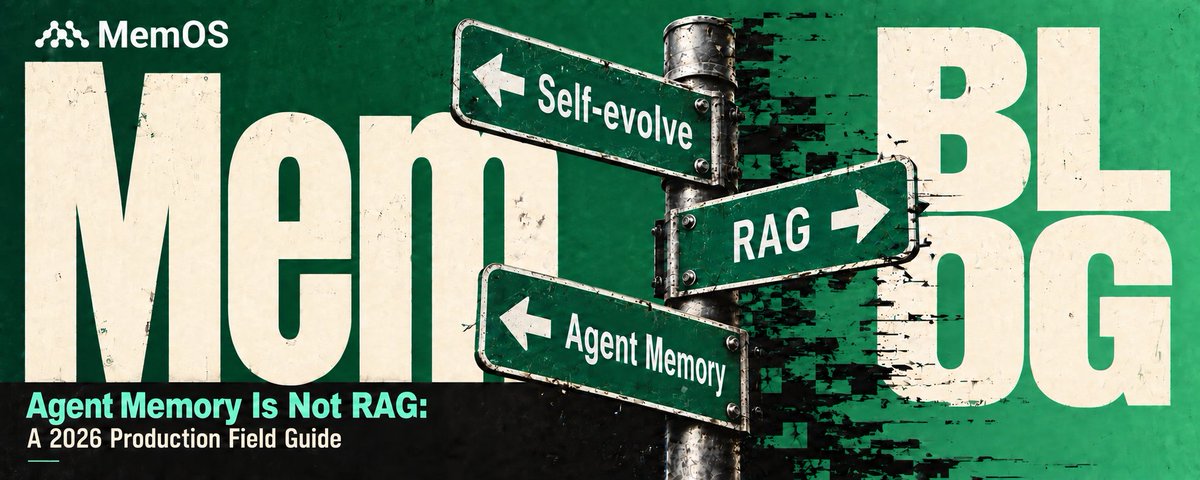
Our latest guide explains how agent memory works with RAG and compares memory solutions on lifecycle, access control, deployment, and fit.
Read the full guide 👇🏻
MemOS is heading to SF @Techweek_ 🚀
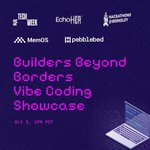
On October 5, we're co-hosting the Builders Beyond Borders: Vibe Coding Showcase with EchoHer, @CalHacks, and @pebble_bed in San Francisco.
Building with AI? We'd love to see what you're working on.
→ Submit your project: forms.gle/Mv1GYHJWru19y8UJA
→ Join us: partiful.com/e/mGyFYFRLUKRuP…


BREAKING NEWS: SF and LA Tech Week calendars are LIVE!
You can now register for events: tech-week.com/calendar
2,300+ event submissions across San Francisco and Los Angeles
📍SF: October 5-11
📍LA: October 12-18
People always ask about the data, so a few stats:
-SF once again takes the crown for “biggest tech week ever” with 1,500+ events
-1 in 7 SF events is about agentic AI: 213 events in SF and 53 in LA are explicitly about agents (in the title or description). In 2024 there were only about a dozen!
-There are 124 hackathons across the two weeks, and the variety is huge: everything from hardware to defense, media/creative, fintech, civic/social good, etc. Everyone is a builder now.
- LA, the OG Tech Week (now in its fifth year!), has seriously doubled down on deep tech with 100+ events and lots of El Segundo activity.
Last year, Tech Week saw attendees from over 100 countries. It’s going to be a party.
See you there! 🥳
Your agent does the work. MemOS helps it carry the context forward.
🌟 github.com/MemTensor/MemOS
📄 memos-docs.openmem.net

Once initialized, you can keep working while the memory flow runs with your conversations. No need to manually run memory commands each time.
⚡ On LoCoMo, MemOS CLI uses over 80% fewer tokens than OpenClaw’s native memory.
MemOS brings relevant context back before your agent answers, then saves new questions, answers & task experience for future conversations.
Less re-explaining. More continuity from one task to the next, 2 integration paths make this part of your daily workflow:
☑️ DeepSeek Harness: No-Hook
AGENTS.md + Agent Skills guide DSH to retrieve memory before answering and save it after each turn. No DSH core changes or lifecycle hooks required.
☑️ Native Hook for 6 agent frameworks
Codex, Claude Code, Cursor, OpenCode, OpenClaw & Hermes use framework events to trigger memory retrieval and writeback.

MemOS Cloud CLI just got DSH support + Native Hook integration 🔌
Same project, new session, same background to explain again and again.
Your prefs, past decisions & lessons from completed tasks shouldn't disappear into old chats.
🤖 Made with AI


MemOS retweeted

我想很多人都有这个困扰:之前经常需要在Codex和Claude Code之间来回切换,现在又加上了最近爆火的DeepSeek Harness。
但是每次来回切换、或者想尝尝DSH的鲜的时候,我都得把背景重新讲一遍,确实挺烦的~
最近在GitHub上发现的一个开源项目 memmy-agent,把 Codex、DeepSeek Harness、Claude Code接了进去,直接解决了困扰我很久的跨Agent 记忆的问题。
我用它做的事情很简单:把分散在不同 Agent 里的历史,沉淀到同一份个人上下文里,默认 Local-first,让它们都能调用。
我把它分别接入 Codex、DeepSeek Harness、Claude Code 之后,我做了一个信号中继站小游戏。
我先在Codex 写完基础玩法,然后对话里说一句话:
第一次失败时,给玩家一次翻盘机会,别直接结束游戏。
但这句话我故意不写入代码、README 或者是本地记忆文件。
然后新开 DeepSeek Harness,它从 Memmy 直接读出了这条决定,非常丝滑。
再新开 Claude Code,它读代码前先复述了规则,再按这个方向把后续功能补完。
代码只能告诉下一个 Agent 项目做到哪,但那些留在对话里的决策,才影响着项目接下来往哪走。
以后,Agent 要记住的,不只是代码,还有你前面已经决定的决策和经验。
Memmy 不仅帮我解决了Agent记忆的问题,还让这些经验不再独属于某一个 Agent,而是只属于你。
Switch agents, not context。
Memmy 支持桌面端、CLI、API、MCP 和 Skills多种方式,可以直接接着执行任务。
如果你也经常在多个 Agent 之间切换,可以拿自己的项目试一下。
项目GitHub:github.com/MemTensor/memmy-a…
🤝 Paid partnership
What gets remembered?
Key conclusions. Tool results. Execution traces.
MemOS summarizes, indexes, and stores them locally. When a related task comes back, DSH can recover existing constraints and approaches that have already been tested—not reconstruct them from scratch.
Quick Start 👇🏻

MemOS Local Plugin 2.0.16's live now, using the provider and model already set in the DSH profile. Credentials stay with DSH—no API key to copy.
🔗 memos-claw.openmem.net
🌟 github.com/MemTensor/MemOS