

I turn pictures into words. Aggie, M.D., cardiothoracic imager. Asst Professor at @UCSDMedSchool. Bringing radiology to the final frontier. 🚀🩺🩻 Ad Astra.
San Diego, CA
Joined July 2018
- Tweets353
- Following619
- Followers180
- Likes869




Michael Pohlen retweeted

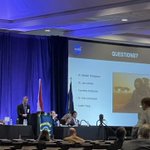
Happening now: Session 19 Uncharted Territory in Cardiothoracic Imaging with @MichaelPohlen, Dr. Patricia Mergo, Dr. Alan Ropp, and Dr. Arya Iranmanesh. #STR2026
Michael Pohlen retweeted

The most historic experiment we had on board was a tech demonstration: The first ever X-Ray taken in space.
Project: X-Ray ⚡
Question: Can we take good quality X-Rays in space?
Fun facts:
- Due to bone loss in microgravity, fractures can become more likely on long duration missions - so we need a way to diagnose these.
- X-rays can also be used to have a look at faulty electronics! The most fun picture we have is one where we captured our chest plus a wearable sensor, so we got both objectives hit in one go.
- The first X-ray in history was taken in 1895 of Wilhelm Röntgen's wife - here next to our recreation in space.
Find the full list of research projects here: f2.com/research.pdf


Congratulations to the @framonauts crew and all involved on performing the first human radiograph in space! A giant leap into the final frontier for radiology.

The ride to orbit was much smoother than I had anticipated. Apart from the final minute before SECO, I barely felt any G-forces—it honestly felt like just another flight.
I had imagined it would feel like being in an elevator that suddenly drops, but that sensation never came. If I hadn’t set free Tyler, the polar bear zero-gravity indicator, I might not have realized we were already weightless. I think being tightly strapped into our seat buckets made the transition less noticeable.
The first few hours in microgravity weren’t exactly comfortable. Space motion sickness hit all of us—we felt nauseous and ended up vomiting a couple of times. It felt different from motion sickness in a car or at sea. You could still read on your iPad without making it worse. But even a small sip of water could upset your stomach and trigger vomiting.
Rabea spent some time on the ham radio, making contact with Berlin. No one asked opening the cupola on the first day—we were all focused on managing the motion sickness. We had a movie night watching our own launch and went to sleep a bit earlier than scheduled. We all slept really well.
By the second morning, I felt completely refreshed. The trace of motion sickness is all gone. We had breakfast, took a few X-ray images, and opened the cupola three minutes after midnight UTC—right above the South Pole.
Stay tuned.


Michael Pohlen retweeted

News from #AIUM2025: What can sonographers learn from astronauts' use of ultrasound?👇
buff.ly/8TiVeqL
@AIUMultrasound #radiology #ultrasound
Excited to be working with @framonauts to acquire the first x-rays of a human in space next week during the Fram2 mission! More details here: f2.com and spacexray.org

Always glad to return to Galveston for @NASA HRP Investigators’ Workshop. Excited to see more and more imaging work each year, and congrats to @Kyle_D_Anderson on his award-winning work on LLM assessment for aerospace medicine! #SpaceMedicine #SpaceRadiology


Thankful to get to share the basics of ultrasound for human spaceflight with the attendees at #OSMED2024 #SpaceMedicine


Excited to share my new review article on what the future may hold for #SpaceRadiology: journals.sagepub.com/doi/abs… #SpaceMedicine #AerospaceMedicine
Thanks to everyone for a fantastic #AsMA2024. Good to see friends old and new, and no better way to end than with a @NASA ExMC panel led by @AerospaceDr! #SpaceMedicine


Michael Pohlen retweeted

To make real-time clinical decisions autonomously in deep space, astronauts will need access to useful data. Here, the Crew Health and Performance Integrated Data Architecture project is testing prototype software that interfaces with EVA health monitoring capabilities #AsMA2024 – at Chicago, IL

A big thanks to @AerospaceDr and everyone else involved in our work. Thrilled to share it with the world and take the next steps towards radiography in spaceflight! #SpaceMedicine #AsMA2024 #SpaceRadiology


Great work by @MichaelPohlen & the Exploration Medical Capability team today at #AsMA2024! Analysis showed that having the capability to do x-ray imaging in #space could apply to a significant number of the medical conditions that we anticipate could occur on exploration missions

Excited to be on the way to Chicago to share our work on the utility of ultrasound and radiography for human spaceflight at #AsMA2024! 4pm tomorrow, Grand Hall K. #SpaceMedicine #SpaceRadiology @Aero_Med

Happy #FirstContactDay! 🖖 – at West Menlo Park, CA

Michael Pohlen retweeted

This is long overdue; the state used to have a California Space Authority but it never received state funding unlike those in several other states. CA is obsessed with Hollywood and while that industry is important, this one is potentially bigger! presstelegram.com/2024/03/23…
Grateful for the opportunity to speak at #STR2024 this week and spend time with colleagues and mentors both current and future @StanfordRad @UCSDHealth @thoracicrad


Keep an eye out for our preliminary results on whole-body MRI applications for spaceflight at NASA’s Human Research Program Investigators Workshop! #HRPIWS24 #SpaceMedicine

Michael Pohlen retweeted

Its a Christmas miracle! Finally able to record a new podcast with radiologist and long-time space-nerd-friend @MichaelPohlen on space rads!
[Youtube]youtube.com/@TalkSpaceMed
[Spotify]open.spotify.com/show/4zfiqz…
[Apple]podcasts.apple.com/us/podcas…


Michael Pohlen retweeted

The trainee essay from @MichaelPohlen details the growing importance of radiologists' involvement in space healthcare as the field of space radiology becomes a present reality.
ajronline.org/doi/10.2214/AJ…

Thank you to @BrainsOnMars for an enlightening talk on the brain in space at @StanfordRad Grand Rounds on Friday! #SpaceRadiology – at Stanford, CA
